Heather Fink is a comedienne/filmmaker/storyteller who bravely shares her thoughts and feelings about long-term illness, caregiving, death, loss (income, career, family), and love in a live performance.
The title Quicksand telegraphs Heather’s theme, most of all its weight. She offers an authentic, energetic, engaging, and quirky memoir with relatable universal situations.
The well-paced performance (with backdrop slide show of photos, a stuffed dummy father, and surprise pop-up) entertains and reels us in as we relate to the family crisis – her father’s stroke – the toll on her father unable to speak but four words, the exhaustion of her self-sacrificing Dutch mother, and loss for Heather’s efforts to advance her career. Heather shares, “we lived with a constant sea of emergencies.” Thirteen years of emergencies.
The material is fresh and raw. Heather’s father Stephen passed away exactly a year ago around the time she celebrated another birthday.
Heather’s journey is one of endurance and faith.
A fine audience experience demonstrating the value of everyday love and remembrance.
Quicksand messages:
Family illness and ultimately death affect the life trajectory of all involved.
Learn how to recognize a stroke!! (outlined on the show’s program)
There are 53 million unpaid caregivers in the U.S., they represent the backbone of long-term care. Most families, such as Heather’s, cannot afford to hire in-home caregivers.
Heather’s Angst and Outcome:
“I’m 43 and I have nothing to show for it” she cries. As we learn, though she may not yet see, she has everything to show for it – being present for both parents with love and support, plus the experience of a dark night of the soul that ultimately led to her current mission – meaningful discussions about caregiving, illness, and death.
Heather is now an advocate for stroke awareness, advance care planning, and talking about death, especially at Death Cafes.
Notes:
The Hollywood Fringe Festival, a community arts event, is held over three weekends every June at various small theaters in LA. It was founded in 2010 with 130 shows. The term originated with the first Edinburgh Fringe Festival which featured unique, non-traditional performances in 1947.
Death Café. Bernard Crettaz, a Swiss sociologist, created the first Café Mortels. His concept of meeting over tea and cake revolutionized how we speak about death and dying. Jon Underwood, who founded Death Café in the UK, made a trip to meet his inspiration Bernard Crettaz. Underwood attended the last Café Mortels in Lausanne, October 31, 2014. Jon died suddenly in 2017 at the age of 43. His mother and sister, plus two women in the U.S., keep the project going. There are more than 18,000 Death Cafes in 90 countries around the world.
There is a thoughtful Death Café in Los Angeles hosted by Elizabeth Gill Lui, a photographer/artist/author and death doula, at LA’s Philosophical Research Society.
A June 12, 2024 article in the Los Angeles Times features Elizabeth’s Death Café. The photo includes the author of this post (wearing a mask) and to her right and the reader’s left, charming Heather Fink who created the solo piece Quicksand. Link to article is in the Resources section below.
Wendy Jane Carrel, MA, is a Spanish-speaking senior care advocate from California. She has travelled Mexico for several years researching health systems, senior care, and end-of-life care to connect Americans, Canadians, and Europeans with healing options for loved ones. She is a compassionate companion and palliative care liaison, legacy writer, co-founder of Café Mortality Ajijic/now Death Café Ajijic and founding member/speaker of the Beautiful Dying Expo (USA). She is a trauma-informed, gentle End-of-Life Doula (National End-of-Life Doula Alliance proficient), and a speaker and published author on subjects related to senior well-being. Wendy’s web site is https://www.WellnessShepherd.com
In the U.S. a social model of hospice (SMHh as written in academic and medical journals) is described as a dedicated home with 24/7 non-medical personalized care for end-of-life when dying at home becomes unmanageable. It is a non-profit service, often at no cost, in collaboration with support from a medical hospice service (usually the Medicare hospice benefit). It is sustained by community philanthropy, usually with a large base of volunteers devoted to comfort care and the gentlest passage possible.
In other words, end-of-life support by the people for the people.
Social Hospice Model
Social models for the dying have been recorded since 3000 B.C. (ancient Egypt). Every continent has had and still has some form of community care for the dying.
In modern times, the term social hospice was part of an obscure movement following the “good death” or “death with dignity” efforts of the 1950’s and 60’s. The goal was to return the dying process and choices to the individual.
The first U.S. hospices of the 1970’s were non-profits. Their mission was to create a caring, supportive environment in a residence specifically devoted to end-of-life care. In the 1980’s, social hospice for HIV/AIDS came into existence. The model includes grief and bereavement support for families.
The current U.S. landscape is dominated more and more by for-profit hospices and conglomerates, often funded by Wall Street players and private equity focused on high profit margins.
There are not as many community-based offerings as there once were.
****This situation may reverse and evolve based on growth in preparation for dying education, the end-of-life doula movement, and more awareness about the benefits community models provide. Why? Because they provide an unmet need.
Where may you find a social model hospice in the U.S. and who is social hospice for?
The home I know best, as I have participated in their on-line educational gatherings, is Abode Contemplative Care for the Dying in San Antonio, Texas.
Abode Home is affiliated with the Omega Home Network (based in Tulsa, Oklahoma), the largest U.S. social hospice network promoting the development and expansion of community homes for the dying. There are currently 74 homes found in 27 states, others are in development. https://www.omegahomenetwork.org/
Omega Homes generally receive solo agers who do not have support for dying at home, the dying whose family no longer has personal or financial resources for 24/7 care, and the homeless.
Here is a bird’s eye view of Abode Contemplative Care Home in San Antonio. There are others just as precious. Photo below courtesy of Abode Home.
Even though I live in both California and Mexico focusing on services for senior care and end-of-life, I continue to follow how others create and sustain community care.
I wish such sustainable community care would be available in every country and to every individual.
As a solo boomer (no spouse, no children, no fallback) I have been contemplating my demise for more than 25 years – I believe in planning ahead when possible.
If I lived in Texas I might choose Abode’s sacred, supportive care based on the energy of light of the CEO, the Board of Directors, the staff, the End of Life Navigators, and the volunteers.
With great pleasure, I have participated in Abode Home’s on-line discussions hosted by CEO Mary Thorsby who welcomes all open-heartedly. She and her team send out meaningful, inviting newsletters, quarterly reports, and raise funds to sustain their generous service.
When I first learned of Abode Home I was attracted by the pastoral-looking watercolor rendering, photos of the garden, the words contemplative care, but most of all Abode’s transparency and community engagement.
The home is a sanctuary – a quiet dwelling surrounded by nature with an intimate atmosphere, light in each of the three rooms, and, an inclusive presence.
Abode Home collaborates with all the San Antonio medical model hospice providers who send physicians, nurses, and medications.
Comfort care is provided 24/7 at the residence by five full-time staff, four part-time navigators, and 70 volunteers (15 of whom are Board members) in eight hour shifts. “It’s a grass roots team effort different from the medical model, and, it’s a mission,” shares CEO Mary.
Abode Home is celebrating its 10th year serving the public.
Here are some of Abode Home’s supportive activities for their end-of-life guests and the community-at-large:
Bedside yoga
Book Club – book study with End-of-Life titles
Caregiver guidance for supporting oneself through caregiving
Contemplative Drumming
Education via on-line Zoom meetings and gatherings at the home
Death Café second Saturdays of the month
Dementia series with speakers from the community
Dia de los Muertos celebrations each fall
EOL (end-of-life) Doula trainings and EOL Doula Certifications – teaching others how to be with dying and dispatching them to the community-at-large
Fundraisers – a yearly Spring Art Show & sale; a fall online BIG GIVE
Luminarias lit in paper bags on stone walls around the property every December
Meditation via Zoom
Pull Up A Chair Dinners – highlighting alternative therapies for End-of-Life comfort
Note: According to the National Vital Statistics System, about 35% of Americans die in hospitals, down from 48% in the year 2000. Almost 30% die in nursing or hospice homes. (This statistic does not include dying from a sudden accident, cardiac arrest, or stroke).
Social model throughout the world:
The social model has existed for millennia in various forms following cultural preferences and traditions.
“Egyptians, Orientals, Greeks, and Romans all used churches or temples as refuge for the sick or for pilgrims. Care of the sick was the responsibility of those believed to have special talents as healers, those who felt it was a religious duty, or diploma physicians who learned their craft based on scientific knowledge at the time,” writes Cathy Siebold in The Hospice Movement: Easing Death’s Pains (Twayne Publishers, New York, 1992).
Buddhist Emperor Asoka of India, (273-233 B.C.) known for a humanitarian approach to governance, created 18 shelters for aging, disabled, ill, and poor pilgrims who came to die and be cremated on the Ganges River. As we know, such homes exist now though they are mainly used by Hindus.
According to Wikipedia, historians believe the first “hospices” originated in Malta around 1065 during the Crusades. They were run by nurse nuns.
Summary:
The social hospice mission is to enhance quality of life to the end of life with compassionate care in a sacred manner regardless of ability to pay.
Local, direct, loving acts of care during life and at end-of-life are the foundation for a flourishing community.
Wendy Jane Carrel, MA, is a Spanish-speaking senior care advocate from California. She has travelled Mexico for several years researching health systems, senior care, and end-of-life care to connect Americans, Canadians, and Europeans with healing options for loved ones. She is a compassionate companion and palliative care liaison, legacy writer, co-founder of Café Mortality Ajijic/now Death Café Ajijic and founding member/speaker of the Beautiful Dying Expo (USA). She is a trauma-informed, gentle End-of-Life Doula (National End-of-Life Doula Alliance proficient), and a speaker and published author on subjects related to senior well-being. Wendy’s web site is https://www.WellnessShepherd.com
https://www.youtube.com/watch?v=U7tHPCjEs7c Marty Bazelak, MD, palliative care physician hosts guests from Clare House, Tulsa, OK, founders of the Omega Home Network of social hospices.
In October I spent three weeks in Italy celebrating the 90th birthday of “Super Silvana” the last living person of her generation who has witnessed my life since I was a teenager. Her nickname comes from her daughter and friends who have spent a lifetime watching her overcome obstacles. She was a child during WWII living in the countryside, and later, the sole support of her daughter and other relatives. My heartfelt thanks to Silvana and her daughter for permission to share. Here is what I observed:
Aging in Place
Silvana is aging in place with dignity and self-respect, her way, as much as possible.
From my point of view, it is not easy without unlimited resources and optimum health in Italy, nor almost anywhere else in Europe. Nordic countries and The Netherlands may be mini exceptions. (I have seen well-thought-out senior living and support in Stockholm and outside Amsterdam).
Silvana’s circumstances are what Americans would refer to as middle class. She worked her whole life, ran a small business, and owns a condominium in an attractive section of Florence a few hundred yards from the Arno River. She has been a widow for over 35 years.
She is aware of the importance of diet, buys the freshest food, and continues to create meals from scratch. She used to go to open-air markets but recently has found most produce at the Esselunga market behind the back gate of the condominium. Years ago, we drove to the Tuscan towns of Impruneta or Poggibonsi on weekends and returned with the best quality olive oil, chianti, cheeses, and more. Today this is accomplished by or with her super capable and loving daughter, her only child, who lives next door, and works full-time.
Here below is a photo taken by her daughter outside the Esselunga market under the hot (over 100 degrees) October sun.
Silvana’s home is immaculate – open any armoire and you will find the best quality linen, beautifully laundered and ironed. Ditto for her clothing. In the entrance hall she keeps a marble bowl of necklaces – pearls, Murano glass, and others on a sideboard. When she goes to the supermarket or for a café, she will (unless it is too hot) be wearing a necklace, earrings, and fine watch. Next to the sideboard is her walker for the street.
Guess who cleans the condo, prepares meals, does the laundry, and makes certain all is in order. Silvana!
When you meet her, she exudes kindness, and love. She is an appreciator of life, always smiling and seeing the best in you and those whom she meets. She is a woman of immense energy, generosity, and intelligence. She worries about others and knows her neighbors and their stories. Every day she walks one flight up to check on another aging in place lady who is the caregiver for a severely disabled daughter. The lovely lady upstairs receives no respite or support from social services, neither does Silvana.
The precious little dog in the photo by her daughter below is Nina, Silvana’s companion during the day while her daughter works.
On Thursdays a hairdresser comes to coif Silvana’s hair. The hairdresser also attends to the ladies upstairs. This is Silvana’s investment in feeling better and “a posto” or okay.
Silvana’s attractive appearance defies what she is feeling almost 24/7 – unrelenting pain from rheumatoid arthritis, scoliosis, osteoarthritis, and other co-morbidities.
Nighttime Challenge
Nighttime is more difficult than daytime. Sleep is interrupted with shooting pain despite evening medication. When she gets up to use the bathroom, it is not easy. It takes a while to lift her body comfortably from the bed. (The bed she carefully chose gives best possible comfort and support for her condition). She is wise and focuses on remaining stable as she rises; it is a chore to walk the short distance. She does not use a walker in the house or to navigate at night. The lighting is good. But what if she falls?
Socialization
Silvana loves her independence, walking the local streets and around the condo compound every day. Unlike many disabled and ailing who are retired, she is supremely socialized, though it would be helpful to have visitors or a regular companion during the day other than neighbors who stop by outside her window. Game shows on TV are not of interest, the news is. She enjoys reading and crossword puzzles. Her mind is sharp.
Almost every day I was there we walked to the city center looking to replace my favorite Igi & Co. wedge walking shoes. Each time we went it was a charming adventure watching how she would dart ahead of me with her walker, so excited. She attracts folks like magnets on the street, in stores. It is fun to watch. As you may have surmised, she is super friendly and has a gift for storytelling.
We were late returning from the center one evening and decided to hop on a tram instead of walking back. As she enters the tram with her walker she is smiling and announcing how much she appreciates everyone’s help and she is sorry if she is disturbing anyone. Passengers smile broadly, transfixed by her charisma and warmth. I wish I had thought to make a video of the experience. It was such a pleasure to watch.
Assisted Living in Italy
Silvana has absolutely no interest in a senior living home even if she could afford the prices. There are a handful of “luxury” residences, homes run by nuns, and homes partially supported by the government in Tuscany known as RSA (Residenza Sanitaria Assistenziale – sanitary residence care).
The photo below is of a typical modern assisted living in Florence. The photo is only to show an example, not to recommend or endorse.
In Italy, there is private pay assisted living, and as in the U.S., you will be moved if you require nursing care. Prices range between 2500 and 4500 euros per month, depending on the city and the region. I visited four residences in Florence and two in Pistoia on this trip. My priority was to be with Silvana as much as possible, observe her health, and see if we could discover some surprise solution to ease her aging in place. My last trip was to see Silvana’s loving oldest sister before she passed away – fortunately, with good care paid for in part by the Italian government.
Home Health Aides (known as “badanti”)
Receiving help at home is not paid for or assisted by social services unless you are uncommonly poor and gravely disabled – blind, deaf, paralyzed, etc. Silvana might welcome a “badante”, a caregiver, though she might not readily admit this. She tries not to show it, but she is understandably tired. She is not a complainer. Keep in mind it is cultural to not discuss your woes outside your family, and just as important, is the desire to “fare una bella figura” an idiomatic way of saying always put your best foot forward.(Badante is from the Italian verb badare, to take care of).
There are agencies for a badante, male or female, in larger Italian cities. In Tuscany and other provinces there is also an underground market (or hidden job network) of migrant Peruvian, Moldavian, and Romanian badantes, some apparently without residency. I heard stories (not confirmed) about abuse or theft on occasion by caregivers who are not vetted or bonded. On the other side, there are stories of “modern servitude” by Italian families hiring badanti.
Below is a photo of a large agency on Via del Sansovino in Florence. There are three other agencies in city center.
According to a British study by Giuliana Costa the hiring of migrant badanti to relieve Italian families has been on-going since around 2000. The average price of a badante starts at about 800 euros/month (about $900 USD) and goes to 1500 euro (about $1600 USD) or 2000 euro per month ($2200 USD) not including room and board. The average gross monthly salary of middle-class Italians is currently 3650 euros, the current average middle class pension is 800-1200 euros/month or more). With prices rising around the world since COVID, the cost for a badante continues to increase.
The situation is challenging if you are caught in the middle. Italian families, the traditional caregivers, must now work or care for their own children as well as their parents.
Depending on which statistics you study, Italy has the second or third largest population of older adults in the world, following Germany or Japan. In Italy today, there is not enough support for the growing population of older adults.
Average Middle-Class Pension in Italy, Will It Pay for a Badante?
The average middle class pension in Italy is around $16,572.22 USD/year. Monthly, that comes to 1370 euros, but the pension is more likely 800 to 1000 euros per month. Even if your condo is owned, you are paying condo fees, water, gas, electricity, transportation, food, doctors, clothing, and miscellaneous expenses. Are you able to pay a badante who will need his or her own room + board? If you are lucky perhaps you may find someone for a few short hours at 10-12 euros per hour. But over time the expense may become prohibitive.
If you own a home and have a pension above the poverty line, it is a given that government social services will tacitly expect your family to care for you.This makes me wonder what happens if you are a solo ager with no support.
If you are above the poverty line in Tuscany, you must pay a fee to go to a senior center, a day care center, receive social worker support and other services. If the choice is paying utilities and eating, will you pay for day care? As far as I have learned from research, there is no organization such as Meals on Wheels in Florence for example, and even if there was, Silvana prefers choosing what food is most healthful for her. I was hoping to learn about a non-profit organization of volunteer companions that visit older adults. Florence does, however, have a volunteer service that drives extremely disabled older adults to doctor appointments.
The local government social services in Florence are housed in the ASL Ufficio di Assistenza (the Assistance Building) which includes the ISEE, the government entity which assesses your economic condition (Equivalent Economic Situation Indicator).
What happens if Silvana has a fall, a stroke, and needs serious care?
Government healthcare will kick in, but for some services, she may be paying in part. Her daughter sends good thoughts to the universe every day so that her mother will not have an accident, so do I.
The national health system in Italy includes state hospitals which are funded by taxes. If you are Italian, or a resident, you do not pay as a patient for the hospital. For scheduled surgery, a referral from a doctor is required. In acute situations, you can go to an emergency room (Pronto Soccorso) without a referral.
What works…
Italy has provided universal healthcare since 1978 through the Ministry of Health and its SSN Servizio Sanitario Nazionale. This service is available to all Italians and Italian residents. Until the last few years, according to many, it has been a positive experience. Recently, due to staff shortages, COVID, and fewer euros to support the system, it takes longer to receive attention. Fortunately, Silvana has an SSN geriatrician whom she is pleased with. SSN does not include dentistry and psychological support. There is also private pay medicine in Italy and private pay health insurance. Many Italians are now participating in both public and private insurance, the latter if they are able to afford it.
Conclusion
The review above is a snapshot. A proper evaluation would require several months or a year of due diligence and observation to understand the changing system of care for older adults in Italy.
Again, as with the U.S. and most “western” nations, much has changed in the last 10 or 20 years – mostly diminishing social services plus higher cost of living and cost of care prices.
My Italian trip made Mexico, (where I focus my energies coordinating senior care, senior housing, and end-of-life care), seem comparatively less complicated and more affordable for Americans, Canadians, or Europeans seeking to age in place outside their home country.
Through Mexico’s INAPAM and DIF, all nationals and residents may participate in programs and activities designed as poverty reduction strategies. Senior centers act as daycare centers with socialization (there are government centers in rural areas as well as metropolitan areas), seniors receive discounts for travel by bus locally and long distance, Mexican national seniors receive a small monthly amount for expenses, and DIF homes (not that many in the country), provide a roof over one’s head and care.
Wendy Jane Carrel, MA, is a Spanish-speaking (and still Italian-speaking) senior care advocate from California. She has travelled 13 states of Mexico for more than 20 years researching health systems, senior care, and end-of-life care. She provides housing and care solutions and guides transitions in/to Mexico for Americans, Canadians, and Europeans. She is a compassionate companion and palliative care liaison, legacy writer, a trauma-informed End-of-Life Doula (National End-of-Life Doula Alliance proficient), and a speaker and published author on subjects related to senior well-being. Wendy’s web site is https://www.WellnessShepherd.com
Just returned from three weeks in Italy celebrating the 90th birthday of “Super Silvana” the last living person of her generation who has witnessed my life since I was a teenager. I hope to share what I learned about aging in place, senior care, and end-of-life from Silvana, her daughter, neighbors, friends, and site visits in Tuscany in another post. As with the U.S., much has changed in the last 10 years – mostly diminishing social services (with some exceptions in both nations) and higher prices. Thankfully in Mexico, prices related to care continue to be more affordable, comparatively.
A few days after my return, I became a member of the Older Adult Advisory Board for the City of West Hollywood, CA. Population 36,000, approximately 6,000 older adults (number to be verified). Excited and honored to serve. There will be much to learn, observe, and address with time. I have permission to mention this event and to post the photo with Francisco, the Strategic Initiatives Program Administrator who swore me in. He is a bright and integral part of all that is evolving. We were delighted to discover mutual Spanish and that I knew the charming town in Jalisco his family is originally from.
Francisco G and Wendy Jane are in the photo below by board member Michael Hollingsworth:
For those of us devoted to palliative and hospice education and community-based services, October 14 was World Hospice and Palliative Care Day. Meaningful. November 2 is World Right to Die Day, a controversial subject, but for some well-being = peace of mind, making a transition legally and quietly. In the U.S. November is known as National Hospice and Palliative Care month.
Dra Susana Lua Nava, the palliative care thought leader in Guadalajara, Mexico who created the only 24/7 palliative care hospital (Juntos Contra el Dolor – United Against Pain) in Jalisco state in 2010, travelled to meet the Pope in Rome in October and has returned to Guadalajara to host the 6th International Palliative Care Congress. The main speaker is her mentor and mentor to Latin American and Spanish palliative care physicians, nurses, social workers, psychologists, and others, Dr. Marcos Gomez Sancho of the Canary Islands, Spain. See https://www.mgomezsancho.com/esp/index.php Other speakers will be from Argentina, Costa Rica, Cuba, and Mexico. The congress will be held November 9-11 at Auditorio Fray Antonio Alcalde, Av. Fray Antonio Alcalde 1220, Miraflores, 44270 Guadalajara, Jal., Mexico in Spanish. The fee for three days is 1200 Mexican pesos. For more information see: https://juntoscontraeldolor.com/
Even though I attended three Juntos Contra el Dolor palliative care conferences in Guadalajara I reported only on one, the 2nd International Congress produced by Dra Susana:
We are now in the sign of Scorpio, the sign of death and transformation, a sign that teaches us much. Colleagues in Mexico have created events around the Day of the Dead and death and dying.
Wilka Roig, who is based in San Miguel de Allende, Mexico, is the founder of Elizabeth Kubler-Ross Foundation Central Mexico, producer/host of Death Cafes, a transpersonal psychologist, creator of the first green burial plot in Guanajuato state, and most of all an educator with a community-based approach. She is bringing the American director of The Last Ecstatic Days to Lake Chapala with a documentary that dares to ask one of life’s biggest questions about death. The screenings will kick-off the 1st Latin America Impact Tour November 7 and 8, 2023, 3:00 p.m. at Cine+Lago, with free complementary workshops facilitated by the Fundación Elisabeth Kübler-Ross (EKR) México Centro team on November 7 and 8, 11:00 a.m. at Lake Chapala Society, Ajijic, Mexico. Writes Wilka: “The Last Ecstatic Days explores the physical, emotional, and psychological journey of one man’s desire to not die alone, and introduces the hospice doctor who gives up everything to honor that dying wish.” https://wilkaroig.com/
Gerontologist and death doula Loretta Downs is teaching at the Lake Chapala Society, Ajijic, what is one of my favorite subjects to teach Advance Care Planning: Living Well and Dying Well. The dates are November 8 and 15. This is an evergreen subject, always valuable. https://endoflifeinspirations.com/
This week I will participate in two all-day meetings of Carefest sponsored by Caring Across Generations on the UCLA campus in Westwood, CA. The national organization, founded in 2011, states “We are families, caregivers, people with disabilities, and aging Americans creating a new way to live well and age with dignity.” Eager to meet, greet, and share what I learn. https://caringacross.org/
And then a trip to Baja for a site visit of a new senior living home, and a trip to Sonora state Mexico to meet up with a soulful American end-of-life doula and her expat community to talk about preparing for emergencies and end-of-life.
Feeling grateful and fortunate. Sending healing thoughts to climate refugees, those suffering from injuries/illness, those enduring abuse and war, and all. 2024 promises to be better, perhaps, as it will be an 8 year. Eight = infinity.
Wendy Jane Carrel, MA, is a Spanish-speaking senior care advocate from California. She has travelled Mexico for several years researching health systems, senior care, and end-of-life care to connect Americans, Canadians, and Europeans with healing options for loved ones. She is a compassionate companion and palliative care liaison, legacy writer, co-founder of Café Mortality Ajijic/now Death Café Ajijic and founding member/speaker of the Beautiful Dying Expo (USA). She is a trauma-informed, gentle End-of-Life Doula (National End-of-Life Doula Alliance proficient), and a speaker and published author on subjects related to senior well-being. Wendy’s web site is https://www.WellnessShepherd.com
Feeling excited to be included on two panels at a Mexican government Pueblos Magicos/AMAR event in Los Angeles, Friday September 22, 2023, at the Shrine Auditorium to talk about Moving to Mexico. My focus will be senior housing and healthcare options, among other subjects.
Pueblos Magicos are “magical pueblos”, 177 small towns in 31 Mexican states. For the most part they are charming Mexican villages that represent Mexico’s cultural heritage and traditions, some with historical relevance.
As a lovely synchronicity, I have enjoyed one pueblo magico on and off for several years, Ajijic at Lake Chapala, one hour south of Guadalajara in Jalisco state.
Javier Govi, Founder and CEO of AMAR (Asociacion Mexicana de Asistencia en el Retiro), the Mexican Association of Retirement Communities, is producing and moderating the panels.
Here is the AMAR marketing for two of the invitees, do not know who else will be present. Looking forward to participating!
AMAR, founded in 2007, is a national Mexican non-profit organization committed to educate and collaborate with Mexican government regulatory agencies and business executives in Mexico and North America on the potential of the senior housing industry in Mexico.
The Shrine Auditorium is at Figueroa and Jefferson Blvd in downtown Los Angeles near the campus of USC. https://www.shrineauditorium.com/ The event is free.
Wendy Jane Carrel, MA, is a Spanish-speaking senior care advocate from California. She has travelled Mexico for 20+ years researching health systems, senior care, and end-of-life care to connect Americans, Canadians, and Europeans with healing options for loved ones. She is a speaker and published author on subjects related to senior well-being. Wendy’s web site is https://www.WellnessShepherd.com
If you are a resident of Mexico or an about-to-be resident, is Assisted Living with nurse nuns an option to consider if you might need care?
The short answer, for some folks, may be yes.
How many residences in Mexico are Catholic non-profits and where are they located?
According to a 2018 report, INEGI (the National Institute of Statistics and Geography), there are under 900 assisted living communities in Mexico, 85% of which are in the private sector. The remaining 15% are Catholic non-profit residences, other non-profits, or DIF (Desarrollo Integral de la Familia, loosely translated as Integrated Development of the Family) government homes.
Residences are in every state and most large cities. For example, in Guadalajara, Mexico’s second largest city, there are approximately 35 assisted living homes. Of those 35, six are run by five different orders of nurse nuns, one order has two homes.
What may you expect under the care of nurse nuns?
The answer depends on the order of nuns, their mission, the location in Mexico, the resources of the home, how the home is supported by the Archdiocese, volunteer staff, the community, and more.
Historically nuns (and originally monks) were caregivers, nurses, purveyors of healing remedies as herbalists, and suppliers of prayers and psychological support for the ill. They met folks at homes, hospitals, and on the grounds of their wealthy benefactors first in Europe, then the Middle East (aiding crusaders), and later in Latin America beginning around 1540.
Some homes have inviting colonial entrances. Others are newer homes.
Asilo Brunet Celerain, Merida, Mexico
Ancianitas de Santa Clara de Asis, A.C was opened by Franciscan nuns in January of 2018 at San Pedro Tesistan, Jocotopec, Jalisco, Mexico. The order of St. Francis of Assisi first came to Mexico in 1955. They have a hospital in Guadalajara.Several expat volunteers at Lake Chapala invest time and love energy to support the home.
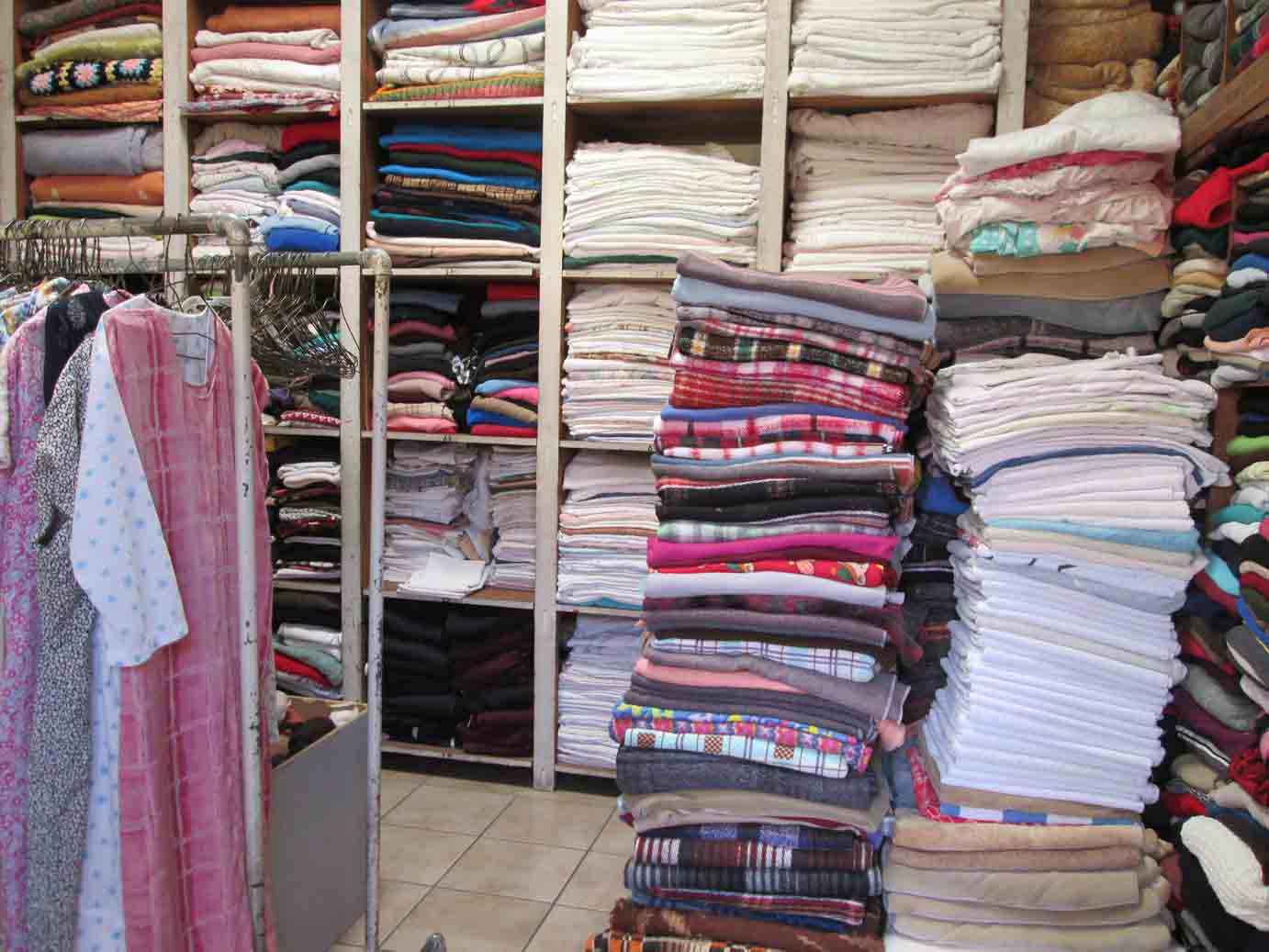
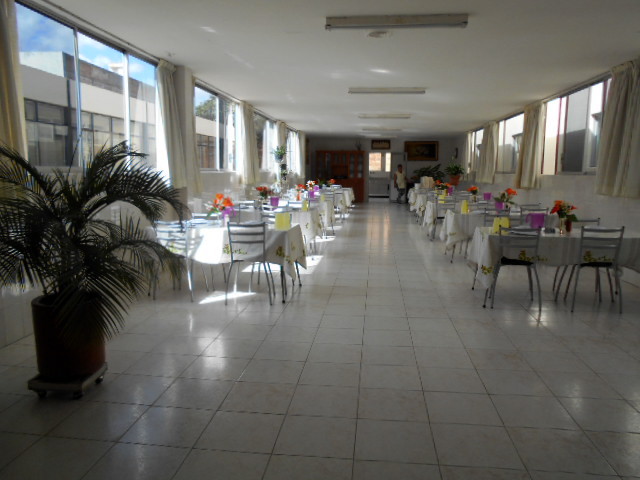
Homes tend to be clean and organized with immaculate kitchens, dining rooms, and laundry rooms. “Cleanliness is close to Godliness” seems to be a motto most nun administrators, usually known as “Madre Superiora”, and the Sisters “Hermanas” live by.
Asilo de los Desamparados, A.C. linen room, Guadalajara, Mexico
Food will invariably be Mexican, unlike continental cuisine found at some private pay homes with foreign residents.
Most homes are for women only, some are for men and women.
Residencia San Jose exercise class for men and women, Guadalajara, Mexico
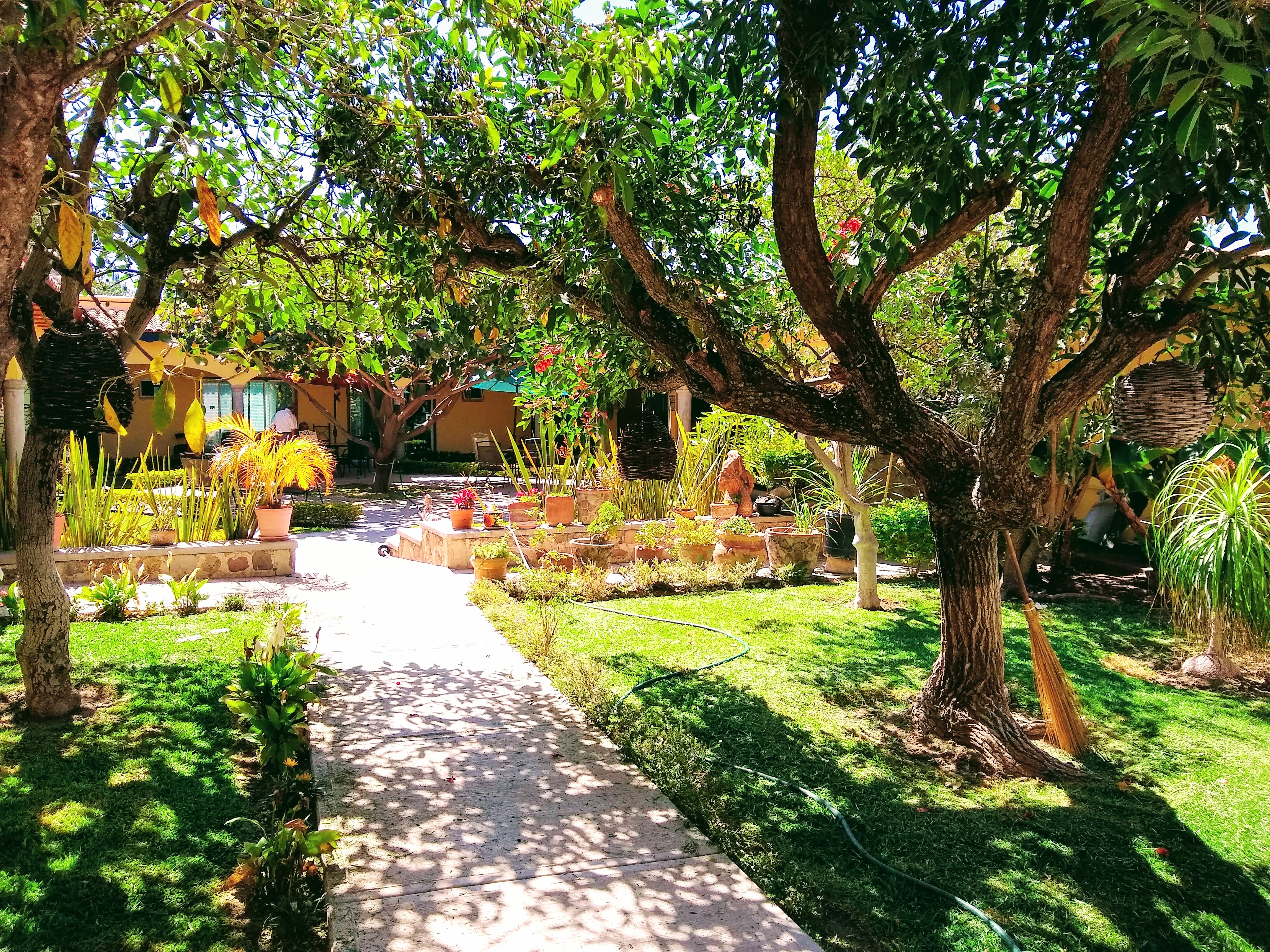
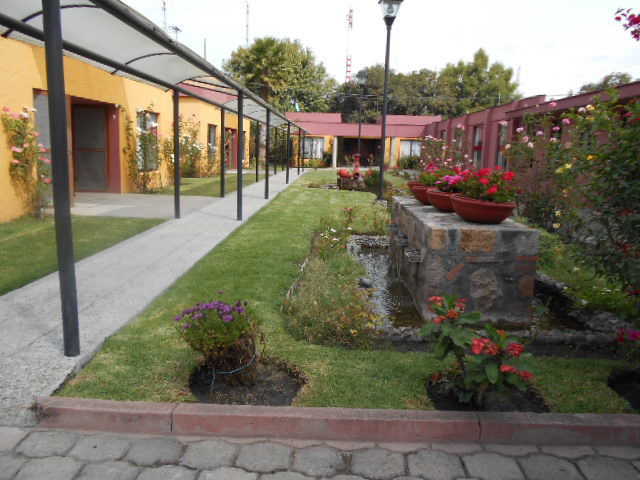
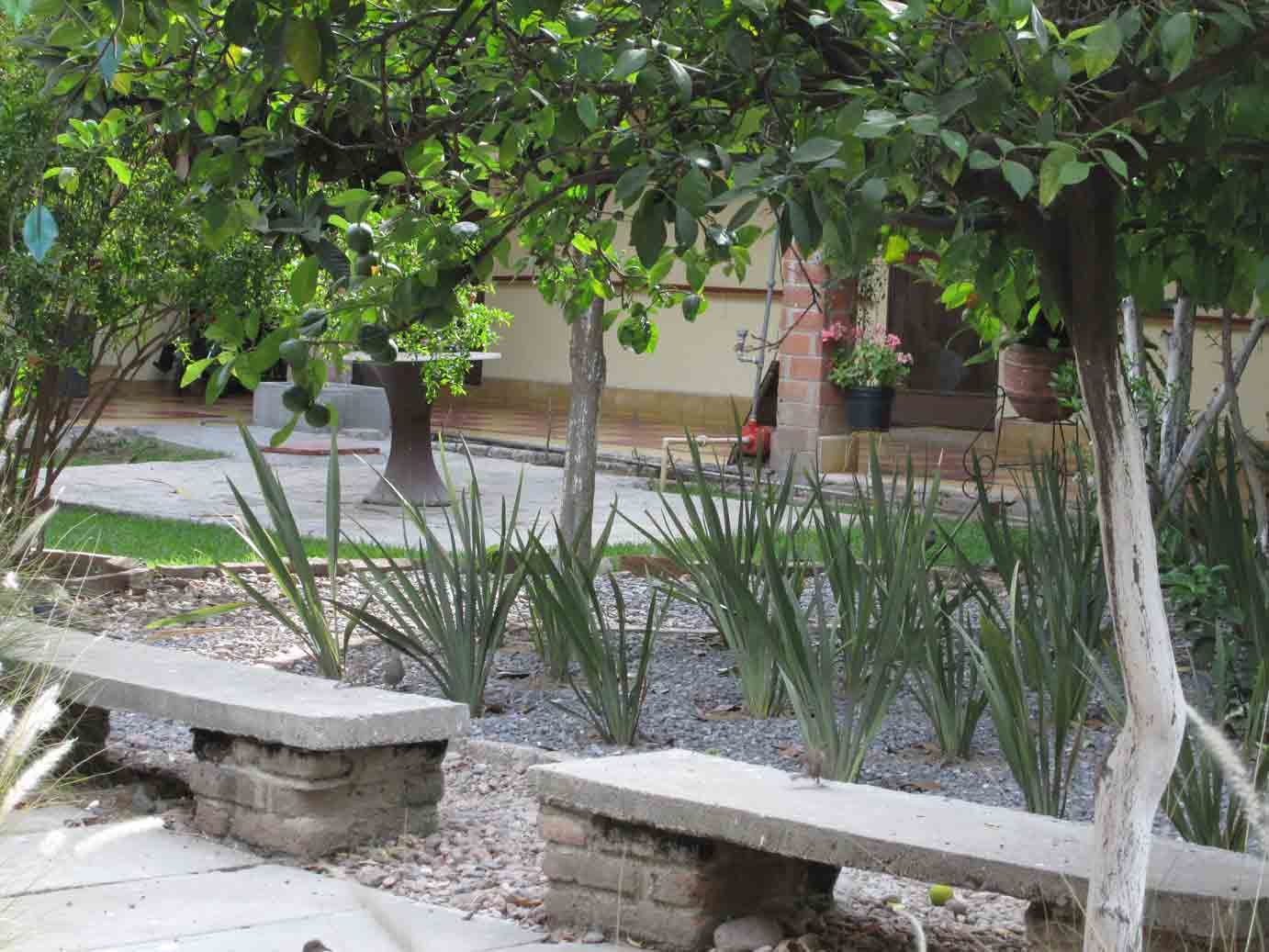
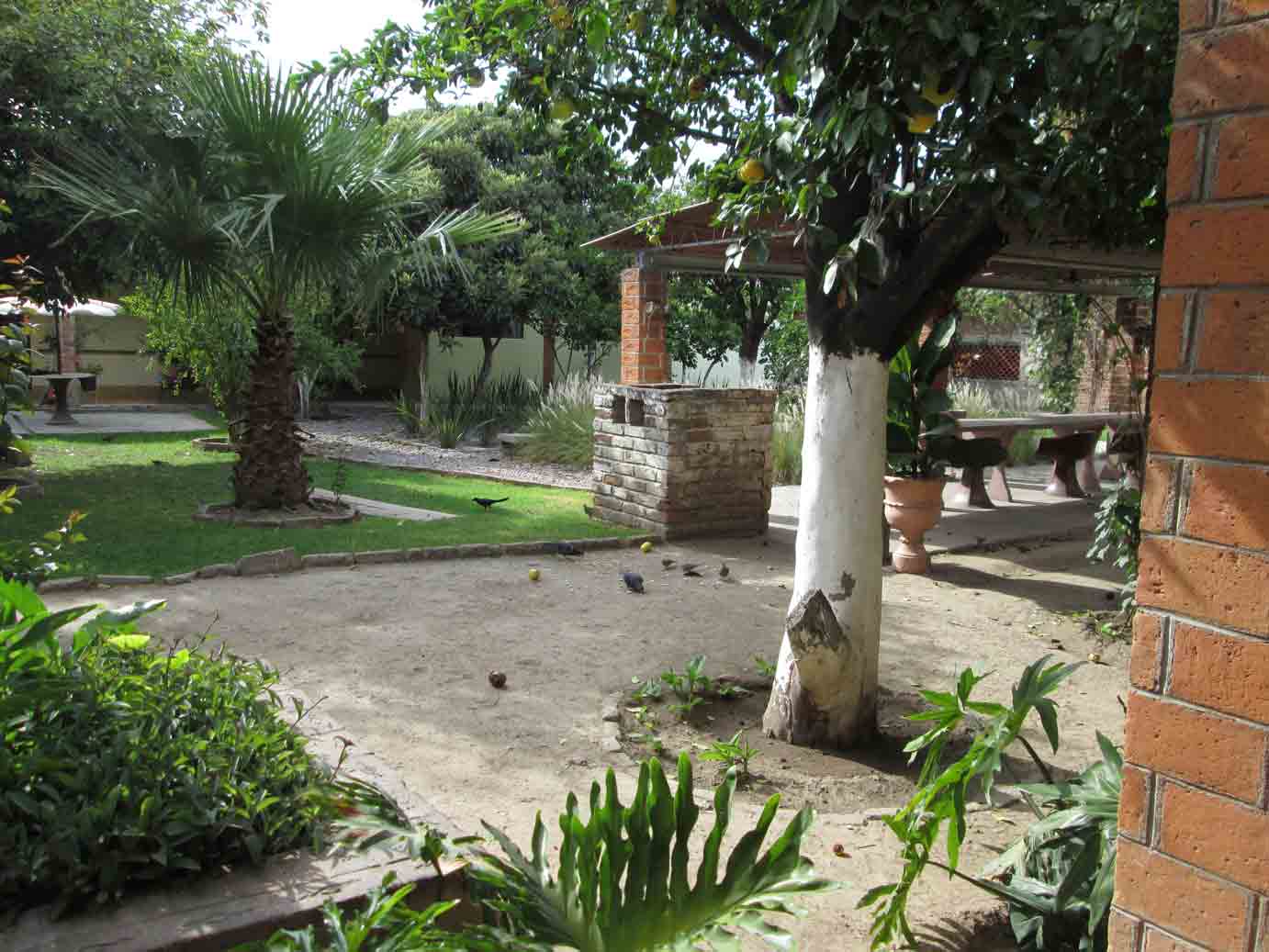
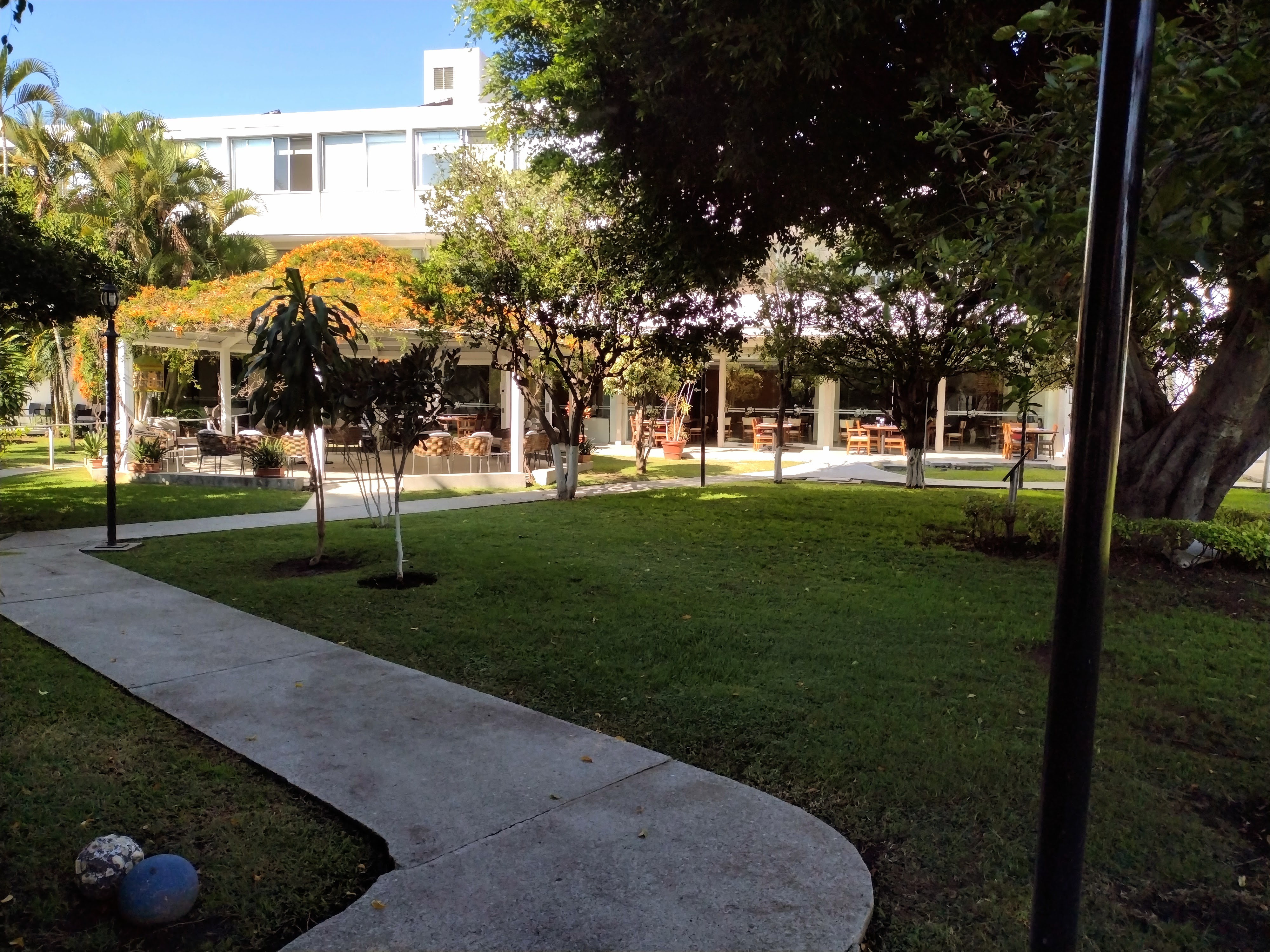
Environment is important. Properties with trees, gardens, places to stroll or sit in the sun or shade are common. Places for meditation and prayer are common, including of course a campus chapel.
Casa Hogar San Vicente inner garden, Lagos de Moreno, Jalisco, Mexico
Casa Hogar Tepayac inner garden, Leon, Guanajuato, Mexico
Casa Hogar Tepeyac inner garden, Leon, Guanajuato, Mexico
Gardens at Residencia San Jose, Zoquipan, Guadalajara, Mexico
The language will usually be Spanish. Some nuns speak English. Nuns in Mexico are from Mexico but also from Africa, Europe, parts of Asia, and other countries in Latin America.
Quality of care. Mexicans in general are known for compassionate care, nurse nuns as well. Nuns have centuries of lived experience and tradition in the art of care. They are educated to serve vulnerable populations, especially older adults. They make sacrifices and overcome many challenges to help all. They show up daily and with attention. Since they have no children, patients are often offered their mothering ministrations. They pray for your healing even when not in front of you. If you believe in the power of prayer, their prayers may be welcome.
Nurse nuns have often worked in Catholic hospitals before working in assisted living and have backgrounds in acute/critical/emergency care.
Sister Augustina from Venezuela, 80+ years old, now retired, on nursing corridor at Residencia San Jose, Zoquipan, Guadaljara, Mexico
Nuns tend to follow early morning rising rituals and do not stay up all night unless tending to residents. This day schedule, as opposed to the Mexican culture stay-up- all-night way of life, may be compatible with the routines of some foreigners.
Is it possible for an expat to live at a senior home run by nurse nuns?
If the person meets the admission requirements, yes. Americans, Brits, and Canadians have been or continue to be residents in assisted living run by Mexican nuns.
Residents of Asilo Brunet Celerain, Merida, Mexico. The sweet lady in the middle is British.
Precious residents of Asilo para Ancianas at the central plaza of Guadalupe, Zacatecas, Mexico. One of the residents is an American who shared she enjoys being under the care of the nuns.
For those who do not have enough funds for private pay, being cared for by nurse nuns at their “casas de reposos” (rest homes), is an option. Many Catholic orders are ecumenical, and open to non-Catholics and “all God’s children.” Pay is based on what each person can afford. The system tends to be democratic. Those with more funds are essentially supporting life for others. Those with more funds may often have their own private room. Those with fewer funds sleep and store belongings in a dormitory-like environment. In Mexican culture, being close to others and not being alone is preferred. Privacy is a Canadian, Western European, and U.S. concept.
Asilo de Desamparados, A.C., a women only home, sleeping quarters, Guadalajara, Mexico
Casa Hogar Tepeyac bedroom for ladies, Leon, Guanajuato, Mexico
Casa Hogar San Vicente private room, Lagos de Moreno, Jalisco, Mexico. The home is supported by the community and a group of well-to-do volunteers.
The Missionaries of Charity (Mother Teresa) offer a small, immaculate, serene place in Tijuana, Baja Norte, Mexico. Some nuns are from India. On a visit the women residents were sewing. From the outside walls and entrance you would not know the nuns and their residents were there. Photos were not allowed, perhaps for security reasons.
What about the costs for assisted living and nursing? What do Mexicans pay, what do expats pay?
There is a sliding scale with nurse nuns and other non-profits. The prices in private pay are the same for everyone.
Most Mexicans cannot afford private pay. In this case families become caregivers, or their elders live with nuns or in other non-profit care homes.
Foreigners in Mexico (generally retirees) often have enough funds for private pay care which costs between $1500 and $3500 USD/month or more depending on the location and the amount of care needed, not including diapers, meds, or outside physicians. The costs with nuns would be lower depending on needs, around $800-$1000 USD (not always). Again, your payment to the residence is a donation that helps the entire community.
Note: care costs in all homes are currently climbing due to inflation in Mexico. The Canadian and U.S. dollar have decreased in value to the Mexican peso.
Will there continue to be homes administered by nurse nuns (and the Catholic Church) in Mexico in the foreseeable future?
Probably. Even though Catholic hospitals and assisted living homes are slowly being purchased and phased out by healthcare conglomerates in the U.S., it seems unlikely there will be a similar scenario in Mexico any time soon.
A 2015 report via ENPECYT (Survey of Public Perception of Science and Technology), an arm of INEGI, estimates 5% of 350,000 licensed nurses in Mexico are monjas (nuns), that would make the number about 17,500. Licensed nurses receive four years of training or more, including nurse nuns who study at their own schools and major universities. The nursing school curriculum includes practical, on-site education at hospitals, homes for older adults, and places where the population is poor and vulnerable. Many nuns have M.A. degrees in bioethics, nutrition, palliative care, and other disciplines. Even though Mexico is a country where few folks consider themselves practicing Catholics, the country is culturally Catholic, and traditions tend to be observed.
Summary:
Nurse nuns are dedicated and trained for the care of older adults as geriatric nurses. Other than contemplative orders, they also work in hospitals or as teachers.
Nuns have cared for vulnerable folks for centuries – the abandoned, the ill, travelers, wealthy patrons – in short, diverse populations.
If you love Mexican culture, are not particular about food, are comfortable with simplicity, and welcome the support of prayers and a unique kind of care, assisted living and nursing care with nuns may be an option. If you are not Catholic and do not speak a lot of Spanish, you may or may not feel comfortable.
Wendy Jane Carrel, MA, is a Spanish-speaking senior care advocate from California. She has travelled 13 states of Mexico for more than 20 years researching health systems, senior care, and end-of-life care. She provides care solutions and guides transitions in/to Mexico for Americans, Canadians, and Europeans, and is a published author on subjects related to senior well-being. Wendy was a palliative care volunteer with a physician nun and nurse nuns of Santissima Trinidad in Jalisco, Mexico for three years and came to know Augustine, Carmelite, Dominican, Franciscan, Josefina, Sacred Heart nurses and the Little Sisters of the Abandoned Elderly, Missionaries of Charity (Mother Teresa), and the Sisters of Mary. See more at https://www.WellnessShepherd.com
If you live in Mexico or Latin America, have you created a plan for what to do in case of an accident, natural disaster, or healthcare emergency?
Who is going to show up for you?! What if you are no longer able to speak and make decisions for yourself?
If you wish to save your family, other loved ones, and neighbors considerable grief and time, it is important to understand what is involved when a foreigner becomes ill or dies in Mexico or other Latin American nation.
Last month I had the pleasure of joining patient advocate and educator colleague Deborah Bickel of Be Well San Miguel to share with expats in San Miguel de Allende why it is wise to create a Mexican documentacion jurada (living will) or voluntad anticipada (advance healthcare directive). My role in the meeting was to give an overview of palliative care and hospice.
Deborah Bickel of Be Well San Miguel, Wendy Jane Carrel of Wellness Shepherd
We have each invested 11 years or more sharing with expats (Deborah in Mexico, Guatemala, and Nicaragua – me in Mexico and Ecuador) why planning is important no matter your age but especially if you are 55+.
Short list of reasons:
Mexican law is civil law. British, Canadian, and U.S. law is common law. There are major differences.
If you arrive with an Advance Health Care Directive or Five Wishes or other document legal in your native country, it will not be legal in Latin America unless you get lucky. In Mexico, you must create a documentacion jurada and/or voluntad anticipada if you want your wishes honored. These documents must be notarized.
Notaries in Mexico are experienced attorneys appointed by the Governor of State. Some will incorporate your home country wishes for you. These documents must be created BEFORE any accident, illness, or demise. In some instances documents are created by an attorney who is not a notary and then signed in front of a notary.
Regarding the voluntad anticipada, as of this date only 14 of Mexico’s 32 states offer a voluntad anticipada. The purpose of the voluntad, sometimes referred to as a directriz, is to avoid legal, medical, and bioethical problems that could complicate the situation for you the patient or your family.
Mexico is a country with predominantly Catholic traditions. These traditions influence choices. If you are Catholic, the system may seem familiar, such as burial over cremation. If you had chosen to live in Buddhist or Hindu Asia, cremation would be a relatively easy matter involving fewer steps as cremation is common practice. Or, you could have opted for a Tibetan sky burial. If you wish to be cremated, you will need a notarized document stating this wish.
Latin Americans have large family systems. If something happens to you as a Latin American, a family member will show up and know what to do. Most expats live in Latin America alone or as a couple, sometimes with children, often without a plan for emergency support.
The Mexican culture, language, and way of thinking are unique. Most of all, procedures may be unfamiliarand complex. Attitudes and response to accidents, illness, and death are different.
Non-Spanish speaking expats often need bilingual advocates to negotiate the system. At least three people are recommended to advocate for your wishes, and/or serve as your healthcare proxies. If one is not available when needed, perhaps another will be.
April 16 is National Healthcare Decisions Day in the U.S. and a reminder that if you do not yet have a plan, every day is a good day to work on one no matter where you live.
Aileen Gerhardt, a fellow patient advocate and educator in Boston writes “decide, document, designate, and discuss!!” Good advice.
Deborah’s extensive medical directive service for Guanajuato state Mexico may be found at:
Wendy Jane Carrel, MA, is a Spanish-speaking senior care advocate from California. She has travelled Mexico for several years researching health systems, senior care, and end-of-life care to connect Americans, Canadians, and Europeans with healing options for loved ones. She is a compassionate companion and palliative care liaison, legacy writer, co-founder of Café Mortality Ajijic/now Death Café Ajijic and founding member/speaker of the Beautiful Dying Expo (USA). She is a trauma-informed, gentle End-of-Life Doula (National End-of-Life Doula Alliance proficient), and a speaker and published author on subjects related to senior well-being. Wendy’s web site is https://www.WellnessShepherd.com
Looking forward to another trip to beautiful San Miguel de Allende in March 2023. If it were not so cold at night in that expat haven of 10,000 or more retirees, I’d travel there more often!!
In any event, pleased to be joining talented patient advocate Deborah Bickelof Be Well San Miguel for a talk about end-of-life planning, palliative care, and hospice in Mexico titled “Planning for the Third Stage of Life.”
Deborah will share the wisdom of preparing for your care, how she first learned to plan when she worked with AIDS in Africa, and how creating your Mexican Advance Healthcare Directive aka your “documentacion jurada” may assist in creating quality of life to the end of life. The ultimate message: there are good reasons for all foreigners in Mexico to obtain these notarized documents.
I will provide a brief history of palliative care and hospice in Mexico, the Mexican Palliative Care Law of 2009, what care is present now, where to find support, what the future may hold. My talk is based oneight years of research, conferences, studies for a Mexican palliative care diploma, volunteer years with a Jalisco palliative care hospital, site visits, and relationships with palliative care organizations and hospice providers in Jalisco (Guadalajara, Lake Chapala, Lagos de Moreno, Puerto Vallarta, Tepatitlan), Mazatlan, Merida, Mexico City, Morelia, San Miguel de Allende, and Tijuana.
The event is scheduled for 11:00 a.m., Wednesday, March 15, 2023, at the Kubo Hotel Cafe, Stirling Dickinson 28, San Miguel de Allende, Mexico.
Deborah holds an MA in Public Health from UC Berkeley. She is also a graduate of Stanford University’s Physician Assistant program where she later taught. She has been dedicated to healthcare advocacy in Mexico, Nicaragua, Guatemala, Cuba, and Africa. She is a fluent Spanish speaker. See https://bewellsanmiguel.com
My bio for this subject is as follows:
Wendy Jane Carrel, MA, is a Spanish-speaking senior care advocate from California. She has travelled Mexico for several years researching health systems, senior care, and end-of-life care to connect Americans, Canadians, and Europeans with healing options for loved ones. She is a compassionate companion and palliative care liaison, legacy writer, co-founder of Café Mortality Ajijic/now Death Café Ajijic, and founding member/speaker of the Beautiful Dying Expo (USA). She is a trauma-informed, gentle End-of-Life Doula (National End-of-Life Doula Alliance proficient), and a speaker and published author on subjects related to senior well-being. Wendy’s web site is https://www.WellnessShepherd.com
Aside from dedication to senior care in Riverside County, California (Coachella, Palm Springs, Rancho Mirage), I have made a point of visiting small and large older adult residences in places I travel to. During the last 25 years I have gratefully been received at innumerable homes in California, Chile, Ecuador, Italy, and Mexico.
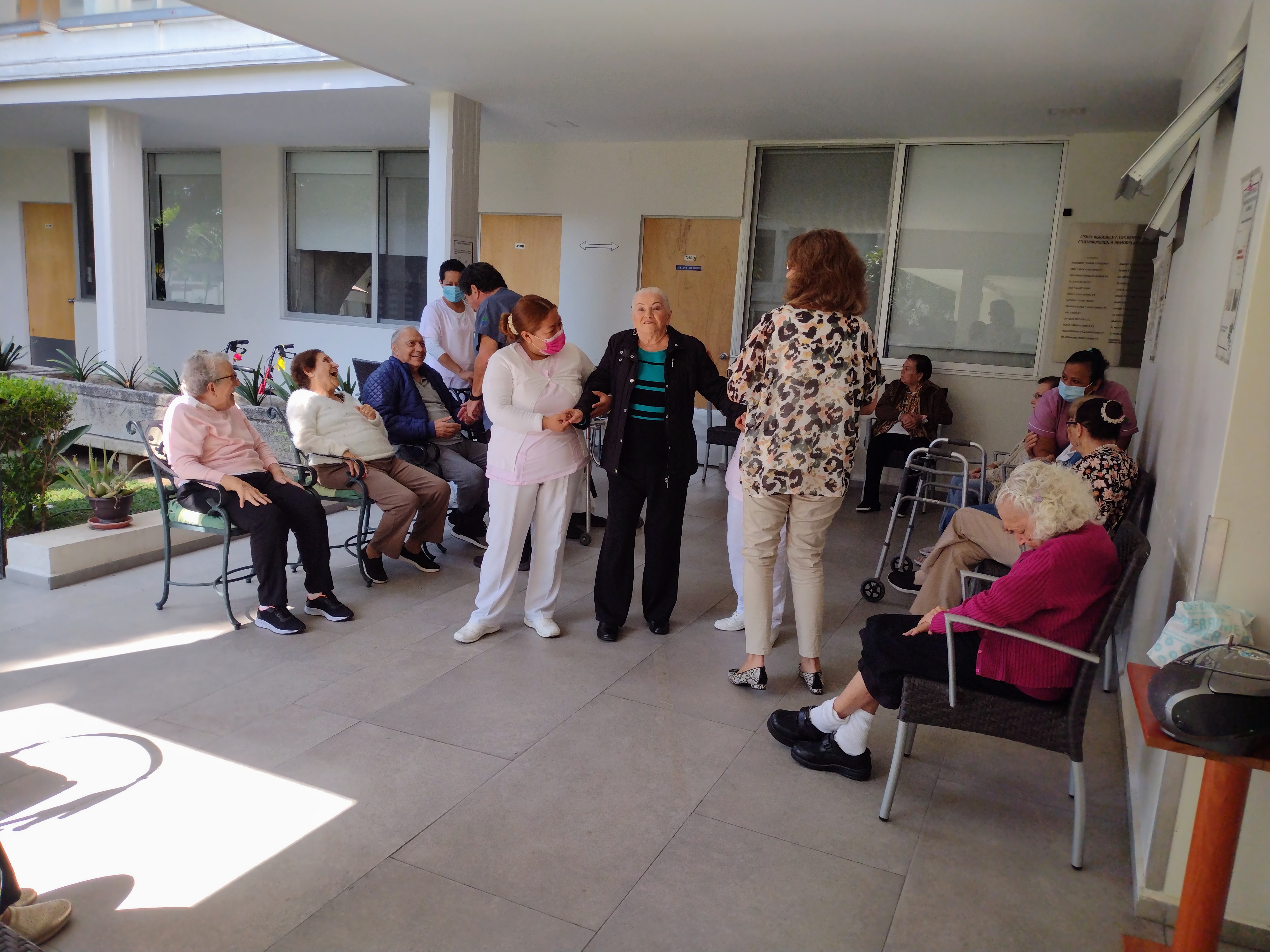
I must say, after spending time in Mexican government (DIF homes – department of social services), non-profits (mostly run by nuns), and for-profit homes in 16 states of Mexico, Eishel Nuestro Hogar (Eishel Our Home) in Cuernavaca, is a standout.
Possible reasons why…
This residence functions well because those in charge are serving older adults as their mission. And with compassion. In this way, residents and personnel feel at home despite any minor shortcomings.
At Eishel the director, the physician in charge, and the Board of Directors are transparent. They welcome all who wish to learn about their residence. You may eat a meal, spend the night, or stay longer if you wish to acquaint yourself with the environment. This is unusual.
Few homes in Mexico choose to be as open. Few homes have web pages with authentic photos. For financial and social reasons, many Mexican homes, if they have an Internet presence, choose Facebook.
Culturally, Jewish people are super organized. They care and support each other well. Yes, this is a biased statement, yet it is based on years of observation. (I was NOT brought up in the Jewish faith).
Let’s do a walk through of Eishel Nuestro Hogar/Eishel Our Home :
First, I was expected. Nice !!
For obvious reasons, there is serious security. The modern compound is walled. Within double-locked doors the guards reviewed my ID, then called the administrator.
I was shown to the courtyard where I waited on a comfortable bench with a view through glass front doors to the synagogue. The air was crisp, dry, and warm. (Cuernavaca is known for its spring climate throughout the year).
Synagogue at Eishel Nuestro Hogar, Cuernavaca, Mexico
Within minutes the administrator (who came on her day off) greeted me with the physician in charge. They generously gave their time for a detailed and meaningful tour of the entire compound.
From an American point of view Eishel is a CCRC – a Continuing Care Retirement Community with independent living, assisted living, rehabilitation, nursing care, and end-of-life accomodation. The difference from most CCRC’s in the U.S. is that you offer a monthly donation, and do not own.
Eishel is an A.C., Asociación Civil, a non-profit that has existed in various forms since 1947, 75 years ago. (The first recognized assisted living with 24/7 care in the U.S. opened in Portland, Oregon in 1981).
The Eishel campus has lovely manicured grounds, two modern two-story residences, an outdoor theater, a sculpture garden, an herb garden, two gazebos, and a wall of plaques recognizing the donors.
A gazebo at Eishel Nuestro Hogar facing the independent living indoor/outdoor dining room
Eishel Nuestro Hogar Donor Garden
The fresh herb garden is maintained by residents, the chef, and kitchen staff. In addition to herbs there are tomatoes, lettuce, peppers, and more. Pineapples, blackberries and strawberries also grow on the grounds.
We visited residents in their comfortable airy rooms, the nursing floor, and stopped by the currently empty end-of-life suite with one large light-filled room for the resident patient and another room for his or her family.
Note : Even though some senior living administrators in Mexico have thought to create hospice within senior living, Eishel is the only residence I have visited that has sustained such a space. HOLA (Hospice of the Angels) tried this concept in their Morelia assisted living residence for two years during the pandemic. Unfortunately HOLA closed for a variety of reasons.
The nursing floor …
Eishel Nuestro Hogar Infirmary
Dr. Golub attending to patients in nursing floor day room at Eishel
Nursing floor dining room with views to nature and tables to accommodate reclining wheelchairs. Visitors from other countries have come to see the unusual curved tables so they might replicate similar practical tables in their nursing areas.
There are two sparkling, immaculate kitchens honoring kosher tradition.
Eishel’s current population of 72, with room for 140, is mostly Mexican. There are residents from Europe and the U.S. The languages most heard are Spanish, Yiddish, and English, in that order. Entrance is for anyone of Jewish faith either Ashkenazi or Sephardic. One must be 65 years of age, wish to live there, and agree to the rules. Persons with aggressive behavior or on dialysis are not admitted. Please see the web site which outlines requirements. Your monthly payment is a donation to the non-profit.
Photo of rehabilitation patio with Dr. Golub greeting residents, and Director Gonzalez in black and beige blouse dancing in front of a resident
Activities include movies (there is a theater), tai chi, trips, art classes, occupational therapy, and more. There is a library. A 70-year-old retired coffee table book author from Mexico City shared with me that he teaches writing. He lives at Eishel for « the fabulous year-round weather, intellectual conversation, the food, and the sense of community. »
According to the director, there is little staff turnover. Some employees stay 25 years.
Every two months Eishel publishes a full-color mini-magazine, a gazeta. There are articles by board members, residents, and staff on a variety of subjects.
Meaning of the name Eishel :
The Hebrew letters Eishel or Aishel (aleph, shin, lamed) are an acronym for Achila (feeding), Shtiya (drinking), and Linah (lodging). Since ancient times, Eishel denoted an inn.
In case you are wondering about population of Jews in Mexico and the rest of the world :
According to the Pew Research Center there are about 14 million Jews around the world representing 0.2% of the global population:
“While Jews historically have been found all around the globe, Judaism is highly geographically concentrated today. More than four-fifths of all Jews live in just two countries, the United States (41%) and Israel (41%).”
According to American Jewish Aging Services there are over 95 Jewish organizations or homes serving older adults in the U.S.
According to Wikipedia approximately 70,000 Jews (both Ashkenazi and Sephardic) live in Mexico (primarily Cuernavaca, Lake Chapala, Mexico City, Puerto Vallarta, and San Miguel de Allende). Another 230,000 live in Argentina.
The first Jews, known as Crypto or Converso Jews because they converted to Catholicism during the Inquisition in Portugal and Spain, came to the Americas with Christopher Columbus on his first expedition (according to Wikipedia and information from the University of Florida George A. Smathers Libraries). They were called cryptos because they secretly practiced their faith but were publicly Catholics.
Summation
My visit was satisfying. Eishel is an unusual Mexican senior home. Its administrators show they are vested in well-being. At this time the residents are mostly Jewish Mexicans and the help is mostly Mexican. The atmosphere is comfortable and convivial, likely the result of residents having much in common. The true reveal would be living there or visiting Eishel over a period of time.
Wendy Jane Carrel, MA, is a Spanish-speaking senior care specialist and consultant from California. She has travelled Mexico for several years researching health systems, senior care, and end-of-life care to connect Americans, Canadians, and Europeans with options for loved ones. She has assessed hundreds of senior housing choices in 16 Mexican states. Her web site is https://www.WellnessShepherd.com
One hour south of Guadalajara, Mexico’s second largest city, is the quaint village of Ajijic, a Pueblo Magico. For those of you who have visited or lived there, you have may have heard or read that the village is also known as the “City of Fallen Women.”
The Fallen Women are foreigners. Foreigners who have tripped on river rock, rough cobblestone, or lone pieces of steel rebar. They have broken hips, femur bones, wrists, or sadly lost their lives with complications from falls. Fewer men fall. As I write it is reported that one older adult male was walking in Chapala Centro, three miles from Ajijic, at 8:19 a.m. Sunday, September 26. According to a witness, he fell, hit his head, and died.
A few years ago, I felt just as sorrowful when I learned a similar story. I think of it often. A 60-year-old male fell in Ajijic, impaled his head on river rock, and died. Someone reported he was fit and had no health conditions. That may be true or not. No matter what, surviving a fall or dying from a fall is sad and painful, an event to be avoided no matter where you live. But if you are in Mexico it’s good to have a plan if you do fall and to walk with awareness even though it is easy to get distracted.
The worst-case scenario is falling and dying alone. In Mexico your body will be transported to the closest SEMEFO (Servicio Medico Forense or Medical Forensic Service) for an autopsy and your family and friends will have quite a challenge retrieving your corpse. Even if your government makes a call to assist, your government does not interfere or have influence with the Mexican government SEMEFO unless you get lucky.
Several ladies I’ve met at Lake Chapala have fallen on the street or at home. Fortunately, they were in company or had cell phones to call for help. They also had immediate access to doctors. They or companions had pre-organized for such an event, just in case. Recovery was rarely easy but thankfulness for rescue is the continued message.
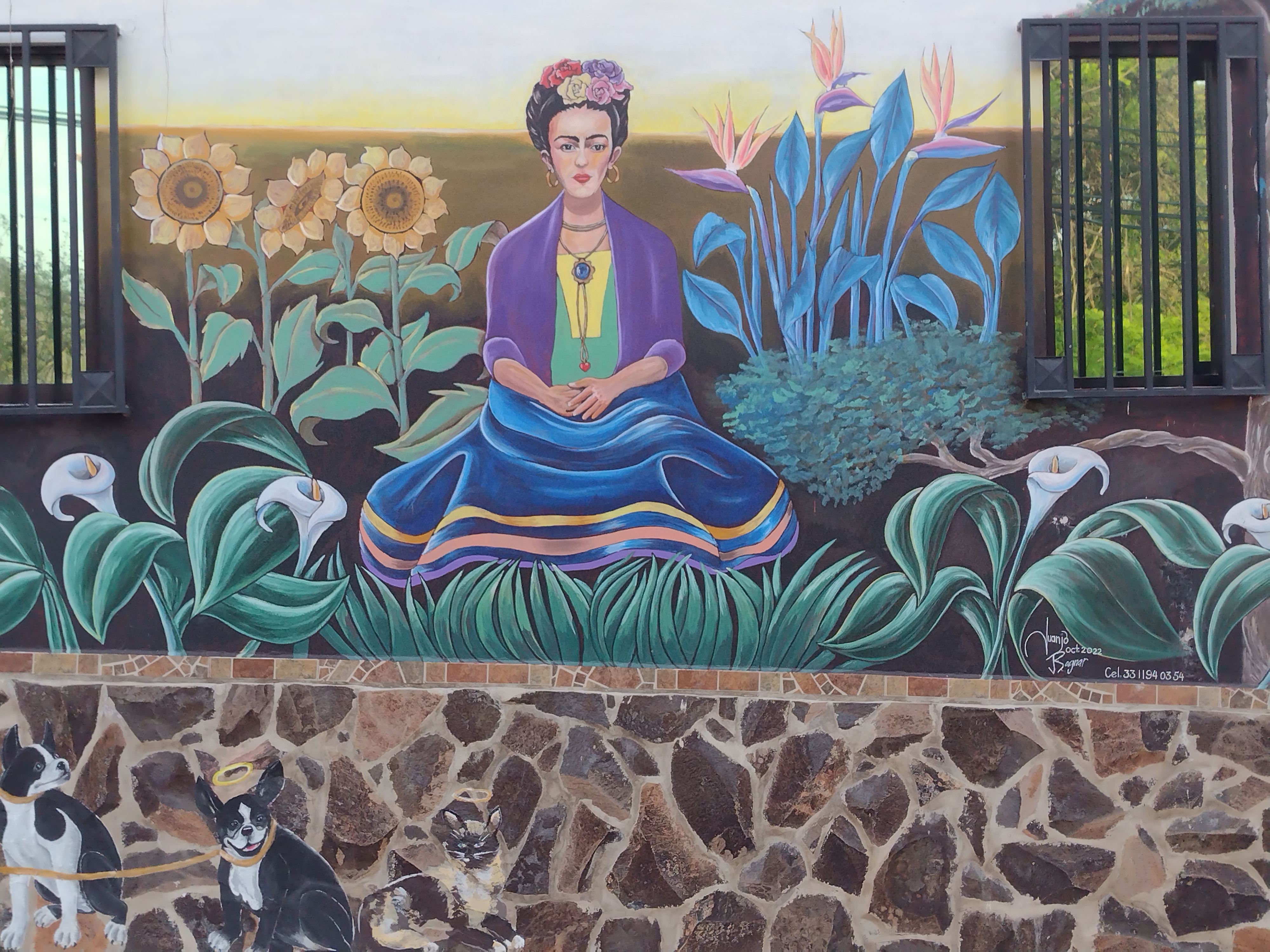
A reminder for why I do not wish to fall anywhere, I wish to keep dancing. This lovely mural may be found at the base of Colon Street in the Pueblo Magico of Ajijic.
Fall Awareness Week was commemorated September 18-24 in the U.S.
Throughout the coming fall/autumn weeks fall prevention workshops are being held at senior centers in the U.S. Fortunately, in Mexico, most expat communities offer balance and exercise classes as well as services with local physical therapists.
Current statistics related to older adults falling in the U.S. (and Mexico):
The U.S. Center for Disease Control (CDC) and innumerable other studies report the following:
1 in 4 older adults fall each year
1 in 4 falls result in an increased level of care
Every 19 minutes an older adult dies from a fall (in the U.S.)
Persons with Alzheimer’s and other forms of dementia fall more, and person-centered care is critical for them
Falls are the leading cause of both fatal and non-fatal injuries for older adults
The cost of falls is $50 billion per year across the U.S. health system – emergency rooms, hospitals, rehab, and more.
Mexico’s INEGI (National Institute of Statistics and Geography) has population stats, aging stats, and mortality figures (but not by cause). On the Instituto Nacional de Geriatria Mexico City website I was unable to discover statistics related to falls. Studies of the last three years have focused on poverty, nutrition, care of chronic illness, and COVID. Nonetheless, falls happen in Mexico, and not just to expats.
With care and attention most falls can be prevented. When they are prevented, they save you and healthcare systems high costs financially, physically, and emotionally.
What should anyone of any age, especially an older adult, pay attention to now? Preventive measures?
1. Assess your fall risk. Protect your bones. Many older adults are not aware they may be walking around with osteoporosis, also known as the “silent disease”. The cost of a bone density test in Mexico is reasonable (for most). Discuss the results with your physician, chiropractor, or naturopath. Read about diet, exercise, supplements and more.
2. Join an exercise program focused on building balance and strength. Expat communities throughout Mexico offer pilates, yoga, training at gyms, and specialized classes for older adults at senior centers known as “centros geriatricos.” As mentioned, physical therapy may also be helpful.
3. Dress sensibly. Wear clothing you will not trip on. Wear sensible shoes that support and cushion your feet. Flip flops, for example, are not the best choice of sandal at a certain age, easy to twist an ankle.
3. Check your vision, hearing, and medications. Some medications may cause weakness, fogginess, forgetfulness. Be aware.
4. If you do fall, yes, there could be an emotional toll. You may feel shame or anxiety. Even if the fall is unwitnessed, best to share the information with chosen healthcare professionals and friends. It is fine to self-recover but letting someone know what happened will create a history to refer to and will assist healthcare professionals should you fall again (hopefully not).
5. Consider using a cane or walking stick. No need to stay inside. Movement is more important than no movement. Walk in safe places without skateboards, bicycles, and other moving forces that could harm you.
6. Consider making where you live safe and barrier free by following universal living design standards. Wood floors and linoleum are preferred as the materials cushion falls to some degree. No slippery or wet floors. Well-lit rooms and corridors. Grab bars. See links below in Resources for ways to create an environment friendly to falls and most disabilities.
7. Companions or buddies to keep an eye on you. Whether you are a solo ager, married, or with a significant other, it is wise to have at least two persons you can call for rescue. Make that three, with your doctor. As the National Council on Aging suggests, “make fall prevention a team effort.”
Wishes for your wellness and no falls! Please be careful.
Safely You is a San Francisco-based company focused on preventing falls in senior living and skilled nursing. Their well-documented report “The 2022 State of Falls” is available for download on their website. https://www.safely-you.com/
Wendy Jane Carrel, MA, is a Spanish-speaking senior care specialist and consultant from California. She has travelled Mexico for several years researching health systems, senior care, and end-of-life care to connect Americans, Canadians, and Europeans with healing options for loved ones. She has assessed hundreds of senior housing choices in 16 Mexican states. Her web site is https://www.WellnessShepherd.com.