Exporting Our Elders, Finding Eldercare, Health Care Planning Mexico, International Retirement, Long-Term Care, Mexico Senior Living, U.S. Caregiving Crisis

Finding Eldercare in Mexico and Beyond: What Recent Media Interviews with Me and Others Reveal About the U.S. Caregiving Crisis

When it comes to navigating the older adult care crisis in the U.S., there is no single solution. Every family and elder I speak with faces a unique, incredibly complex set of circumstances. When they cannot find viable solutions at home, they are increasingly searching for affordable care elsewhere—mainly long-term care in Mexico due to its proximity and climate, or in nations where they qualify for a second heritage passport.

In recent magazine and podcast interviews, we dive into this international perspective—unpacking real-world pros and cons of domestic care and the honest truths of crossing borders for help.

In 2024, I wrote an extensive piece about eldercare beyond U.S. borders and why families are running out of options at home: Finding Eldercare/Senior Care Abroad.

That post brought insightful journalists to my door.

The first was Hikari Mae Hida, an international journalist and translator who deeply understands caregiving through her own global reporting and family experiences. Her well-crafted story for Deseret Magazine, (apologies as Deseret requires registry to read) “The Great Global Caregiving Crisis,” masterfully outlines the high-stakes families face. The article opens with my serious question:

“What if we live a long life and are abandoned or without funds despite our best efforts?” For Wendy Jane Carrel, a senior care specialist with over two decades of experience who operates the consulting service Wellness Shepherd, this question is a looming reality.

I am grateful to Hikari for quoting me throughout and bringing vital mainstream attention to this systemic issue. You can explore more of her work at Hikari Mae Hida’s Official Site.

International social impact consultant Anna de la Cruz published a powerful, deeply personal account of the care economy for Slate. Her article, “Exporting Our Elders,” (sorry, no complimentary read from Slate),highlights my mission at Wellness Shepherd to help families discover compatible, affordable long-term care workarounds abroad. Thank you, Anna, for sharing your heart-wrenching story as a sandwich-generation caregiver balancing young children while managing complex, high-stakes medical logistics for your disabled brother and your parents. Learn more about Anna’s consulting work at Anna De La Cruz | Social Impact Consulting.

Following that piece, Anna Sale—the creator and host of Slate’s Death, Sex, and Money podcast—invited Anna de la Cruz to share her story on air. The episode also featured Laura Silverstein, a Seattle-based Aging Life consultant who helped design the care plan for Anna’s mother, and me.

My reflection “humane eldercare has often become a luxury item” ended up as the header for the episode. A quick disclaimer if you listen to the podcast: you may wonder if I was recovering from watching a weepie movie! Between my “stealth-whisper” and sounding unrecognizable – I usually deliver actionable advice and solid support nuggets – I have determined host Anna Sale’s famously hypnotic, soothing voice must have lulled me into a trance.

You can hear the full episode on Slate: Humane Eldercare Has Often Become a Luxury Item

Ultimately, my hope is that these stories continue to spark an urgent conversation: the critical need for a more affordable, dignified, and humane care infrastructure throughout the nation.

© Wendy Jane Carrel 2026

Wendy Jane Carrel, MA, is a trusted Older Adult Advocate and Cross-Border Consultant who has hands-on experience with healthcare systems, Aging in Place, international retirement transitions, long-term care, palliative care, and end-of-life care in Mexico, Ecuador, other nations, and the USA. She provides informed, thoughtful guidance and curated, compatible care options for reitrees, solo agers, families, and their loved ones. She is a speaker and published author on subjects related to senior well-being and a trauma-informed end-of-life doula. Wendy’s web site is http://www.WellnessShepherd.com.

Resources:

https://www.businessinsider.com/long-term-care-costs-growing-problem-for-americans-2026-8

https://www.businessinsider.com/eldercare-crisis-long-term-care-costs-families-2026-8

https://www.elderlawanswers.com/long-term-care-costs-are-hollowing-out-generational-wealth-21539

https://www.usatoday.com/story/money/2026/03/12/aarp-us-costs-middle-class-home-care-crisis/89085293007

https://www.aol.com/articles/dolly-parton-said-her-last-163041000.html Neal K. Shah on caregiving and Dolly Parton’s comments about caregiving her husband, an important part of the care conversation

https://www.thetimes.com/money/family-finances/article/care-costs-retirement-thailand-abroad-expats-personal-finance-695jxcvcn An older adult couple finds an affordable solution with a positive outcome at Care Resort Chiang Mai, Thailand (sorry, there is a paywall with The Times)

Aging, Alzheimer's, Dementia, Health & Wellness Mexico, Long-Term Care, Mental Health, Mexico, Senior Care Mexico

International Geriatric/Gerontology Conference Guadalajara 2016 – Focus on Dementia

The Hospital Civil “Fray Antonio Alcalde”, also known as the Old Civil Hospital, produced its 21st International Geriatric and Gerontology Symposium July 7-9, 2016, at the Hilton Hotel auditorium in Guadalajara, Mexico. The theme was “Enfermedades Neurodegenerativas en la Vejez”, or, Neurodegenerative Illness in Older Adults.

There were about 250 attendees as well as one pharmaceutical company (Asofarma de Mexico, S.A.), one hospital supply company from Switzerland, and a private pay day care senior center (www.vidavi.mx) offering business cards, pamphlets, free pens, and carry bags to participants in the registration area.

Four geriatric physicians from the hospital organized the event – Dr.David Leal Mora (the international section), Dr.Hector Ivan Cruz Neri, Dr. Julio Alberto Dias Ramos, and Dra Rocio Garcia Talavera. Guest speakers were from Guadalajara, Leon, Mexico City, and the U.S.

Old Civil Hospital Geriatrics Symposium, Guadalajara, 2016
Old Civil Hospital Geriatrics Symposium, Guadalajara, 2016   Dr. Rocio Garcia is at the podium, Dr. David Leal is the first man on the left with dignitaries from the public hospital system

There were memorable talks about the Use and Abuse of Antipsychotic Drugs, Managing the Symptoms of Parkinson’s, When a Day is 36 Hours, Evidence-Based Geriatrics, Government Assistance Programs for Older Adults, and Can We Prevent Dementia?

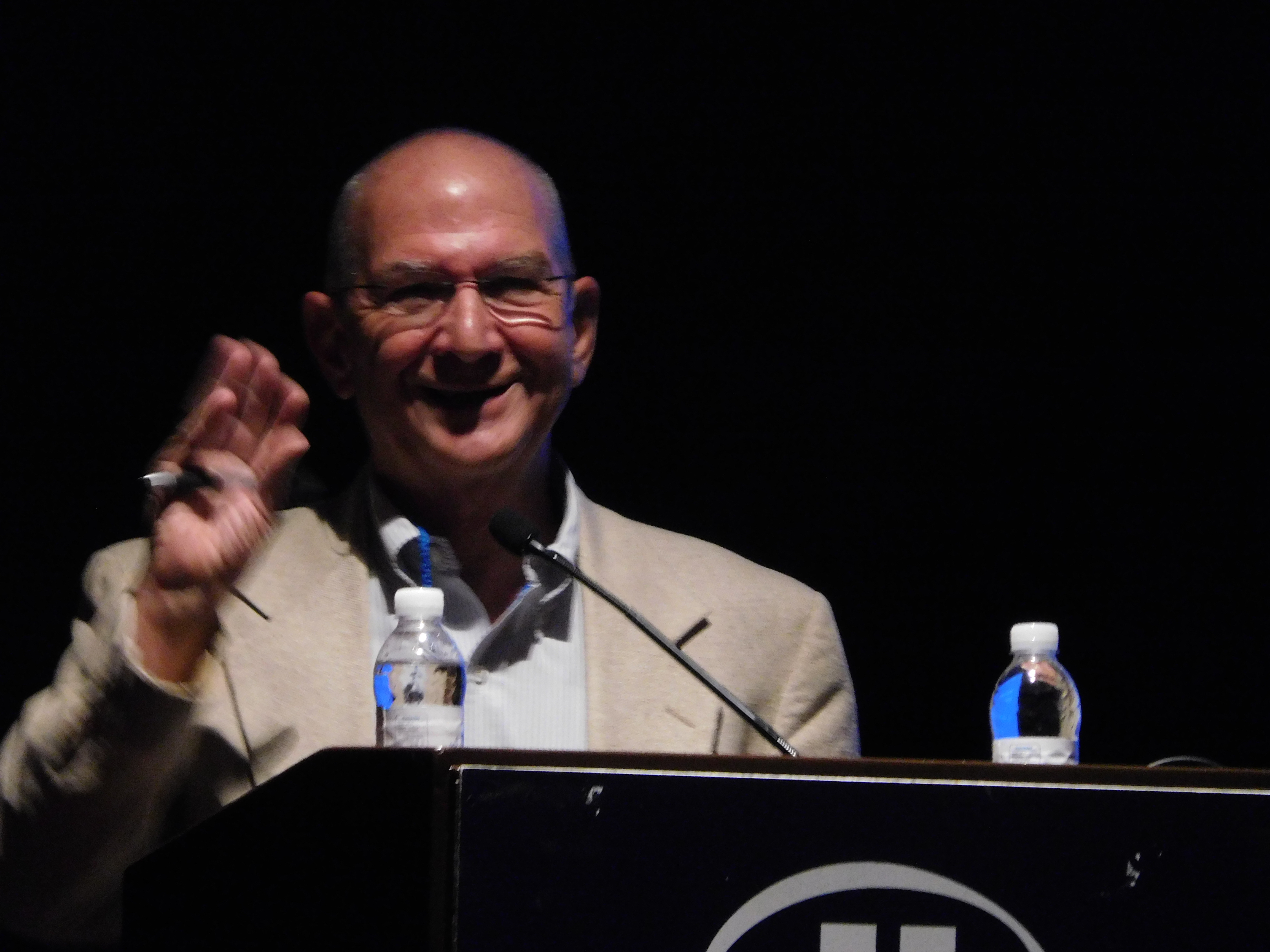
Peter V. Rabins, MD, MPH, Professor of Psychiatry, Johns Hopkins
Peter V. Rabins, MD, MPH, Professor of Psychiatry, Johns Hopkins, and author


What stood out most were the physicians, both American and Mexican, who are exploring and interested in alternative non-drug options for dementia prevention. The common theme – we must all be vigilant in keeping our cognitive skills sharp to the very end, if possible.

Topic-Related Resources:

Israeli physicians have developed a surgery to remove shaking due to Parkinson’s disease http://healthamazing.co/2016/07/13/first-in-israel-surgery-that-removes-shaking-due-to-parkinsons-disease/

http://www.latimes.com/opinion/op-ed/la-oe-stone-solvadi-drug-pricing-20160705-snap-story.html   By Daniel Stone, MD, internal medicine and geriatric specialist, Los Angeles, and, Pres of LA Society of Internists. Another physician calling for a stop to the increasing costs of drugs and “pharma greed”.

http://www.AlzheimersDementiaSummit.com focusing on dementia prevention and alternative remedies that already exist for protecting our brains and our minds. Produced by Jonathan Landsman, a natural health advocate with physicians and others as guest speakers – Dr. Russell Blaylock, Dr. David Jockers, Donna Gates, Dr. Mark Hyman, Josh Axe, Sayer Ji, Michael T. Murray and many others. I missed this July 2016 summit on line but believe it might be available to listen to.

http://goodlifeawareness.com/men-may-be-able-to-avoid-dementia-by-marrying-intelligent-women-researchers-say/  Don’t know if the studies are true, but this article caught my attention. 😉

http://yournewswire.com/harvard-professor-says-prescription-drugs-are-killing-population/utm_content=buffer7c70d&utm_medium=social&utm_source=facebook.com&utm_campaign=buffer   article is not professionally written, has a sensational headline, and, requires quotes and some fact-based evidence.
http://seniorhousingnews.com/2016/08/17/communities-turn-to-marijuana-to-treat-memory-care-residents/?_hsenc=p2ANqtz-9Kxe5ppADrvnIp22h1hj0wP4zRi3r8rV1Y_cRXvTORbY5Zis0oK9cbZtcGubP25n_orIdb35T0M8nX7GJuMFljm_Bygw&_hsmi=33083300    article about successful use of marijuana (with family permission) instead of drugs to calm patients in northern California dementia care residence
Aging, Ecuador, Ecuador Senior Living, End-of-Life Care, Health & Wellness Mexico, Long-Term Care, Palliative Care

Palliative Care Training for Healthcare Professionals in Cuenca, Ecuador at Hospice Foundation FASEC

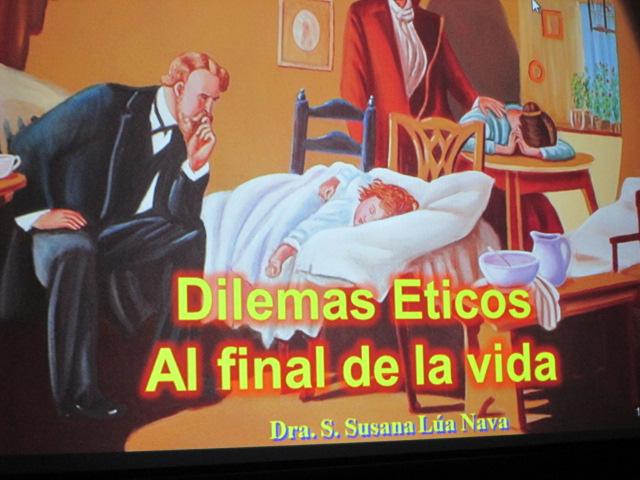
Ethical dilemmas at End-of-Life

FASEC (Fundacion al Servicio del Enfermo de Cancer/Foundation Serving Those Ill with Cancer), together with Care Partners International of Washington state, and the University of San Francisco, Quito hosted a palliative care training in Spanish for five days, April 20-24, the first in a series of four trainings for physicians, nurses, psychologists, volunteers, and others. The well-attended event drew healthcare workers from Cuba, Cuenca, Europe, Mexico, and the U.S.

The main speaker was Dr. Susana Lua Nava, a highly regarded Mexican educator and nun who teaches throughout Mexico and at UAG (Universidad Autonoma de Guadalajara). She runs a hospice, Juntos Contro El Dolor (United Against Pain), with three nurse nuns and a staff of volunteers. Dr. Lua and her team are dedicated to the alleviation of pain in all – no matter a patient’s background, religious belief, or economic position.

Dr. Lua, author of El Enfermo, Terreno Sagrada/The Ill, Sacred Terrain, offered several slides of her work in Mexico and Spain, gave stunning examples of patient care, and spoke about dying at home or in a hospital (advantages and disadvantages of both), myths and realities on the use of morphine, the art of sharing sad news, and preparing the spirit, among other subjects. The most riveting discussion was on ethical dilemmas, a subject she teaches often – why and who one tells or does not tell of their terminal condition based on socio-economic backgrounds, culture, expectations, and other factors.

The next FASEC trainings are scheduled for the second week of June, the third week of July, and a week in October.

For contact information and more story details please click on the link below.

http://cuencahighlife.com/cuenca-palliative-care-training-educates-the-public-and-healthcare-community-first-of-four-training-session-sponsored-by-fasec/