
Aging in Community, West Hollywood, CACA, Aging in Place, West Hollywood, CA, Older Adult Accessibility, Older Adult Advisory Board, West Hollywood, CA, Solo Ager West Hollywood, CA

West Hollywood Celebrates Aging in Place During Older Adults Month May 2025

City streets were abloom with jacaranda and magnolia trees, and sidewalk gardens featured roses, brugmansia, and honeysuckle as the City of West Hollywood, California celebrated Older Adults Month in May 2025.  

Aging in Place/Aging in Community resources and services were highlighted, and the city honored a senior who has made a difference in the community.

Since 2016, the Aging in Place/Aging in Community Strategic Plan created to accommodate the anticipated silver tsunami (the worldwide phenomenon of older adults living longer) has been a stand-out initiative. The goal: offer quality-of-life and a sense of control for aging where you live with an extensive array of easy access support services. According to the 2020 census the population of West Hollywood is around 36,000 with older adults 65+ representing 20% of residents (7,200).

A recent West Hollywood Aging in Place success story:

A 92-year-old solo ager was hospitalized after breaking a hip and femur bone. From the time she entered an in-patient rehab she knew she wanted to be at home. Any other place? She felt her life might unravel. The challenge? How to access the only bathroom located upstairs in her one-bedroom apartment. With the good offices of a Jewish Family Services social worker, the woman’s health care advocate who lives almost an hour away, and the non-profit DCRC (Disability Community Resource Center) which serves the disabled, a stairlift was installed so she could continue to enjoy her home of over 50 years. Her health and her spirits improved greatly over a period of months. So greatly that she was able to give a poetry reading from her recently published book at a southern California library the last week of May. She continues to use a walker. The stairlift allows her comfort for healing and self-sufficiency.

Note: In 2022, the City of West Hollywood received the SCAN Foundation Innovation Award for “embracing aging” in one’s home throughout a person’s lifespan.

On May 14 at 2:00 p.m. at the televised Older Adult Advisory Board (OAAB) meeting, Richard (Ritch) Colbert a chaplain at Cedars-Sinai Medical Center and 39+ year counselor for the recovery and LGBTQ communities received the Senior of the Year Service Award with a proclamation presented by Mayor Chelsea Byers and OAAB Vice-Chairman RJ Holguin. Story plus photos at this link: https://wehotimes.com/west-hollywood-honors-richard-colbert-at-20th-annual-older-adults-service-awards/

Older Adult Advisory Board Chairman John Allendorfer deftly guided the televised meeting. During Public Comments Disability Advisory Board member Rick Watts and Human Services Commission member Karen Eyres spoke movingly about current concerns, mainly proposed Medicaid cuts which would harm children, the disabled, and older adults. Medicaid, known as Medi-Cal in California, currently provides essential health care coverage including support for vulnerable older adults for long-term care in nursing homes.

West Hollywood Older Adult Advisory Board members at the 20th Annual Older Adult Health Fair on May 8, 2025 in the photo below. Missing are members Nadia Sutton and A. Lee Walkup.
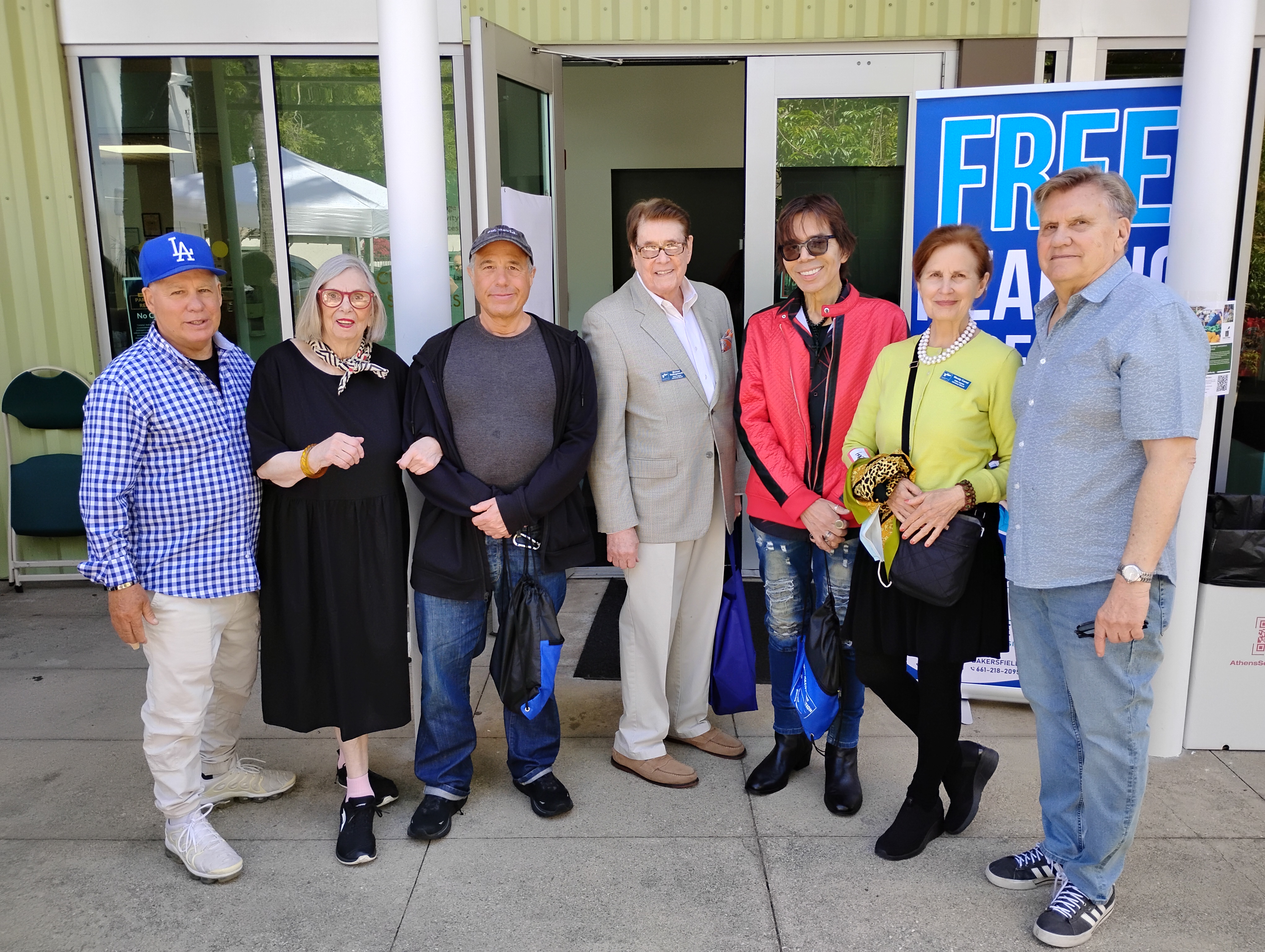
On May 8 several hundred seniors convened at Plummer Park for the 20th Annual Older Adult Health Fair co-sponsored by Cedars-Sinai Medical Center and Jewish Family Services. Attendees learned about and/or applied for assistance with an array of non-profits:

Access LA transportation services for the disabled

Bez Tezek Free Legal Services

City of West Hollywood Rent Stabilization Department “Know Your Rights” Workshop

One Generation’s program registration for utility assistance and energy conservation

Jewish Family Services social worker support

Jewish Family Services nutrition education and meals at centers around the community

Jewish Family Services exercise and crafts classes, a social engagement monthly meeting, classes in digital education 

Maple Counseling mental health support

Project Angel Food’s medically tailored home-delivered meals

The California Hearing Center, a family business, offered free hearing assessment tests

Others   

Most of these programs/services are free or donation based.

Not present at the fair in 2025 but present last year was Metro.net the LA County bus and rail transportation system which continues to offer West Hollywood older adults $20/month complimentary travel on Metro. Seniors TAP cards are reloaded with the city.

According to Rent Café, approximately 80% of West Hollywood residents are renters. West Hollywood’s Rent Stabilization Department gave a presentation at the fair. Grassroots community organization Coalition for Economic Survival (CES), focused on supporting tenant’s rights since 1973, was also present.

Cedars-Sinai Medical Center offered:

blood pressure readings, blood glucose readings

cholesterol readings, heart rate reports

consultations with an MD

participation for those interested in a Cedars-Sinai free genetic testing research project

The Care Team, active in West Hollywood since the fall of 2023, and at the fair for the first time, offers mobile behavioral health support in partnership with www.sycamores.org. A two-person team cum phone coordinator 24/7, holidays included, mans each shift. They work in tandem with the County Fire Department’s Station 7 & 8 in West Hollywood, and the West Hollywood Sheriff’s station to respond to crisis situations, especially assisting the unhoused and other vulnerable populations “in an atmosphere that empowers”. The team also conducts follow-up care and wellness checks for all who call. The Care Team number is (323)540-6392. Also see www.weho.org/careteam.

Preparing for the West Hollywood 20th Annual Senior Health Fair on May 8 in the photo below are Older Adult Advisory Board Member Pat Dixon (on the left), honored with the 2025 LA County Older Adult Service Award, and Francisco Gomez, Acting Strategic Initiatives Supervisor, City of West Hollywood currently dedicated to the Holloway Interim Housing Program.

A community Aging in Place plan is a privilege. Nationwide surveys reveal 90% of the older adult population prefers to age in place.

West Hollywood is a small, young city of about two square miles sitting on the unceded land of the Gabrieleño Tongva and Gabrieleño Kizh peoples. It is surrounded by the City of Los Angeles. Los Angeles, founded in 1781, has an estimated population of around 3.8 million. Two older adults from Culver City (20-30 minutes away) who attended the health fair last year and this year shared how they wish they could move to West Hollywood. Other older adults who live in Los Angeles county and neighboring Los Angeles have shared similar thoughts with this writer after witnessing and comparing services. (Yes, a smaller population creates a more tenable situation).

Photos by City of West Hollywood photographer Joshua Barash of Older Adult Month May events may be found online at https://www.flickr.com/photos/weho/albums/

Conclusion:

In its 40 years as a city, West Hollywood has created a strong bank of social service resources for all citizens, not only seniors. Its Aging in Place/Aging in Community plan won the SCAN Foundation’s Innovation award.   

Other age-friendly cities actively developing notable services for health, housing, participation, security, transportation, and more are Rochester, NY; Grand Rapids, MI; Madison, WI; Provo, Utah and others. On the This Old House survey (see resource section below), West Hollywood is listed as number seven out of 10, mostly because the cost of living in California is higher compared to the rest of the cities on the list.

Honoring contributions of older adults each year and addressing their needs in aging officially started by federal government decree in 1963. At that time 17 million older adults were 65 or older, one third lived in poverty, and few programs existed to meet their needs. Today there are approximately 60 million older adults in the U.S., nine million in the State of California.

Disclaimer: The author has lived in West Hollywood, CA since graduate school and has a bias for a community she appreciates living in.

© Wendy Jane Carrel, 2025

Wendy Jane Carrel, MA, is an older adult health care advocate, advisor, and care coordinator from California. She has conducted due diligence for senior living and retirement on five continents and is passionate about supporting families and their elders. She provides informed, attentive, compassionate guidance and curated options for aging in Ecuador, Mexico, and other destinations both domestic and abroad. She is a speaker and published author on subjects related to senior well-being. Wendy’s web site is https://www.WellnessShepherd.com 

Resources:

https://acl.gov/oam/history# Administration for Community Living website (formerly Administration on Aging website)

https://www.democratandchronicle.com/story/news/2024/12/05/rochester-ny-named-best-in-the-u-s-for-aging-in-place-heres-why/76733432007/ This Old House’s 10 best cities for aging

https://scag.ca.gov/sites/default/files/old/file-attachments/west-hollywood-he-0421.pdf West Hollywood renter statistics from the Southern California Area of Government

https://www.weho.org/Home/Components/News/News/10603/23 Scan Foundation Award news

https://en.wikipedia.org/wiki/West_Hollywood,_California

Abode Contemplative Care Texas, Community Hospice, Death and Dying, End-of-Life Care, End-of-Life Doula Certification, Hospice, Social Hospice

Support for Dying via Social Hospice – A Snapshot from Abode Home, Texas

What is social hospice?

In the U.S. a social model of hospice (SMHh as written in academic and medical journals) is described as a dedicated home with 24/7 non-medical personalized care for end-of-life when dying at home becomes unmanageable. It is a non-profit service, often at no cost, in collaboration with support from a medical hospice service (usually the Medicare hospice benefit). It is sustained by community philanthropy, usually with a large base of volunteers devoted to comfort care and the gentlest passage possible.

In other words, end-of-life support by the people for the people.

Social Hospice Model

Social models for the dying have been recorded since 3000 B.C. (ancient Egypt). Every continent has had and still has some form of community care for the dying.

In modern times, the term social hospice was part of an obscure movement following the “good death” or “death with dignity” efforts of the 1950’s and 60’s. The goal was to return the dying process and choices to the individual.

The first U.S. hospices of the 1970’s were non-profits. Their mission was to create a caring, supportive environment in a residence specifically devoted to end-of-life care. In the 1980’s, social hospice for HIV/AIDS came into existence. The model includes grief and bereavement support for families.

The current U.S. landscape is dominated more and more by for-profit hospices and conglomerates, often funded by Wall Street players and private equity focused on high profit margins.

There are not as many community-based offerings as there once were.

****This situation may reverse and evolve based on growth in preparation for dying education, the end-of-life doula movement, and more awareness about the benefits community models provide. Why? Because they provide an unmet need.

Where may you find a social model hospice in the U.S. and who is social hospice for?

The home I know best, as I have participated in their on-line educational gatherings, is Abode Contemplative Care for the Dying in San Antonio, Texas.

Abode Home is affiliated with the Omega Home Network (based in Tulsa, Oklahoma), the largest U.S. social hospice network promoting the development and expansion of community homes for the dying. There are currently 74 homes found in 27 states, others are in development. https://www.omegahomenetwork.org/

Omega Homes generally receive solo agers who do not have support for dying at home, the dying whose family no longer has personal or financial resources for 24/7 care, and the homeless.

Here is a bird’s eye view of Abode Contemplative Care Home in San Antonio. There are others just as precious. Photo below courtesy of Abode Home.

Even though I live in both California and Mexico focusing on services for senior care and end-of-life, I continue to follow how others create and sustain community care.

I wish such sustainable community care would be available in every country and to every individual.

As a solo boomer (no spouse, no children, no fallback) I have been contemplating my demise for more than 25 years – I believe in planning ahead when possible.

If I lived in Texas I might choose Abode’s sacred, supportive care based on the energy of light of the CEO, the Board of Directors, the staff, the End of Life Navigators, and the volunteers.

With great pleasure, I have participated in Abode Home’s on-line discussions hosted by CEO Mary Thorsby who welcomes all open-heartedly. She and her team send out meaningful, inviting newsletters, quarterly reports, and raise funds to sustain their generous service.

When I first learned of Abode Home I was attracted by the pastoral-looking watercolor rendering, photos of the garden, the words contemplative care, but most of all Abode’s transparency and community engagement. 

The home is a sanctuary – a quiet dwelling surrounded by nature with an intimate atmosphere, light in each of the three rooms, and, an inclusive presence.

Abode Home collaborates with all the San Antonio medical model hospice providers who send physicians, nurses, and medications.

Comfort care is provided 24/7 at the residence by five full-time staff, four part-time navigators, and 70 volunteers (15 of whom are Board members) in eight hour shifts. “It’s a grass roots team effort different from the medical model, and, it’s a mission,” shares CEO Mary.

Abode Home is celebrating its 10th year serving the public.

Here are some of Abode Home’s supportive activities for their end-of-life guests and the community-at-large:

Bedside yoga

Book Club – book study with End-of-Life titles

Caregiver guidance for supporting oneself through caregiving

Contemplative Drumming

Education via on-line Zoom meetings and gatherings at the home

Death Café second Saturdays of the month

Dementia series with speakers from the community

Dia de los Muertos celebrations each fall

EOL (end-of-life) Doula trainings and EOL Doula Certifications – teaching others how to be with dying and dispatching them to the community-at-large

Fundraisers – a yearly Spring Art Show & sale; a fall online BIG GIVE

Luminarias lit in paper bags on stone walls around the property every December

Meditation via Zoom

Pull Up A Chair Dinners – highlighting alternative therapies for End-of-Life comfort

Reading of Names on All Souls Day, November 2

Sound healings

Staff and volunteer training

Threshold choir

Yes, donations are welcomed and appreciated.

See www.abodehome.org/donate, write info@abodehome.org, or see their Facebook page at https://www.facebook.com/ABODEcontemplativecare

Note: According to the National Vital Statistics System, about 35% of Americans die in hospitals, down from 48% in the year 2000. Almost 30% die in nursing or hospice homes. (This statistic does not include dying from a sudden accident, cardiac arrest, or stroke).

Social model throughout the world:

The social model has existed for millennia in various forms following cultural preferences and traditions.

“Egyptians, Orientals, Greeks, and Romans all used churches or temples as refuge for the sick or for pilgrims. Care of the sick was the responsibility of those believed to have special talents as healers, those who felt it was a religious duty, or diploma physicians who learned their craft based on scientific knowledge at the time,” writes Cathy Siebold in The Hospice Movement: Easing Death’s Pains (Twayne Publishers, New York, 1992).

Buddhist Emperor Asoka of India, (273-233 B.C.) known for a humanitarian approach to governance, created 18 shelters for aging, disabled, ill, and poor pilgrims who came to die and be cremated on the Ganges River. As we know, such homes exist now though they are mainly used by Hindus.

According to Wikipedia, historians believe the first “hospices” originated in Malta around 1065 during the Crusades. They were run by nurse nuns.

Summary:

The social hospice mission is to enhance quality of life to the end of life with compassionate care in a sacred manner regardless of ability to pay.

Local, direct, loving acts of care during life and at end-of-life are the foundation for a flourishing community.

© Wendy Jane Carrel 2024

Wendy Jane Carrel, MA, is a Spanish-speaking senior care advocate from California. She has travelled Mexico for several years researching health systems, senior care, and end-of-life care to connect Americans, Canadians, and Europeans with healing options for loved ones. She is a compassionate companion and palliative care liaison, legacy writer, co-founder of Café Mortality Ajijic/now Death Café Ajijic and founding member/speaker of the Beautiful Dying Expo (USA). She is a trauma-informed, gentle End-of-Life Doula (National End-of-Life Doula Alliance proficient), and a speaker and published author on subjects related to senior well-being. Wendy’s web site is https://www.WellnessShepherd.com

Resources:

https://www.omegahomenetwork.org/homes/ with a map of locations in the U.S. Scroll down to see the list plus website links to each.

https://www.youtube.com/watch?v=U7tHPCjEs7c  Marty Bazelak, MD, palliative care physician hosts guests from Clare House, Tulsa, OK, founders of the Omega Home Network of social hospices.

https://journals.lww.com/jhpn/abstract/2021/10000/social_model_hospice_home__a_concept_analysis.13.aspx  Social Model Hospice Home

https://journals.lww.com/jhpn/abstract/2023/10000/experiences_of_homeless_recipients_of_social_model.10.aspx

https://theprint.in/pageturner/excerpt/king-ashokas-hospitals-to-rural-health-mission-how-the-indian-medical-system-evolved/746649

https://history.stackexchange.com/questions/61776/did-the-emperor-ashoka-really-build-hospitals-or-is-that-a-myth

https://www.businessinsider.com/photos-varanasi-india-city-of-death-tourism-2023-6#the-city-is-dotted-with-ancient-temples-there-are-an-estimated-3600-in-total-5

https://en.wikipedia.org/wiki/Hospice

https://www.propublica.org/article/hospice-healthcare-aseracare-medicare “Endgame: How the Visionary Hospice Movement Became a For-Profit Hustle”  …… plagued by exploitation.  By Eva Kaufman, November 28, 2022.

https://cepr.net/report/preying-on-the-dying-private-equity-gets-rich-in-hospice-care/

https://www.cdc.gov/mmwr/volumes/69/wr/mm6919a4.htm# government report on U.S. death statistics from 2018 (not including, obviously, COVID death)

https://www.ncbi.nlm.nih.gov/pmc/articles/PMC9255424

https://www.reuters.com/article/idUSKBN1YF2Q5

https://caringheartandhands.org/social-model-hospice-homes-can-change-end-of-life-care/  excerpt from book by Karen Wyatt, MD, hospice physician

https://eolupodcast.com/tag/social-model-hospice/   Karen Wyatt, MD, hospice physician host

https://en.wikipedia.org/wiki/Saint_Fabiola