

Nestled in Mexico’s highlands, Aguascalientes charms visitors with colonial architecture, clean streets, wide sidewalks, shade trees, and a warm community spirit. About 1.5 million residents live at 6,194 feet above sea level, an easy drive on the highway from Jalisco (three hours from Guadalajara). Known for its safety and relative tranquility, Aguascalientes surprised this newcomer. During my three-day stay persistent winds became an unexpected part of the city’s personality.
Founded in 1575 by royal decree of King Phillip II of Spain, the city’s original name was Villa de Nuestra Señora de la Asunción de las Aguas Calientes (Village of Our Lady of the Assumption of the Hot Waters). Citizens are amusingly referred to as hidrocalidos or hydrothermal people.
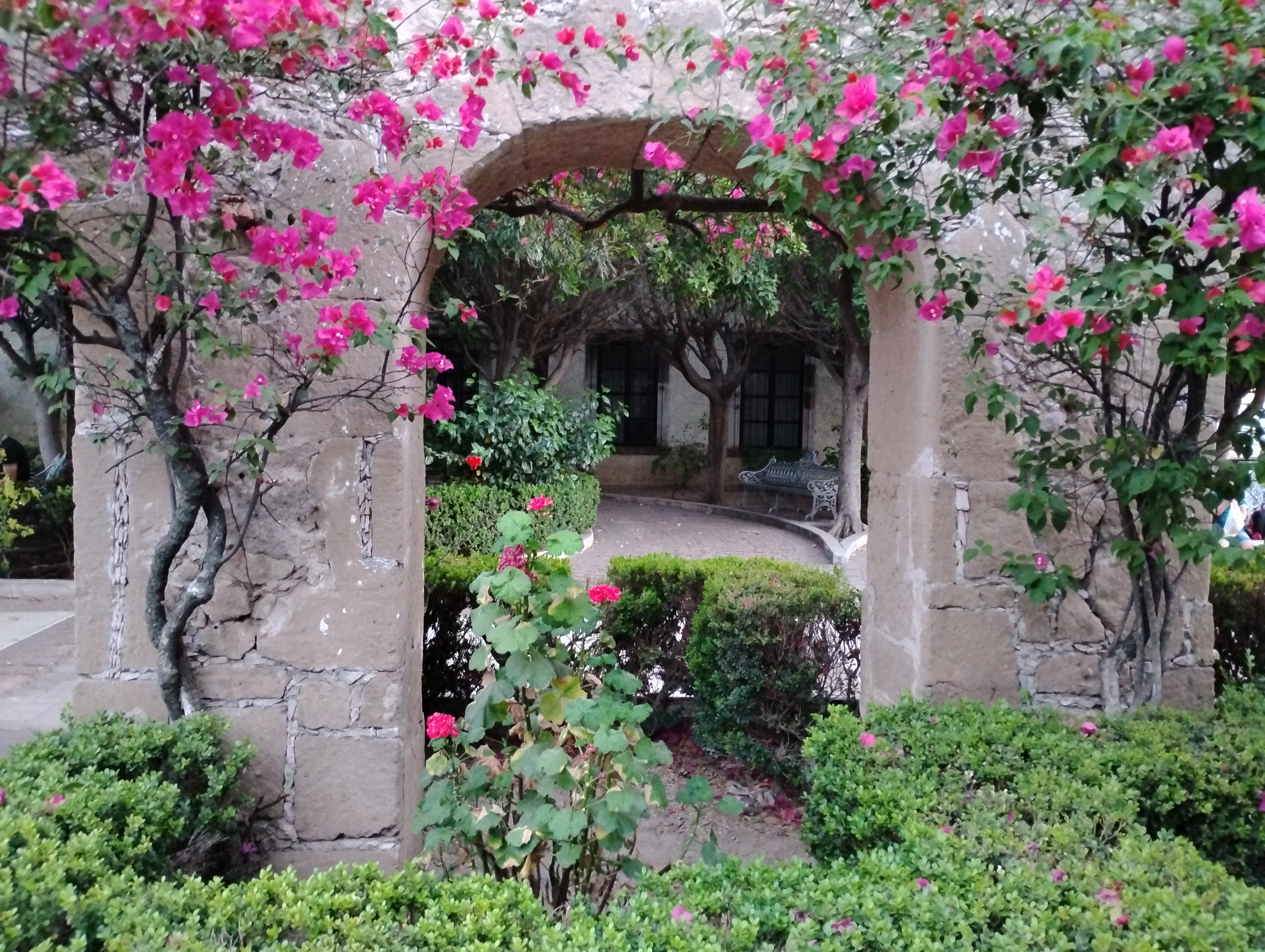
Mini-park in central Aguascalientes:
Immaculate street with residences and shops in central Aguascalientes:

Aguascalientes is an industrial city. Major companies present are GM, Honda, Mazda and Nissan. Other notable companies manufacture medical equipment, electronics, car parts, and textiles. Years ago, Aguascalientes built trains. The original station still stands as a museum and there are restored train cars to see.
Not surprisingly, among the expat population estimated around 1,000, there are several Japanese. Trip Advisor lists 34 Japanese restaurants (not all Japanese owned).
A glimpse of what I experienced related to older adult activities, care, hospitals, and end of life:
Older Adult Socialization in Community
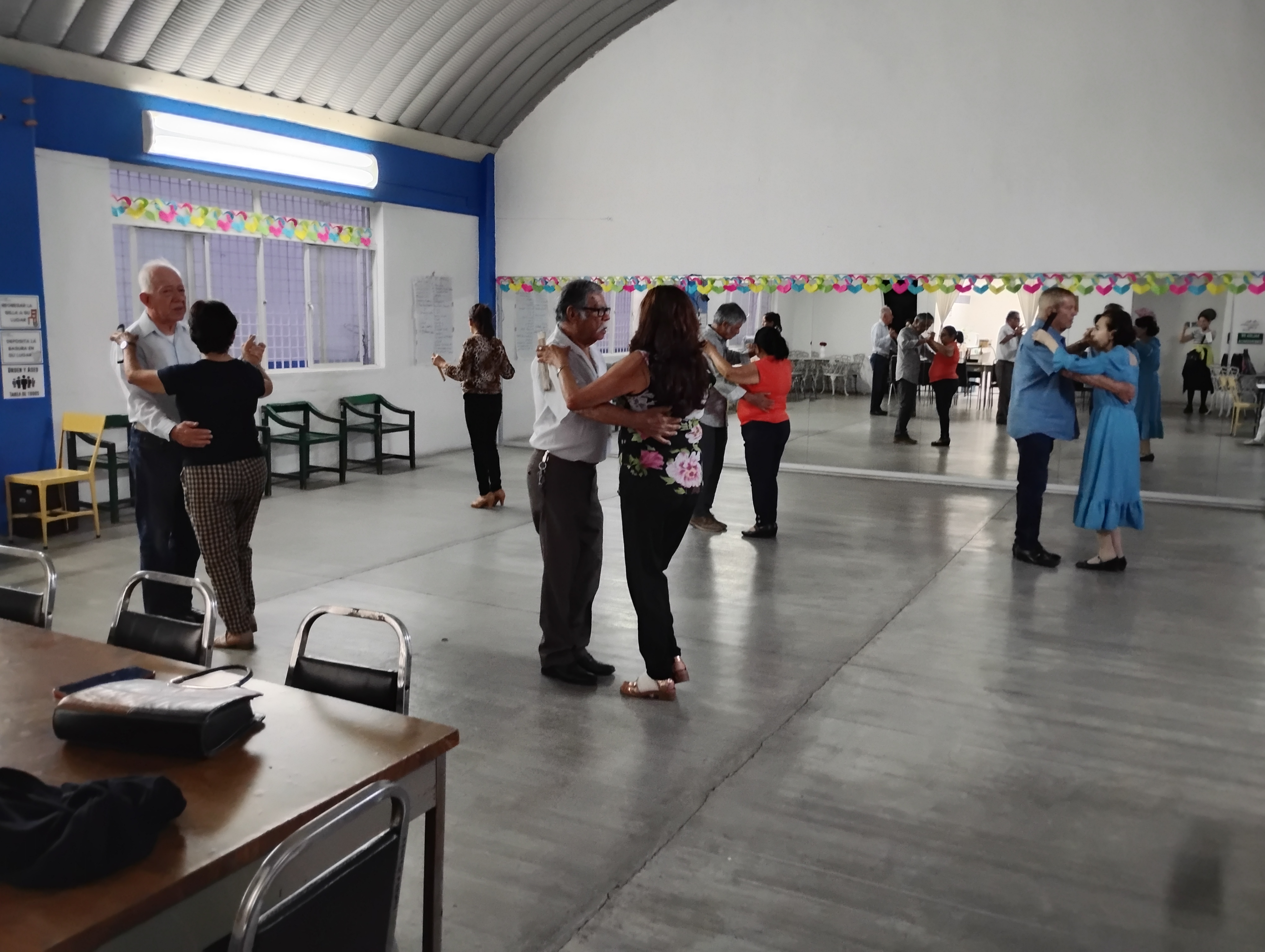
Club de la Tercera Edad is a public center for older adults run by CONACYT, the national counsel studying science and technology. When I arrived, there was a danzon class. Danzon is a Cuban music and slow dance tradition, immensely popular in Mexico and other parts of Latin America.

DIF and INAPAM Older Adult Activity Centers Both DIF (Desarrollo Integral de la Familia) and INAPAM (Instituto Nacional de las Personas Adultas Mayores) are government run centers offering activities. They are separate entities but sometimes collaborate. DIF addresses entire family needs and is more about social protection of vulnerable populations. It offers adult daycare centers, psychosocial support, food programs, medical attention, recreational activities, and more. INAPAM is focused on older adult legal rights, transportation discounts, medical and cultural services.
On another trip I hope to meet Aguascalientes DIF director Aurora Jimenez Esquivel, known for her innovative initiatives including a popular travel program to visit nearby states known as “Gigantes Viajeros”. If you have access to Facebook, there are charming photos with older adults from Aguascalientes enjoying a trip at the FB page of Aurora Jimenez Esquivel. The link would not post when I loaded it here.
Señor Sebastian As I made my way to the Panteón de los Ángeles y La Cruz, thirst led me to a sunlit corner store not far from the cemetery gates. There I met the venerable octogenarian you see in the photo whose warmth seemed to animate the whole neighborhood. With his son by his side, he presides over the store like a sage, sharing stories about local elders and aging in place. He graciously pointed me to the entrance of the cemetery. After wandering the peaceful grounds among small and large gravestones, I returned to thank him —feeling, in that moment, not just like a visitor, but welcomed to Aguascalientes. Memorable encounter.

Photos of the cemetery may be seen on an Aguascalientes Facebook page at: https://www.facebook.com/VivaAguascalientes/posts/pante%C3%B3n-de-los-%C3%A1ngeles-y-la-cruzaguascalientes-ofrece-una-gran-historia-en-relac/2168728129814822/
Assisted Living/Memory Care Residences
According to INEGI (the Mexican government statistics bureau) and Google, there are about 14 long-term care residences. (In Mexico long-term care is, with some exceptions, all in one – assisted living/memory care/nursing).
I focused on homes in the city center and visited seven to get a feeling for environment, providers, residents, and care.
Three assisted living/memory care homes had closed, one during COVID. Most places were basic, clean, modest, and dark, yet each with devoted caregivers. Residents in some homes seemed thrilled to have a visitor.
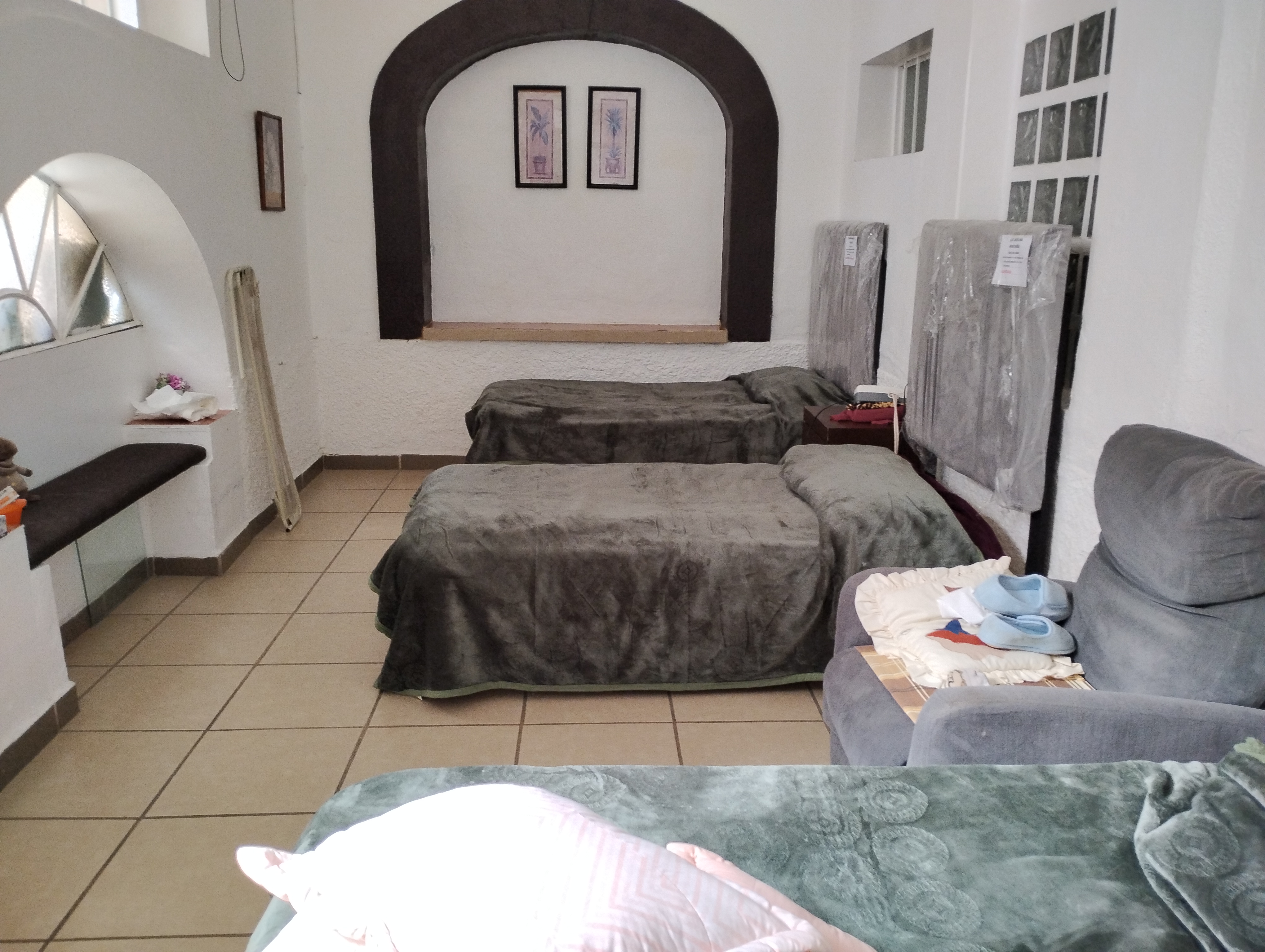
I was warmly welcomed at clean, efficient, light-filled Residencia de la Roble which houses 33 older adults including Mexican-Americans who prefer to age in their native Aguascalientes. Care costs are about $700/month USD (13,000 pesos/month) for shared rooms (there were two single rooms). Included in the fee: nutrition with customized diets, television and activities, laundry, medical care by the owner, a geriatrician, and most of all what appeared to be loving, energetic care by devoted nursing assistants. Note: Many Mexicans are accustomed to sharing space. The concept of privacy and your own room is often found with families who are well-off.
Here are photos showing a shared room with pristine, well-organized clothing and linen storage:

There is no website for Residencia de la Roble but you may find several photos of its high energy, activities, and sweet residents and caregivers on Facebook at Residencia para adulto mayor “El Roble”. https://www.facebook.com/profile.php?id=100064126566555
On my next visit I wish to tour Estancia Geriatrica Villas Juan Pablo as I had originally planned. It is a privileged residence in a park-like setting, also with lots of light, a few miles north of the city center. You will find photos at https://estanciageriatricavjp.com/ The environment reminds me of countryside care homes outside Quito, Ecuador – wood cabinetry, vistas of green meadows, tranquility. Under “instalaciones” there are photos of private rooms. The monthly prices at Villas Juan Pablo would be double, or more than double, the costs at Residencia de la Roble.
Note: prices for long-term care in the state of Aguascalientes are less than in the state of Jalisco (home to Guadalajara, Lake Chapala, and Puerto Vallarta). The Aguascalientes homes cater to local Mexican families.
Hospitals and Dental Care
Aguascalientes has an impressive medical infrastructure with hospitals both public and private. Hospital MAC (there are two, one in the north the other in city center), Centro Hospitalario de Aguascalientes, Star Medica, Centro Medico la Salud, Hospital Cardiologica de Aguascalientes, Medica San Juan de Aguascalientes, Hospital Fundación Medica México Franco Brasileña plus a plethora of other options for specialized medical care as well as dentistry.
Emergency Care at Hospital MAC
The third night of my visit I awakened around 10-10:30 p.m. feeling tingling down my right side and leg. My first thought, oh no, not a TIA/stroke!! But I was able to speak. The sweet elderly man on night duty at the hotel suggested a taxi to the Red Cross. I wished for a hospital. I was super weak and dizzy yet decided to slowly walk to a nearby hotel. The night duty clerk there suggested Hospital MAC, a few blocks away.
There are about 30 MAC hospitals in the country. I had visited others and felt confident. I was especially encouraged because I could see the hospital tower from the front door of the hotel. I walked slowly but surely about four short blocks and made it to the emergency room. A nurse promptly greeted me, took my name, invited me to a room, took my vitals. I was then escorted to meet Dra Nancy originally from Mexico City and a graduate of UNAM. She was amazing – attentive, kind, professional. A thorough assessment of eyes, strength in arms and legs, heart, walking etc. Thankfully I was going to be okay. I was dehydrated (first time ever and quite a lesson) and had a bit of heat stroke from walking in the sun from early morning to sundown. The hospital experience was a gift, and I remain grateful to all who assisted and cared for me at the hotel as well.
Palliative Care and End-of-Life Care
Pain relief for life-limiting illness is offered by 14 anesthesiologists with palliative care credentials at hospitals and clinics. Two of the physicians drive from Guadalajara. According to a list of medical providers, there are 20 geriatricians. In-home pain relief for end-of-life is offered by at least two geriatricians.
All assisted living/nursing homes attend to end-of-life.
One residence, Hogar del Abuelo Maty, was founded with supportive end-of-life care in mind. It is in the countryside one hour to the northeast of Aguascalientes.
The home, opened in 1981, is named in remembrance of Matilde (Maty) Dubroy de Villanueva who was accompanied at end of life by her daughter Carolina Villanueva de Garcia. The profound experience inspired Señora Carolina to build the hogar where every elder could have a dignified death with compassionate, personalized care.
The current administrator of the non-profit is the founder’s son, Carlos Garcia Villanueva. Care is provided by nurse nuns of St. Vincent de Paul. The nuns have a long and rich history of companioning the infirm and those at end-of-life. The website with photos and videos reveals more: https://www.hogardelabuelomaty.org/
While I did not encounter any modern-day end-of-life doulas in Aguascalientes, Mexico, non-medical, psychosocial spiritual support has been a community tradition for centuries. Local women known as “parteras” assist not only with birth but have a significant role supporting families and individuals during the dying process.
Funeral Home Arriaga
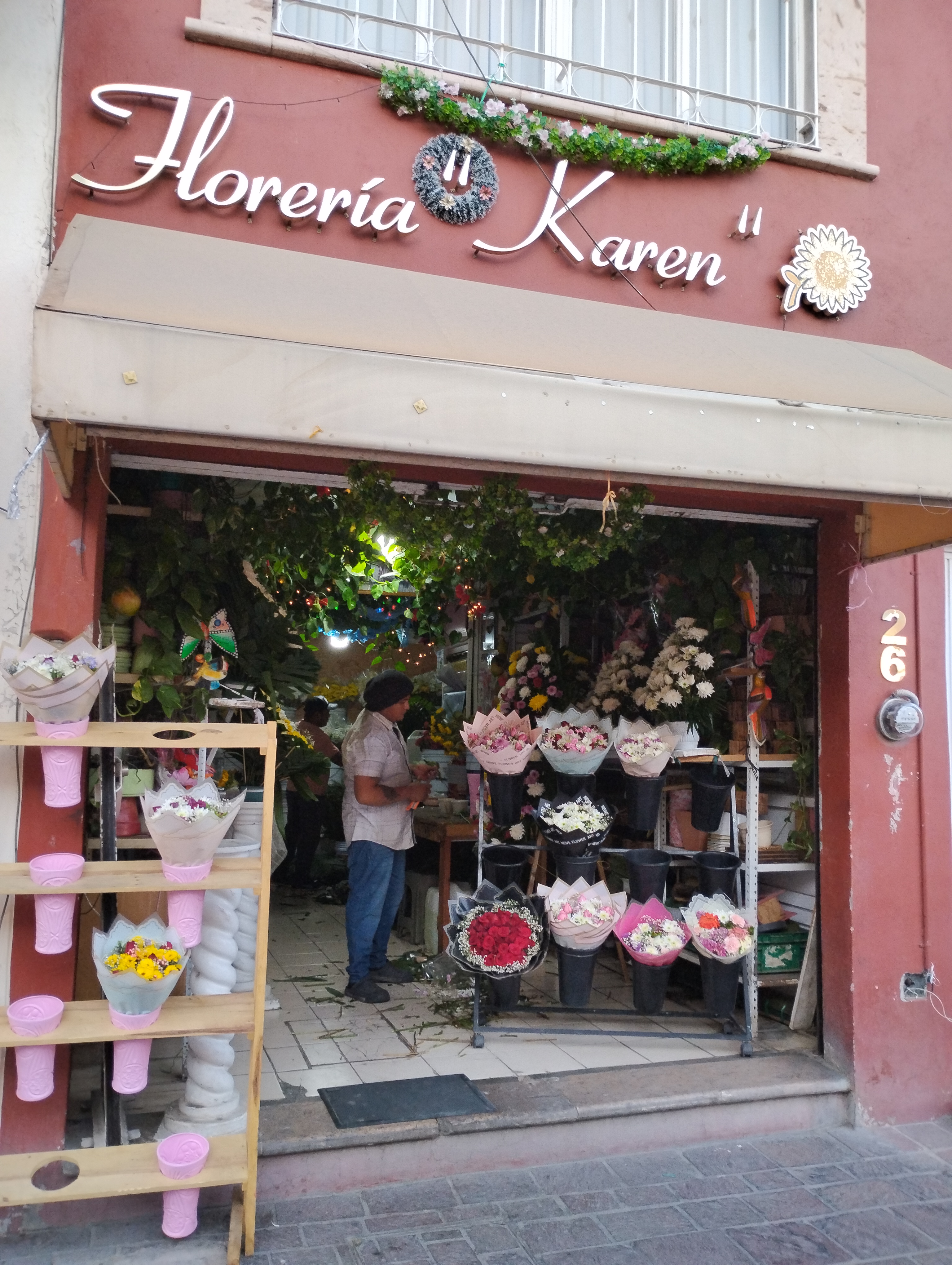
Toward the end of each day, I passed Funeraria Arriaga on the way to my hotel. Families waited inside where there are four viewing rooms and a place to sit and sip coffee or tea. Or, they waited in front of the building. There is a florist across the street.

Most Mexicans choose burial in a coffin. For those who choose cremation, the cost with this funeral home is between 9,000 and 20,000 pesos ($470 to $1000 USD) depending on whether there is a memorial service. According to Funeraria Arriaga there is no refrigeration in Aguascalientes but there is embalming. (Refrigeration is possible in Jalisco to create time for family members arriving from far away to view the deceased). The Boinita Group advertises green spaces for cremains (ashes) in Aguascalientes as well as Cancun, Hermosillo, Merida, and San Luis Potosi. https://boinita.com/en/green-niches-of-funerary-forests-in-mexico/
National Museum of Death

The museum, which opened in 2007, exhibits death-related artifacts from pre-Hispanic times to the present from the personal collection of Octavio Bajonero Gil. The 2,000 or so items include sacred religious paintings, sculptures, objects d’arte, and more. They are displayed in three connected buildings of a restored 17th century convent that once housed Franciscan monks. The property is now owned by the University of Aguascalientes.

My experience was not of the macabre. Some items show the unique Mexican sense of humor.

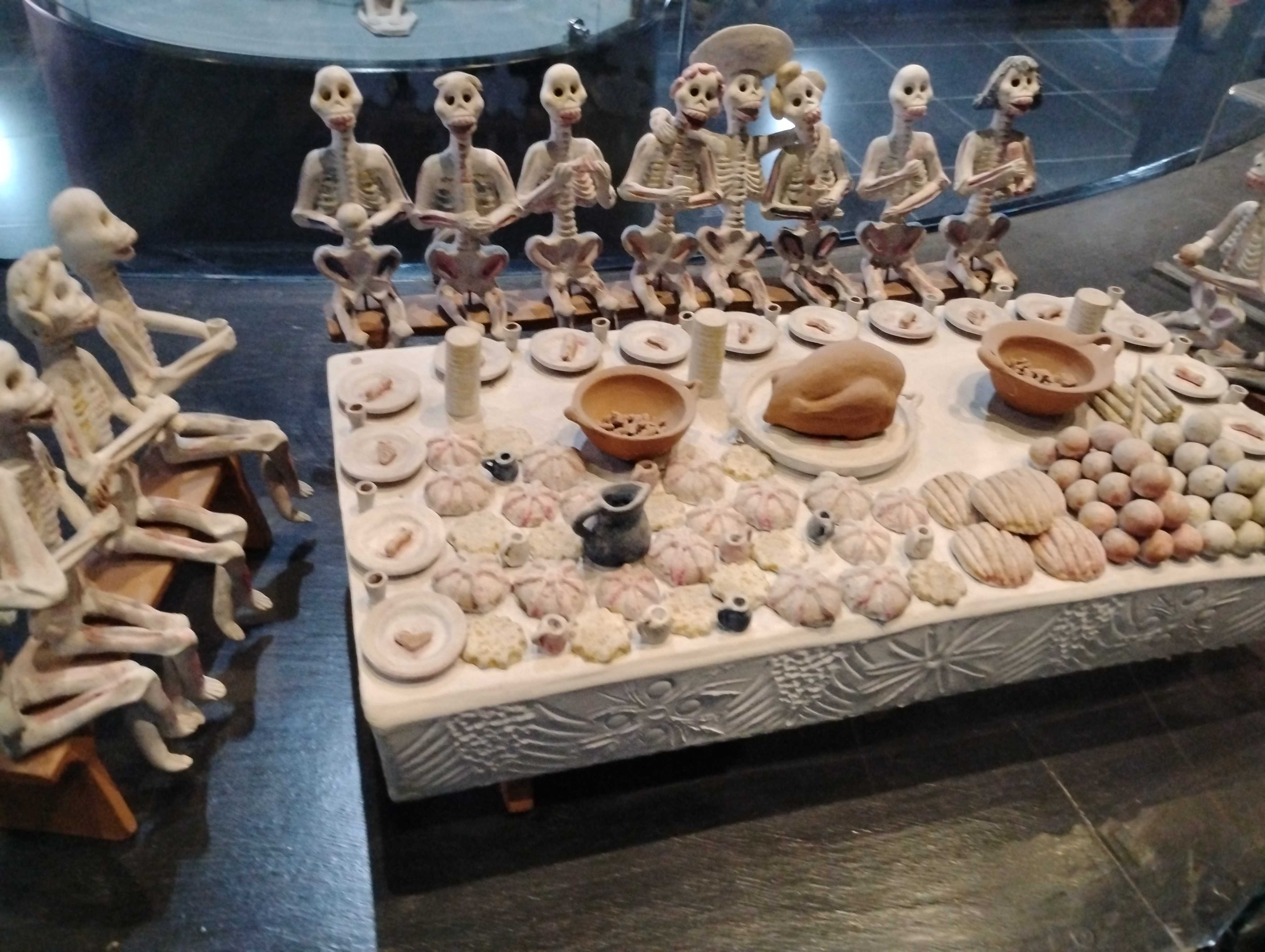
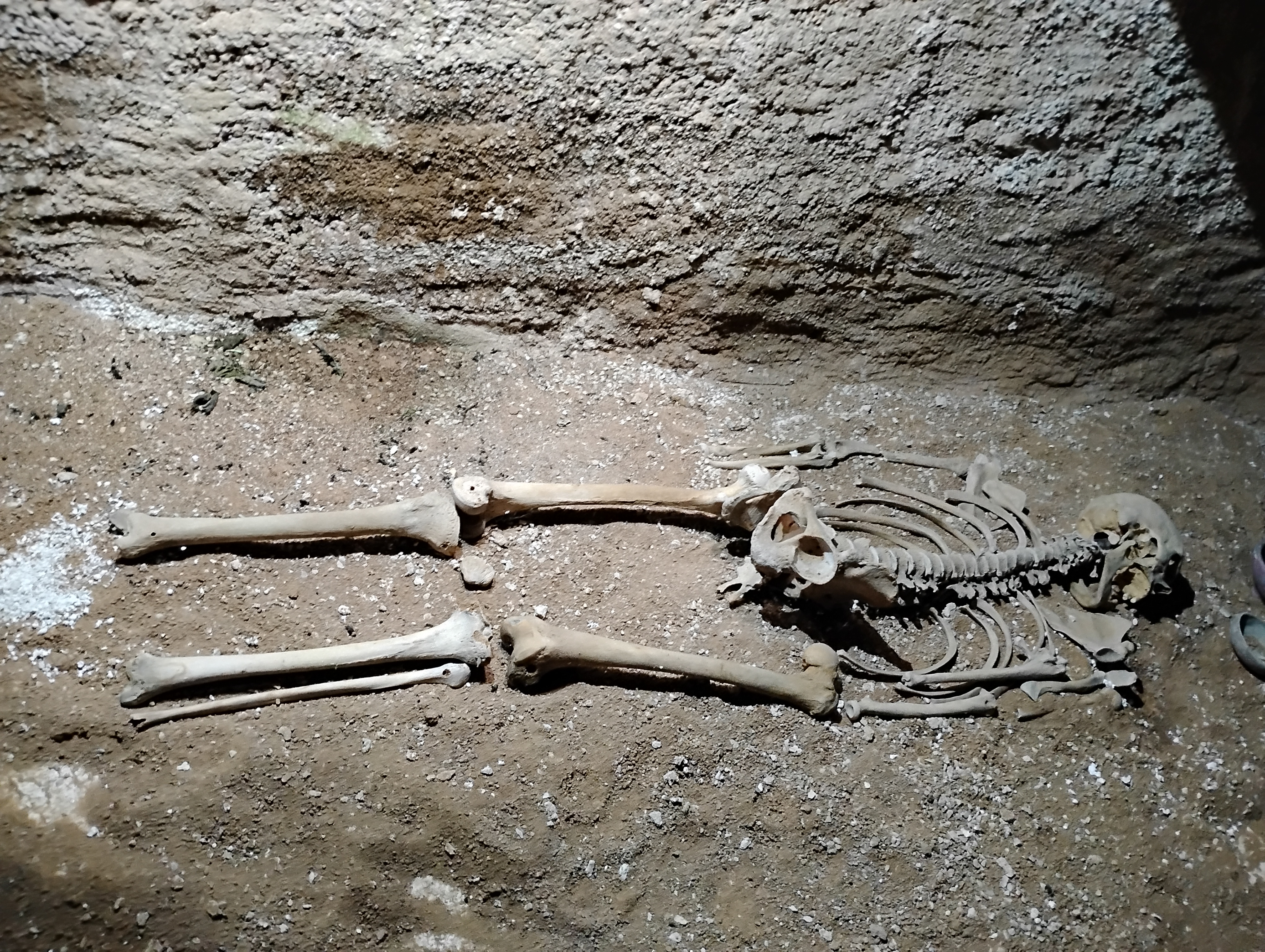
At the entrance of the museum is a gift shop where you pay an entrance fee of 20 pesos ($1 USD). It takes 45 minutes to an hour for a self-guided tour. If you are lucky you will have university student Antonio accompany you to the basement to see reconstructed gravesite remains. The photo below was taken in the basement:
Later, multi-lingual Jesus from Mexico City who delighted me with his Italian might lead you through the floors and buildings.
The Instagram video at this link shows more items displayed in the museum: https://www.instagram.com/reel/C-Ag-HsgAFv/
The museum produces 200 or so events per year including the October/November Day of the Dead Celebrations. At the writing of this post the calendar of events for the 2025 Annual Festival de Calaveras (skeletons) has yet to be posted.
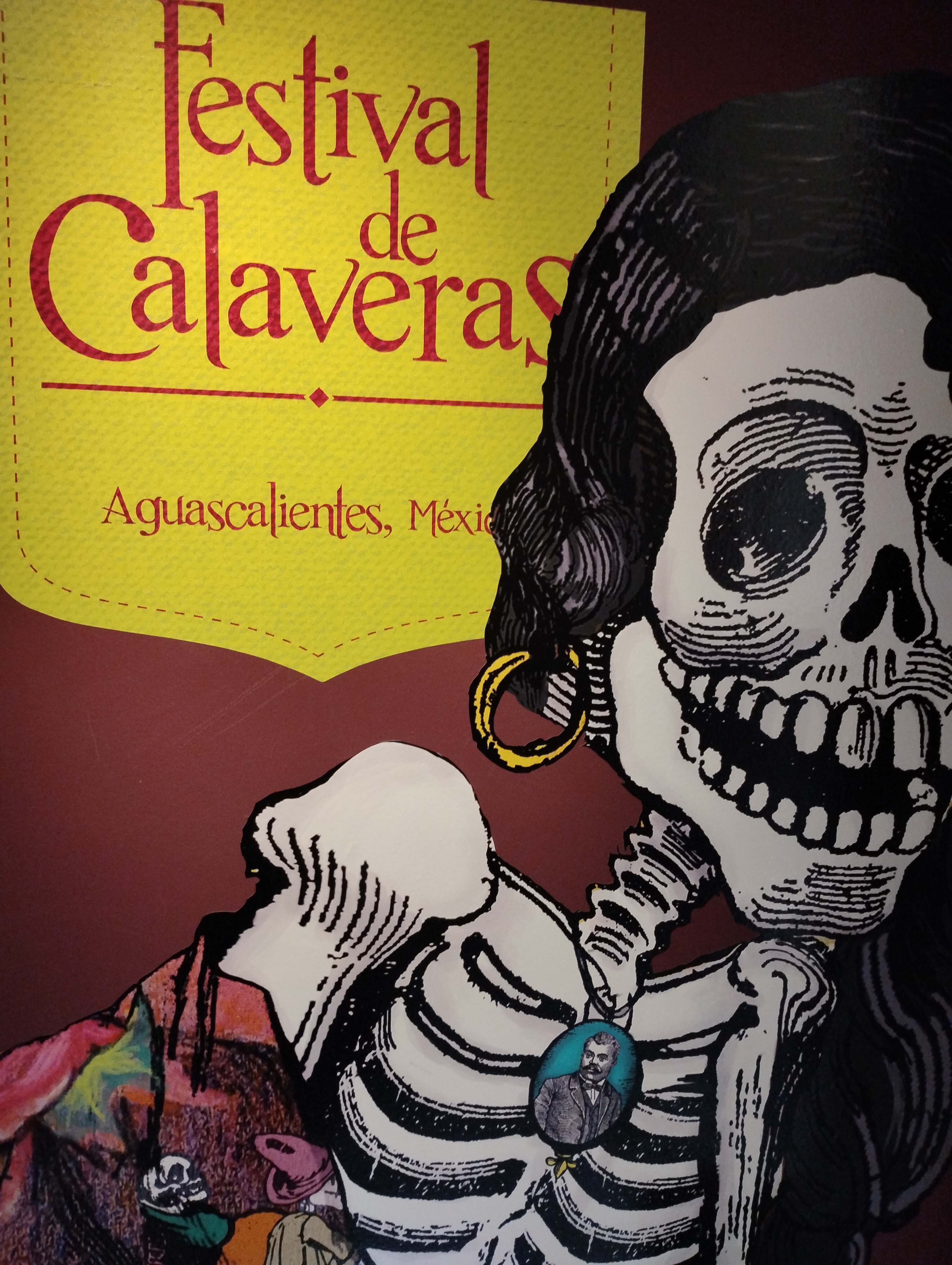
Museo Posada This museum is dedicated to the collected works of Aguascalientes native Jose Guadalupe Posada (2 February 1852 – 20 January 1913), a political satirist/caricaturist, engraver, and printmaker known throughout Mexico as the father of La Calavera Garbancera/La Catrina, a female skeleton dressed to the nines that is seen each year at Dia de los Muertos/Day of the Dead ceremonies. During the presidencies of Portfirio Diaz (1876-1911) Posada introduced skulls and bones as political and cultural critique. La Catrina indicates death comes to all, including politicians and the super wealthy. Here below is a Catrina from the Museum of Death:

Photos of the museum and its contents may be seen at this link: https://ags.gob.mx/turismo/conocemas/museoposada/index.html
© All rights reserved. Wendy Jane Carrel 2025
Wendy Jane Carrel, MA, is a trusted older adult advocate and consultant who has many years of hands-on experience with healthcare systems, retirement options, senior living and wellness programs in Mexico, Ecuador, Italy, the U.S., and beyond. She provides culturally sensitive transition guidance and curated options for families and elders domestically and internationally. Wendy’s web site is https://www.WellnessShepherd.com
Resources
https://en.wikipedia.org/wiki/List_of_states_of_Mexico
https://en.wikipedia.org/wiki/Aguascalientes_(city)
https://en.wikipedia.org/wiki/Jos%C3%A9_Guadalupe_Posada
https://www.hospitalesmac.com/ MAC Sur, Aguasacalientes, República de Perú 102, Las Américas, 20230 Aguascalientes, Ags., Mexico Open 24 hours
https://www.atlasobscura.com/places/national-museum-of-death
https://www.youtube.com/watch?v=01-n8TduhkM Mariana Lange’s Mexico Relocation Guide
 Wellness Shepherd