Blog

Aging, Death and Dying, Death Cafe Mexico, End-of-Life Care, End-of-Life Planning, Health & Wellness Mexico, Living Abroad, Mexico, Retirement

Death Café Ajijic, Mexico; Ex-Pats and Snowbirds Talk Gently about Mortality

A group of American, Canadian, and UK ex-pats and “snowbirds” recently gathered for the first Death Café Ajijic, Mexico. There were 18 persons present at Café El Grano including an anesthesiologist, a hospice nurse, a hospice social worker, a psychiatrist, teachers, and others. There were two facilitators who work with end-of-life planning and transitions.

If the term Death Café (excuse the direct wording, I prefer Sacred Conversation) is new to you, you may hear it more and more.  Death Cafes or Café Mortels began with Swiss sociologist Bernard Crettaz who held over 100 such meetings in his native country until recently. In 2011, Jon Underwood, inspired by Crettaz, created Death Cafes in England (see history at http://deathcafe.com/what/  ).

These all-volunteer social events to discuss death and dying respectfully and informally (no agenda) are now held in 52 countries including Australia, Europe, Canada, the U.S., and parts of Latin America where death has sometimes, but not always, been a foreboding and scary subject.  Buddhist, Hindu, or Muslim countries, and places with indigenous populations tend to consider death a natural part of life and honor it as such more easily. Most café organizers work with end-of-life, and tend to focus on alternative, kinder, spiritual ways of departing. Note: There is a Death Café in Singapore.

“At a Death Café… our aim is to increase awareness of death to help people make the most of their (finite) lives,” states the Café web site. Most of all, the Café encourages an exchange of stories and perspectives as a way to embrace death.

What prompted a Death Café in Ajijic?

First, a number of retired ex-pats and visitors die in Mexico unexpectedly, and, they die without a health care directive and/or an end-of-life plan. There is a need for continued conversation and education.

Second, Loretta Downs, MA, has been speaking to locals at a popular venue, Open Circle (as well as at In the Heart of Awareness, the Buddhist center), about end-of-life for several years.  She flies in from Chicago every January to deliver her talks. About 300 + persons show up to listen as she encourages her audiences to become friendly with the idea of mortality and to prepare for it – think about it, and express to others what you want.  See http://www.endoflifeinspirations.com.
DSCN2635
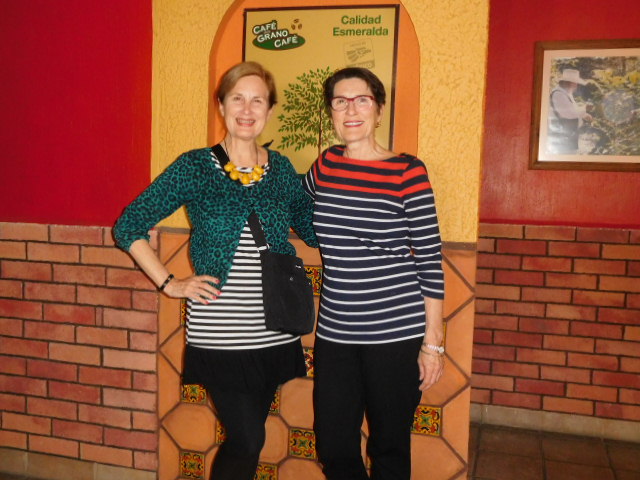
Wendy Jane Carrel and Loretta Downs, End-of-Life Guides, Planners, and Educators; Co-Hosts of Death Cafe Ajijic 2018

Third, yours truly, Wendy Jane Carrel, MA, has been speaking to ex-pats around Ecuador for three years and subsequently in Mexico with the same passionate message – make friends with your demise, please make a plan.

It seemed natural for Loretta and I to team up to host a Café for Lake Chapala.

My interests had been reinforced as a result of volunteering two years at Juntos Contra el Dolor, the only 24/7 palliative care hospital and hospice in the state of Jalisco, a model for Mexico. I was given the gift of observing how painful chronic and terminal illnesses are treated, the politics of medicine, the politics of opioids, cultural difficulties related to dying, family constellations, and the difficulties of running a non-profit in a rich country (yes, rich in many resources) with little tradition of philanthropy. Most of all, I learned the concept of a “good death” requires much education and outreach in Mexico as well as at home.

Loretta’s friend Nancy Gershman, who produces Death Café NYC, gave us welcome pointers before the Ajijic meeting. We followed Nancy’s advice – small tables of 3-4 for intimate conversation, one of us (Loretta) to circulate and ensure participant exchanges were flowing, see that anyone who was recently grieving the loss of a loved one was comfortable, followed-up by an evaluation to learn what we could do better the next time.  https://www.meetup.com/Death-Cafe-New-York-City/
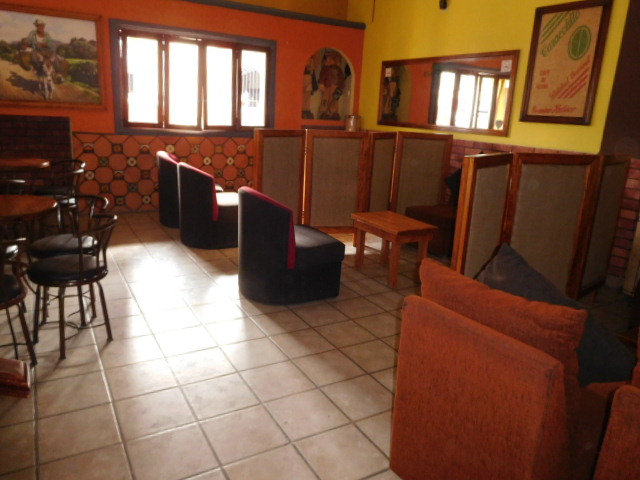
Cafe El Grano, nice partitions for intimate conversation
Cafe El Grano, Ajijic, Mexico – nice partitions and small tables for intimate conversation – also a most accommodating owner 😉

Because Loretta and I travel often, she is based in Chicago, and I in LA, we may not be producing other cafes until January 2019 unless another healthcare worker can pick-up in our absence.

Note: If you have not heard of Ajijic, it’s a sleepy Lake Chapala village, with a population of around 10,000, an hour south of Guadalajara. It is a popular tourist destination. Lake Chapala is home to around 20,000 full-time retirees from north-of-the border.

The DeathCafe.com web site indicates there are 9 death cafes in Mexico. I could only find one. It is located in Mexico City. See http://deathcafe.com/deathcafe/1695/ .

I have so much more to learn. I am now eager to return home to attend hospice social worker and end-of-life guide Betsy Trapasso’s Death Café LA https://www.facebook.com/deathcafelosangeles/   or Maggie Yenoki’s gathering in Pasadena https://www.facebook.com/deathcafepasadena/

© Wendy Jane Carrel 2018

Wendy Jane Carrel, MA, is a Spanish-speaking senior care advocate from California. She has travelled Mexico for several years researching health systems, senior care, and end-of-life care to connect Americans, Canadians, and Europeans with healing options for loved ones. She is a compassionate companion and palliative care liaison, legacy writer, co-founder of Café Mortality Ajijic/now Death Café Ajijic and a speaker and published author on subjects related to senior well-being. Wendy’s web site is https://www.WellnessShepherd.com

References

https://www.counterpunch.org/2018/01/12/what-happens-at-a-death-cafe/   excellent overview of a Death Café gathering in Sonoma, California by Shepherd Bliss

https://www.theguardian.com/healthcare-network/2017/mar/09/death-cafe-learn-talk-dying-patients

https://www.washingtonpost.com/news/acts-of-faith/wp/2017/07/10/the-founder-of-death-cafe-has-died-but-his-movement-to-accept-the-inevitable-end-of-life-will-live-on/

https://www.facebook.com/DEATH-Cafe-Singapore-402018853254286/  a unique look at what Death Café Singapore is paying attention to

https://www.prospectmagazine.co.uk/magazine/take-me-to-the-death-cafe

Aging, Alzheimer's, Assisted Living, Assisted Living Mexico, CCRC's in Mexico, Health & Wellness Mexico, Health Care Planning Mexico, Living Abroad, Mexico, Mexico Senior Living, Senior Care Mexico

Guidelines for Choosing Assisted Living/Nursing Care in Mexico

Gardens at Casa de las Lunas in Puerto Vallarta with independent living, assisted living and respite care, private pay

According to realtors at Lake Chapala, Mexico, and the information desk at the Lake Chapala Society in Ajijic, the popular ex-pat retirement destination has received more than double the no. of potential renters, buyers, and information hungry folks from Canada and the U.S. than in years before. (Other popular retirement destinations are also seeing an increase in activity – see no. 3 below).

Among visitors intent on moving are travel aficionados looking for a unique cultural experience, the prospect of meeting stimulating people from all parts of the world, but more importantly, an opportunity to stretch their dollars.

And then there is senior living and healthcare, a subject of interest for most. For “sandwich-generation” boomers who lost savings and/or homes during the American recession of 2007-8, or spent savings for the education of millennial children or grandchildren, many are finding there may be little left for themselves or parents if assisted living or nursing care are ever required.

An added concern is that funding for Medicare and Medicaid in the U.S. are currently being challenged.

Alma, a non-profit home for 40 residents in San Miguel Allende

If the cost of assisted and continuing care in Canada (Canada takes care of its disabled, ill, and older adults through universal care programs but there is also private pay care) or the U.S. is not an option, there are more affordable options in other countries. The closest place to look is Mexico.

Here are guidelines for looking at assisted living and continuing care in Mexico, costing between $600 USD to $3500 USD/month, depending on the value of the American dollar and the Canadian dollar vs. the peso, the location, and the residence you choose:

  1. Take note – in Mexico the terms assisted living and “nursing home” are often one and the same, with exceptions. Care facilities are not known as they are north of the border – assisted living, rehabilitation, nursing home, and hospice. It is often an all-in-one approach. Also, with some exceptions, homes mix physically disabled residents with memory care residents.
  2. Select cities or areas you wish to be in for climate – coastal, desert, mountains. (Coastal tropical places cost a little more because A/C is expensive).
  3. If the future resident does not speak Spanish, seek places with ex-pat communities and English-speaking locals who are often a source of volunteers – Baja California Norte (Ensenada, Rosarito Beach, Tijuana), Cancun, Lake Chapala, Mazatlan, Mexico City, Puerto Vallarta. Or, choose smaller places such as Merida, and San Miguel Allende. Some care homes have all foreigners as residents, others locals and foreigners together. Usually one person on staff speaks English, sometimes more than one.
  4. Do the due diligence. Research places and determine costs. Most assisted living and “nursing homes” catering to foreigners have web sites in English easily found on Google Search.
  5. Consider private pay homes and non-profits, as well as residences run by nuns whether you are Catholic or not. Nuns often (but not always) provide quality care as most are nurses with a mission to serve, plus costs tend to be what Mexicans would pay if price is a consideration. Another level of care is found in government homes, some pleasant others not; some accept foreigners with residency cards. There are differences in every region of the country, and there are no rules.
  6. Note: no two places will be alike – financially, environmentally, socially, and in terms of care. Homes are not regulated with the strict standards one is accustomed to in Canada and the U.S.  However, there are places with quality care and high standards.
  7. Conduct site visits. Assess for yourself what might be an acceptable match in terms of environment and people. Would you or your loved one feel comfortable and safe? Do you like the space, the staff?  How are you welcomed? Do residents seem cared for or are they alone in “God’s waiting room” without attention and activities? Ask residents what they like best and what they don’t like. How clean is the home? Standards differ from place to place. Arrive at meal time… is there enough assistance for each resident? Is food fresh, nutritious, and nicely presented? Is it food you would or could eat? Does the home prepare meals compatible with health challenges? What about care plans and medication management? What about emergencies? How are these matters handled?
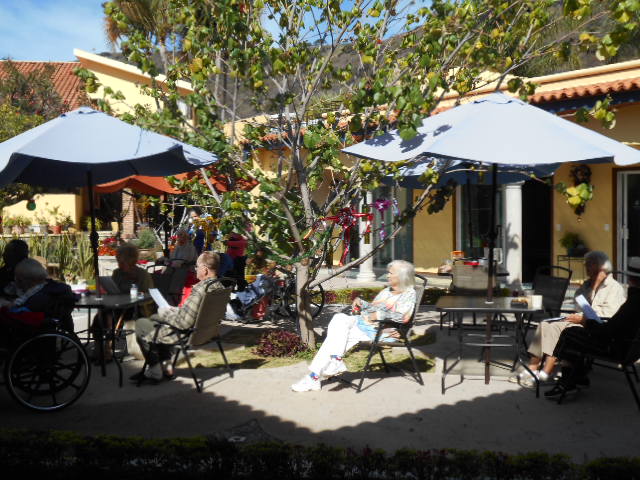
Patio at a private pay “nursing” home, Casa Nostra, at Lake Chapala


Casa de los Abuelos DIF (government) home for seniors, Morelia – these homes are intended for Mexican nationals but on occasion persons with residency visas who pay are accepted, depends on the place and availability

There are no simple answers for selection.

Ideally, we would all have perfect health to our last days and an abundance of funds which would allow us to receive the best possible care wherever we choose to live.

Note: CCRC’s (Continuing Care Retirement Communities, from independent living to demise), now referred to as Life Plan Communities, have not arrived in Mexico, with one exception. There are plans in the works for Life Plan Communities in Baja California, Cancun, and at Lake Chapala from American, Canadian, Mexican, and Spanish developers.
References:

https://www.youtube.com/watch?time_continue=2&v=6lYA7c1Pnuo   Ajijic, Mexico video 2017

http://www.pbs.org/newshour/bb/foreign-retirees-flocking-mexico/

https://www.seniorhousingforum.net/blog/2016/8/3/will-mexico-solve-senior-living-affordability-problem

Aging, Assisted Living Mexico, Mexico Grandparents Day/Dia del Abuelo Mexico, Mexico Senior Living, Senior Care Mexico

Mexico Celebrates Grandparents Day (Dia del Abuelo) August 28, 2017

Throughout Mexico, children and grandchildren make a point of spending time with their elders on August 28. They also bring gifts. This year, because the official day is Monday, most festivities and visits were held over the weekend.

Note: The tradition of celebrating Grandparents Day was instituted in 1983 under the presidency of Lazaro Cardenas. During the 1990’s, announcer Edgar Gaytan promoted the special day on a radio program dedicated to older adults.  It has become an important event for families.


Arriving at Ohana Assisted Living, San Juan Cosala, Jalisco, Mexico for Grandparents Day Celebration

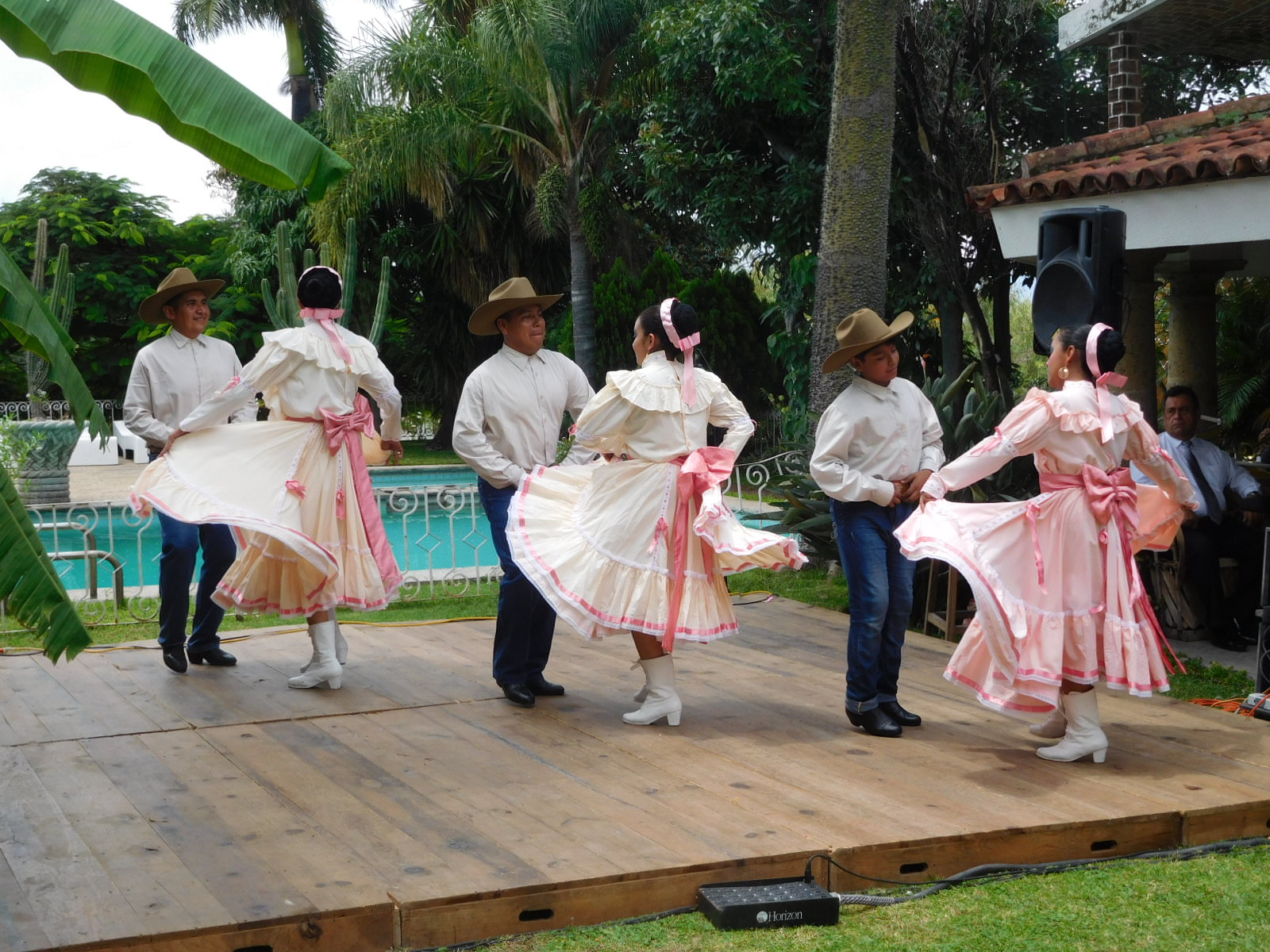
This year, Ohana Assisted Living in San Juan Cosala at Lake Chapala in the state of Jalisco honored its residents with a grand party that included relatives and friends, staff, folkloric dancers, an extraordinary jazz band with musical choices remembered by the generation of residents, and a beautifully prepared buffet. The residents at Ohana are from Canada, Mexico, and the U.S.

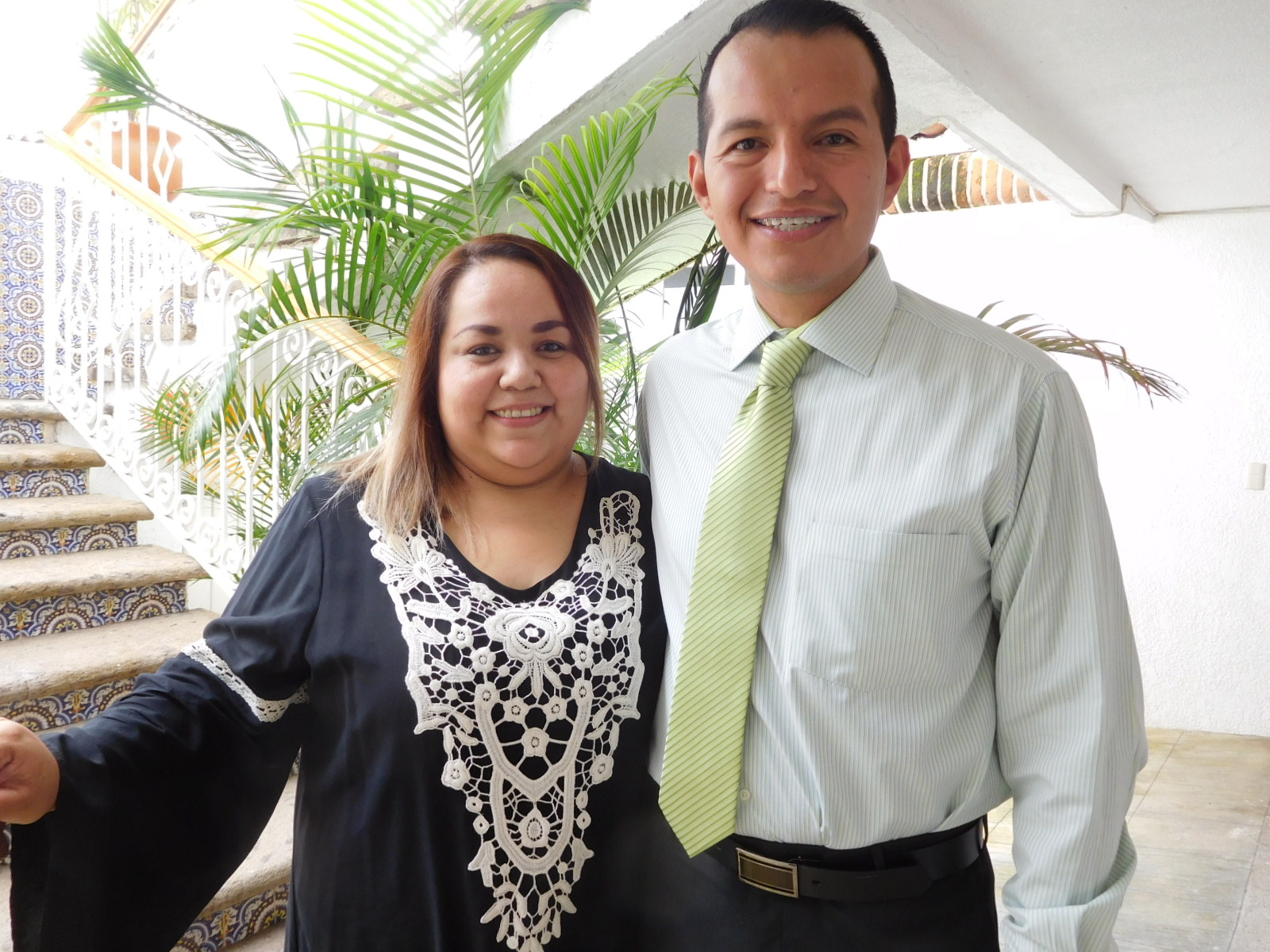
Hosts Ana and Alonzo, both geriatric nurses who live on the lovely campus, warmly greeted all. They produced a memorable event.

Ana and Alonzo, geriatric nurses, owners of Ohana Assisted Living


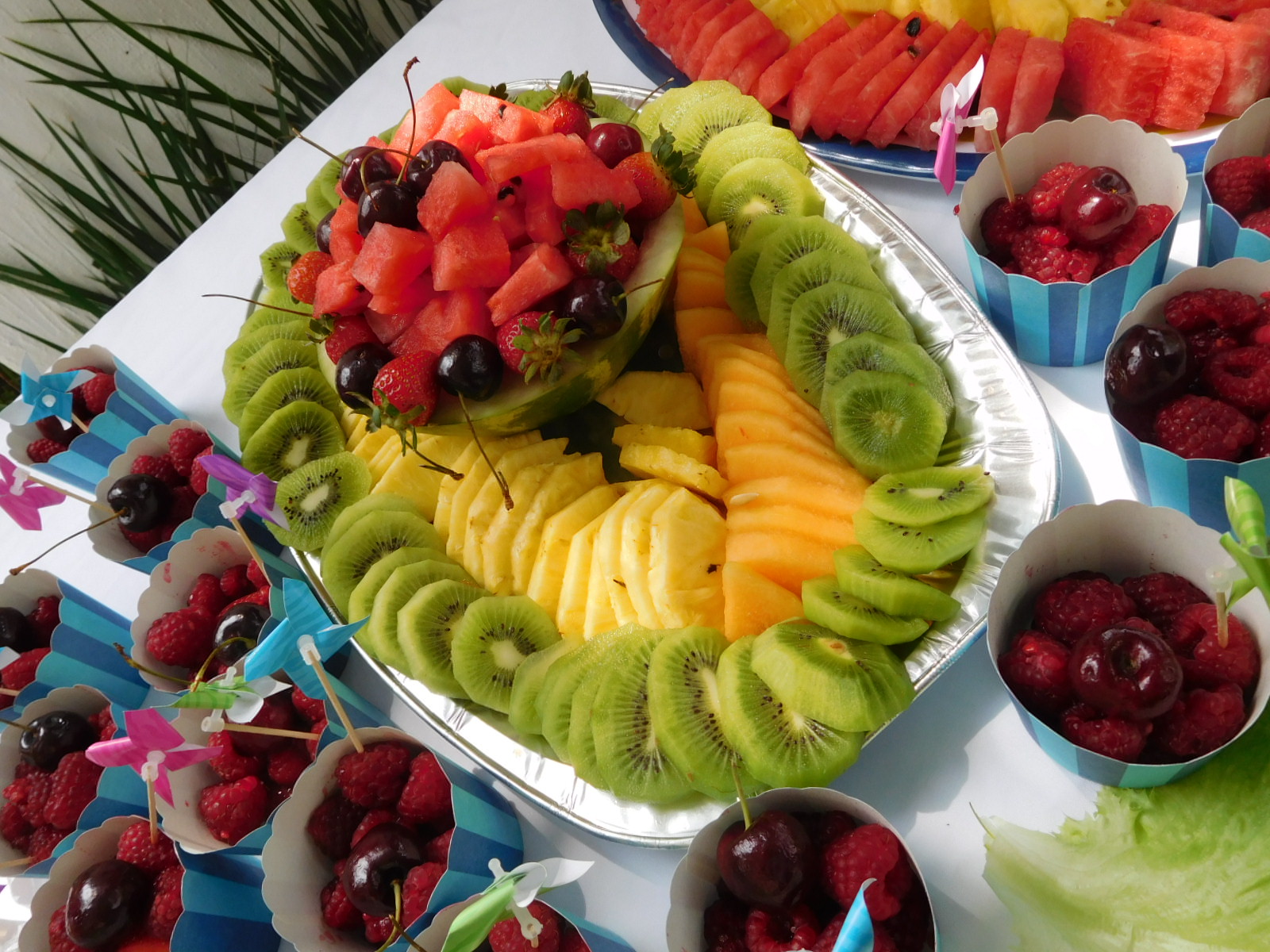
Fabulous Mexican summer fruit at Ohana Assisted Living, known for its quality meals and treats


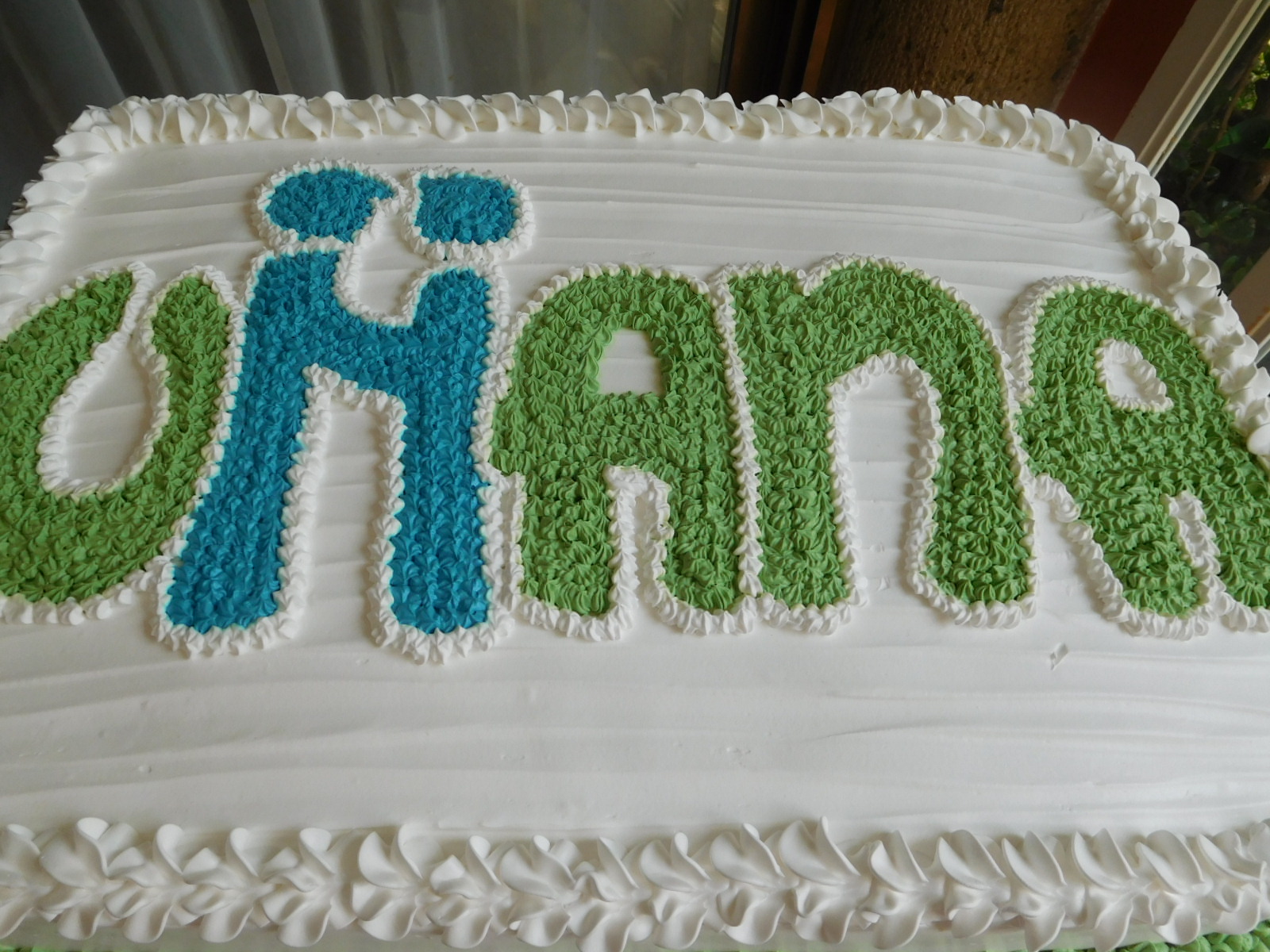
Grandparents Day cake at Ohana Assisted Living, Mexico


Folkloric dancers near the Ohana Assisted Living pool

The dancers changed costumes three times and by the end of their performances they had gone from pastels to bright and colorful red, white, and black!! Loved the zapadiada dancing. Fun for all.

Grandparents Day Celebration with live jazz band at Ohana Assisted Living, Mexico


Former heavy weight wrestler. salsa teacher, and LA Times writer Ken in rehab after a fall in California, accompanied by adorable caregivers
dscn1767.jpg
Bob, U.S. Air Force retired, with his caregiver who lovingly calls him “joven”, young one because of his bright spirit
Expats, Health & Wellness Mexico, Mexico

Alternative Healing Pop-Up Clinic at Lake Chapala Teams Americans, Canadians, and Mexicans

On Saturday, August 19, 2017, social worker/psychotherapist Toni Rahman, originally from Missouri, produced a Pop-Up Clinic to introduce alternative healing practitioners to each other at a Lake Chapala, Mexico refuge.

After a sage “cleansing” and blessing by Toltec shamanic student and host Craig Shanholtzer, nine persons introduced themselves and the work they do. An additional seven friends who support healing solutions came to learn and experience what the nine offer, and, to help get the word out to the community-at-large about resources at the lake.

It was a beautiful day spent on an inviting porch, in a splendid garden, or in quiet rooms either giving or receiving. “Magical”, “relaxing”, “wonderful” are the comments I heard.


Lake Chapala Pop-Up Clinic patio where participants were welcomed and got to know each other


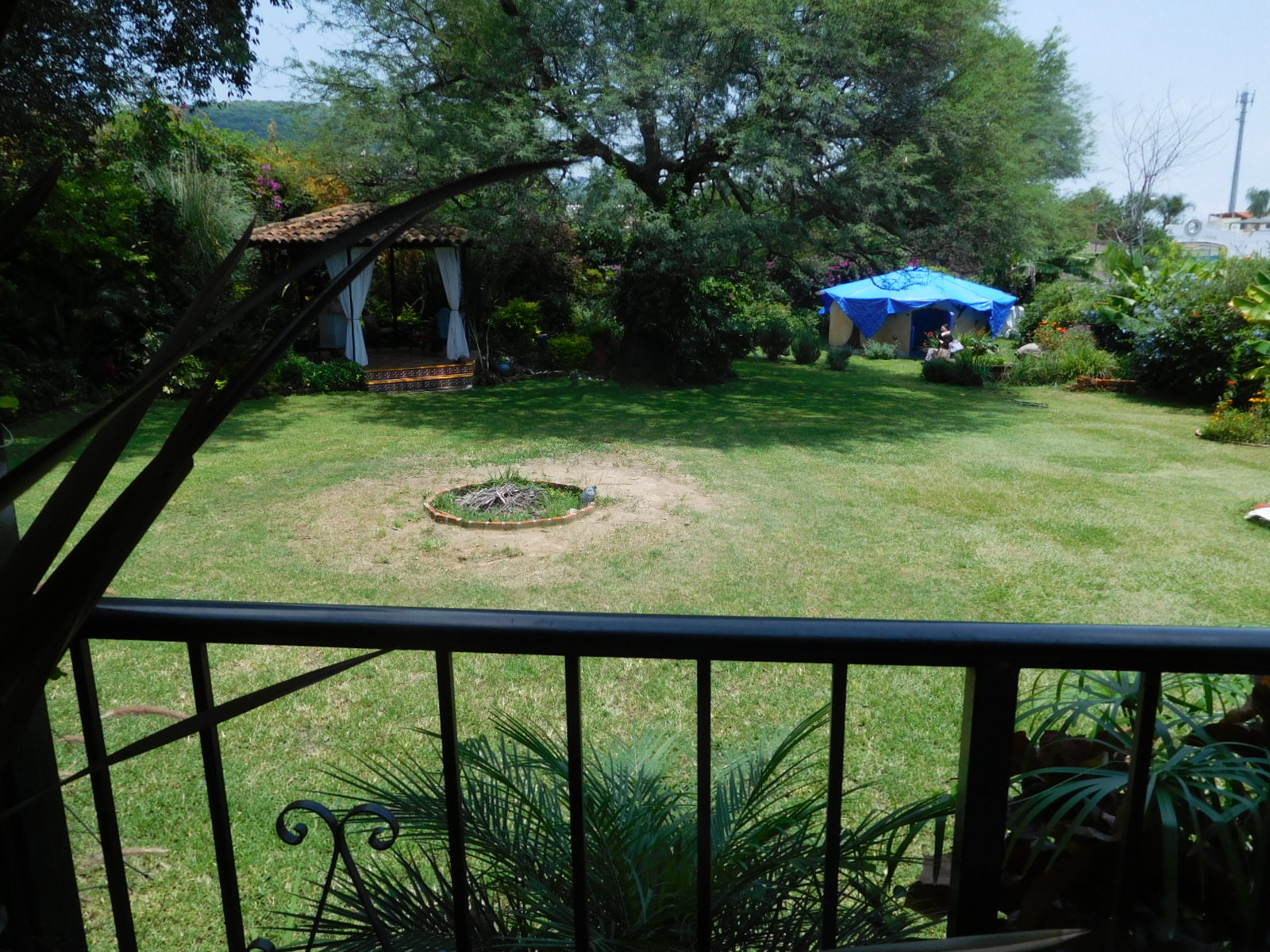
Lake Chapala Pop-Up Clinic Healing Garden


Some healing arts folks who were present:

Toni Rahman, producer of the Lake Chapala Pop-Up Healing Clinic

Toni Rahman – psychotherapist, EMDR practitioner, angel card reader, and author of the newly released Being in My Body     http://www.ToniRahman.com

Kim Campbell – Canadian massage therapist with training in osteopathy

Doris Diaz, Kundalini yoga instructor

Doris Diaz – Kundalini yoga instructor, originally from Venezuela and Guadalajara, now a resident at the lake

Dara Eden, Reiki practitioner (far right)

Dara Eden – Usui Reiki Master Teacher/Intuitive Energy Healer, originally from California via one year in Vilcabamba, Ecuador    www.InnerChiMastery.com

Mahadevi – Thai massage therapist, ayurvedic consultations, from Colombia

Aracely Marquez – Mexican SCIO therapist (could not attend but will attend future Pop-Up Clinics)

Sophia Rose –  holistic therapist and coach, intuitive consultant, clinical hypnotherapist, and EFT practitioner from San Diego  www.catalystresource.com

Cynthia Rothchild – tantra teacher, watsu therapist, cosmic breathing teacher originally from Ohio  www.cincoelementosajijic.com

Earl Schenck, hands on healing and IET (Integrated Energy Therapy) practitioner for over 20 years

The next Lake Chapala Pop-Up Healing Clinic is scheduled for Saturday, September 23. The time and place will be announced on bulletin boards and in periodicals around Lake Chapala as well as on the sana-clinica.com web site sited below.

For more photos from the event click on this link:

http://sana-clinica.com/pop-up-clinic-ajijic-mexico/

Namaste mucho from Lake Chapala

Death and Dying, End-of-Life Care, Health & Wellness Mexico, Humanitarian Rescue Older Adults, Mexico, Pain, Palliative Care, Palliative Care Mexico

Mexican Palliative Care Team Juntos Contra el Dolor Conducts Medical Mission in Remote Oaxaca State

Juntos Contra el Dolor, A.C., the only 24/7 palliative care and hospice service in the state of Jalisco, Mexico, leads a yearly (sometimes twice yearly) medical and humanitarian mission to assist the Mazateca (people of the deer) in remote mountain communities of Oaxaca state. The team is led by Juntos founder Dr. Susana Lua Nava, a thought leader in palliative care and hospice.

Palliative care in Mexico is generally provided by a team of doctors, nurses, social workers, psychologists, chaplains, and trained volunteers with the goal of relieving pain and creating a comfortable existence for patients physically, emotionally, and spiritually. An important part of the work is the educational component for families and caregivers. Hospice is an extension of palliative care for end-of-life.

This year a group of 13 Jalisco volunteers (two physicians, nurses, social workers, a nutritionist, and trained palliative care missionaries) drove from Guadalajara in a rented white van to the high Sierras of Oaxaca in southern Mexico. The trip took 14 hours. After arrival, they spent the night in a local church in Huautla de Jimenez, population approximately 32,000.  (See references and You Tube videos below for more info).

Juntos Contra el Dolor Medican Mission to Oaxaca
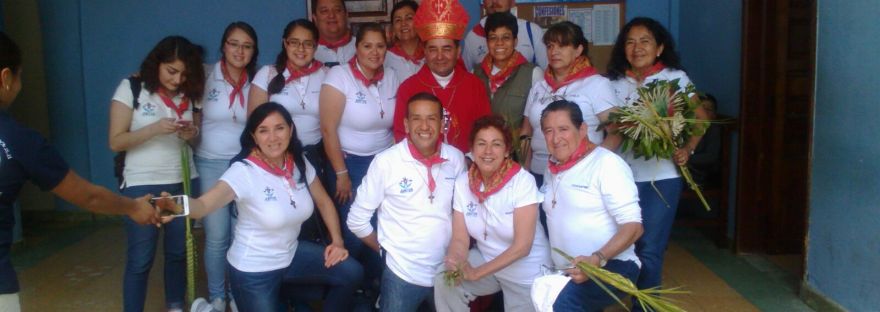
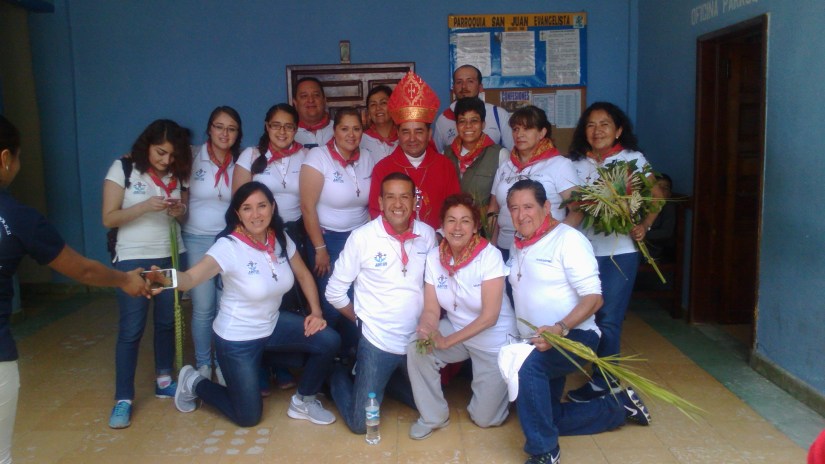
Juntos Contra el Dolor, A.C. palliative care team on humanitarian mission during Easter holiday to Oaxaca; man in red is Sr. Obispo Armando of Huautla di Jimenez; Dra Susana Lua Nava is in khaki vest; the woman on the far right holding palm fronds is a Huautla physician
Local Environment

Each day for nine days the team, divided into three groups, walked and climbed footpaths to families in the areas of San Andres Hidalgo, Chilchitlan, San Antonio, and Santa Carlota. Dwellings of each family are about an acre or more apart, sometimes kilometers apart.

There is no running water in the dwellings. There is no electricity except in rare instances. There is no natural gas. Wood is used inside homes and exposure to smoke can lead to respiratory illnesses. Some families do not have shoes.

The Mazateca homes, people, and clothing are clean and tidy. Personal hygiene is conducted with soap and small plastic bassinets of water.

“Although the trips are physically exhausting,” recounts missionary German Maria Becercil of Guadalajara, “they are an excellent reminder of how much I have and am grateful for – hot water, a refrigerator, a stove, and most of all my health.”

What was immediately noticeable to nutritionist Jorge Gonzalez Gonzalez of Tepatitlan, Jalisco, was the lack of food. Not enough food. This scarcity, he says, can lead to digestive illnesses – gastritis, colitis, stomach ulcers, pernicious anemia, and pyrosis (heartburn).  “Poor nutrition,” he continues, “also leads to low weight and low height, and metabolic illnesses such as diabetes and hypertension.” The mission hiked in with bags of food staples for the ill and their families.
Nutritionist Jorge Gonzalez w/Young Patient
Nutritionist Jorge Gonzalez Gonzalez with young Mazateca patient

Mazateca tradition of shamanic healing

The Mazateca culture holds unique health beliefs.

When illness strikes, they follow a tradition of shamanic healing with the use of “magic mushrooms” or salvia divinorum (a green paste made from a plant), mixed with cosmology and some Catholicism (altars, candles, and prayers). The ill person is usually laid on the ground over blanket-covered wooden slats.

The man in the photo below was thought to be dying of extreme stomach pain. His family placed the salvia (the green paste) on his head. It turned out he had a curable condition – ulcers – and the team was able to assist his healing.

Missionary German
Missionary German Becercil (in yellow) attending an elderly man whom he found with green salvia (Mazateca natural medicine) on his forehead

There is a general lack of knowledge among Mazatecas about many illnesses, especially cancer. There are no modern communications systems in rural areas. Few Mazatecas read or write. There are rarely funds to consult with a physician in Huautla, or to pay for medicine.  “The situation is hard for these appreciative and kind people. Without access they just get sicker,” comments missionary German.

The Juntos Contra el Dolor team is Catholic yet ecumenical. The team honors and works with traditions and belief systems of those they attend. Each mission has been able to address chronic pain and other needs, plus provide nutritional, emotional, and spiritual support. In addition to medical expertise and heartfelt prayers for patients and families, Dra Susana Lua Nava offers additional love and comfort by bathing the feet of those she cares for.

As many Mazatecas do not speak Spanish, local interpreters work with the mission.

A Young Girl with Cancer

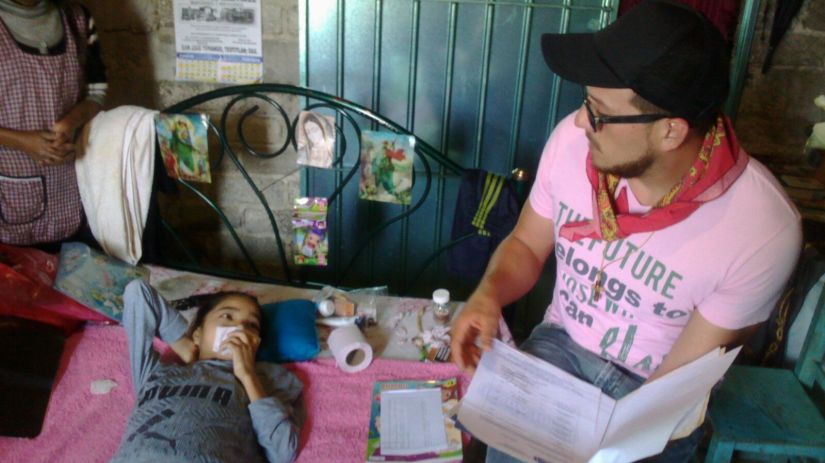
This year, the team met an 18-year-old who had been diagnosed with stomach cancer in Puebla (the closest public (free) hospital).  Doctors did not tell her or her family she might die. Apparently no treatments were offered and no medicine was available. No education or instructions were given about what to expect or how to handle the pain.

It is possible there was no pain medicine available at the public hospital (often the case throughout Mexico). Perhaps the hospital did not have a palliative care team (likely), perhaps doctors were frustrated when there were no medicines to offer, or, perhaps the girl was discriminated against because she is indigenous and they wouldn’t give her medicine if they had it. There is no reliable account of what actually happened. Dra Susana Lua Nava and the team brought pain medicines and gave the family detailed instructions on how best to take care of their loved one.

Palliative Care Dr. Susan Lua Nava Reviewing Documents with Cancer Patient
Mexican Palliative Care Care Doctor Susan Lua Nava reviewing documents with precious cancer patient in the remote mountains of Oaxaca state

Despite the sad situations of illness encountered, missionary German concludes “in the 14 years I have been on humanitarian missions, I end up receiving much more than I have given.” Being with the noble Mazateca is always a gift. His sentiment was expressed by others who also felt humbled by the experience.

Mexican Palliative Care Law of 2009

The Mexican Palliative Care Law of 2009 states that anyone suffering from severe pain, especially with a terminal condition, has a right to relief from that pain. Unfortunately, the public is often unaware of this human right and where to find the help when needed.  http://www.calidad.salud.gob.mx/site/calidad/docs/dmp-paliar_00C.pdf

See also the Human Rights Watch report on palliative care in Mexico, “needless suffering at the end of life.”    https://www.hrw.org/news/2014/10/24/mexico-needless-suffering-end-life

Juntos Contra el Dolor, A.C.  (United Against Pain) is a non-profit palliative care hospital and hospice in Guadalajara, Mexico offering consultations, in-home care (65-70 patients), and in hospital palliative care and/or hospice service. The mission is supported by donations. Founder Dra Susana Lua Nava is the author of El Enfermo: Terreno Sagrado (The Ill: Sacred Terrain).  For more information write to juntoscontraeldolor@gmail.com  or call (52)(33)3617 2417 in Guadalajara. See http://www.juntoscontraeldolor.com  (currently under construction) and Facebook USA page at https://www.facebook.com/JuntosContraelDolorUSA/

Notes and references:

There are approximately 305,836 Mazatecas in Mexico. Each Mazateca community is usually less than 500 in number. The native language Mazateco is related to Nahuatl.

www.euromedinfo.edu/how-culture-influences-health-beliefs.html/   “Although Hispanics share a strong heritage that includes family and religion, each subgroup of the Hispanic population has distinct cultural beliefs and customs. Fatalistic views are shared by many Hispanic patients who view illness as God’s will or divine punishment brought about by previous or current sinful behavior. Hispanic patients may prefer to use home remedies and may consult a folk healer, known as a curandero (or shaman).”

https://mapcarta.com/19948092 map of the Sierra Mazateca
https://www.youtube.com/watch?v=_xwIOrTKbxo  Huautla de Jimenez video December 2016
https://www.youtube.com/watch?v=1SXFrih04NA    dancing at the gravesite of someone in San Andres Hidalgo
https://www.vice.com/en_us/article/salvia-velada-mazatec-shaman-ceremony-portfolio-v23n8  unique video by American interested in shamanism and plants

https://www.youtube.com/watch?v=9C5ETSgHWBo  Mazateca shaman known as the Corn Reader

Researched and written by Wendy Jane Carrel

Photos by German Becercil and Jorge Gonzalez Gonzalez

Health & Wellness Mexico, Hospice, Pain, Palliative Care, Palliative Care Mexico

Palliative Care & Hospice in Jalisco, Mexico; Health Talk at Lake Chapala March 25

A church at Lake Chapala, Mexico has kindly asked me to speak at one of their health seminars.
I will share what I have learned after 1 1/2 years observing the only 24/7 palliative care and hospice model in Jalisco, Mexico, Juntos Contra el Dolor.  See http://www.juntoscontraeldolor.com
Details:
March 25, 2017   Saturday, 10:30 a.m.  St. Andrew’s Anglican Church
Calle San Lucas 19, Riberas el Pilar, Chapala
Palliative Care and Hospice in Jalisco, Mexico  presented by Wendy Jane Carrel, M.A.
Palliative care and hospice options in Jalisco will be reviewed. There will be a discussion of what might one expect compared to the U.S. or Canada.
The talk is open to the public.
Death and Dying, Dying in Mexico, End-of-Life Care, Hospice, Humanitarian Rescue Older Adults, Mexico, Palliative Care, Palliative Care Mexico

Sacred, Dignified Death in a Mexican Palliative Care Hospital

I have been sitting hospice as a volunteer since 1999.

I currently have the honor of assisting at the only 24/7 palliative care hospital and hospice in the state of Jalisco, Mexico, http://www.juntoscontraeldolor.com, (United Against Pain).

It is beyond words to describe what I see and feel as patients come and go – those who get well, those who pass in our presence, those who have family, those who are estranged from family, those who have no family.

Every day is a lesson in human behavior, details of physical illness and care, psychology of illness, and feelings that occur as we observe pain and/or quiet passing of others. Every day, despite the circumstances, there is a demonstration of love.

In early 2016 we received a call from El Refugio (The Refuge) missionaries, a non-profit that rescues people from the streets of Guadalajara. They had found a tall (by American standards), emaciated man who appeared to be dying.

The man had been taken to Hospital Civil Viejo (the Old Civil Hospital) where admittance was refused. The missionaries called in desperation. They remembered Juntos Contra el Dolor serves all regardless of economic position or faith. Everyone deserves a respectful end-of-life.

The  founder of the Juntos Contra el Dolor humanitarian model for Mexico, Dra Susana Lua Nava, urged the group to bring the man immediately. The man arrived dehydrated, malnourished, and appeared as though he would pass at any moment.

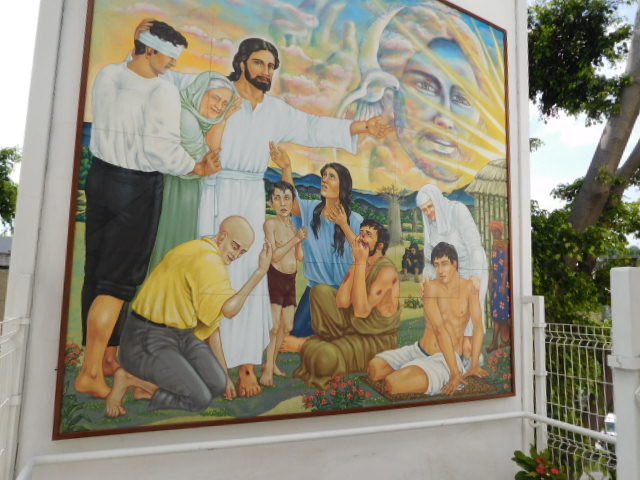
mural at entrance to Juntos Contra el Dolor
Mural at entrance to Juntos Contra el Dolor, palliative care hospital and hospice, Guadalajara, Mexico

We gently bathed him several times the first few days removing deep set black from his shoeless feet and body. We constantly changed the sheets and his gown. The odor was strong the first days and then dissipated. Around the fourth or fifth day the patient began to open his eyes. We started feeding him by mouth, little by little.

Each of us who entered his room – physicians, nurses, social workers and volunteers would have the same experience. We would talk to him, but he could only answer with sounds. At first we thought it was because he had lost almost all this teeth. We finally figured out he did not speak Spanish. He may have been a native Huichol from the mountains of Jalisco. We did not know.

But whenever we visited or fed him there would be light of appreciation in his eyes, and a slight smile on his strong, handsome face. When we stroked his forehead and hair or had our hands on his, he would bring our hands to his lips and kiss us. Tears would stream down his face. This is how he communicated. It made us wonder if he was ever attended to in his life. We too were moved. We felt deep compassion for him. We did our best to make him feel welcome and comfortable.

His name? He had no identification. One of the rescuers decided on “Rogelio”. We did not know his age. We guessed age 80. We did not learn the circumstances of his life of course. All we knew is that at this stage of his existence he was alone and abandoned. 

But we were there. One of the missionaries would come when he could to stay by Rogelio’s side all night, as family members usually do.

There were humming sounds of prayer in the room each day from those who stood by him.

In less than two weeks Rogelio passed in the early morning hours, veladoras (candles) burning. I was there alone with the night nurse. We bathed and diapered him. We wrapped his hands and head in gauze. We wrapped him in a new sheet with his face peeking out. I silently talked to him and wished him a good transition. I cannot speak for others who tended to him but his presence was an inexplicable gift.

Most of the patients who come to us (or whom we go to at home) are surrounded by innumerable family members. Rogelio was no longer without support. Hopefully, we gave him a dignified death.

Miraculously, El Refugio found a way to pay for his cremation. They found a place for his remains under a tree (we do not know where) and said prayers for him. He was cared for by everyone along his journey. See https://www.facebook.com/elrefugio.cuarto    Note: When unknown persons pass in Guadalajara their remains are placed in an unmarked communal grave in the city cemetery.

Rest in peace dear Rogelio.

Caregivers, Death and Dying, End-of-Life Care, Health & Wellness Mexico, Hospice, Palliative Care

How Caregiving A Dying Husband Taught a Journalist Appreciation for Living

PBS News Hour features a short talk by Tracy Grant, Washington Post editor, about how caring for her terminally ill husband offered an understanding of quality of life and made her own life worth living. (See link at end of blog for video).

As a caregiver, palliative care worker and hospice volunteer, I agree with what Grant communicates. We all become our better selves while caring for others. The ill teach us so much. Their gifts to us last a lifetime. The experiences can be remarkable.

Tracy Grant

Tracy Grant, Deputy Managing Editor, Washington Post

http://www.pbs.org/newshour/tag/tracy-grant/

Aging, Health & Wellness Mexico, Mexico, Mexico Senior Living, Older Adults, Senior Care Mexico

International Day of the Older Adult is Celebrated in Guadalajara, Mexico

The International Day of Older Adults is celebrated, by proclamation of the United Nations, on October 1 every year.

In Mexico this event dovetails with the country’s Senior Day at the end of September. Festivities are held at senior centers, senior homes, and on DIF (government social service) grounds.

For those of you who haven’t been to Mexico, especially Guadalajara, its “tapatio” residents love to sing and dance no matter their age. Being around these folks will automatically lift your spirits. They love to dress up, eat well, and have fun.  Most of all, they never give up despite mobility issues or aches and pains.

Tapatio singing seniors

In Mexico there are 7.5 million persons 70 or older. This number is expected to reach 8.5 million in 2020, and 10.2 million by 2030.  According to the Mexican government, at 60 you are an older adult. It is unclear why the number of boomers and persons ages 60-70 are not included in the Mexican government statistics (INEGI) reports.

In the U.S. there are 70-80 million adults who  will be over 65 by 2020.

This year I attended the Asilo Juan Pablo II senior day festivities (see earlier post September 2016) at http://www.WellnessShepherd.com .

Last year I attended an event at DIF’s Centro de Amistad Internacional (Center of International Friendship) on Calle Eulogio Parra 2539 just off Lopez Mateo in Guadalajara. It was co-hosted by the Office of Older Adults for the State of Jalisco, Mexico and by INAPAM ( the National Institute for Older Adults, est. in 2002). It was held on the first Sunday of October from 10 a.m. to 3 p.m.

Groups of seniors performed dances, ladies were offered free beauty treatments by the Irma de Zuniga make-up academy located on Lopez Cotilla in downtown Guadalajara (www.irmadezuniga.com), there were talks by gerontologists, nutritionists and others experts. Jhre Chacon and his team of healing touch trainees from UNCOA offered massages, Reiki, and other relaxing experiences for the guests. There were also poetry readings and card games.

Tapatio caballeros
Tapatio caballeros


older adult folkloric dancers, Guadalajara


healing touch holistic care for older adults, Guadalajara
healing touch holistic care for older adults, Guadalajara, offered by UNCOA


Queen for a Day make-up gift for older adults, Guadalajara

Ana Maria Luz Garcia, owner of the historic restaurant La Fonda de Arcangel Miguel (www.fondasanmiguelarcangel.com, housed in a colonial convent in the center of Guadalajara), hosted the buffet breakfast/brunch. Garcia is a passionate advocate for healthy living at any age.

Consuelo Manzo Chavez, Director of Older Adults for DIF presided with Alma Solis Montiel, who at the time was the Director of INAPAM but is now the Director General of the Institute for Older Adults for the State of Jalisco.

International Day of Older Adults with DIF and INAPAM Directors & amigita Leila
International Day of Older Adults with Senior Care Advisor Wendy Jane Carrel, DIF Director Consuelo Manzo Chavez, and former INAPAM Director Alma Solis – now Director of the Institute of Older Adults for the state of Jalisco, with unidentified older adult, and human rights attorney Laila Martinez de Santiago
End-of-Life Care, Health & Wellness Mexico, Hospice, Pain, Palliative Care, Palliative Care Mexico

Mexico Palliative Care Non-Profit Holds Festive Fundraiser in Super-Competitive Environment

Mexican non-profits have a hard time surviving. One can say many non-profits, no matter the country, find it challenging to be sustainable.

In the state of Jalisco, there are over 800 registered A.C.’s, Asociaciónes Civiles, or non-profits. In all of Mexico, there are about 4,000 registered non-profits. That’s a lot of competition in a land where philanthropy, though existent, is not part of the culture.

Juntos Contra el Dolor of Guadalajara is a remarkable entity. It is a Mexican model for palliative care and hospice. Its resourceful, enthusiastic founder and palliative care educator Dra Susana Lua Nava is an ecumenical nun. Her team serves anyone of any belief system or economic background. All are dedicated to offering holistic pain relief for life-limiting conditions or at end-of-life.

dscn0330
Administration volunteer Michele Carrillo, Madre Martina Zumaya Head of Nursing, Dra Susana Lua Nava founder, Dra Karla Rebollar of Juntos Contra el Dolor A.C.

In 2014 Dra Susana Lua Nava and Juntos Contra el Dolor received the prestigious state of Jalisco IJAS award for outstanding contributions by a non-profit.

Juntos Contra el Dolor’s 24/7 humanitarian effort includes not only medical attention at its 8-bed hospital but outreach and education to 65 or more patients and their families at home. For a Mexican non-profit dependent on donations, this is an achievement. Faith in the need, faith in all possibilities, and a lot of love are components of the Juntos ability to continue despite obstacles.

Every member of the team is a volunteer except the nurses. The team consists of palliative care doctors, psychologists, social workers, chaplains, and trained volunteers.

dscn0239
Four social workers, two MD’s (far right), all Juntos Contra el Dolor volunteers

Juntos Contra el Dolor held its annual fundraiser, a Fiesta Mexicana gala, on Saturday, September 24.

The nuns and volunteers led by Dra Susana Lua Nava proved to be creative and super organized.
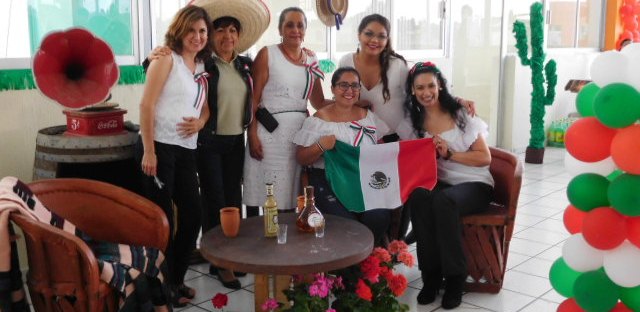
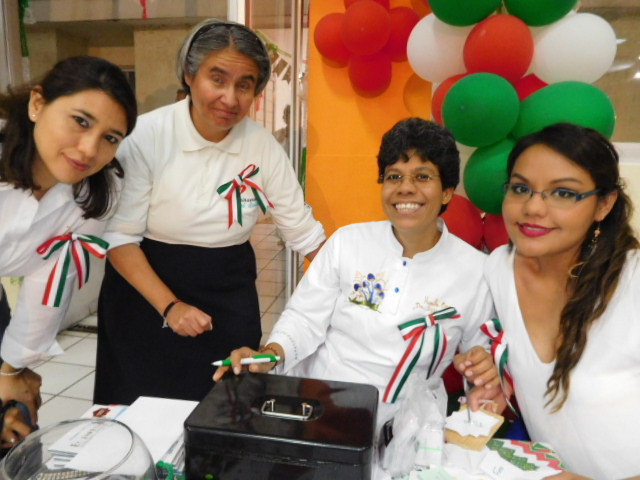
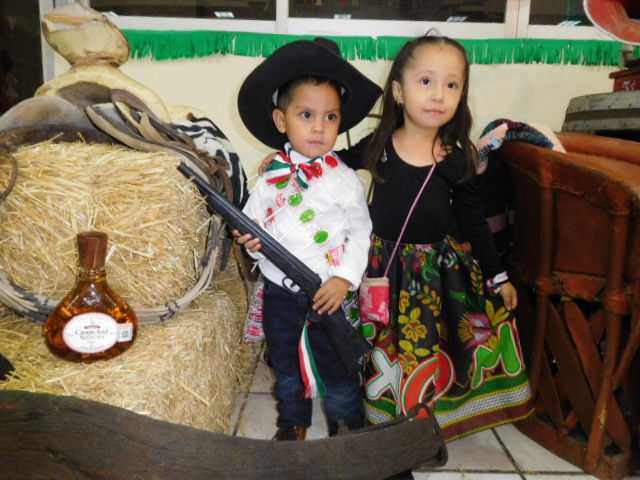
Every detail was attended to – philodendron plants, potted geraniums, Viva Mexico banners, red/green/white flags hanging from the ceilings, red/green/white bow ties over white blouses or shirts so people would know who the volunteers were, donated chocolate cake from one of the best bakeries in town, clean white table cloths and chair covers, a tequila bar, a hand-made hot organic corn tortilla corner, and a place for photos where guests could dress like a revolutionary from the Mexican independence. Fresh quality food included 10 guisados (entrees) prepared with love and served in Mexican pottery, a rarity at charity events in Jalisco. And, there was a romantic singing group Los Bohemios, plus an all-girl mariachi band dressed in hot pink and silver!!  A lively event and fun for all.
dscn0243
Sweet volunteers Lola, Maria, and Nena
dscn0332
Volunteer Juan with his lovely, sensitive mother – his father, her husband, passed away at Juntos Contra el Dolor in June 2016
beautiful Mexican ladies of the San Bernardo parish
dscn0284
junior guests
dscn0319
All-girl mariachi band from Guadalajara

Juntos Contra el Dolor provides weekly consultations in a donated space in San Augustin, a suburb to the west of Guadalajara. By January 2017 there will  be consultations for those suffering from pain at Lake Chapala, an hour from Guadalajara. The offices will be in the Church of San Juan Batista in San Juan Cosala.

As mentioned, the non-profit stays afloat by donations – usually in-kind support such as diapers, linen, paper supplies, fresh organic food, and new medicines.At the following link you can read what is needed and where one can make donations.  http://juntoscontraeldolor.com/Donaciones/don.html

Dr. Lua received three years of specialized palliative care training in the Canary Islands with Dr. Marcos Gomez Sancho, considered the leading palliative care physician and professor of the Latin world. Dr. Lua is a thought leader for Mexico, and author of  El Enfermo: Terreno Sagrado  (The Ill: Sacred Terrain).