In a few days I am heading to Hermosillo, Sonora to meet with the principals of a new palliative care residence, review some assisted living/long-term care homes, and join a colleague in San Carlos (two hours south near Guaymas) for a vital conversation on navigating the unexpected in Mexico.
We’ll be diving into the ‘why’ and ‘how’ of preparing for healthcare emergencies and end-of-life care in Mexico – a journey that requires understanding different laws, cultural nuances, and a healthcare system that can feel complex when you’re far from home.
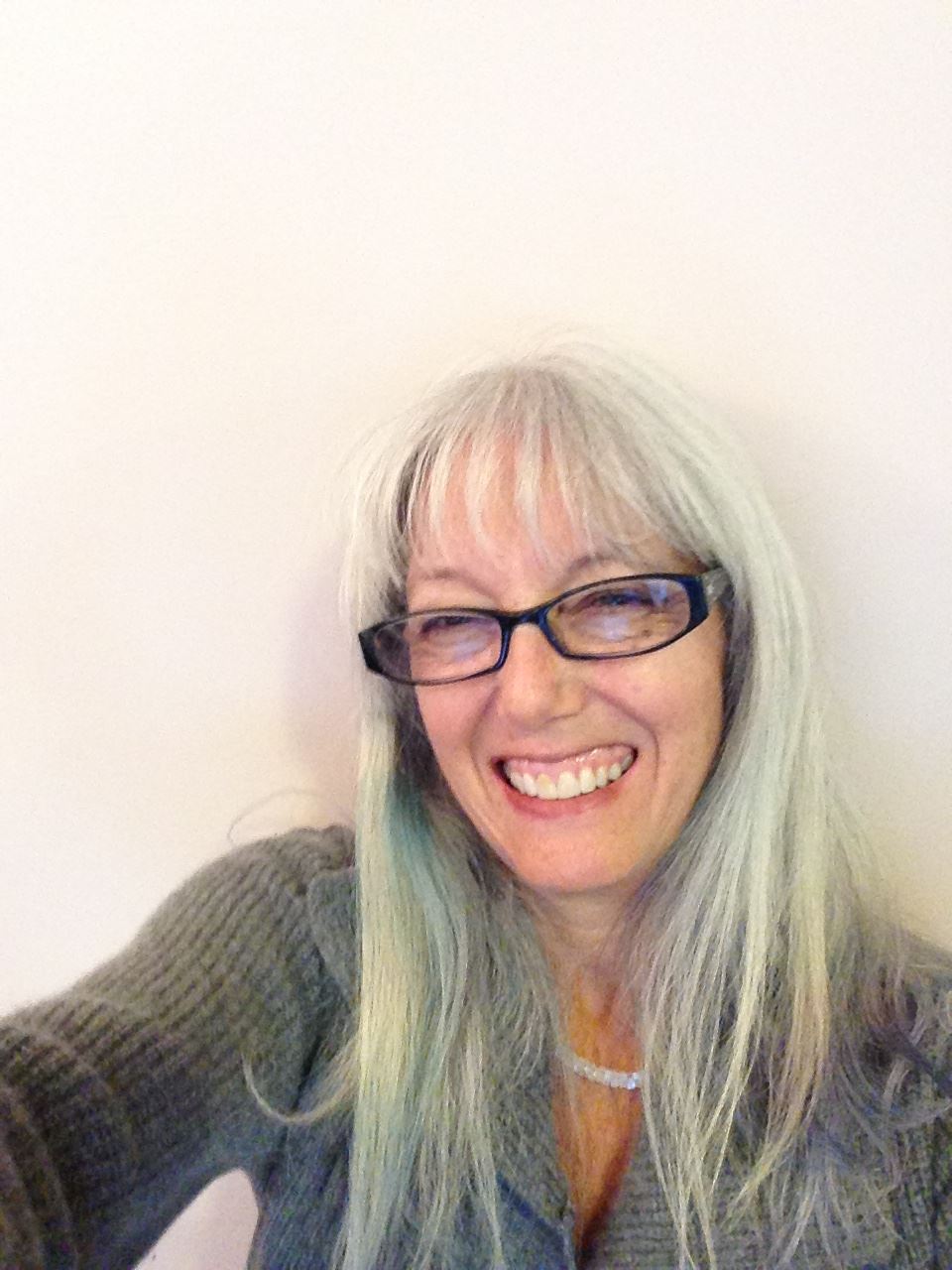
My Death Educator and End-of-Life Doula colleague Marta Macbeth will share about her experiences with a dying loved one in San Carlos and Hermosillo as well as the use of cannabis for comfort care. Here is a photo of lovely Marta:
I will also share stories and focus on the importance of advance care documents plus building a support system if you are an expat. Together with Marta we will discuss the palliative care options currently available in the Guaymas-San Carlos-Hermosillo area.
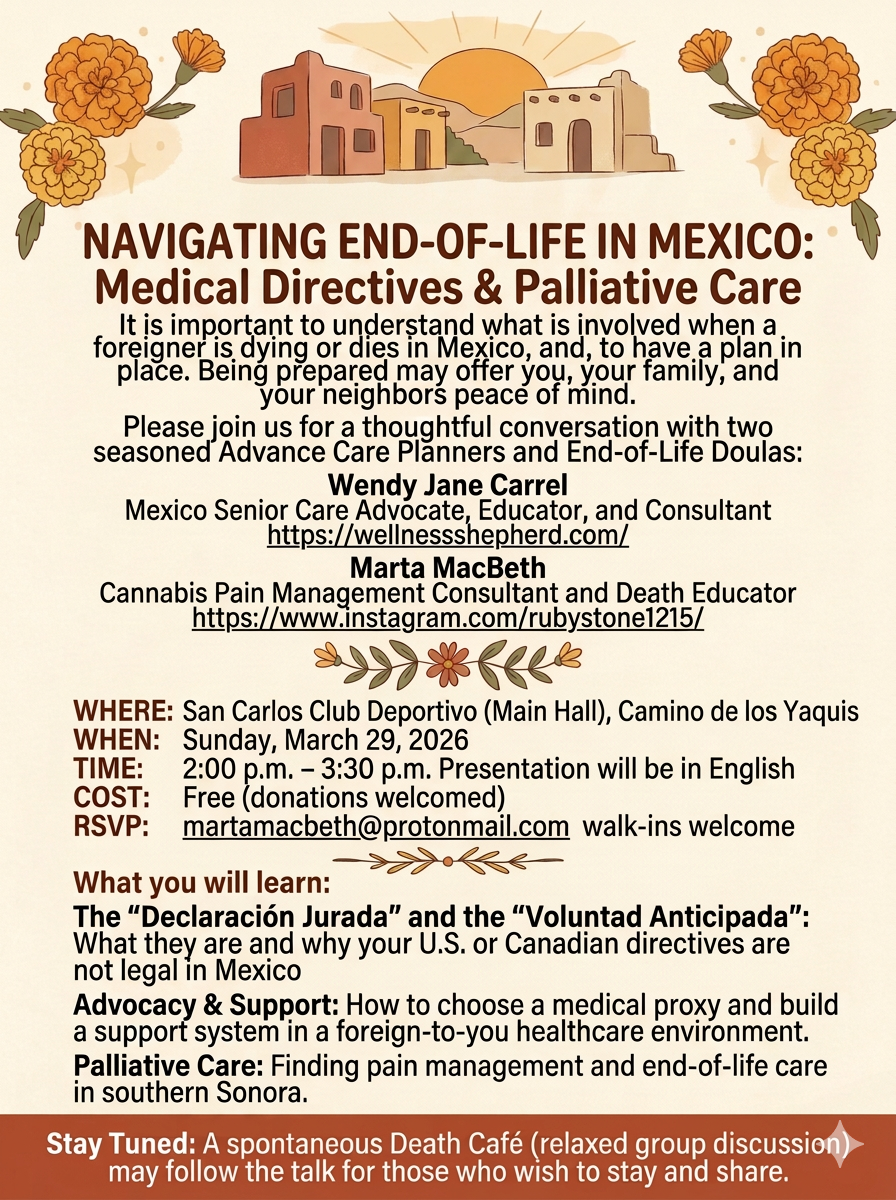
Here below is a poster of the free, open to the public event if you have friends or colleagues in Sonora who may wish to attend.
Below the poster is a link to my blog, based on 11 years of hands-on experience, about Dying in Mexico and how to prepare.
Wendy Jane Carrel, MA, is a trusted older adult advocate and consultant who has hands-on experience with healthcare systems, senior care residences, and end-of-life care in Mexico, Ecuador, and other nations. She acts as a healthcare liaison providing informed, thoughtful guidance and curated, compatible care options for individuals, and for families and their loved ones. She is a speaker and published author on subjects related to senior well-being and a trauma-informed end-of-life doula. Wendy’s web site is http://www.WellnessShepherd.com.
If you live in Mexico or Latin America, have you created a plan for what to do in case of an accident, natural disaster, or healthcare emergency?
Who is going to show up for you?! What if you are no longer able to speak and make decisions for yourself?
If you wish to save your family and other loved ones considerable grief and time, it is important to understand what is involved when a foreigner becomes ill or dies in Mexico or other Latin American nation.
Last month I had the pleasure of joining patient advocate and educator colleague Deborah Bickel of Be Well San Miguel to share with expats why it is wise to create a Mexican declaracion jurada (living will) and/or voluntad anticipada (advance healthcare directive). The voluntad anticipada is incorporated into the declaracion jurada in many sates. My role in the meeting was to give an overview of palliative care and hospice and how to find end-of-life support in Mexico.
We have each invested 14 years or more sharing with expats (Deborah in Mexico, Guatemala, and Nicaragua – me in Mexico and Ecuador) why planning is important no matter your age but especially if you are 55+.
Short list of reasons:
Mexican law is civil law
British, Canadian, and U.S. law is common law.
There are major differences.
If you arrive with an Advance Healthcare Directive or Five Wishes or other document legal in your native country, it will not be legal in Latin America unless you get lucky. In Mexico, you must create a declaracion jurada and/or voluntad anticipada if you want your wishes to be honored. Some attorneys and notaries will incorporate your home country wishes for you. These documents must be created BEFORE any accident, illness, or demise. As of this date only 14 of Mexico’s 32 states offer a voluntad anticipada. The purpose of the voluntad, sometimes referred to as a directriz, is to avoid legal, medical, and bioethical problems that could complicate the situation for you the patient or your family.
Mexico is a country with predominantly Catholic traditions. These traditions influence choices. If you are Catholic, the system may seem familiar, such as burial over cremation. If you had chosen to live in Buddhist or Hindu Asia, cremation would be a relatively easy matter involving fewer steps as cremation is common practice. Or, you could have opted for a Tibetan sky burial. If you wish to be cremated, you will need a notarized document stating this wish.
Latin Americans have large family systems. If something happens to you as a Latin American, a family member will show up and know what to do. Most expats live in Latin America alone or as a couple, sometimes with children.
The Mexican culture, language, and way of thinking are unique. Most of all, procedures may be unfamiliarand complex. Attitudes and response to accidents, illness, and death are different.
Non-Spanish speaking expats often need bilingual advocates to negotiate the system. At least three people are recommended to advocate for your wishes, and/or serve as your healthcare proxies. If one is not available, perhaps another will be.
April 16 is National Healthcare Decisions Day in the U.S. If you do not yet have a plan, every day is a good day to work on one no matter where you are.
Aileen Gerhardt, a fellow patient advocate and educator in Boston writes “decide, document, designate, and discuss!!” Good advice.
Wendy Jane Carrel, MA, is a Spanish-speaking senior care advocate from California. She has travelled Mexico for several years researching health systems, senior care, and end-of-life care to connect Americans, Canadians, and Europeans with healing options for loved ones. She is a compassionate companion and palliative care liaison, legacy writer, co-founder of Café Mortality Ajijic/now Death Café Ajijic and founding member/speaker of the Beautiful Dying Expo (USA). She is a trauma-informed, gentle End-of-Life Doula (National End-of-Life Doula Alliance proficient), and a speaker and published author on subjects related to senior well-being. Wendy’s web site is https://www.WellnessShepherd.com
If you live in Mexico or Latin America, have you created a plan for what to do in case of an accident, natural disaster, or healthcare emergency?
Who is going to show up for you?! What if you are no longer able to speak and make decisions for yourself?
If you wish to save your family, other loved ones, and neighbors considerable grief and time, it is important to understand what is involved when a foreigner becomes ill or dies in Mexico or other Latin American nation.
Last month I had the pleasure of joining patient advocate and educator colleague Deborah Bickel of Be Well San Miguel to share with expats in San Miguel de Allende why it is wise to create a Mexican documentacion jurada (living will) or voluntad anticipada (advance healthcare directive). My role in the meeting was to give an overview of palliative care and hospice.
Deborah Bickel of Be Well San Miguel, Wendy Jane Carrel of Wellness Shepherd
We have each invested 11 years or more sharing with expats (Deborah in Mexico, Guatemala, and Nicaragua – me in Mexico and Ecuador) why planning is important no matter your age but especially if you are 55+.
Short list of reasons:
Mexican law is civil law. British, Canadian, and U.S. law is common law. There are major differences.
If you arrive with an Advance Health Care Directive or Five Wishes or other document legal in your native country, it will not be legal in Latin America unless you get lucky. In Mexico, you must create a documentacion jurada and/or voluntad anticipada if you want your wishes honored. These documents must be notarized.
Notaries in Mexico are experienced attorneys appointed by the Governor of State. Some will incorporate your home country wishes for you. These documents must be created BEFORE any accident, illness, or demise. In some instances documents are created by an attorney who is not a notary and then signed in front of a notary.
Regarding the voluntad anticipada, as of this date only 14 of Mexico’s 32 states offer a voluntad anticipada. The purpose of the voluntad, sometimes referred to as a directriz, is to avoid legal, medical, and bioethical problems that could complicate the situation for you the patient or your family.
Mexico is a country with predominantly Catholic traditions. These traditions influence choices. If you are Catholic, the system may seem familiar, such as burial over cremation. If you had chosen to live in Buddhist or Hindu Asia, cremation would be a relatively easy matter involving fewer steps as cremation is common practice. Or, you could have opted for a Tibetan sky burial. If you wish to be cremated, you will need a notarized document stating this wish.
Latin Americans have large family systems. If something happens to you as a Latin American, a family member will show up and know what to do. Most expats live in Latin America alone or as a couple, sometimes with children, often without a plan for emergency support.
The Mexican culture, language, and way of thinking are unique. Most of all, procedures may be unfamiliarand complex. Attitudes and response to accidents, illness, and death are different.
Non-Spanish speaking expats often need bilingual advocates to negotiate the system. At least three people are recommended to advocate for your wishes, and/or serve as your healthcare proxies. If one is not available when needed, perhaps another will be.
April 16 is National Healthcare Decisions Day in the U.S. and a reminder that if you do not yet have a plan, every day is a good day to work on one no matter where you live.
Aileen Gerhardt, a fellow patient advocate and educator in Boston writes “decide, document, designate, and discuss!!” Good advice.
Deborah’s extensive medical directive service for Guanajuato state Mexico may be found at:
Wendy Jane Carrel, MA, is a Spanish-speaking senior care advocate from California. She has travelled Mexico for several years researching health systems, senior care, and end-of-life care to connect Americans, Canadians, and Europeans with healing options for loved ones. She is a compassionate companion and palliative care liaison, legacy writer, co-founder of Café Mortality Ajijic/now Death Café Ajijic and founding member/speaker of the Beautiful Dying Expo (USA). She is a trauma-informed, gentle End-of-Life Doula (National End-of-Life Doula Alliance proficient), and a speaker and published author on subjects related to senior well-being. Wendy’s web site is https://www.WellnessShepherd.com




 Wellness Shepherd