Aging, Alzheimer's, Assisted Living, Expats, Health & Wellness Mexico, Mexico, Mexico Senior Living, Retirement, Senior Care Mexico, Senior Living

Senior Care/Senior Living Options at Lake Chapala, Mexico

Not long ago I addressed a group of Canadians and Americans at an Open Circle chat at the Lake Chapala Society in Ajijic, Mexico. Most of the attendees were full-time residents with the lay of the land, but curious newcomers attended as well.

The most meaningful part of the presentation?  Introducing American and Mexican senior living owners to the audience. After the chat they were able to become acquainted with one another.

In the photo below, four Mexican registered nurse owners are represented. I am the person holding the microphone.

FotoSeniorLivingProvidersLakeChapala
Senior Care Specialist Wendy Jane Carrel introduces owners of Senior Homes at Lake Chapala to Americans and Canadians

Senior Housing Forum posted my article based on the talk.. See http://tinyurl.com/zoz9zdf or https://www.seniorhousingforum.net/blog/2016/8/3/will-mexico-solve-senior-living-affordability-problem  to read the entire piece, or,  read below…

Will Mexico Solve the Senior Living Affordability Problem?

Published on Wed, 08/03/2016 – 4:55pm

By Wendy Jane Carrel, wellnessshepherd.com

If you cannot afford healthcare or retirement in Canada or the U.S., what are your options? Where do you look?

For the last five decades, and especially since the U.S. economic challenges that became apparent in 2007-2008, retirees have been choosing destinations in Asia, Europe, and Latin America.

Despite news about crime and drug cartels, Mexico reigns as the number one choice for most American and Canadians, primarily because of its lower costs, warmer weather, health care choices, and location so close to home.

According to U.S. Consulates in Mexico there is a current count of between 1.2 – 1.4 million Americans living in Baja California, Cancun, Lake Chapala, Mazatlan, Puerto Vallarta, San Miguel Allende, and other areas. (The number also includes Americans who are not retired). According to the Canadian Consulate in Guadalajara and the Canadians Abroad Registry, approximately 10,000 Canadians are registered in high season and 1,500 are registered as retired full time in Mexico. Not all Canadians register.

Choices for senior living in Mexico are not all that dissimilar to those in Canada and the U.S.:

  • Aging in Place – independent living in your own home or apartment

  • Aging in Community – co-housing

  • Assisted Living – if you require care and cannot afford full-time care at home

  • Nursing Care and Rehabilitation

Lake Chapala

Currently, at Lake Chapala, Mexico there are in the neighborhood of 20,000 retired Americans and Canadians.

North shore Lake Chapala, which includes the communities of Ajijic, Chapala, Jocotepec, San Antonio, and San Juan Cosala (40 minutes drive time from one end of north shore to the other), has several options for senior living with others being planned.

What is different from Canada and the U.S. is the cost of living, especially for health care, often up to two-thirds less.

What is also different is that there are no Life Planning (continuing care) models at Lake Chapala. A project was planned three years ago and has yet to be built. There is one, however, that will open in Mexico City sometime this fall.

Another difference is that in Canada and the U.S. Alzheimer’s and dementia patients are in separate areas on a campus. In most of Mexico, dementia patients are living and sharing the same space with older adults who have mobility issues, not dementia issues, and the care is rarely specialized.

Mexican senior homes are under the purview of the Ministry of Public Health and local fire departments. They are not tightly regulated and inspected as they are in Canada and the U.S.

What is available at Lake Chapala now?

  • Three co-housing/independent living options – one in Ajijic with three individual apartments and five casitas, a pool, lakeside views, and two meals a day; one in Riberas del Pilar on two levels where residents have their own apartment, are provided with two meals a day, and have access to a library, a gym, and a pool; and one in San Juan Cosala, focusing on health, green living, and sustainability.

    At the first two if you become immobile or develop serious health issues you would need to move. At the property in San Juan Cosala (in development) you can invite caregivers to your living quarters.

  • Three assisted living homes specializing in Alzheimer’s and dementia care – one is run by a geriatrician and a nurse, the other two by nurses with doctors on call. One of these homes plans to add a second home in the near future for a total of four dedicated Alzheimer’s care homes at the lake to meet the growing need.

  • Six homes combine assisted living, nursing and some rehabilitation.

    That number climbs to seven if you include two rooms above the offices of a physician in Ajijic (no rehab), and 9 if you include one owner who has three homes (no rehab).

    It climbs to 10 choices with an American-owned recovery care center for plastic surgery (more like a B & B) where you can also rent suites. The recovery center has been in existence for almost 20 years.

    The total number of choices reaches 11 if you include a low-income senior home in Chapala which also has Mexican residents.

  • Four properties have owners who live on site. These properties are either American- or Canadian-owned, or, owned by English-speaking Mexicans who focus on serving the expat community. There usually is one person who speaks English at the senior living options at Lake Chapala.

The above-mentioned places are private pay. Monthly costs for private pay assisted living at Lake Chapala range between $1,000 and $2,000 U.S. per month except for the home in Chapala. (The average U.S. private pay is $3200-$3500, and up to $12,000/month or more for Alzheimer’s care).

Most care homes at the lake have 12 or fewer residents. Service is considered personalized. In many instances there is the quality of “carino,” caregivers treating you like a lovable member of the family.

There are 125 senior living homes in the state of Jalisco, housing 1,723 elders. These numbers include only Mexican citizens. Not included are Americans and Canadians at Lake Chapala or in Puerto Vallarta. There are approximately 758,000 older adults in Jalisco state.

In Guadalajara, an hour from Lake Chapala, there are three models of senior care – private pay, non-profit care primarily with nuns (usually excellent quality), and government care (usually DIF, a social services entity that exists throughout Mexico). Prices range from gratis for the indigent to around $400-$800 U.S. for those with pensions, and up to $3500 U.S. for private pay.

Note: I have met Americans with incomes of $600 or less/month who are living comfortably and safely in Mexican assisted living homes throughout the country.

Resources:

Canadian retirees make new homes in Mexico

Instituto Nacional de Estadistica y Geografia National Institute of Statistics and Geography

US State Department – Relations with Mexico

* Cover photo of Lake Chapala courtesy of en.wikipedia.org
** Map of Lake Chapala region courtesy of mexico-insights.com


Aging, Alzheimer's, Dementia, Health & Wellness Mexico, Long-Term Care, Mental Health, Mexico, Senior Care Mexico

International Geriatric/Gerontology Conference Guadalajara 2016 – Focus on Dementia

The Hospital Civil “Fray Antonio Alcalde”, also known as the Old Civil Hospital, produced its 21st International Geriatric and Gerontology Symposium July 7-9, 2016, at the Hilton Hotel auditorium in Guadalajara, Mexico. The theme was “Enfermedades Neurodegenerativas en la Vejez”, or, Neurodegenerative Illness in Older Adults.

There were about 250 attendees as well as one pharmaceutical company (Asofarma de Mexico, S.A.), one hospital supply company from Switzerland, and a private pay day care senior center (www.vidavi.mx) offering business cards, pamphlets, free pens, and carry bags to participants in the registration area.

Four geriatric physicians from the hospital organized the event – Dr.David Leal Mora (the international section), Dr.Hector Ivan Cruz Neri, Dr. Julio Alberto Dias Ramos, and Dra Rocio Garcia Talavera. Guest speakers were from Guadalajara, Leon, Mexico City, and the U.S.

Old Civil Hospital Geriatrics Symposium, Guadalajara, 2016
Old Civil Hospital Geriatrics Symposium, Guadalajara, 2016   Dr. Rocio Garcia is at the podium, Dr. David Leal is the first man on the left with dignitaries from the public hospital system

There were memorable talks about the Use and Abuse of Antipsychotic Drugs, Managing the Symptoms of Parkinson’s, When a Day is 36 Hours, Evidence-Based Geriatrics, Government Assistance Programs for Older Adults, and Can We Prevent Dementia?

Peter V. Rabins, MD, MPH, Professor of Psychiatry, Johns Hopkins
Peter V. Rabins, MD, MPH, Professor of Psychiatry, Johns Hopkins, and author


What stood out most were the physicians, both American and Mexican, who are exploring and interested in alternative non-drug options for dementia prevention. The common theme – we must all be vigilant in keeping our cognitive skills sharp to the very end, if possible.

Topic-Related Resources:

Israeli physicians have developed a surgery to remove shaking due to Parkinson’s disease http://healthamazing.co/2016/07/13/first-in-israel-surgery-that-removes-shaking-due-to-parkinsons-disease/

http://www.latimes.com/opinion/op-ed/la-oe-stone-solvadi-drug-pricing-20160705-snap-story.html   By Daniel Stone, MD, internal medicine and geriatric specialist, Los Angeles, and, Pres of LA Society of Internists. Another physician calling for a stop to the increasing costs of drugs and “pharma greed”.

http://www.AlzheimersDementiaSummit.com focusing on dementia prevention and alternative remedies that already exist for protecting our brains and our minds. Produced by Jonathan Landsman, a natural health advocate with physicians and others as guest speakers – Dr. Russell Blaylock, Dr. David Jockers, Donna Gates, Dr. Mark Hyman, Josh Axe, Sayer Ji, Michael T. Murray and many others. I missed this July 2016 summit on line but believe it might be available to listen to.

http://goodlifeawareness.com/men-may-be-able-to-avoid-dementia-by-marrying-intelligent-women-researchers-say/  Don’t know if the studies are true, but this article caught my attention. 😉

http://yournewswire.com/harvard-professor-says-prescription-drugs-are-killing-population/utm_content=buffer7c70d&utm_medium=social&utm_source=facebook.com&utm_campaign=buffer   article is not professionally written, has a sensational headline, and, requires quotes and some fact-based evidence.
http://seniorhousingnews.com/2016/08/17/communities-turn-to-marijuana-to-treat-memory-care-residents/?_hsenc=p2ANqtz-9Kxe5ppADrvnIp22h1hj0wP4zRi3r8rV1Y_cRXvTORbY5Zis0oK9cbZtcGubP25n_orIdb35T0M8nX7GJuMFljm_Bygw&_hsmi=33083300    article about successful use of marijuana (with family permission) instead of drugs to calm patients in northern California dementia care residence
Aging, Health & Wellness Mexico, Mexico, Palliative Care Mexico, Retirement, Senior Care Mexico

Aging – Mexican Physician Advocates Eating Less, Walking More

Dr. Jose Gustavo Valladores, President of the Gerontological Society of Jalisco, addressed a group of older adults in a meeting room at Juntos Contra el Dolor Hospital in the parish of San Bernardo, Mezquitan Country, Guadalajara, a few days ago.

Valladores, a spry, humorous, and fit 75 year old advocated eating less, walking more, sleeping about seven hours, and learning to breath slowly and deeply for a more healthful life.

Dr. Valladores contends we do not need to eat as much as we continue to age. His comments remind me of a movement afloat in senior living in the U.S. called Grind Dining, serving small, elegant portions that are easy to see, easy to consume, and easy to manage, especially for those with arthritis, dementia, etc.  Studies show health outcomes with such meals are positive.

Harvard-trained physician and gerontologist Bill Thomas of the Green Project and Eden Alternative has a not to dissimilar approach for aging well that he calls MESH. Move, Eat, Sleep, Heal.

The conversation for wellness in aging continues with this notable consensus among two gerontologists from two different cultures. A return to basics. Wise.

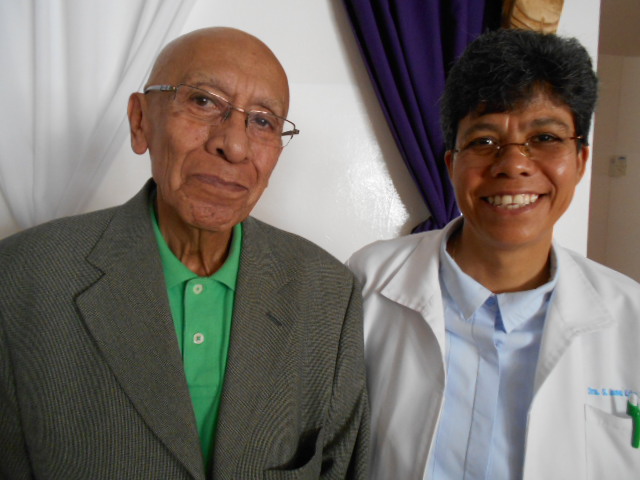
Dr. Gustavo y Dra Susana 21 de mayo 2016
Dr. Jose Gustavo Valladores y Dra Susana Lua Nava

Dra Susana Lua Nava, the founder of the 24/7 palliative care hospital and hospice, was Dr. Valladores’ medical school student 20 years ago.

Aging, Hospice, Mexico, Palliative Care, Senior Services

2nd International Palliative Care Congress in Guadalajara, Mexico – Oct 2015

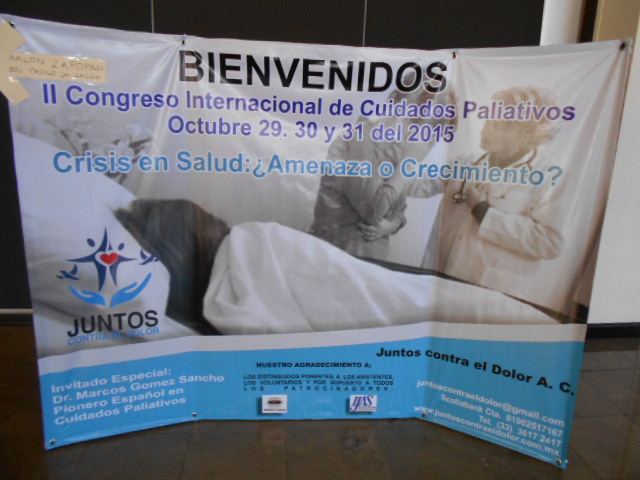
Juntos Contra el Dolor, AC (United Against Pain) a palliative care non-profit in Guadalajara, Mexico produced its 2nd International Palliative Care Congress (II Congreso Internacional de Cuidados Paliativos) at Expo Guadalajara October 29, 30, and 31, 2015. Physicians, psychologists, social workers, tanologists, nurses, and hospice volunteers participated in a study of the theme, Health Crisis: A Threat or an Opportunity for Growth?

Juntos Contra el Dolor Palliative Care Congress, Oct 2015, Mexico
Juntos Contra el Dolor 2nd International Palliative Care Congress, Guadalajara, Mexico   October 2015

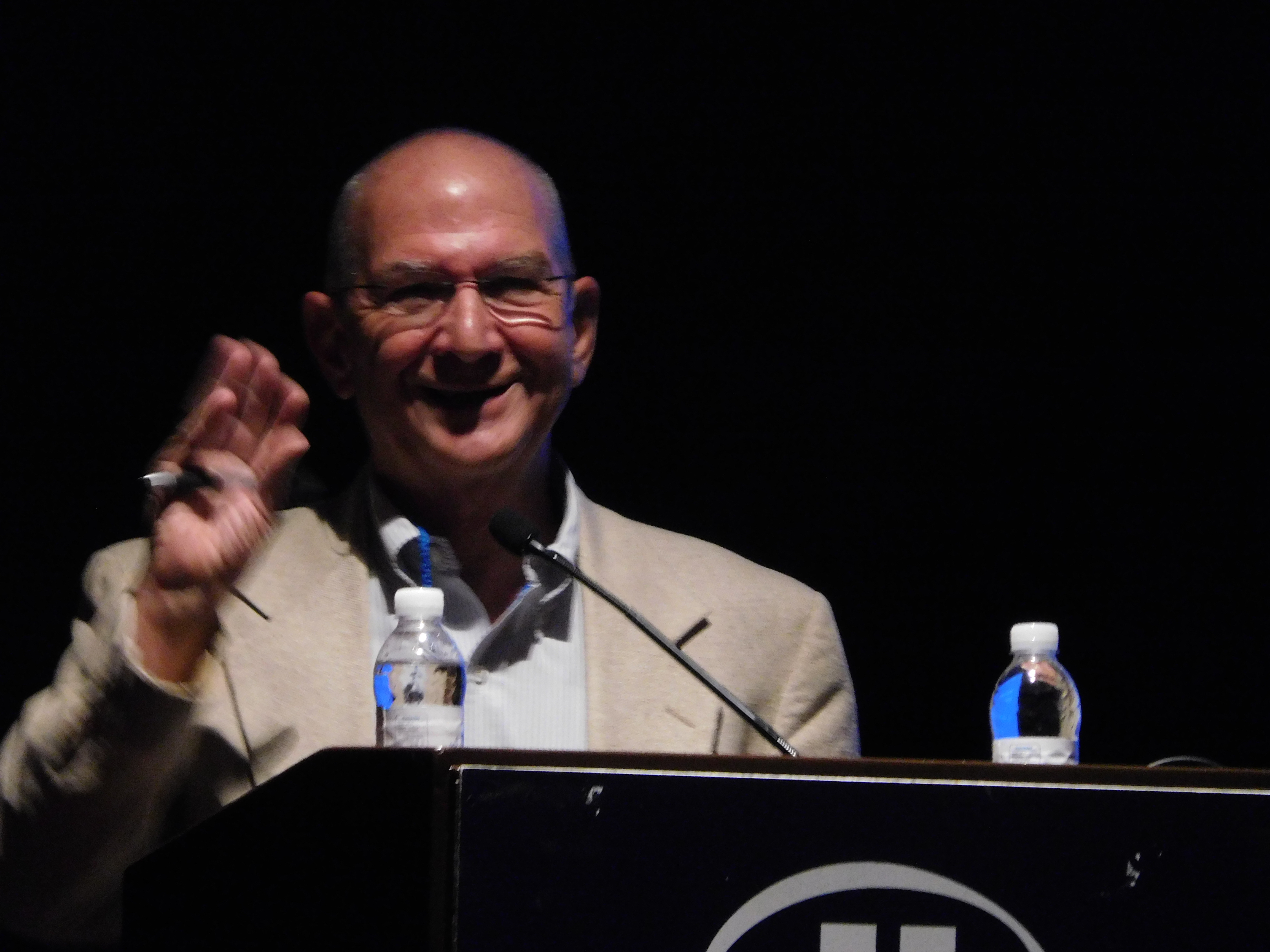
Dr. Marcos Gomez Sancho, pioneer and thought leader in palliative care from Spain’s Canary Islands, was the main speaker. He spoke of the History of Death in Different Cultures, the Agony of Death vs. Dying in Peace, and, Advice for Family Caregivers in Terminal Situations. In addition to his own conclusions, he chose quotes from poetry, music, psychiatrists, and authors, as well as art work, to illustrate his main points:

the family must allow the ill person to make their departure

the experience of the person who is dying can help those who are witnessing their passing

the worst deaths are for those attached to machines (extreme personal pain, extreme financial costs)

the care team must be inter-disciplinary for best positive outcomes (attending to psycho-social, economic, physical, and spiritual needs of patients and families)

Dr. Marcos Gomez Sancho of the Canary Islands, Spain
Dr. Marcos Gomez Sancho of the Canary Islands, Spain, thought leader in palliative care signing one of his books

Dr. Gomez played a tape of Greek singer Demis Roussos’ Morir al Lado de Mi Amor (To Die Beside My Love), which reiterates a common last wish. He also quoted Austrian neurologist Sigmund Freud, “If you want life, prepare for death.”

Here below are You Tube links to Demis Roussos’ music in Spanish and French. (The Congress heard audio only, it did not view photos):

https://www.youtube.com/watch?v=193oMUtQzGE with Spanish sub-titles

https://www.youtube.com/watch?v=S5pu-FheBAo woman admirer’s production with no sub-titles

https://www.youtube.com/watch?v=QTBQm5RWUcw  in French

Other compelling lectures included anesthesiologist Dr. Beatriz Angelica Flores Garcia’s controversial topic Morfina vs. Marihuana. She outlined how morphine and marijuana can be used for pain relief. No one on the panel of professionals, nor anyone from the audience, could agree about use of either or both, and/or effects.

Psychologist Ortencia Gutierrez Alvarez focused her talk about crisis in the family as it relates to decisions. Conclusion? Allow free will of the patient. Psychologist Fabiola Montoya Martin del Campo who has worked with youth with cancer for over 20 years shared stories of the bravery and wisdom of children facing crisis. Dr. Cristina Orendain, a well-known naturopath with a number of health food stores in Guadalajara, spoke about tryptophan for pain relief and as a mood enhancer in our food and in supplement form.

Juntos Contra El Dolor founder Dr. Silvia Susana Lua Nava, an expert in palliative care and a nun, was the guiding light behind the conference together with Sister Martina Zumaya Tamayo, a nurse nun with a specialty in bio-ethics. They offer an integrated model for Mexico including best possible professional care with support for both patient and family. They welcome persons of diverse socio-economic background, religion, age, and race at their hospital for care, counseling, or to arrange in-home services.


Hda. Madre Silvia Susana Lua Nava, MD

Dr. Lua offered her own account about suffering and pain as an opportunity for spiritual growth. In 2015 she experienced three invasive surgeries, one to correct a surgery gone wrong. From age 19 to 2015 she endured five other surgeries. The presentation of how she learned to confront and overcome pain and the unknown was both amusing and inspiring. Dr. Lua is also the author of a book about palliative care which shares her insights, El Enfermo: Terreno Sagrado (The Ill: Sacred Ground).

Dr. Manuel Centeno from OPD Hospital Civil Guadalajara (the new civic hospital Dr. Juan I. Menchaca) addressed the most frequent problems treating patients with cancer of the colon. Nurse Elisa Gutierrez Andrade spoke of placement and complications involved with surgically implanted PEG’s (percutaneous endoscopic gastronomy), stomach feeding tubes. In both instances, explicit photos were shown and the lessons about care were clear and convincing.

Maria de Jesus Gonzalez Romo spoke of home nursing care and a not unusual circumstance – attending to men who have two families – two “wives” and two sets of children all meeting at the man’s death bed. Gonzalez spoke of what the patient suffers physically, psychologically, and spiritually – and how survivors deal with the patient’s pain and their own. Lots of drama – anger, forgiveness, fighting – but also a lot of love.

Attendees earned 20 continuing education credits and a diploma from the Colegio Nacional de Cuidados Paliativos de Jalisco, www.comecupal.com.mx

A note about palliative care in Mexico:

The Ministry of Public Health instituted a law in 2009 that all citizens should have access to palliative care (pain relief and comfort for chronic diseases and at end-of-life). In October 2014 the Human Rights Watch conducted a study which showed the availability of palliative care is uneven and limited throughout the country. There are also politics associated with obtaining opiods. See article at http://www.ehospice.com/ArticleView/tabid/10686/ArticleId/13355/language/en-GB/Default.aspx

A note about Juntos:

As with most non-profits, Juntos Contra El Dolor relies on donors – pharmaceutical companies, the Catholic church (which provides the housing), volunteers, and others. Throughout the year Juntos hosts weekly educational activities in an effort to support its professionals and its expenses. Dr. Nava and two other nuns are unpaid. Funds for cleaning supplies, diapers, kitchen items, linens, gasoline for in-home visits, nursing staff, nursing supplies, and upgraded office equipment are always in need. Juntos is registered as an international non-profit and all donations are tax deductible by deposit to the Juntos Contra El Dolor account at ScotiaBank CTA 01002517167. More information is available at tel. (52)(33) 3617-2417, http://www.JuntosContraElDolor.com, or at juntoscontraeldolor@gmail.com.

The web site for Dr. Marcos Gomez Sancho is http://www.mgomezsancho.com


Aging, Assisted Living, Ecuador, Ecuador Senior Living, Senior Living

Cuenca, Ecuador Nun Honored for Work with Indigent Older Adults

I am happy to say that an ode to one of my heroines, Sister Patricia Rodriguez, a nun with the Sisters of Charity, has been published.  (See the highlighted link below) .

The City of Cuenca recently honored her amazing contributions not only to seniors but to the community at large.

I have had the pleasure of following Sor Patricia’s work since 2011.  She is indeed inspirational, and, a lot of fun to be around.

The photo below was taken at an Italian restaurant in Cuenca.

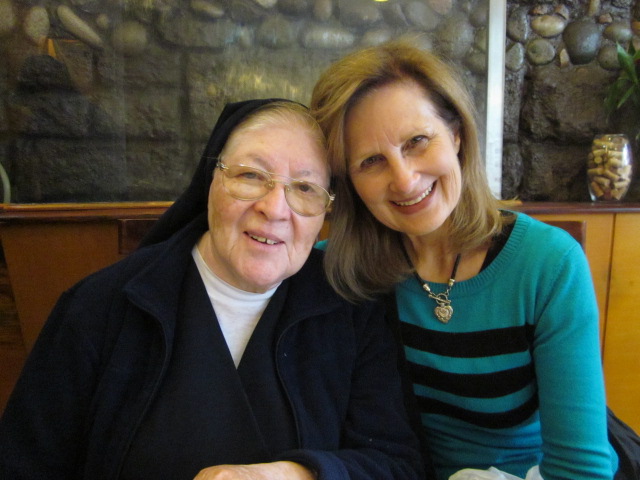
I love Sor Patricia, "coordinadora" at Hogar Miguel Leon
I love Sor Patricia, “coordinadora” at Hogar Miguel Leon

At 86 and still going strong, Sister Patricia Rodriguez is honored for her service to Cuenca’s abandoned seniors and to the community.


Aging, Ecuador, Ecuador Senior Living, Expats, Health & Wellness Mexico

End-of-Life Planning Discussion at Cuenca Chamber of Commerce, May 6

In March, I published an article on the importance of End-of-Life Planning for North Americans and others who live overseas.  Here is a link to the article in case you missed it.

http://cuencahighlife.com/why-creating-an-end-of-life-plan-in-ecuador-is-a-good-idea-for-expats/

There was quite a bit of response. Most responders asked for a seminar.

For those of you who missed announcements in Cuenca High Life, Gringo Post, and Gringo Tree the last few days, here below is the information for the event which will  focus on three main subjects:

1. Why you need a physician ahead of time

2.  Why you need a legal document (an Ecuadorian document if you reside in Ecuador) stating your end-of-life wishes

3.  What the process is for cremation and why it is so difficult

95anios-banner-mailing

Cuenca Chamber of Commerce Sponsors End-of-Life Planning Discussion Wednesday, May 6

Mark your calendars for 11:00 am Wednesday, May 6 for an important discussion on End-of-Life legal matters and cremation/burial options in Cuenca, Ecuador.

Senior care consultant Wendy Jane Carrel will moderate a panel with attorney Grace Velastegui and Camposanto Santa Ana Funeral and Cemetery General Director Simon Toral.

Presentations will be followed by a question and answer session to address your pressing concerns.

May 6, 2015 11:00 a.m.
Cuenca Chamber of Commerce 3rd floor (there is an elevator)
Federico Malo y 12 de Abril facing Parque de la Madre (view map)
Cuenca

☎ 07 284-2772 ext 233 attn: Gabriela Maldonado

Here below is a photo from the May 6 meeting, deemed a success by the Cuenca Chamber of Commerce.  Almost 250 persons were in attendance.  There are approximately 10,000 North Americans resident in Cuenca , Loja/Vilcabamba, and places in-between.

Director General Simon Toral, Attorney Grace Velastegui, Senior Care Consultant Wendy Jane Carrel, Chamber President Atty Jaime Moreno
Director General Simon Toral, Attorney Grace Velastegui, Senior Care Consultant Wendy Jane Carrel, Chamber President Atty Jaime Moren
Aging, Ecuador, Ecuador Senior Living, End-of-Life Care, Health & Wellness Mexico, Long-Term Care, Palliative Care

Palliative Care Training for Healthcare Professionals in Cuenca, Ecuador at Hospice Foundation FASEC

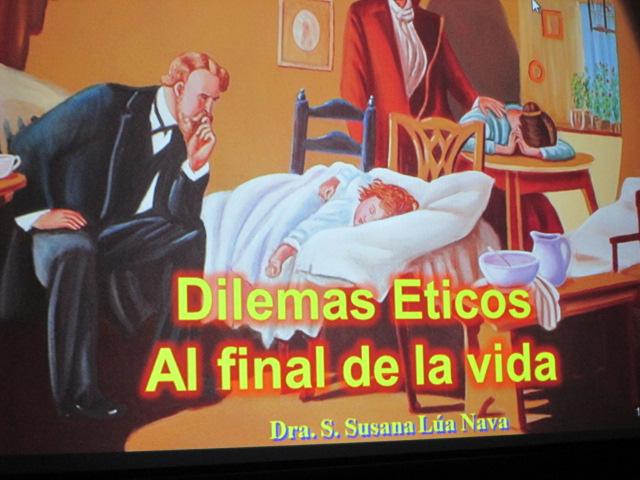
Ethical dilemmas at End-of-Life

FASEC (Fundacion al Servicio del Enfermo de Cancer/Foundation Serving Those Ill with Cancer), together with Care Partners International of Washington state, and the University of San Francisco, Quito hosted a palliative care training in Spanish for five days, April 20-24, the first in a series of four trainings for physicians, nurses, psychologists, volunteers, and others. The well-attended event drew healthcare workers from Cuba, Cuenca, Europe, Mexico, and the U.S.

The main speaker was Dr. Susana Lua Nava, a highly regarded Mexican educator and nun who teaches throughout Mexico and at UAG (Universidad Autonoma de Guadalajara). She runs a hospice, Juntos Contro El Dolor (United Against Pain), with three nurse nuns and a staff of volunteers. Dr. Lua and her team are dedicated to the alleviation of pain in all – no matter a patient’s background, religious belief, or economic position.

Dr. Lua, author of El Enfermo, Terreno Sagrada/The Ill, Sacred Terrain, offered several slides of her work in Mexico and Spain, gave stunning examples of patient care, and spoke about dying at home or in a hospital (advantages and disadvantages of both), myths and realities on the use of morphine, the art of sharing sad news, and preparing the spirit, among other subjects. The most riveting discussion was on ethical dilemmas, a subject she teaches often – why and who one tells or does not tell of their terminal condition based on socio-economic backgrounds, culture, expectations, and other factors.

The next FASEC trainings are scheduled for the second week of June, the third week of July, and a week in October.

For contact information and more story details please click on the link below.

http://cuencahighlife.com/cuenca-palliative-care-training-educates-the-public-and-healthcare-community-first-of-four-training-session-sponsored-by-fasec/

Aging, Ecuador, Ecuador Senior Living, Health & Wellness Mexico, Senior Services

Cuenca, Ecuador Inaugurates New City Senior Center

Mayor Marcelo Cabrera, his wife, city dignitaries, employees, and approximately 150 seniors were present Sunday morning, April 19, as Cabrera proudly inaugurated one of Cuenca’s special projects, the “first free public senior center” also known at El Hogar del Abuelos (Home of the Grandparents).  Eight other city senior centers are in the planning stages.

See Cuenca High Life article at link below

http://cuencahighlife.com/cuenca-mayor-cabrera-inaugurates-new-city-senior-center/

Cuenca Ecuador's new city senior center in the El Vergel neighborhood
Cuenca Ecuador’s new city senior center in the El Vergel neighborhood
Aging, Ecuador, Ecuador Senior Living, Expats, Health & Wellness Mexico, Retirement, Senior Living

Guidelines for Choosing a Healthful Home or Apartment in Ecuador

Here below is a link to an article I posted on http://www.CuencaHighLife.com offering 12 key guidelines for selecting a healthful living environment in Ecuador or wherever else you choose to be.

See http://cuencahighlife.com/choosing-the-right-environments-for-healthful-living/

wide doors for easy access, glass panels for energy of light
wide doors for easy access, glass door panels for energy of light
concrete pavers instead of slippery tile or marble, safer when raining
concrete entry pavers instead of slippery tile or marble, safer to walk on when raining
round, soft furniture, no edges to hurt yourself
Aging, Ecuador, End-of-Life Care, Expats, Living Abroad, Retirement, Senior Living

Why Creating an End-of-Life Plan When Living Abroad Is a Good Idea

Here below is a link to an article I wrote that was posted on CuencaHighLife.  It’s about the importance of creating an end-of-life plan if you live in Ecuador.  The bigger message is that it is wise to have such a plan in place where ever you chose to live.

Ecuador, is ruled by civil law. North America and England are ruled by common law. Different systems, different procedures.

Why creating an end-of-life plan in Ecuador is a good idea for expats | CuencaHighLife.


Camposanto Santa Ana, a    cemetery in Cuenca, Ecuador
Camposanto Santa Ana, a
cemetery in Cuenca, Ecuador