
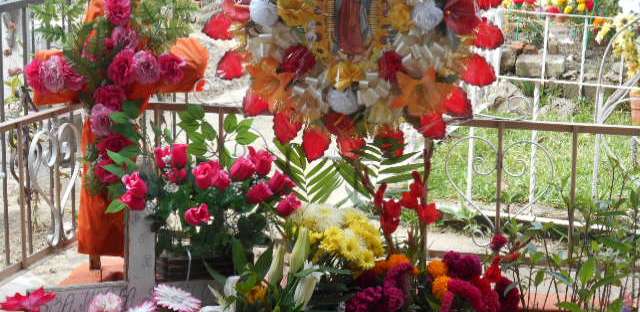
While conducting research on health care and end-of-life options for older adults in Mexico, and volunteering at a Guadalajara palliative care hospital and “hospice” (not a term often used in Mexico, and not a term used by the hospital), I have witnessed both expected and unexpected deaths of Americans, Canadians, other foreigners, and Mexicans. In the case of Mexicans, the procedure following death is almost seamless, with rare exception.

The question is, how will you prepare for such a situation if you are not Mexican?
Here is some of what I’ve learned in expat havens from Alamos to Ajijic, Mazatlan to Merida, and Tijuana to Oaxaca:
If you wish to save your family, other loved ones, and your neighbors considerable grief and time, it is important to understand what is involved when a foreigner dies in Mexico, and, to have a plan in place.
This goes for 18-year olds, 40-year olds, and especially for all persons over age 60.
Even though the subject is one many of us prefer to avoid, family and friends back home, as well as your local neighbors, will be grateful if you plan ahead. Planning ahead might even give you peace of mind!
WHAT TO BE AWARE OF
The system of law is different. If you are from Canada, England, or the U.S., you are accustomed to common law, not civil law based on Napoleonic code. The rules governing disposition of human remains in Mexico are not the same as at home. The time and bureaucratic requirements required to negotiate the Mexican system, post-death, can be daunting.
Laws governing end-of-life options and protocol are not federal. Laws vary from state to state regarding advance healthcare directives and the right to choose not to receive medical treatment if it is clear you are dying.
Mexico is a country with predominantly Catholic traditions. These traditions influence choices. If you are Catholic, the system may seem familiar, such as burial over cremation. If you had chosen to live in Buddhist or Hindu Asia, cremation would be a relatively easy matter involving fewer steps as cremation is common practice. Or, you could have opted for a Tibetan sky burial!
The Mexican culture, language, and way of thinking are unique. Most of all, procedures may be unfamiliar and complex.
PREPARING AHEAD FOR YOUR DEMISE & DISPOSITION OF REMAINS IN MEXICO
Legal Documents
The one key Mexican legal document you need to acquire for best outcomes is a “declaración jurada ” (more or less the equivalent of a living will) stating your dying wishes for comfort, how you wish to die, how you wish your body handled, your burial, cremation, and other desires. This document must be created before your demise. The declaración jurada will almost always insure your plan is followed. It is prepared by notaries (notarios), attorneys who are notarios, or attorneys who create the document and send you to a notario. The document is apostilled with the notario according to the Hague Convention which establishes a legal framework to resolve cross-border legal issues in family law and civil matters.
Current costs for the federal apostille are around 2200 MX pesos, 755 MX pesos for the legalization, 100 to 400 MX pesos per page for translation (many offices that assist foreigners write the documents in Spanish on one side, English on the other), about 30 pesos per page for official government certification, and between 1000 and 5000 Mexican pesos for the Poder Notorial (Power of Attorney) fee. Amounts may vary office to office. Refer to your local attorney or notary for exact amounts and details. Amounts may increase each year.
Note: Powers of Attorney (equally important for pre-death and health care complications), and wills regarding your property (usually a Testamento Publico Abierto) and fidelcomisos (for those owning property near the coastline or a border) are separate documents. Please consult with attorneys and notaries for specific advice. Once a year, older adults can receive a 50% discount in the month of September for wills relating to property (home, car, jewelry, and other assets).
Most notaries create and offer you two or three apostilled original copies of your declaración jurada. One copy stays with the notario. Carefully file your copies and if possible, create one photocopy for your glove compartment if you drive, place another in a binder or file at home, and scan and send a copy for cloud storage.
Note: Some funeral homes offer notarized Letters of Intention for cremation or burial. This, in addition to your declaración jurada, is a somewhat reliable back-up. These funeral homes will give you a card to carry on your person at all times; the card contains your name and other details plus their contact information. Not all funeral homes offer this service.
Your Advance Health Care Directive or Five Wishes from home is not valid in Mexico even if notarized, apostilled and translated into Spanish unless you get lucky.
You are best off incorporating preferences from your Advance Health Care Directive or Five Wishes (https://fivewishes.org/) into your Mexican legal document or declaración jurada. Several expats in Jalisco have chosen to do this with their attorney/notarios or attorneys and notarios.
As mentioned, many living wills/declaración juradas for foreigners, unless you live in a rural area, are written in Spanish on one half of the page, and English on the other. This is the most important document you can obtain relating to your end-of-life wishes.
Note: there is no guarantee your healthcare requests will be honored by doctors, hospitals, and ambulance services, just as in your home country. Your cremation request will be honored if it is in writing and your papers are presented.
Another helpful legal document exists if you are diagnosed with a terminal illness, the “voluntad anticipada” or “directriz”.
As of this writing, if you live in one of the Mexican states that have the Ley de Voluntad Anticipada (Advance Healthcare Directive law) you may refuse life-sustaining medical treatment. This document is created by a notario or your healthcare institution.
You may also incorporate your wish to refuse life-sustaining medical treatment in your living will/declaración jurada.
The states which have created and implemented the law of Voluntad Anticipada to date are Aguascalientes, Chiapas, Chihuahua, Coahuila, Colima, Guanajuato, Guerrero, Hidalgo, Jalisco, Michoacan, Nayarit, Mexico City, Mexico state, Oaxaca, Puebla, San Luis Potosi, Sonora, Tlaxcala, Veracruz, Yucatan, and Zacatecas.
Burial in Mexico
Burial in Mexico could be easier than shipping a casket home and less expensive, with one exception. Many cemeteries offer plots for purchase for a set period of time (usually six years) with the understanding that remains will be removed and buried elsewhere at the end of that period. Arrangements must be made in advance for relocation of remains or they may be removed to a communal grave.
There is now the option of green burial in the state of Guanajuato through the Elizabeth Kubler-Ross Foundation in San Miguel de Allende. At the time of this writing there is no other known green burial option in Mexico.
There are “natural” burials (linen shrouds, light wood caskets) in Jewish cemeteries at Lake Chapala, and in Mexico City, and Puerto Vallarta.
Note: There is less room at cemeteries in heavily populated areas. According to some city Pantheon (cemetery) directors, families with plots are burying loved ones 10 persons deep.
The population from Chapala to Jocotopec (north Lake Chapala) just south of Guadalajara, for example, is around 100,000, including 20,000 full-time ex-pats (numbers not exact). There are approximately 100+ deaths per year among the ex-pat community according to Chapala’s Registro Civil, Civil Registry office.
Ajijic Cemetery along Lake Chapala serves a population of 10,000-12,000. It is full unless a family sells you a plot there.

Cremation in Mexico
When death occurs in Mexico, local practices will govern how quickly a cremation can take place. In the state of Jalisco burial or cremation must be within 48 hours, or the body must be embalmed. There is one exception – a body can lie up to 30 days in refrigeration (if refrigeration is available and with permission) awaiting family members from out of country to view the remains. Then cremation or interment will take place. Cost for cremation in Jalisco, for example, is approximately 10,000 -15,000 Mexican pesos; costs for embalming, around 5,000 Mexican pesos. The prices escalate every year.
In Mexico your legal next-of-kin may request cremation or interment if you do not have a notarized living will with end-of-life wishes. It is unwise, however, to depend on good luck or miracles in this situation – again, best to have a Mexican living will, your declaración jurada.
Some churches in Mexico offer space for cremated remains in an urn or box in a mini-mausoleum setting. Here again, you are usually paying for a specified number of years.
Note: According to a U.S. Consulate web site, “if the deceased is to be transported between states in Mexico for cremation, the body must be embalmed. If the body is to be transported over 100 km a special transit permit is also required.”
Crematories
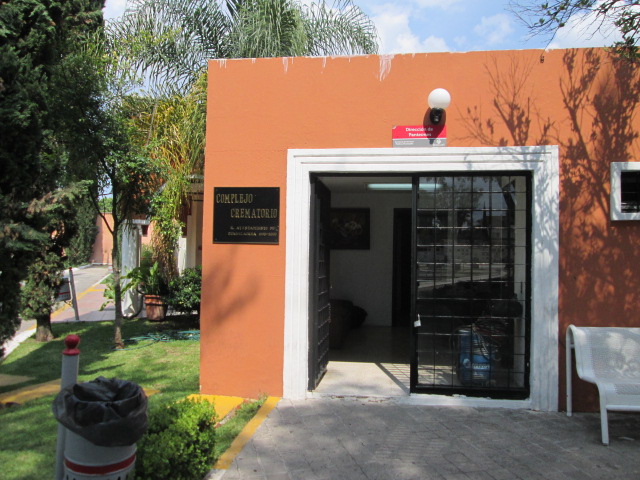
By law, a body is to be identified ahead of time. In Guadalajara, for example, no toe tags are used. Photos are taken of faces before the procedure. The name of the person is also written on a ticket. That ticket, serving as I.D., is inserted into a slot space outside the crematory machine.
Shipment of Remains Outside of Mexico
If you are American and wish your ashes or remains sent home, there is another step for a loved one or trusted advocate to complete after all Mexican death-related documents are obtained. (If you are Canadian, see the links in the Resources section below. Canadian procedures are not the same as American procedures). If your body has been cremated, a cremation certificate from the funeral home, an affidavit from the funeral director, and an original copy of the death certificate must be delivered to the nearest Embassy or Consulate. (See U.S. Government 7 FAM 258 DOCUMENTS TO ACCOMPANY REMAINS). If you die in a small city or rural area and cremation is your preference, understand the expense, effort, and permissions needed to fulfill this requirement.
According to the U.S. government, a consular officer will prepare a consular mortuary certificate to ensure “orderly shipment of remains and facilitate U.S. Customs clearance.” The certificate will be delivered to you in English and it will contain the essential information including cause of death.
As for shipment of remains in a casket, a U.S. consular officer will work to ensure that the Mexican funeral director and American funeral director are in communication to guarantee preparation of remains complies with local, U.S. Department of State, and federal requirements. All corpses going to the U.S. must be embalmed. The shipping time is approximately seven days.
Also note: DHL, Federal Express, and embassy diplomatic pouches cannot be used to ship cremated remains out of the country. There is no customs fee to ship remains to the U.S. Note: Shipment of embalmed remains in a casket outside of Mexico involves not only high cost, but red tape. Consider buying repatriation of remains insurance.
Other Details to Consider for Smoother Disposition of Remains in Mexico:
Someone to Act on Your Behalf, Preferably a Spanish-speaking Advocate
Are you a solo ager? Or a millenial digital nomad? Even if not, do you have at least three friends or neighbors in your community who will follow through with your wishes and instructions if you die in Mexico? Note: Do not depend on legal next-of-kin (spouse) or significant other to represent you. What if you both die in a car accident or other tragedy? It is best to delegate additional persons or a trusted attorney to take charge. Make certain this person understands and speaks good Spanish.
A Physician
Do you have a working relationship with a medical doctor who can be called immediately by the designated person or persons to declare cause of death and write the death certificate so an autopsy can be avoided? If you live in Jalisco do not call 911, an ambulance (Cruz Roja or Cruz Verde), the fire department (bomberos), or the police. Call the doctor, obtain the death certificate (Certificado de Defunción – delivered with three copies), then call the funeral home. The copies of the certificate are then delivered to the local Civil Registry (Registro Civil), the Ministry of Public Health, and INEGI (the National Statistics Office).
In places with several expatriates, funeral homes sometimes have doctors who can appear if your doctor is on vacation, but most doctors prefer a relationship with you before they will appear and sign a death certificate. Note: If foul play is suspected, an autopsy will be required and the police and fiscalia (the district attorney’s forensics department) will be involved.
Funeral company
Have you selected a funeral service or transporter to collect your body and handle your remains? Using a funeral service is necessary in most of Mexico, unless you are in a remote, rural village where you may be buried in a local cemetery.

Organ donation
Do you want your organs donated? Then your wishes must be written in your living will/declaración jurada or indicated on your Mexican driver’s license. Organ donations are handled by CETOT, the State Council of Organ Transplants.
Do you wish to donate your corpse for scientific study? If you die in Mexico City, your body may be welcome at UNAM’s Programa de Donacion de Cuerpo. Note: Many universities now use the TAQ Sistemas Medicos with synthetic human body parts for surgical instruction. The system comes complete with imaging equipment, computer interface, and surgical equipment.
Where to Place Remains. Do you wish your remains to stay in country or shipped home?
Someone to Act on Your Behalf, Preferably a Spanish-speaking Advocate Part 2
Again, designate at least three people to oversee your affairs in Mexico in the immediate aftermath of your death. This is recommended based on witnessing situations in Ecuador and Mexico over a period of 15 years and accompanying distressed family members. Your ex-pat friends may travel quite a bit or may not be present at the time. Always plan for back-up. It is important understand and speak good Spanish.
Do your designees know which funeral service or transporter will collect your body? Do they know where your legal documents (passport, INM immigration green card, living will/declaración jurada – specific for cremation or burial, contact info) are and how to pay the funeral home if not pre-paid? Do they know where to locate your bankcard, cash, and/or documents 24/7? Do they have a set of your keys? Plan on leaving about 20,000 – 30,000 Mexican pesos or more for the certifying doctor, transportation, the funeral company, Civil Registry fees, and cremation so your friends are not left to raise funds.
Copies of Documents.
Your survivors will need several copies of critical documents – passport, residence card, living will/declaración jurada , death certificate, mortuary certificate, affidavit of Mexican funeral director, transit permit, et altri. The person(s) in charge must be told not to offer an original document to transit people, most bureaucrats, etc. – in most instances these entities receive copies. Place your documents in an easy to locate binder, scan them, and send them to cloud storage for retrieval. (You will have organized your passwords ahead of time and given them to your trusted designees).
Death Certificate (Acta de Defunción)
Who will obtain the Mexican government declaration of death with the appropriate stamps from the Civil Registry and the Ministry of Public Health? This is not only a death certificate but an authorization for burial or cremation. Some Mexican funeral homes have experience assisting with these matters, others not. Will your designees need to do it? Best to find out how to obtain the certificate in the state or province where you live so you can leave instructions. (See Resources section with links to information about death certificates in Mexico).
Register Death with Your Country’s Embassy or Consulate
Who will obtain the proper documents from the U.S. Embassy or Consulate, the Canadian Embassy or Consulate, or other foreign government representative in Mexico not only to register the death, but for remains transported home? Some funeral homes are accustomed to offering this service, others not. The embassy or consulate will prepare a Report of Death from the death certificate. Your family member or representative will use this document along with the Mexican documents if or when remains are transported out of Mexico. At the U.S. Consulate you are entitled to 10 to 20 original copies in English.
Spanish language skills are imperative
Depending on Spanish-speaking friends or Mexican friends during this process requires a Plan B. What if they are not available when needed? Have more than one person at the ready who can negotiate procedures in Spanish. There are a number of facilitators, translators, and attorneys who speak English or other languages, best to keep their information handy for your back-up group.
What happens if you die in Mexico, have no spouse, no next-of-kin, no legal documents stating your wishes, and no legal representatives?
Your body will probably be transported to a morgue, usually a SEMEFO (Servicio Médico Forense – Medical Forensic Service) building with refrigeration. Not all SEMEFO buildings have refrigeration or space, even if they have refrigeration. See video links at end of article with tours of SEMEFO in Guadalajara, Mexico City, Sinaloa and the Yucatan.
Your country’s representatives will be called. Each country has different procedures for handling such situations. Your body will probably be autopsied. Often, if no one claims your body, your remains will be placed in a communal grave in Mexico. Each state of Mexico and each rural area has different traditions and procedures.
Few people know where they will die or when. If you spend time in Mexico, or any Latin American country with deeply Catholic traditions, where family ties and support reign (i.e. you will be rescued and your loved ones will know what to do), as well as strict codes and preferences that may not be yours, please choose to prepare yourself.
Preparation hint: register your whereabouts and family contact information with your embassy or consulate The U.S. government, for example, has an excellent system for Americans at https://step.state.gov/. It is the Smart Traveler Enrollment Program and advises you of security risks in the place where you are living and assists with connecting family and others to you in case of emergency. Other places to register your emergency information are located in expat communities around the country. The registries are usually announced in local directories, magazines, English-language newspapers, or found by word-of-mouth. Some non-profit expat organizations provide registries as do churches and synagogues with English-speaking congregations.
End-of-Life Planning is critical for expats.
Create peace of mind for yourself, your loved ones, and your neighbors.
Note: Preparing medical directives for healthcare emergencies, and preparing wills, are subjects worthy of their own long articles and are not included above.
Note two: Physicians, hospital administrators, funeral directors, cemetery directors, city and province officials (including a district attorney forensics office), three attorneys, one notary, and a consulate were consulted with or interviewed in Mexico for this article.
Note three: If you are alone with no spouse, no children, and no one to rescue you, it is suggested you carry a copy of the funeral home card with contact information on you, plus a copy of key contacts including the notary public. When traveling, also carry a copy of your declaración jurada. If you have a car, it is recommended you keep a copy of your declaración jurada in the glove compartment.
Wendy Jane Carrel, MA, is a trusted older adult advocate and consultant who has hands-on experience with healthcare systems, senior care residences, and end-of-life care in Mexico, Ecuador, and other nations. She acts as a healthcare liaison providing informed, thoughtful guidance and curated, compatible care options for individuals, and for families and their loved ones. She is a speaker and published author on subjects related to senior well-being and a trauma-informed end-of-life doula. Wendy’s web site is http://www.WellnessShepherd.com.
You have permission to re-post the entire article or quote from the article when you include author’s name, biography, and contact information as above, and the copyright indicated below.
© All rights reserved. Wendy Jane Carrel, 2018, 2021, 2023, 2026
Resources (including American, Canadian, and UK government disposition of remains specifics)
https://travel.gc.ca/assistance/emergency-info/death-abroad Canadian government specifics for death and disposition of remains abroad
https://travel.gc.ca/docs/publications/death-abroad.pdf smart tip sheet from the Canadian government
https://travel.gc.ca/travelling/publications/die-in-mexico well-written protocol for handling death of a Canadian abroad (some advice applicable for Americans)
https://www.international.gc.ca/country-pays/mexico-mexique/mexico_city-mexico-info.aspx Canadian government page answers “What If I Die in Mexico?”
https://www.theguardian.com/money/2007/nov/28/expat-finance-health well-written article about dying abroad applicable to U.K. passport holders.
https://mx.usembassy.gov/wp-content/uploads/sites/25/Consular-Districts-map.jpg There are nine U.S. Consulates in Mexico, see map in link to locate the one closest to you
https://mx.usembassy.gov/u-s-citizen-services/death-of-a-u-s-citizen/ general info page about death of a U.S. citizen
https://fam.state.gov/fam/07fam/07fam0250.html US State Department procedures for disposition of remains for an American citizen abroad
https://travel.state.gov/content/travel/en/international-travel/while-abroad/death-abroad1.html
https://travel.state.gov/content/travel/en/international-travel/while-abroad/death-abroad1/estates-of-deceased-US-citizens.html how the U.S. Consulate can act as interim executor of your Mexican estate
https://travel.state.gov/content/travel/en/international-travel/while-abroad/death-abroad1/death-statistics.html reporting death of U.S. citizen abroad
https://travel.state.gov/content/travel/en/international-travel/while-abroad/death-abroad1/return-of-remains-of-deceased-us-citizen.html documents required for return of remains to the U.S. from abroad – consular mortuary certificate, affidavit of foreign funeral director and transit permit, U.S. entry requirements and customs, shipment embalmed remains
http://dof.gob.mx/nota_detalle.php?codigo=5079096&fecha=30/01/2009 information that is on the Mexican death certificate
http://www.salud.gob.mx/unidades/cdi/documentos/DOCSAL7761.pdf Mexican death certificate sample
http://www.dgis.salud.gob.mx/contenidos/difusion/cdefuncion.html Mexican death certificate sample
https://www.uv.es/GICF/4A2_Pena_GICF_11%20.pdf death certificate Mexico
https://www.gob.mx/sre/acciones-y-programas/tramites-de-registro-civil scroll down to see requisites for processing death certificates with the civil registry
http://www.contrapuntonoticias.com/2016/01/31/saturan-cuerpos-la-morgue-de-jalisco/ morgue specifics Guadalajara, Jalisco, in Spanish
https://www.youtube.com/watch?v=FMrXyatJW0c Guadalajara, Jalisco, morgue tour
https://www.facebook.com/pages/SEMEFO-Instituto-Jalisciense-de-Ciencias-Forenses/495279867165305 Guadalajara morgue FB page. If comments are to be believed, more bodies than there are refrigerators, no answering the phone, poor communication, etc.
https://wdef.com/2018/09/19/morgue-director-fired-over-stench-of-157-corpses-in-truck/ September 2018 article reporting on two tractor trailers filled with unidentified corpses as there is not enough refrigerated space at the morgue in Guadalajara. A report by the English-language Guadalajara Reporter stated that corpses of two unrelated Americans, who died of natural causes, were stored in the tractor trailers, an indication that some stored corpses were identified first, not that it makes being stored in a tractor trailer palpable.
https://www.youtube.com/watch?v=54FEr0Q1naI SEMEFO Yucatan forensics. Director Dr. Luis Peniche is interviewed. There is a tour of the Yucatan morgue.
https://www.youtube.com/watch?v=kWNr53cWfxk Sinaloa SEMEFO, a report in Spanish about abandoned corpses and no refrigeration 2016, “muerte indigna.” Apparently a new building has been constructed since with refrigeration. Note: in places of extreme humidity and heat with no refrigeration, imagine the stench.
https://www.youtube.com/watch?v=5fNXN6XycPA According to the video, “drug dealer” tombs in Sinaloa represent the opposite kind of ending from an abandoned body left at the morgue. The Jardines de Humaya cemetery in Culiacán, Sinaloa, is known for its extravagant mausoleums, not all that dissimilar from the concept of the Mamluk tombs in Cairo Egypt’s City of the Dead (circa 642 AD). The video shows the tomb of Ignacio Coronel that apparently cost millions of pesos or dollars.
https://www.youtube.com/watch?v=B-mHof2axB4 According to this 2017 documentary video from Mexico City, if after three weeks no one identifies a body, it will usually end up in a communal grave. In another report, some bodies may go to a medical school for study.
https://noticieros.televisa.com/videos/cadaveres-estudio-medicina/ cadavers for study at UNAM, Mexico City April 2018 TV interview with forensic physician and professor
https://www.youtube.com/watch?v=pxxNfnOVWt8 the biggest clandestine burial ground in Mexico, according to this video, was an “extermination camp” in the state of Coahuila.
https://mexiconewsdaily.com/news/166-skulls-and-other-remains-exhumed/ another clandestine burial ground found in the state of Veracruz.
https://www.telegram.com/news/20171028/worcester-undertaker-asks-lawmakers-whos-responsible-for-unclaimed-dead?template=ampart Outside Boston, MA, there is a funeral parlor that buries the homeless, abandoned, etc. It is an expensive undertaking (yes, pun intended), and would probably cost a lot less if green burials were permitted.
https://tomzap.com/dying.html Dying in Puerto Escondido, Oaxaca, a 2013 report. At that time it was estimated one needed about 12,000 pesos to pay for cremation, now transportation and cremation will come to around 20,000 pesos, depending on the funeral home.
http://www.pressrepublican.com/news/local_news/mexican-funeral-customs-differ-from-ours/article_f93a7231-0389-5ca7-9161-ffaeb7b523e2.html An American in Puebla writes about the differences in American and Mexican end-of-life traditions.
http://www.redfuneraria.com/cremacion-o-entierro#anchor4
http://www.redfuneraria.com/mexico/funerarias Mexican law regarding death (in Spanish)
https://mexiconewsdaily.com/news/nurse-did-well-selling-job-placements-organs/ a cautionary tale about illegal organ harvesting in Chihuahua, Mexico. All persons involved were Mexican, not foreigners.
https://trasplantes.jalisco.gob.mx/ CETOT State Council of Organ Transplants
https://www.facebook.com/TrasplantesJalisco/
https://trasplantes.jalisco.gob.mx/acerca/ubicacion-y-contacto
https://es.wikipedia.org/wiki/Declaracion_jurada – what a living will is
https://theconversation.com/amp/planning-for-death-must-happen-long-before-the-last-few-days-of-life-104860 An article from Australia about why planning for end-of-life “must happen long before the last few days of life.”


 Wellness Shepherd
