City of West Hollywood Older Adults, Death Education Mexico, Health & Wellness Mexico, Palliative Care Mexico

Wellness Shepherd Fall 2023 Events and Reveals for Older Adult Well-Being

Just returned from three weeks in Italy celebrating the 90th birthday of “Super Silvana” the last living person of her generation who has witnessed my life since I was a teenager. I hope to share what I learned about aging in place, senior care, and end-of-life from Silvana, her daughter, neighbors, friends, and site visits in Tuscany in another post. As with the U.S., much has changed in the last 10 years – mostly diminishing social services (with some exceptions in both nations) and higher prices. Thankfully in Mexico, prices related to care continue to be more affordable, comparatively.

A few days after my return, I became a member of the Older Adult Advisory Board for the City of West Hollywood, CA. Population 36,000, approximately 6,000 older adults (number to be verified). Excited and honored to serve. There will be much to learn, observe, and address with time. I have permission to mention this event and to post the photo with Francisco, the Strategic Initiatives Program Administrator who swore me in. He is a bright and integral part of all that is evolving. We were delighted to discover mutual Spanish and that I knew the charming town in Jalisco his family is originally from.

Note: The City of West Hollywood, CA was awarded the SCAN Foundation Award 2022 for its Aging in Place/Aging in Community Programs in alignment with the California Master Plan for Aging. You may read more about that here: https://www.weho.org/services/human-services/strategic-initiatives/aging-in-place

Francisco G and Wendy Jane are in the photo below by board member Michael Hollingsworth:

For those of us devoted to palliative and hospice education and community-based services, October 14 was World Hospice and Palliative Care Day. Meaningful. November 2 is World Right to Die Day, a controversial subject, but for some well-being = peace of mind, making a transition legally and quietly. In the U.S. November is known as National Hospice and Palliative Care month.

Dra Susana Lua Nava, the palliative care thought leader in Guadalajara, Mexico who created the only 24/7 palliative care hospital (Juntos Contra el Dolor – United Against Pain) in Jalisco state in 2010, travelled to meet the Pope in Rome in October and has returned to Guadalajara to host the 6th International Palliative Care Congress. The main speaker is her mentor and mentor to Latin American and Spanish palliative care physicians, nurses, social workers, psychologists, and others, Dr. Marcos Gomez Sancho of the Canary Islands, Spain. See https://www.mgomezsancho.com/esp/index.php Other speakers will be from Argentina, Costa Rica, Cuba, and Mexico. The congress will be held November 9-11 at Auditorio Fray Antonio Alcalde, Av. Fray Antonio Alcalde 1220, Miraflores, 44270 Guadalajara, Jal., Mexico in Spanish. The fee for three days is 1200 Mexican pesos. For more information see: https://juntoscontraeldolor.com/

Even though I attended three Juntos Contra el Dolor palliative care conferences in Guadalajara I reported only on one, the 2nd International Congress produced by Dra Susana:

We are now in the sign of Scorpio, the sign of death and transformation, a sign that teaches us much. Colleagues in Mexico have created events around the Day of the Dead and death and dying.

Wilka Roig, who is based in San Miguel de Allende, Mexico, is the founder of Elizabeth Kubler-Ross Foundation Central Mexico, producer/host of Death Cafes, a transpersonal psychologist, creator of the first green burial plot in Guanajuato state, and most of all an educator with a community-based approach. She is bringing the American director of The Last Ecstatic Days to Lake Chapala with a documentary that dares to ask one of life’s biggest questions about death. The screenings will kick-off the 1st Latin America Impact Tour November 7 and 8, 2023, 3:00 p.m. at Cine+Lago, with free complementary workshops facilitated by the Fundación Elisabeth Kübler-Ross (EKR) México Centro team on November 7 and 8, 11:00 a.m. at Lake Chapala Society, Ajijic, Mexico. Writes Wilka: “The Last Ecstatic Days explores the physical, emotional, and psychological journey of one man’s desire to not die alone, and introduces the hospice doctor who gives up everything to honor that dying wish.” https://wilkaroig.com/

Gerontologist and death doula Loretta Downs is teaching at the Lake Chapala Society, Ajijic, what is one of my favorite subjects to teach Advance Care Planning: Living Well and Dying Well. The dates are November 8 and 15. This is an evergreen subject, always valuable. https://endoflifeinspirations.com/

This week I will participate in two all-day meetings of Carefest sponsored by Caring Across Generations on the UCLA campus in Westwood, CA. The national organization, founded in 2011, states “We are families, caregivers, people with disabilities, and aging Americans creating a new way to live well and age with dignity.” Eager to meet, greet, and share what I learn. https://caringacross.org/

And then a trip to Baja for a site visit of a new senior living home, and a trip to Sonora state Mexico to meet up with a soulful American end-of-life doula and her expat community to talk about preparing for emergencies and end-of-life.

Feeling grateful and fortunate. Sending healing thoughts to climate refugees, those suffering from injuries/illness, those enduring abuse and war, and all. 2024 promises to be better, perhaps, as it will be an 8 year. Eight = infinity.

Wendy Jane Carrel, MA, is a Spanish-speaking senior care advocate from California. She has travelled Mexico for several years researching health systems, senior care, and end-of-life care to connect Americans, Canadians, and Europeans with healing options for loved ones. She is a compassionate companion and palliative care liaison, legacy writer, co-founder of Café Mortality Ajijic/now Death Café Ajijic and founding member/speaker of the Beautiful Dying Expo (USA). She is a trauma-informed, gentle End-of-Life Doula (National End-of-Life Doula Alliance proficient), and a speaker and published author on subjects related to senior well-being. Wendy’s web site is https://www.WellnessShepherd.com

Dying in Mexico, Hospice Mexico, Palliative Care Mexico

Wellness Shepherd Wendy Jane Carrel Speaks to Ex-pats about Palliative Care in Jalisco, Mexico January 29

Senior care specialist and palliative care liaison Wendy Jane Carrel will speak at the Lakeside Presbyterian Church in Riberas del Pilar, Lake Chapala, on Wednesday January 29, 2020 from 2-3 p.m. about “Palliative Care and Hospice in Jalisco.”

The free public talk will cover Carrel’s years on a palliative care mission in Guadalajara, and introduce what is currently available in Jalisco for pain management, especially at end-of-life.

On January 22, same time, same place, Dr. Sam Thelin, who has a general medical practice in Chapala serving ex-pats, will review “New Healthcare Options at Lakeside.” Thelin, an American, studied medicine at the highly-regarded private medical school UAG (Universidad Autonoma de Guadalajara).  See http://www.drthelin.com


Wendy Jane Carrel, MA, is a Spanish-speaking senior care consultant from California. She has travelled Mexico for several years researching health systems, senior care, and end-of-life care in order to connect Americans, Canadians, and Europeans with options for loved ones. She has investigated hundreds of senior housing choices in 16 Mexican states. You may read more of her history at https://wellnessshepherd.com/about/ .

Health & Wellness Mexico, Hospice, Pain, Palliative Care, Palliative Care Mexico

Palliative Care & Hospice in Jalisco, Mexico; Health Talk at Lake Chapala March 25

A church at Lake Chapala, Mexico has kindly asked me to speak at one of their health seminars.
I will share what I have learned after 1 1/2 years observing the only 24/7 palliative care and hospice model in Jalisco, Mexico, Juntos Contra el Dolor.  See http://www.juntoscontraeldolor.com
Details:
March 25, 2017   Saturday, 10:30 a.m.  St. Andrew’s Anglican Church
Calle San Lucas 19, Riberas el Pilar, Chapala
Palliative Care and Hospice in Jalisco, Mexico  presented by Wendy Jane Carrel, M.A.
Palliative care and hospice options in Jalisco will be reviewed. There will be a discussion of what might one expect compared to the U.S. or Canada.
The talk is open to the public.
End-of-Life Care, Health & Wellness Mexico, Hospice, Pain, Palliative Care, Palliative Care Mexico

Mexico Palliative Care Non-Profit Holds Festive Fundraiser in Super-Competitive Environment

Mexican non-profits have a hard time surviving. One can say many non-profits, no matter the country, find it challenging to be sustainable.

In the state of Jalisco, there are over 800 registered A.C.’s, Asociaciónes Civiles, or non-profits. In all of Mexico, there are about 4,000 registered non-profits. That’s a lot of competition in a land where philanthropy, though existent, is not part of the culture.

Juntos Contra el Dolor of Guadalajara is a remarkable entity. It is a Mexican model for palliative care and hospice. Its resourceful, enthusiastic founder and palliative care educator Dra Susana Lua Nava is an ecumenical nun. Her team serves anyone of any belief system or economic background. All are dedicated to offering holistic pain relief for life-limiting conditions or at end-of-life.

dscn0330
Administration volunteer Michele Carrillo, Madre Martina Zumaya Head of Nursing, Dra Susana Lua Nava founder, Dra Karla Rebollar of Juntos Contra el Dolor A.C.

In 2014 Dra Susana Lua Nava and Juntos Contra el Dolor received the prestigious state of Jalisco IJAS award for outstanding contributions by a non-profit.

Juntos Contra el Dolor’s 24/7 humanitarian effort includes not only medical attention at its 8-bed hospital but outreach and education to 65 or more patients and their families at home. For a Mexican non-profit dependent on donations, this is an achievement. Faith in the need, faith in all possibilities, and a lot of love are components of the Juntos ability to continue despite obstacles.

Every member of the team is a volunteer except the nurses. The team consists of palliative care doctors, psychologists, social workers, chaplains, and trained volunteers.

dscn0239
Four social workers, two MD’s (far right), all Juntos Contra el Dolor volunteers

Juntos Contra el Dolor held its annual fundraiser, a Fiesta Mexicana gala, on Saturday, September 24.

The nuns and volunteers led by Dra Susana Lua Nava proved to be creative and super organized.
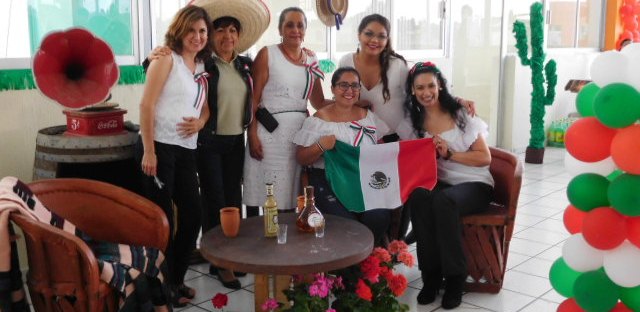
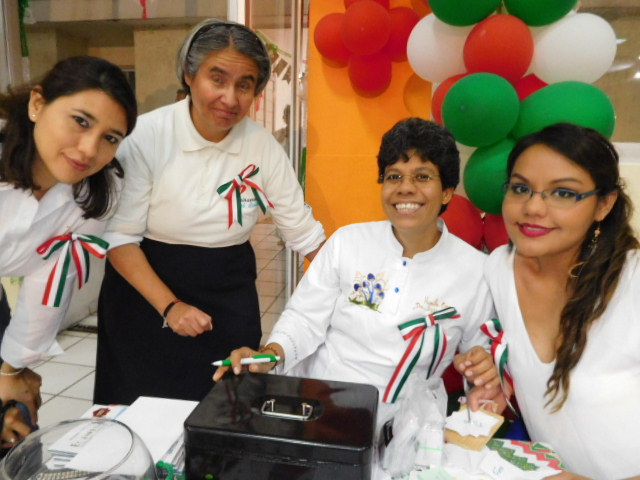
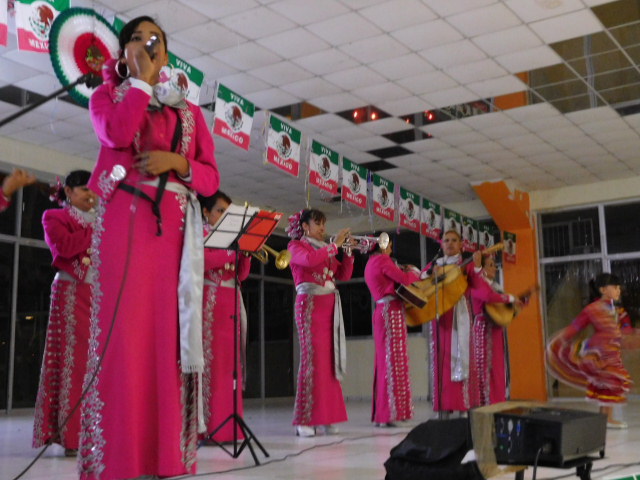
Every detail was attended to – philodendron plants, potted geraniums, Viva Mexico banners, red/green/white flags hanging from the ceilings, red/green/white bow ties over white blouses or shirts so people would know who the volunteers were, donated chocolate cake from one of the best bakeries in town, clean white table cloths and chair covers, a tequila bar, a hand-made hot organic corn tortilla corner, and a place for photos where guests could dress like a revolutionary from the Mexican independence. Fresh quality food included 10 guisados (entrees) prepared with love and served in Mexican pottery, a rarity at charity events in Jalisco. And, there was a romantic singing group Los Bohemios, plus an all-girl mariachi band dressed in hot pink and silver!!  A lively event and fun for all.

dscn0243
Sweet volunteers Lola, Maria, and Nena

dscn0332
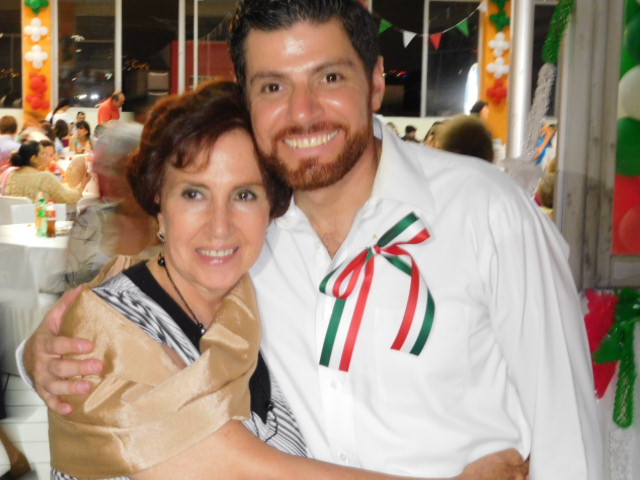
Volunteer Juan with his lovely, sensitive mother – his father, her husband, passed away at Juntos Contra el Dolor in June 2016

beautiful Mexican ladies of the San Bernardo parish

dscn0284
junior guests

dscn0319
All-girl mariachi band from Guadalajara

Juntos Contra el Dolor provides weekly consultations in a donated space in San Augustin, a suburb to the west of Guadalajara. By January 2017 there will  be consultations for those suffering from pain at Lake Chapala, an hour from Guadalajara. The offices will be in the Church of San Juan Batista in San Juan Cosala.

As mentioned, the non-profit stays afloat by donations – usually in-kind support such as diapers, linen, paper supplies, fresh organic food, and new medicines.At the following link you can read what is needed and where one can make donations.  http://juntoscontraeldolor.com/Donaciones/don.html

Dr. Lua received three years of specialized palliative care training in the Canary Islands with Dr. Marcos Gomez Sancho, considered the leading palliative care physician and professor of the Latin world. Dr. Lua is a thought leader for Mexico, and author of  El Enfermo: Terreno Sagrado  (The Ill: Sacred Terrain).

End-of-Life Care, Expats, Hospice, Palliative Care, Palliative Care Mexico, Senior Care Mexico

Mexican Palliative Care Thought Leader Dr. Susana Lua Speaks to Expats about Unmet Pain Relief Needs

Dra Susana Lua Nava, a palliative care physician based in Guadalajara, Mexico, spoke to over 200 North Americans and locals at Open Circle on the Lake Chapala Society grounds in Ajijic, Mexico about pain relief for chronic conditions and end-of-life.

Her passionate presentation about the unmet needs in Jalisco state and throughout the country triggered many questions from the audience, plus more interest in bringing such services to the lake. Lake Chapala is about an hour’s drive from Mexico’s second largest city Guadalajara. An estimated 20,000 North Americans reside there during high season.

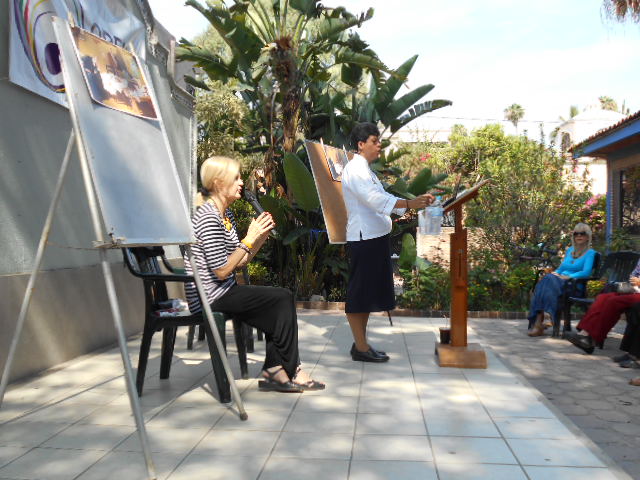
Dra Susan Lua Nava, palliative care physician, addresses Open Circle

It is a goal of Dra Lua’s non-profit Juntos Contra el Dolor, A.C., (United Against Pain), http://www.juntoscontraeldolor.com, to educate communities throughout Mexico about what palliative care is, and show how to offer comfort care to those with life-limiting diseases. Ideally, there would be models for this care in each state. Currently, palliative care is primarily found in three large cities at regional hospitals – Guadalajara, Mexico City, and Monterrey.

In 2009 the Ministry of Public Health of Mexico established guidelines for palliative care entitling all residents of the nation to relief from pain. The challenge has been that most people do not know exactly what palliative care is, nor where to find it. Palliative medicine is often confused with pain clinics which may offer medications but do not necessarily include a holistic support team for the patient and family members during such trying times.

As of yet, there is no dedicated palliative care/hospice team  – physicians, nurses, psychologists, social workers, clergy, and volunteers working together at Lake Chapala. There have been previous efforts to establish a hospice.  (The main cities at the lake are Ajijic, Chapala, San Juan Cosala, and Jocotopec. It takes around 40 minutes to drive from Chapala on the east end to Jocotopec on the western end).

There are a number of highly talented retired palliative care and hospice administrators, physicians, nurses, clergy, social workers, and others from Canada, the U.S., South Africa, and other countries at the lake. Several groups have formed to discuss how to establish a service that can serve all populations and will endure.

DVDs of the chat by Dra Lua can be ordered at http://www.opencircle-ajijic.org

DSCN1311
Wendy Jane Carrel acts as translator for Dr. Lua’s talk on palliative care in Mexico

I performed a Cliff Notes version of Dr. Lua’s talk as there was much to cover in a short amount of time.

A week after the presentation to North Americans, Dr. Lua gave a public health talk on the same subject to local Mexicans at the Ajijic Cultural Center.

Aging, Health & Wellness Mexico, Mexico, Palliative Care Mexico, Retirement, Senior Care Mexico

Aging – Mexican Physician Advocates Eating Less, Walking More

Dr. Jose Gustavo Valladores, President of the Gerontological Society of Jalisco, addressed a group of older adults in a meeting room at Juntos Contra el Dolor Hospital in the parish of San Bernardo, Mezquitan Country, Guadalajara, a few days ago.

Valladores, a spry, humorous, and fit 75 year old advocated eating less, walking more, sleeping about seven hours, and learning to breath slowly and deeply for a more healthful life.

Dr. Valladores contends we do not need to eat as much as we continue to age. His comments remind me of a movement afloat in senior living in the U.S. called Grind Dining, serving small, elegant portions that are easy to see, easy to consume, and easy to manage, especially for those with arthritis, dementia, etc.  Studies show health outcomes with such meals are positive.

Harvard-trained physician and gerontologist Bill Thomas of the Green Project and Eden Alternative has a not to dissimilar approach for aging well that he calls MESH. Move, Eat, Sleep, Heal.

The conversation for wellness in aging continues with this notable consensus among two gerontologists from two different cultures. A return to basics. Wise.

Dr. Gustavo y Dra Susana 21 de mayo 2016
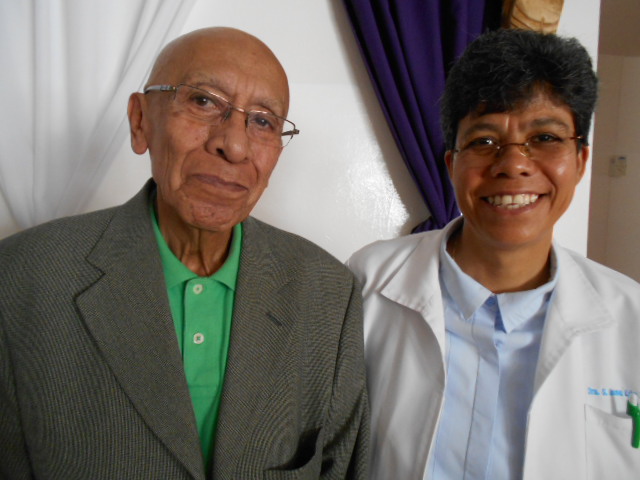
Dr. Jose Gustavo Valladores y Dra Susana Lua Nava

Dra Susana Lua Nava, the founder of the 24/7 palliative care hospital and hospice, was Dr. Valladores’ medical school student 20 years ago.

End-of-Life Care, Health & Wellness Mexico, Hospice, Mexico, Pain, Palliative Care, Palliative Care Mexico

International Pediatric Palliative Care Congress, Mexico, February 2016

With two days of notice I decided to attend a three-day intensive on pediatric palliative care, February 22-24, 2016 at the University of Guadalajara Medical School (Building Q).  It was part of the XVII CIAM (International Congress on Advances in Medicine Contributing to the Future of Health) and was hosted by the Nuevo Hospital Civil (New Civil Hospital) next door. The hospital is where University of Guadalajara Medical School students intern. I am glad I participated.

Until now I have witnessed palliative care (comfort care and non-invasive pain relief) for older adults with chronic conditions or at end-of-life. I knew I would be acquainted with some material. I also knew there would be quite a bit more for me to learn or hear repeated. Heart-rending stories and photos of children fading away were anticipated. And when I saw them, they surely took my breath away. Envision Marlo Thomas and her St. Jude’s Children’s Hospital efforts plus the images you’ve seen of children suffering from maladies across the globe.

Almost 100 physicians, nurses, psychologists, socials workers, and volunteers attended the 22-hour course hosted and organized by Dr. Yuriko Nakashima, a pioneer in this arena in Jalisco state, and a highly-regarded pediatrician and university professor. Yes, her name is Japanese; she is a Mexican citizen.

All speakers were excellent and exceptionally professional.

DSCN0941

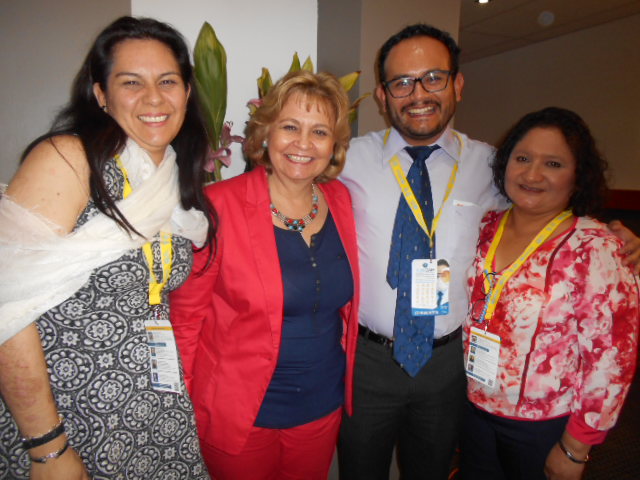
Dr. Yuriko Nakashima, Dr. Lisbeth Quesada Tristan, Dr. Jorge Ramos Guerrero, psychologist Ortencia Guiterrez Alvarez

Presentations by special guest Dr. Lisbeth Quesada Tristan of Costa Rica, referred to as the “abuela” or grandmother of pediatric palliative care, were a stand-out. (She’s actually young). Her work and a collaboration with her non-profit Fundacion Pro Unidad de Cuidado Paliativo (see www.cuidadopaliativo.org) were celebrated at a signing ceremony which included the Director of Guadalajara’s New Civil Hospital Dr. Francisco M. Preciado Figueroa, the Director of the Old Civil Hospital Dr. Benjamin Becerra Rodriguez, and Dr. Yuriko Nakashima representing both the New Civil Hospital Department of Pediatrics and the University of Guadalajara Medical School. Dr. Quesdada is also active with  ICPCN, the International Children’s Palliative Care Network.

Dr. Quesada tackled the following subjects with enthusiasm, humor, intelligence, and wisdom:

She started with a definition of palliative care – comfort care, relief from pain, and non-invasive procedures for irreversible medical conditions, progressive diseases with no cures, premature babies, and end-of-life. She asked, do you believe in aggressive procedures with a child hooked up to machines until life’s end or should the child be held in your arms, hearing a soothing voice, feeling the vibrations of love, and feeling a sense of security?  We are not clinicians of pain only, we are mostly providing quality of life in dire circumstances.

Other discourses:

Is palliative care a right or a necessity for children?

The main things everyone should know about pediatric palliative care

When “hello” means “good-bye”

Communication and support for children and adolescents with terminal illnesses

From Cocoon to Butterfly, the metamorphosis of the suffering child

How to Deal with Dysfunctional Families

The implications of sedation

Here is a paraphrased summation of Dr. Quesada’s comments:

It is offensive to say terminally ill patients. Please be careful with word choice, think about saying “children with life-limiting diseases.”

We must be part of a new paradigm with extensive outreach, going to children in their homes. (Dr. Quesada’s non-profit also serves isolated villages in the mountains of Costa Rica)

Respect children, their rights (they have rights even though not legally competent), their pain, and their wishes

Everyone is important until the last minute of their life.

To work with children one needs huge passion.

We could not do our work without volunteers!!

“Santa morfina”, blessed is the existence of morphine to help relieve pain

“Amar es saltar.”  Saltar literally translated is jumping but the meaning here is love is a way to overcome.

Pediatrician Dr. Jorge Ramos Guerrero (who holds a Master’s in palliative care from a Spanish university) delivered passionate, thoughtful reviews of…

History of Pediatric Palliative Care

Holistic Attention for Children in Palliative Care

Medicine Based on Positive Principles

Dr. Ramos outlined the history of care from Egyptian times to the present with artistic representations, the meaning of the Latin words Hospitum (providing hospitality) and Pallium (to relieve suffering), and reminded the audience that death is a normal process. He emphasized that the primary aspects of treatment are warm care by an interdisciplinary team, and that the objective is pain relief. He reminded the audience: this is not euthanasia. We are present in all moments to create quality of life until the end.

According to INEGI (government) statistics, there are 5-6,000 Mexican children with cancer each year and 56% of these children outlive their diagnosis. Part of holistic care is asking the patient what is most important for him or her. We must put ourselves in the patient’s shoes. With regard to current medicine, Dr. Ramos advocates a newer paradigm – more patient-centered care that offers the best science, the best communication (especially the ability to listen), and the best inter-personal relations.

Dr. Cesareo Gonzalez Bernal spoke of legal implications in palliative care at end-of-life, a subject that always needs continual review. Focusing on patient rights is key. Assisting a patient to die is against the law.

Dr. Regina Okhuysen-Cawley, a Mexican-born American physician working in Houston who specializes in palliative care and hospice, spoke of palliative care as it is used in intensive pediatric care, and how successful an integrative approach can be at the end of life.

Dr Patricia Ornelas and psychologist Ortencia Guiterrez Alvarez (Dr. Nakashima’s long-time colleague at Nuevo Hospital Civil) talked about how to confront death and offered each participant exercises in imagining his or her end-of-life.

Other themes covered by other pediatric palliative care pioneers were how to give the bad/sad news, ethical dilemmas in palliative care, the importance of the nurse on the palliative care team, and spirituality of children.

Madre Martina Zamaya Tamayo, a nurse nun with a Master’s in Bio-ethics, was in the lobby outside the Guadalajara Congress to represent the only 24-7 palliative care hospital in Jalisco, Juntos Contra el Dolor. See www.juntoscontraeldolor.com. She introduced Dr. Susana Lua Nava’s book El Enfermo: Terreno Sagrado (The Ill: Sacred Terrain) to the attendees. Representatives from a dermatological supply house gave out free samples of medicinal lotions.

It was an honor to be in the company of dedicated, informed, and passionate healthcare professionals focused on comfort care and pain relief for ill children.

Note:

No medical schools in Mexico currently offer specializations in palliative care, although according to a Human Rights Watch report from October 2014, six of the country’s 102 medical schools offer some courses. Palliative care diplomas can be received from a palliative care institute in Guadalajara or Mexico City but this is not the same as 2-3 years of specialty training abroad. Mexican doctors usually travel to Argentina, Chile, Cuba, or Spain for this specialization. Anesthesiologists can order morphine, others cannot, unless certified by the government through special courses. And for whatever reason, according to one of the speakers, pediatricians have not been readily included in the arena of palliative care in Mexico to date.

Another note:  

It seems to be in the hearts and minds of Mexican healthcare providers to develop and implement more palliative care services for children.

Dr. Rut Kiman of Argentina, representing  the  ICPCN (International Children’s Palliative Care Network), and Diedrick Lohman of Human Rights Watch, traveled to five states of Mexico in 2015 to see if a December 2014 initiative to include children in palliative care in Mexico was being implemented. They visited the states of Guanajuato, Hidalgo, Morelos, Queretaro, and Toluca. Although they found pediatric palliative care in its infancy,  Dr. Kiman wrote “it is hoped it will soon be a reality in Mexico thanks to the efforts of professionals, non-governmental organizations, and health policy makers.”