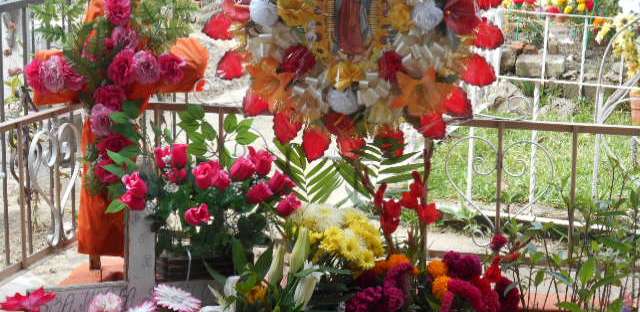
Chapala Municipal Cemetery, Lake Chapala, Mexico
Death and Dying, Death and Dying Education, Death in Mexico, Dying in Mexico, End-of-Life Planning, Expats, Mexico, Solo Agers Mexico

Why Creating an End-of-Life Plan for Expats in Mexico is a Good Idea

While conducting research on health care and end-of-life options for older adults in Mexico, and volunteering at a Guadalajara palliative care hospital and “hospice” (not a term often used in Mexico, and not a term used by the hospital), I have witnessed both expected and unexpected deaths of Americans, Canadians, other foreigners, and Mexicans. In the case of Mexicans, the procedure following death is almost seamless, with rare exception.

Chapala Municipal Cemetery, Lake Chapala, Mexico

The question is, how will you prepare for such a situation if you are not Mexican?

Here is some of what I’ve learned in expat havens from Alamos to Ajijic, Mazatlan to Merida, and Tijuana to Oaxaca:

If you wish to save your family, other loved ones, and your neighbors considerable grief and time, it is important to understand what is involved when a foreigner dies in Mexico, and, to have a plan in place.

This goes for 18-year olds, 40-year olds, and especially for all persons over age 60.

Even though the subject is one many of us prefer to avoid, family and friends back home, as well as your local neighbors, will be grateful if you plan ahead. Planning ahead might even give you peace of mind!

WHAT TO BE AWARE OF

The system of law is different. If you are from Canada, England, or the U.S., you are accustomed to common law, not civil law based on Napoleonic code. The rules governing disposition of human remains in Mexico are not the same as at home. The time and bureaucratic requirements required to negotiate the Mexican system, post-death, can be daunting.

Laws governing end-of-life options and protocol are not federal.  Laws vary from state to state regarding advance healthcare directives and the right to choose not to receive medical treatment if it is clear you are dying.

Mexico is a country with predominantly Catholic traditions. These traditions influence choices. If you are Catholic, the system may seem familiar, such as burial over cremation. If you had chosen to live in Buddhist or Hindu Asia, cremation would be a relatively easy matter involving fewer steps as cremation is common practice. Or, you could have opted for a Tibetan sky burial!

The Mexican culture, language, and way of thinking are unique. Most of all, procedures may be unfamiliar and complex.

PREPARING AHEAD FOR YOUR DEMISE & DISPOSITION OF REMAINS IN MEXICO

Legal Documents

The one key Mexican legal document you need to acquire for best outcomes is a “declaración jurada ” (more or less the equivalent of a living will) stating your dying wishes for comfort, how you wish to die, how you wish your body handled, your burial, cremation, and other desires. This document must be created before your demise. The declaración jurada will almost always insure your plan is followed. It is prepared by notaries (notarios), attorneys who are notarios, or attorneys who create the document and send you to a notario. The document is apostilled with the notario according to the Hague Convention which establishes a legal framework to resolve cross-border legal issues in family law and civil matters.

Current costs for the federal apostille are around 2200 MX pesos, 755 MX pesos for the legalization, 100 to 400 MX pesos per page for translation (many offices that assist foreigners write the documents in Spanish on one side, English on the other), about 30 pesos per page for official government certification, and between 1000 and 5000 Mexican pesos for the Poder Notorial (Power of Attorney) fee. Amounts may vary office to office. Refer to your local attorney or notary for exact amounts and details. Amounts may increase each year.

Note: Powers of Attorney (equally important for pre-death and health care complications), and wills regarding your property (usually a Testamento Publico Abierto) and fidelcomisos (for those owning property near the coastline or a border) are separate documents. Please consult with attorneys and notaries for specific advice. Once a year, older adults can receive a 50% discount in the month of September for wills relating to property (home, car, jewelry, and other assets).

Most notaries create and offer you two or three apostilled original copies of your declaración jurada. One copy stays with the notario. Carefully file your copies and if possible, create one photocopy for your glove compartment if you drive, place another in a binder or file at home, and scan and send a copy for cloud storage.

Note: Some funeral homes offer notarized Letters of Intention for cremation or burial. This, in addition to your declaración jurada, is a somewhat reliable back-up. These funeral homes will give you a card to carry on your person at all times; the card contains your name and other details plus their contact information. Not all funeral homes offer this service.

Your Advance Health Care Directive or Five Wishes from home is not valid in Mexico even if notarized, apostilled and translated into Spanish unless you get lucky. 

You are best off incorporating preferences from your Advance Health Care Directive or Five Wishes (https://fivewishes.org/) into your Mexican legal document or declaración jurada. Several expats in Jalisco have chosen to do this with their attorney/notarios or attorneys and notarios.

As mentioned, many living wills/declaración juradas for foreigners, unless you live in a rural area, are written in Spanish on one half of the page, and English on the other. This is the most important document you can obtain relating to your end-of-life wishes.

Note: there is no guarantee your healthcare requests will be honored by doctors, hospitals, and ambulance services, just as in your home country. Your cremation request will be honored if it is in writing and your papers are presented.

Another helpful legal document exists if you are diagnosed with a terminal illness, the “voluntad anticipada” or “directriz”. 

As of this writing, if you live in one of the Mexican states that have the Ley de Voluntad Anticipada (Advance Healthcare Directive law) you may refuse life-sustaining medical treatment. This document is created by a notario or your healthcare institution.

You may also incorporate your wish to refuse life-sustaining medical treatment in your living will/declaración jurada.

The states which have created and implemented the law of Voluntad Anticipada to date are Aguascalientes, Chiapas, Chihuahua, Coahuila, Colima, Guanajuato, Guerrero, Hidalgo, Jalisco, Michoacan, Nayarit, Mexico City, Mexico state, Oaxaca, Puebla, San Luis Potosi, Sonora, Tlaxcala, Veracruz, Yucatan, and Zacatecas.

Burial in Mexico

Burial in Mexico could be easier than shipping a casket home and less expensive, with one exception. Many cemeteries offer plots for purchase for a set period of time (usually six years) with the understanding that remains will be removed and buried elsewhere at the end of that period. Arrangements must be made in advance for relocation of remains or they may be removed to a communal grave.

There is now the option of green burial in the state of Guanajuato through the Elizabeth Kubler-Ross Foundation in San Miguel de Allende. At the time of this writing there is no other known green burial option in Mexico.

There are “natural” burials (linen shrouds, light wood caskets) in Jewish cemeteries at Lake Chapala, and in Mexico City, and Puerto Vallarta.

Note: There is less room at cemeteries in heavily populated areas. According to some city Pantheon (cemetery) directors, families with plots are burying loved ones 10 persons deep.

The population from Chapala to Jocotopec (north Lake Chapala) just south of Guadalajara, for example, is around 100,000, including 20,000 full-time ex-pats (numbers not exact). There are approximately 100+ deaths per year among the ex-pat community according to Chapala’s Registro Civil, Civil Registry office.

Ajijic Cemetery along Lake Chapala serves a population of 10,000-12,000. It is full unless a family sells you a plot there.

Ajijic Cemetery, Lake Chapala, Mexico

Cremation in Mexico

When death occurs in Mexico, local practices will govern how quickly a cremation can take place. In the state of Jalisco burial or cremation must be within 48 hours, or the body must be embalmed. There is one exception – a body can lie up to 30 days in refrigeration (if refrigeration is available and with permission) awaiting family members from out of country to view the remains. Then cremation or interment will take place. Cost for cremation in Jalisco, for example, is approximately 10,000 -15,000 Mexican pesos; costs for embalming, around 5,000 Mexican pesos. The prices escalate every year.

In Mexico your legal next-of-kin may request cremation or interment if you do not have a notarized living will with end-of-life wishes. It is unwise, however, to depend on good luck or miracles in this situation – again, best to have a Mexican living will, your declaración jurada.

Some churches in Mexico offer space for cremated remains in an urn or box in a mini-mausoleum setting. Here again, you are usually paying for a specified number of years.

Note: According to a U.S. Consulate web site, “if the deceased is to be transported between states in Mexico for cremation, the body must be embalmed. If the body is to be transported over 100 km a special transit permit is also required.”

Crematories

By law, a body is to be identified ahead of time. In Guadalajara, for example, no toe tags are used. Photos are taken of faces before the procedure. The name of the person is also written on a ticket. That ticket, serving as I.D., is inserted into a slot space outside the crematory machine.
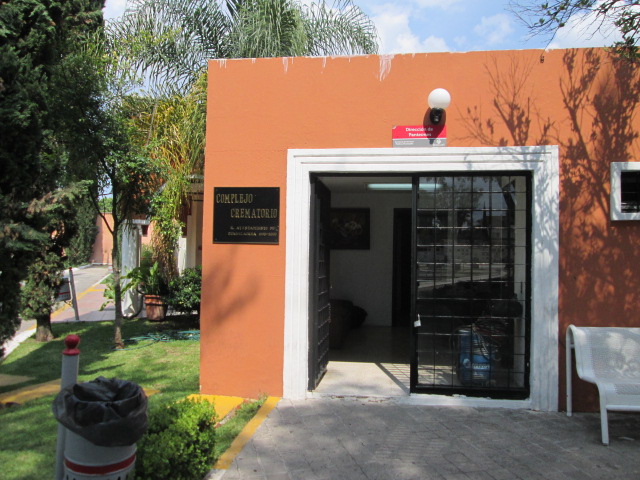
Crematory Center, Guadalajara Municipal Cemetery, Mezquitan Country

Shipment of Remains Outside of Mexico

If you are American and wish your ashes or remains sent home, there is another step for a loved one or trusted advocate to complete after all Mexican death-related documents are obtained. (If you are Canadian, see the links in the Resources section below. Canadian procedures are not the same as American procedures). If your body has been cremated, a cremation certificate from the funeral home, an affidavit from the funeral director, and an original copy of the death certificate must be delivered to the nearest Embassy or Consulate. (See U.S. Government 7 FAM 258 DOCUMENTS TO ACCOMPANY REMAINS). If you die in a small city or rural area and cremation is your preference, understand the expense, effort, and permissions needed to fulfill this requirement.

According to the U.S. government, a consular officer will prepare a consular mortuary certificate to ensure “orderly shipment of remains and facilitate U.S. Customs clearance.”  The certificate will be delivered to you in English and it will contain the essential information including cause of death.

As for shipment of remains in a casket, a U.S. consular officer will work to ensure that the Mexican funeral director and American funeral director are in communication to guarantee preparation of remains complies with local, U.S. Department of State, and federal requirements. All corpses going to the U.S. must be embalmed. The shipping time is approximately seven days.

Also note: DHL, Federal Express, and embassy diplomatic pouches cannot be used to ship cremated remains out of the country. There is no customs fee to ship remains to the U.S.  Note: Shipment of embalmed remains in a casket outside of Mexico involves not only high cost, but red tape. Consider buying repatriation of remains insurance.

Other Details to Consider for Smoother Disposition of Remains in Mexico:

Someone to Act on Your Behalf 

Are you a solo ager? Or a millenial digital nomad? Even if not, do you have at least three friends or neighbors in your community who will follow through with your wishes and instructions if you die in Mexico? Note: Do not depend on legal next-of-kin (spouse) or significant other to represent you. What if you both die in a car accident or other tragedy? It is best to delegate additional persons or a trusted attorney to take charge.

A Physician
Do you have a working relationship with a medical doctor who can be called immediately by the designated person or persons to declare cause of death and write the death certificate so an autopsy can be avoided? If you live in Jalisco do not call 911, an ambulance (Cruz Roja or Cruz Verde), the fire department (bomberos), or the police. Call the doctor, obtain the death certificate (Certificado de Defunción – delivered with three copies), then call the funeral home. The copies of the certificate are then delivered to the local Civil Registry (Registro Civil), the Ministry of Public Health, and INEGI (the National Statistics Office).

In places with several expatriates, funeral homes sometimes have doctors who can appear if your doctor is on vacation, but most doctors prefer a relationship with you before they will appear and sign a death certificate. Note: If foul play is suspected, an autopsy will be required and the police and fiscalia (the district attorney’s forensics department) will be involved.

Funeral company
Have you selected a funeral service or transporter to collect your body and handle your remains? Using a funeral service is necessary in most of Mexico, unless you are in a remote, rural village where you may be buried in a local cemetery.

Guadalajara Municipal Cemetery, Mezquitlan Country

Organ donation
Do you want your organs donated? Then your wishes must be written in your living will/declaración jurada or indicated on your Mexican driver’s license. Organ donations are handled by CETOT, the State Council of Organ Transplants.

Do you wish to donate your corpse for scientific study? If you die in Mexico City, your body may be welcome at UNAM’s Programa de Donacion de Cuerpo.  Note: Many universities now use the TAQ Sistemas Medicos with synthetic human body parts for surgical instruction. The system comes complete with imaging equipment, computer interface, and surgical equipment.

Where to Place Remains. Do you wish your remains to stay in country or shipped home?
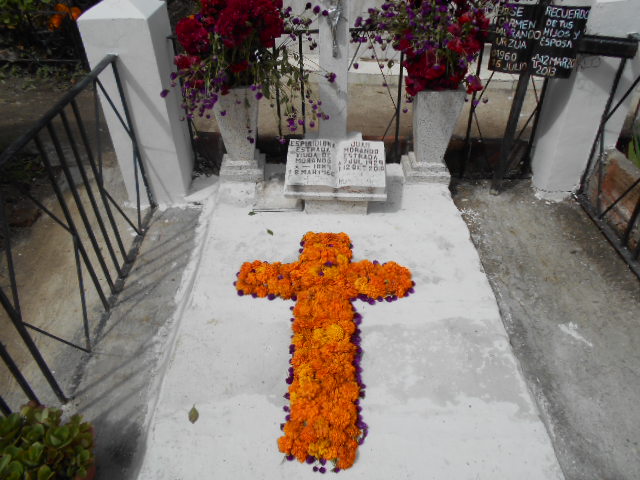
Chapala Municipal Cemetery, Lake Chapala, Mexico

Someone to Act on Your Behalf, Part 2
Again, designate at least three people to oversee your affairs in Mexico in the immediate aftermath of your death. This is recommended based on witnessing situations in Ecuador and Mexico over a period of 15 years and accompanying distressed family members. Your ex-pat friends may travel quite a bit or may not be present at the time. Always plan for back-up.

Do your designees know which funeral service or transporter will collect your body? Do they know where your legal documents (passport, INM immigration green card, living will/declaración jurada  – specific for cremation or burial, contact info) are and how to pay the funeral home if not pre-paid? Do they know where to locate your bankcard, cash, and/or documents 24/7? Do they have a set of your keys? Plan on leaving about 20,000 – 30,000 Mexican pesos or more for the certifying doctor, transportation, the funeral company, Civil Registry fees, and cremation so your friends are not left to raise funds.

Copies of Documents.

Your survivors will need several copies of critical documents – passport, residence card, living will/declaración jurada , death certificate, mortuary certificate, affidavit of Mexican funeral director, transit permit, et altri. The person(s) in charge must be told not to offer an original document to transit people, most bureaucrats, etc. – in most instances these entities receive copies. Place your documents in an easy to locate binder, scan them, and send them to cloud storage for retrieval. (You will have organized your passwords ahead of time and given them to your trusted designees).

Death Certificate (Acta de Defunción)

Who will obtain the Mexican government declaration of death with the appropriate stamps from the Civil Registry and the Ministry of Public Health? This is not only a death certificate but an authorization for burial or cremation. Some Mexican funeral homes have experience assisting with these matters, others not. Will your designees need to do it? Best to find out how to obtain the certificate in the state or province where you live so you can leave instructions. (See Resources section with links to information about death certificates in Mexico).

Register Death with Your Country’s Embassy or Consulate

Who will obtain the proper documents from the U.S. Embassy or Consulate, the Canadian Embassy or Consulate, or other foreign government representative in Mexico not only to register the death, but for remains transported home? Some funeral homes are accustomed to offering this service, others not. The embassy or consulate will prepare a Report of Death from the death certificate. Your family member or representative will use this document along with the Mexican documents if or when remains are transported out of Mexico. At the U.S. Consulate you are entitled to 10 to 20 original copies in English.

Spanish language skills are imperative

Depending on Spanish-speaking friends or Mexican friends during this process requires a Plan B. What if they are not available when needed? Have more than one person at the ready who can negotiate procedures in Spanish. There are a number of facilitators, translators, and attorneys who speak English or other languages, best to keep their information handy for your back-up group.

What happens if you die in Mexico, have no spouse, no next-of-kin, no legal documents stating your wishes, and no legal representatives?

Your body will probably be transported to a morgue, usually a SEMEFO (Servicio Médico Forense – Medical Forensic Service) building with refrigeration. Not all SEMEFO buildings have refrigeration or space, even if they have refrigeration. See video links at end of article with tours of SEMEFO in Guadalajara, Mexico City, Sinaloa and the Yucatan.

Your country’s representatives will be called. Each country has different procedures for handling such situations. Your body will probably be autopsied. Often, if no one claims your body, your remains will be placed in a communal grave in Mexico. Each state of Mexico and each rural area has different traditions and procedures.

Few people know where they will die or when. If you spend time in Mexico, or any Latin American country with deeply Catholic traditions, where family ties and support reign (i.e. you will be rescued and your loved ones will know what to do), as well as strict codes and preferences that may not be yours, please choose to prepare yourself.

Preparation hint: register your whereabouts and family contact information with your embassy or consulate  The U.S. government, for example, has an excellent system for Americans at https://step.state.gov/. It is the Smart Traveler Enrollment Program and advises you of security risks in the place where you are living and assists with connecting family and others to you in case of emergency.  Other places to register your emergency information are located in expat communities around the country. The registries are usually announced in local directories, magazines, English-language newspapers, or found by word-of-mouth. Some non-profit expat organizations provide registries as do churches and synagogues with English-speaking congregations.

End-of-Life Planning is critical for expats.

Create peace of mind for yourself, your loved ones, and your neighbors.

Note: Preparing medical directives for healthcare emergencies, and preparing wills, are subjects worthy of their own long articles and are not included above.

Note two: Physicians, hospital administrators, funeral directors, cemetery directors, city and province officials (including a district attorney forensics office), three attorneys, one notary, and a consulate were consulted with or interviewed in Mexico for this article.

Note three:  If you are alone with no spouse, no children, and no one to rescue you, it is suggested you carry a copy of the funeral home card with contact information on you, plus a copy of key contacts including the notary public.  When traveling, also carry a copy of your declaración jurada.  If you have a car, it is recommended you keep a copy of your declaración jurada in the glove compartment.

Wendy Jane Carrel, MA, is a trusted older adult advocate and consultant who has hands-on experience with healthcare systems, senior care residences, and end-of-life care in Mexico, Ecuador, and other nations. She acts as a healthcare liaison providing informed, thoughtful guidance and curated, compatible care options for families and their loved ones, and individuals. She is a speaker and published author on subjects related to senior well-being and a trauma-informed end-of-life doula. Wendy’s web site is http://www.WellnessShepherd.com.

You have permission to re-post the entire article or quote from the article when you include author’s name, biography, and contact information as above, and the copyright indicated below.

© All rights reserved. Wendy Jane Carrel, 2018, 2021, 2023, 2026

Resources (including American, Canadian, and UK government disposition of remains specifics)

https://travel.gc.ca/assistance/emergency-info/death-abroad Canadian government specifics for death and disposition of remains abroad

https://travel.gc.ca/docs/publications/death-abroad.pdf  smart tip sheet from the Canadian government

https://travel.gc.ca/travelling/publications/die-in-mexico  well-written protocol for handling death of a Canadian abroad (some advice applicable for Americans)

https://www.international.gc.ca/country-pays/mexico-mexique/mexico_city-mexico-info.aspx   Canadian government page answers “What If I Die in Mexico?”

https://www.theguardian.com/money/2007/nov/28/expat-finance-health  well-written article about dying abroad applicable to U.K. passport holders.

https://mx.usembassy.gov/wp-content/uploads/sites/25/Consular-Districts-map.jpg  There are nine U.S. Consulates in Mexico, see map in link to locate the one closest to you

https://mx.usembassy.gov/u-s-citizen-services/death-of-a-u-s-citizen/  general info page about death of a U.S. citizen

https://fam.state.gov/fam/07fam/07fam0250.html  US State Department procedures for disposition of remains for an American citizen abroad

https://travel.state.gov/content/travel/en/international-travel/while-abroad/death-abroad1.html

https://travel.state.gov/content/travel/en/international-travel/while-abroad/death-abroad1/estates-of-deceased-US-citizens.html  how the U.S. Consulate can act as interim executor of your Mexican estate

https://travel.state.gov/content/travel/en/international-travel/while-abroad/death-abroad1/death-statistics.html   reporting death of U.S. citizen abroad

https://travel.state.gov/content/travel/en/international-travel/while-abroad/death-abroad1/return-of-remains-of-deceased-us-citizen.html  documents required for return of remains to the U.S. from abroad – consular mortuary certificate, affidavit of foreign funeral director and transit permit, U.S. entry requirements and customs, shipment embalmed remains

http://dof.gob.mx/nota_detalle.php?codigo=5079096&fecha=30/01/2009  information that is on the Mexican death certificate

http://www.salud.gob.mx/unidades/cdi/documentos/DOCSAL7761.pdf  Mexican death certificate sample

http://www.dgis.salud.gob.mx/contenidos/difusion/cdefuncion.html  Mexican death certificate sample

https://www.uv.es/GICF/4A2_Pena_GICF_11%20.pdf   death certificate Mexico

https://www.gob.mx/sre/acciones-y-programas/tramites-de-registro-civil  scroll down to see requisites for processing death certificates with the civil registry

http://www.contrapuntonoticias.com/2016/01/31/saturan-cuerpos-la-morgue-de-jalisco/  morgue specifics Guadalajara, Jalisco, in Spanish

https://www.youtube.com/watch?v=FMrXyatJW0c Guadalajara, Jalisco, morgue tour

https://www.facebook.com/pages/SEMEFO-Instituto-Jalisciense-de-Ciencias-Forenses/495279867165305  Guadalajara morgue FB page. If comments are to be believed, more bodies than there are refrigerators, no answering the phone, poor communication, etc.

https://wdef.com/2018/09/19/morgue-director-fired-over-stench-of-157-corpses-in-truck/   September 2018 article reporting on two tractor trailers filled with unidentified corpses as there is not enough refrigerated space at the morgue in Guadalajara.  A report by the English-language Guadalajara Reporter stated that corpses of two unrelated Americans, who died of natural causes, were stored in the tractor trailers, an indication that some stored corpses were identified first, not that it makes being stored in a tractor trailer palpable.

https://www.youtube.com/watch?v=54FEr0Q1naI  SEMEFO Yucatan forensics. Director Dr. Luis Peniche is interviewed. There is a tour of the Yucatan morgue.

https://www.youtube.com/watch?v=kWNr53cWfxk   Sinaloa SEMEFO, a report in Spanish about abandoned corpses and no refrigeration 2016, “muerte indigna.”  Apparently a new building has been constructed since with refrigeration.  Note: in places of extreme humidity and heat with no refrigeration, imagine the stench.

https://www.youtube.com/watch?v=5fNXN6XycPA  According to the video, “drug dealer” tombs in Sinaloa represent the opposite kind of ending from an abandoned body left at the morgue. The Jardines de Humaya cemetery in Culiacán, Sinaloa, is known for its extravagant mausoleums, not all that dissimilar from the concept of the Mamluk tombs in Cairo Egypt’s City of the Dead (circa 642 AD). The video shows the tomb of Ignacio Coronel that apparently cost millions of pesos or dollars.

https://www.youtube.com/watch?v=B-mHof2axB4   According to this 2017 documentary video from Mexico City, if after three weeks no one identifies a body, it will usually end up in a communal grave. In another report, some bodies may go to a medical school for study.

https://noticieros.televisa.com/videos/cadaveres-estudio-medicina/  cadavers for study at UNAM, Mexico City   April 2018  TV interview with forensic physician and professor

https://www.youtube.com/watch?v=pxxNfnOVWt8   the biggest clandestine burial ground in Mexico, according to this video, was an “extermination camp” in the state of Coahuila.

https://mexiconewsdaily.com/news/166-skulls-and-other-remains-exhumed/ another clandestine burial ground found in the state of Veracruz.

https://www.telegram.com/news/20171028/worcester-undertaker-asks-lawmakers-whos-responsible-for-unclaimed-dead?template=ampart  Outside Boston, MA, there is a funeral parlor that buries the homeless, abandoned, etc. It is an expensive undertaking (yes, pun intended), and would probably cost a lot less if green burials were permitted.

https://tomzap.com/dying.html  Dying in Puerto Escondido, Oaxaca, a 2013 report. At that time it was estimated one needed about 12,000 pesos to pay for cremation, now transportation and cremation will come to around 20,000 pesos, depending on the funeral home.

http://www.pressrepublican.com/news/local_news/mexican-funeral-customs-differ-from-ours/article_f93a7231-0389-5ca7-9161-ffaeb7b523e2.html   An American in Puebla writes about the differences in American and Mexican end-of-life traditions.

http://www.redfuneraria.com/cremacion-o-entierro#anchor4

http://www.redfuneraria.com/mexico/funerarias  Mexican law regarding death (in Spanish)

https://mexiconewsdaily.com/news/nurse-did-well-selling-job-placements-organs/ a cautionary tale about illegal organ harvesting in Chihuahua, Mexico. All persons involved were Mexican, not foreigners.

https://trasplantes.jalisco.gob.mx/  CETOT  State Council of Organ Transplants

https://www.facebook.com/TrasplantesJalisco/

https://trasplantes.jalisco.gob.mx/acerca/ubicacion-y-contacto

https://es.wikipedia.org/wiki/Declaracion_jurada  – what a living will is

https://theconversation.com/amp/planning-for-death-must-happen-long-before-the-last-few-days-of-life-104860  An article from Australia about why planning for end-of-life “must happen long before the last few days of life.”

Death and Dying, Grief Care, Grief Choir, Holiday Grief, Seasonal Grief, Somatic Grieving

Grief Choir: A Surprisingly Poignant Experience During the Holidays

The holiday season for many in the northern hemisphere is sometimes fraught with sadness, sorrow, and a sense of loss. Thankfully, there is an invitation for comfort and a unique panacea of sorts… a Grief Choir.

What is a Grief Choir and how did I end up attending one?

Elizabeth Gill Lui, the thoughtful leader of Death Café at the Los Angeles Philosophical Research Society, has a mailing list. I am thankfully on it. Her interests and friendships are deep and wide from experiences as a fine arts photographer, author, educator, end-of-life doula, and more.

I read about the gathering and felt compelled to attend.

Here is what happened:

I arrived late, by minutes.

About 30 folks were gathered quietly on chairs in a circle.

The Resonance Collective hosts, Artistic Director Fahad Siadat and clinical psychotherapist Cynthia Siadat smiled in my direction and welcomed me warmly. Someone added a chair so I could join the circle. Lovely.

The leaders shared…they created the concept of Grief Choir out of “a desire to hold space outside a particular religious context during times of loss.” The gathering was intended as a ritual “to sit with the darkness of grief and the growing light of the community with whom it is shared.” A special event, free, to sing and heal. No experience required.

Cynthia passed around a basket with pens and white cards. She asked attendees to write three words for why they came. The cards were collected in the basket and passed around again. This time each of us picked a card from the basket. Then we read aloud from the card we picked. Many reasons were remembrances – names of persons (or pets) who had passed. Do not know for certain as do not know who wrote the names or why. Touching to listen to, especially since none of us knew each other, and a way to feel connected to the community of 30.

Fahad then introduced the East Indian wooden shruti box, akin to a harmonium, sitting on his lap.

If interested, you may read about the shruti box here:

The box has bellows. Fahad slowly opened and closed the box like an accordion. There was no melody, but a drone sound with each movement. And then Fahad would hum and guide a sound meditation. The group was invited to respond and hum with him.  A call to grief if you will. The sounds defied description.

This was quite a surprise for me as I thought I had attended to listen to a choir. As it was then apparent, the choir consisted of all who attended, me included.

The humming at times took on the sound of gentle, tender, almost-wailing. Difficult to describe, intangible, something one must experience. Perhaps a bit of the ululations (zagrouta in Arabic), bouncing from lament to joy but not exactly that. Most of all, a feeling of support from others in the circle. Eyes were closed or open. Fahad and Cynthia had created a safe space. Mellow feelings at the end of the hour.

Fahad (imagine a modern-day Sufi or Rumi) has been described by the LA Times as a “fanciful and downright utopian artist and thinker”. His bio states he “explores sound as spiritual practice, creating interdisciplinary pieces as a vehicle for unveiling the mystery of our interconnected world.” An apt description.

I am pleased to have attended. Unique and memorable. For those who are in Los Angeles and interested, the next Grief Choir is scheduled for the Summer Solstice somewhere around June 20, 2025. The announcement will be made on the Resonance Collective website.

For information about the Resonance Collective and Fahad Siadat see:

For information about Cynthia Siadat see:

For more about Elizabeth Gill Lui see:

© Wendy Jane Carrel 2024

Wendy Jane Carrel, MA, is a Spanish-speaking senior care advocate from California. She has travelled Mexico (and Latin America) for several years researching health systems, senior care, and end-of-life care to connect Americans, Canadians, and Europeans with healing options for loved ones. She is a compassionate companion and palliative care liaison, legacy writer, co-founder of Café Mortality Ajijic/now Death Café Ajijic and founding member/speaker of the Beautiful Dying Expo (USA). She is a trauma-informed, gentle End-of-Life Doula (National End-of-Life Doula Alliance proficient), a speaker and published author on subjects related to senior well-being, and serves on the City of West Hollywood’s Older Adult Advisory Board. Wendy’s web site is https://www.WellnessShepherd.com

Death and Dying, Death Cafe Los Angeles, Family Caregiving, Heather Fink, Long-Term Illness

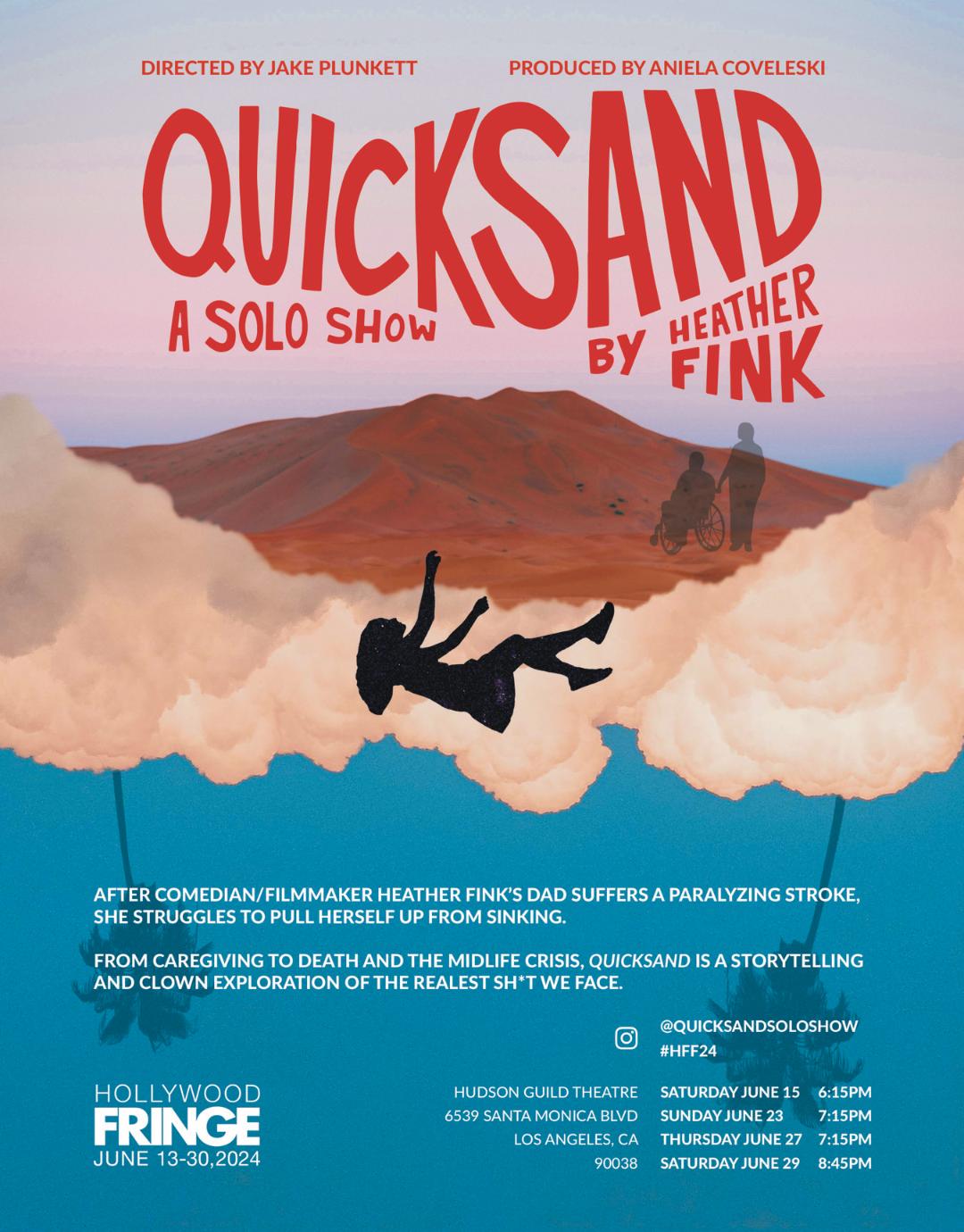
Catastrophic Long-Term Illness, Death and Love – An Immersive Evening About Caregiving with Comedienne/Filmmaker Heather Fink’s Quicksand

Place:  LA’s Fringe Festival, June 2024

Heather Fink is a comedienne/filmmaker/storyteller who bravely shares her thoughts and feelings about long-term illness, caregiving, death, loss (income, career, family), and love in a live performance.

The title Quicksand telegraphs Heather’s theme, most of all its weight. She offers an authentic, energetic, engaging, and quirky memoir with relatable universal situations.

The well-paced performance (with backdrop slide show of photos, a stuffed dummy father, and surprise pop-up) entertains and reels us in as we relate to the family crisis – her father’s stroke – the toll on her father unable to speak but four words, the exhaustion of her self-sacrificing Dutch mother, and loss for Heather’s efforts to advance her career. Heather shares, “we lived with a constant sea of emergencies.” Thirteen years of emergencies.

Meet Heather introducing her show on TikTok at:

The material is fresh and raw. Heather’s father Stephen passed away exactly a year ago around the time she celebrated another birthday.

Heather’s journey is one of endurance and faith.

A fine audience experience demonstrating the value of everyday love and remembrance.

Quicksand messages:

Family illness and ultimately death affect the life trajectory of all involved.

Learn how to recognize a stroke!! (outlined on the show’s program)

There are 53 million unpaid caregivers in the U.S., they represent the backbone of long-term care. Most families, such as Heather’s, cannot afford to hire in-home caregivers.

Heather’s Angst and Outcome:

“I’m 43 and I have nothing to show for it” she cries. As we learn, though she may not yet see, she has everything to show for it – being present for both parents with love and support, plus the experience of a dark night of the soul that ultimately led to her current mission – meaningful discussions about caregiving, illness, and death.

Heather is now an advocate for stroke awareness, advance care planning, and talking about death, especially at Death Cafes.

Notes:

The Hollywood Fringe Festival, a community arts event, is held over three weekends every June at various small theaters in LA. It was founded in 2010 with 130 shows. The term originated with the first Edinburgh Fringe Festival which featured unique, non-traditional performances in 1947.

Death Café. Bernard Crettaz, a Swiss sociologist, created the first Café Mortels. His concept of meeting over tea and cake revolutionized how we speak about death and dying. Jon Underwood, who founded Death Café in the UK, made a trip to meet his inspiration Bernard Crettaz. Underwood attended the last Café Mortels in Lausanne, October 31, 2014. Jon died suddenly in 2017 at the age of 43. His mother and sister, plus two women in the U.S., keep the project going. There are more than 18,000 Death Cafes in 90 countries around the world.

There is a thoughtful Death Café in Los Angeles hosted by Elizabeth Gill Lui, a photographer/artist/author and death doula, at LA’s Philosophical Research Society.

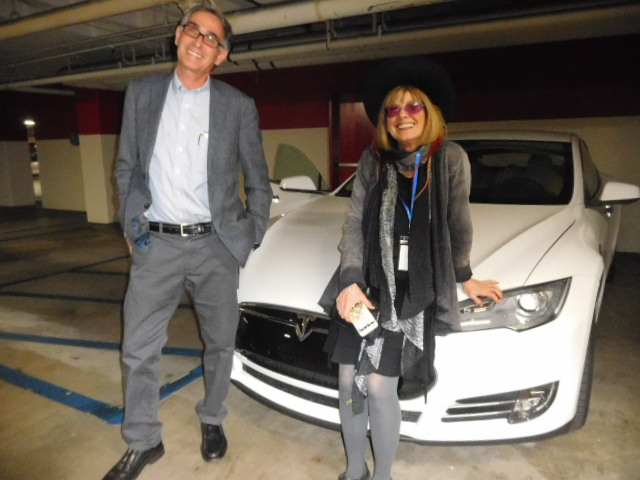
A June 12, 2024 article in the Los Angeles Times features Elizabeth’s Death Café. The photo includes the author of this post (wearing a mask) and to her right and the reader’s left, charming Heather Fink who created the solo piece Quicksand. Link to article is in the Resources section below.

© Wendy Jane Carrel, 2024

Wendy Jane Carrel, MA, is a Spanish-speaking senior care advocate from California. She has travelled Mexico for several years researching health systems, senior care, and end-of-life care to connect Americans, Canadians, and Europeans with healing options for loved ones. She is a compassionate companion and palliative care liaison, legacy writer, co-founder of Café Mortality Ajijic/now Death Café Ajijic and founding member/speaker of the Beautiful Dying Expo (USA). She is a trauma-informed, gentle End-of-Life Doula (National End-of-Life Doula Alliance proficient), and a speaker and published author on subjects related to senior well-being. Wendy’s web site is https://www.WellnessShepherd.com

Resources:

https://www.caregiver.org/resource/caregiver-statistics-demographics/ .

https://www.aarp.org/caregiving/financial-legal/info-2023/unpaid-caregivers-provide-billions-in-care.html

https://deathcafe.com Death Café

https://www.prs.org/events.html Philosophical Research Society, LA

https://www.latimes.com/lifestyle/story/2024-06-12/death-cafes-los-angeles-grieving-discussion-group#  Sorry, there is a paywall

Abode Contemplative Care Texas, Community Hospice, Death and Dying, End-of-Life Care, End-of-Life Doula Certification, Hospice, Social Hospice

Support for Dying via Social Hospice – A Snapshot from Abode Home, Texas

What is social hospice?

In the U.S. a social model of hospice (SMHh as written in academic and medical journals) is described as a dedicated home with 24/7 non-medical personalized care for end-of-life when dying at home becomes unmanageable. It is a non-profit service, often at no cost, in collaboration with support from a medical hospice service (usually the Medicare hospice benefit). It is sustained by community philanthropy, usually with a large base of volunteers devoted to comfort care and the gentlest passage possible.

In other words, end-of-life support by the people for the people.

Social Hospice Model

Social models for the dying have been recorded since 3000 B.C. (ancient Egypt). Every continent has had and still has some form of community care for the dying.

In modern times, the term social hospice was part of an obscure movement following the “good death” or “death with dignity” efforts of the 1950’s and 60’s. The goal was to return the dying process and choices to the individual.

The first U.S. hospices of the 1970’s were non-profits. Their mission was to create a caring, supportive environment in a residence specifically devoted to end-of-life care. In the 1980’s, social hospice for HIV/AIDS came into existence. The model includes grief and bereavement support for families.

The current U.S. landscape is dominated more and more by for-profit hospices and conglomerates, often funded by Wall Street players and private equity focused on high profit margins.

There are not as many community-based offerings as there once were.

****This situation may reverse and evolve based on growth in preparation for dying education, the end-of-life doula movement, and more awareness about the benefits community models provide. Why? Because they provide an unmet need.

Where may you find a social model hospice in the U.S. and who is social hospice for?

The home I know best, as I have participated in their on-line educational gatherings, is Abode Contemplative Care for the Dying in San Antonio, Texas.

Abode Home is affiliated with the Omega Home Network (based in Tulsa, Oklahoma), the largest U.S. social hospice network promoting the development and expansion of community homes for the dying. There are currently 74 homes found in 27 states, others are in development. https://www.omegahomenetwork.org/

Omega Homes generally receive solo agers who do not have support for dying at home, the dying whose family no longer has personal or financial resources for 24/7 care, and the homeless.

Here is a bird’s eye view of Abode Contemplative Care Home in San Antonio. There are others just as precious. Photo below courtesy of Abode Home.

Even though I live in both California and Mexico focusing on services for senior care and end-of-life, I continue to follow how others create and sustain community care.

I wish such sustainable community care would be available in every country and to every individual.

As a solo boomer (no spouse, no children, no fallback) I have been contemplating my demise for more than 25 years – I believe in planning ahead when possible.

If I lived in Texas I might choose Abode’s sacred, supportive care based on the energy of light of the CEO, the Board of Directors, the staff, the End of Life Navigators, and the volunteers.

With great pleasure, I have participated in Abode Home’s on-line discussions hosted by CEO Mary Thorsby who welcomes all open-heartedly. She and her team send out meaningful, inviting newsletters, quarterly reports, and raise funds to sustain their generous service.

When I first learned of Abode Home I was attracted by the pastoral-looking watercolor rendering, photos of the garden, the words contemplative care, but most of all Abode’s transparency and community engagement. 

The home is a sanctuary – a quiet dwelling surrounded by nature with an intimate atmosphere, light in each of the three rooms, and, an inclusive presence.

Abode Home collaborates with all the San Antonio medical model hospice providers who send physicians, nurses, and medications.

Comfort care is provided 24/7 at the residence by five full-time staff, four part-time navigators, and 70 volunteers (15 of whom are Board members) in eight hour shifts. “It’s a grass roots team effort different from the medical model, and, it’s a mission,” shares CEO Mary.

Abode Home is celebrating its 10th year serving the public.

Here are some of Abode Home’s supportive activities for their end-of-life guests and the community-at-large:

Bedside yoga

Book Club – book study with End-of-Life titles

Caregiver guidance for supporting oneself through caregiving

Contemplative Drumming

Education via on-line Zoom meetings and gatherings at the home

Death Café second Saturdays of the month

Dementia series with speakers from the community

Dia de los Muertos celebrations each fall

EOL (end-of-life) Doula trainings and EOL Doula Certifications – teaching others how to be with dying and dispatching them to the community-at-large

Fundraisers – a yearly Spring Art Show & sale; a fall online BIG GIVE

Luminarias lit in paper bags on stone walls around the property every December

Meditation via Zoom

Pull Up A Chair Dinners – highlighting alternative therapies for End-of-Life comfort

Reading of Names on All Souls Day, November 2

Sound healings

Staff and volunteer training

Threshold choir

Yes, donations are welcomed and appreciated.

See www.abodehome.org/donate, write info@abodehome.org, or see their Facebook page at https://www.facebook.com/ABODEcontemplativecare

Note: According to the National Vital Statistics System, about 35% of Americans die in hospitals, down from 48% in the year 2000. Almost 30% die in nursing or hospice homes. (This statistic does not include dying from a sudden accident, cardiac arrest, or stroke).

Social model throughout the world:

The social model has existed for millennia in various forms following cultural preferences and traditions.

“Egyptians, Orientals, Greeks, and Romans all used churches or temples as refuge for the sick or for pilgrims. Care of the sick was the responsibility of those believed to have special talents as healers, those who felt it was a religious duty, or diploma physicians who learned their craft based on scientific knowledge at the time,” writes Cathy Siebold in The Hospice Movement: Easing Death’s Pains (Twayne Publishers, New York, 1992).

Buddhist Emperor Asoka of India, (273-233 B.C.) known for a humanitarian approach to governance, created 18 shelters for aging, disabled, ill, and poor pilgrims who came to die and be cremated on the Ganges River. As we know, such homes exist now though they are mainly used by Hindus.

According to Wikipedia, historians believe the first “hospices” originated in Malta around 1065 during the Crusades. They were run by nurse nuns.

Summary:

The social hospice mission is to enhance quality of life to the end of life with compassionate care in a sacred manner regardless of ability to pay.

Local, direct, loving acts of care during life and at end-of-life are the foundation for a flourishing community.

© Wendy Jane Carrel 2024

Wendy Jane Carrel, MA, is a Spanish-speaking senior care advocate from California. She has travelled Mexico for several years researching health systems, senior care, and end-of-life care to connect Americans, Canadians, and Europeans with healing options for loved ones. She is a compassionate companion and palliative care liaison, legacy writer, co-founder of Café Mortality Ajijic/now Death Café Ajijic and founding member/speaker of the Beautiful Dying Expo (USA). She is a trauma-informed, gentle End-of-Life Doula (National End-of-Life Doula Alliance proficient), and a speaker and published author on subjects related to senior well-being. Wendy’s web site is https://www.WellnessShepherd.com

Resources:

https://www.omegahomenetwork.org/homes/ with a map of locations in the U.S. Scroll down to see the list plus website links to each.

https://www.youtube.com/watch?v=U7tHPCjEs7c  Marty Bazelak, MD, palliative care physician hosts guests from Clare House, Tulsa, OK, founders of the Omega Home Network of social hospices.

https://journals.lww.com/jhpn/abstract/2021/10000/social_model_hospice_home__a_concept_analysis.13.aspx  Social Model Hospice Home

https://journals.lww.com/jhpn/abstract/2023/10000/experiences_of_homeless_recipients_of_social_model.10.aspx

https://theprint.in/pageturner/excerpt/king-ashokas-hospitals-to-rural-health-mission-how-the-indian-medical-system-evolved/746649

https://history.stackexchange.com/questions/61776/did-the-emperor-ashoka-really-build-hospitals-or-is-that-a-myth

https://www.businessinsider.com/photos-varanasi-india-city-of-death-tourism-2023-6#the-city-is-dotted-with-ancient-temples-there-are-an-estimated-3600-in-total-5

https://en.wikipedia.org/wiki/Hospice

https://www.propublica.org/article/hospice-healthcare-aseracare-medicare “Endgame: How the Visionary Hospice Movement Became a For-Profit Hustle”  …… plagued by exploitation.  By Eva Kaufman, November 28, 2022.

https://cepr.net/report/preying-on-the-dying-private-equity-gets-rich-in-hospice-care/

https://www.cdc.gov/mmwr/volumes/69/wr/mm6919a4.htm# government report on U.S. death statistics from 2018 (not including, obviously, COVID death)

https://www.ncbi.nlm.nih.gov/pmc/articles/PMC9255424

https://www.reuters.com/article/idUSKBN1YF2Q5

https://caringheartandhands.org/social-model-hospice-homes-can-change-end-of-life-care/  excerpt from book by Karen Wyatt, MD, hospice physician

https://eolupodcast.com/tag/social-model-hospice/   Karen Wyatt, MD, hospice physician host

https://en.wikipedia.org/wiki/Saint_Fabiola

Aging, Death and Dying, End-of-Life Planning, Swedish Death Cleaning

Gentle Swedish Death Cleaning – Is it for You?

What is Gentle Swedish Death Cleaning?

At a certain point in life when one falls seriously ill, or the 55+ crowd is downsizing and retiring to another location or country, or when there are family discussions about assisted living, it becomes clear mortality may be in the offing (hopefully far off) and belongings will be left behind.

Is it possible to prepare for the time-consuming task of divesting now? And could this activity bring a sense of relief to you and your loved ones?

The Gentle Art of Swedish Death Cleaning: How to Free Yourself and Your Family from a Lifetime of Clutter (part of The Swedish Art of Living and Dying series) by Margareta Magnusson, first published in 2017, addresses some of these questions..

Contrary to what the title may infer cleanings take place before your demise. They are intended as an exercise for the living and do not refer to having someone else bear the burden of tending to belongings after your departure.

In Swedish the exercise is döstädning — a combination of the word “dö” (death) and “städning” (cleaning). As Magnusson explains, “Death cleaning is not about dusting or mopping up; it is a permanent form of organization that makes your everyday life run more smoothly.”

Such “cleanings” are a decluttering and organization system not dissimilar from lifestyle trend books and videos such as Marie Kondo’s hugely popular Konmari, a Japanese organizing system (I add European comforts), or centuries old Danish “hygge” and Norwegian “hugga” lifestyles focused on keeping and enjoying all that is cozy and easy. Hugge, a colloquial term in Norwegian, means to comfort, console, or hug, but it may also mean to chop, cut out, or pare down. If you are a minimalist, these concepts are already familiar.

The process is ultimately like spring and fall cleaning. It may also be thought of as mindfulness about what you choose to surround yourself with now. It may also be thought of as a chance to discuss your wishes for end-of-life.

Takeaways from Magnusson’s book:

  • Start in your 50’s (perhaps any age as it is never too early to be aware)
  • Contact loved ones and let them know your plans (tag items now)
  • Create an opportunity to discuss your End-of-Life plans, encourage candid conversation
  • Begin divesting of less important personal items
  • Gift possessions away gradually – furniture, books, collectibles, clothing
  • Keep mementos and items you cherish or are useful – photos, letters, diaries
  • Donate
  • Prepare a list of important documents and passwords
  • Continue decluttering
  • Initiate a plan for who will inherit your pet or pets
  • Focus on how this process will ultimately unburden children, executors, and others
  • Notice how you may feel less stress or feel happier and freer as you do it
This faux painting reminds me of gathering field flowers with my two sisters for our mother. A friend from Mexico loved it the minute he saw it, and it is tagged for him.

Considerations and Outcomes

The word death is off-putting for some but Magnusson’s intention is to invite us to simplify now to prepare for the inevitable – death in this lifetime. It is a practical and sensible way to help us reflect upon our legacies and what we are leaving behind. It is a kindness to those left behind creating a less burdensome aftermath. And to put it into perspective, it is the antithesis of being buried with all your belongings in a tomb for your afterlife as an Egyptian pharaoh. (Yes, the pharaohs left treasures for us to understand their civilization and we thank them).

Learning the Process Through Experience

I had the pleasure of living in Sweden as a student at the University of Stockholm International Graduate School. I rented rooms from older adults. I did not hear, read about, or witness this tradition.

It is not yet clear if döstädning is definitively Swedish, but Magnusson has certainly been the first to claim it as officially Swedish with her book. Based on my experience Swedes tend to be practical and realistic. In Sweden, you are cared for from cradle to grave with your taxes. Your burial is included. Gentle death cleaning makes sense culturally. It seems to be a Scandinavian custom.

Personal Experience

The unexpected demise of my beautiful mother taught me much. My father died, also unexpectedly, when my siblings and I were children. My mother put all her love energy into creating quality of life and fine memories for us to continue. One day she went for a routine surgery and did not survive. She had, however, organized everything just in case – life insurance, bank account, and a holographic will with a list of which heirlooms (paintings, silver, oriental carpets, family treasures) for each child. Even though I continue to choke up when remembering, it was an extraordinary gift of deep love and care. She modeled this concept without ever speaking of it, she had pre-planned all. A few years later, I began little by little to follow her lead.

Another quiet display of döstädning from the Greatest Generation:                            NOTICE WHEN SOMEONE OLDER STARTS GIVING THINGS AWAY. The action is a clue. It is likely they feel their moments in this lifetime may close in the not-too-distant future.

A lovely 80+ friend in Washington, D.C. called me one day and asked me to please visit. She was clear, “I am contemplating my demise.” Like me, she was a solo adult with no significant other, no children, and few relatives. She insisted I return to California with sacred items from her travels and family. It was an honor to receive the gifts given so tenderly. I treasure them and have marked them for homes with the next generation.

American Tole Tray from Raleigh, North Carolina and Washington, D.C. family via beloved friend, destined for godson and wife who collect antiques, always wished for a French tole tray but this one has far more sentimental value

Another older friend, a neighbor above, was a descendant of a Spanish land grant family. He also lived, as did the fine lady from D.C., an intercontinental and sophisticated life. He too was a solo ager with no spouse or children and insisted on giving me an Austrian tea set, some Mexican silver, and other charming items to enjoy playing house and entertaining with. He died shortly after I received these love mementos.

Even though I shared my heart with my behavior, I wish I had known then how to share what their presence in my life meant to me and had a chance to say goodbye.

I started divesting in my late 40’s because loss (in my life) happens without warning and without time to prepare – sudden deaths of loved ones and friends, accidents, financial disappointments. I cherish my life. I feel my mission has yet to be completed. I carry on with items that bring me the most pleasure or are useful. I am grateful to those that modelled döstädning for me.

Fortunately, there are millennials and Gen-Xers in my life (though not all wish to have possessions) – a niece, a godson with four little children, friends from Oaxaca with extended families, a beloved doctor friend, young women friends and others who thankfully are present to be recipients.

The photo does not do justice to this 1940’s piece from Indian Style with hand-placed fabrics over the poster. Tagged for a doctor friend who loves unusual East Indian and Persian art. Depicted are Krishna and Radha.

If it appeals to you, start with döstädning as a spring and fall cleaning or downsizing so you may focus on quality of life to the end of your life. I suggest starting before you imagine you need to and proceed slowly. You may rediscover meaningful photos, old friends, memories. May you be inspired to find homes for or donate items. Your efforts will be a kindness to those who survive you. Best wishes as you discover and enjoy possible benefits if you have not done so already.


Resources:

https://www.bystored.com/blog/swedish-death-cleaning  well-written review of Margareta Magnusson’s main how-to and why points by a storage company in London.

https://www.youtube.com/watch?v=G-HLC3KtzsE   You Tube post from Penny Marshall of ITV as she visits the author, a funeral, and a death café in Sweden in 2019.

https://mexiconewsdaily.com/opinion/sarah-devries/toss-out-lockdown-junk/  Sarah DeVries in Xalapa, Veracruz, MX says “re-home” what you no longer need  

“If you’re an expat, you’re probably already well-versed in the art of doing away with what no longer serves you so that you can make room for new adventures. In Latin America, where ample storage space is more of a luxury than a given, it can be extra important to make sure that one’s physical environment doesn’t suddenly turn into something resembling a dragon’s lair with mountains of “treasure” piled up all around.”

https://www.csmonitor.com/USA/Society/2017/0725/Boomer-parents-One-day-this-will-all-be-yours.-Grown-children-Noooo Not all boomer children want their parents’ belongings.

https://mylifesite.net/blog/post/im-not-ready-yet-part-1-what-goes-in-the-keep-pile/  a blog about decluttering and downsizing for moves to senior living

https://www.youtube.com/watch?v=u1TisVCm3D4  A mother (age 65) and her daughter listen to the audible Gentle Swedish Death Cleaning and have fun implementing some of the suggestions.

Wendy Jane Carrel, MA, is a Spanish-speaking senior care specialist and consultant from California. She has travelled Mexico for several years researching and studying health systems, housing, senior care, and end-of-life care to connect Americans, Canadians, and Europeans with healing options for loved ones. She has assessed hundreds of senior living choices in 16 Mexican states. Her web site is https://www.WellnessShepherd.com

Death and Dying, Death and Dying Conferences, Death and Dying Education

Beautiful Dying Expo 2021 Gathers Participants from 45 Countries On-line

“Navigating through Life’s Journey” was the theme for the 3rd annual Beautiful Dying Expo November 12-14 on-line produced by author and end-of-life doula Michele Little and co-produced by Christy Marie.

Over 1300 registrants logged in from 45 countries on five continents to learn or share about quality of life, palliative care, hospice, death, dying, green burial, grief, and more.

Not surprisingly most of the speakers who devote themselves to death and dying education have come to the space as a result of personal experiences with death – physicians, nurses, end-of-life doulas, psychologists, social workers, chaplains, family members, policy makers, and more.

There were many tender moments as well as offerings of humor, healing, practical action plans, and revelation. For many attendees the expo went by far too fast. Over 50 useful talks and exchanges included, among other subjects, how to write a holographic will and why (a holographic will is legal), Latin American perspectives on death, pediatric palliative care, surviving suicide, and veteran burial benefits. There were Death Cafes and a Sudden Widow Coach. Much to choose from!!!

“The timing for our exploration couldn’t have been more perfectly aligned as the past two years have impacted all of us and made us more aware of how precious life is,” stated producer Little.

“We needed a place we could go to find answers for our deep, unspoken questions about dying, death and grief. We needed to know it was okay to live, love, and be in joy.”

There were many highlights but one stand-out (I admit to bias because I know them), was the presentation by Rev. Dr. Saul Ebema and his after chat with producer Michele Little. Ebema survived the south Sudanese war and time as a child soldier to eventually become a hospice chaplain in the U.S. Little’s brother David was a NYC firefighter who lost his life trying to save others on 9/11 in one of the twin towers. His remains were never found. These two sentient beings talked about love, loss, the mysteries of death, and the sacredness of life. It was moving to listen to.

Rev. Ebema’s PTSD from witnessing the unmerciful deaths of his parents, his only brother, and the war still lingers. “I longed for a sense of community, for people to talk to, for people you can dream with, and tried to figure out this thing called life.”

Rev. Ebema reminded the audience that “life is a practice”, “grief and joy can co-exist”, and “being kind saves lives.”

Rev Dr. Saul Ebema is the president and founder of Hospice Chaplaincy. He founded and co-hosts “The Hospice Chaplaincy Show” a podcast about compassion and the psychosocial/spiritual aspects of end-of-life care. See https://hospicechaplaincy.com

Rev. Dr. Saul Ebema of Hospice Chaplaincy

Other speakers among the many (apologies to the amazing guests whom I was unable to listen to, thank you for your contributions):

The main presenter on the first morning was Gary Mallkin, a heart-centered, award-winning musician (20 Emmys) who shared how music may support us as we journey gently through grief. Music for Malkin is “innertainment”. “Everything is vibration and has intention, it can shift our attention, hearing is the last sense to go.” From Malkin’s point of view, “the most successful pharmaceutical would be a pill with music, music as medicine.” His website, featuring many spiritual luminaries may be found at www.wisdomoftheworld.com

Althea Halchuk, a Board-Certified Patient Advocate (BCPA) specializing in health law and founder of End Well Patient Advocacy gave an exceptionally articulate and important talk about Medical Surrogacy – who is going to speak for you if you become incapacitated. This is a subject that should be of interest to everyone, especially people who live alone, have no children, no spouse, no significant other, and no support system. Halchuk is also an advocate for Final Exit Network. She is based in Arizona. https://endingwellpatientadvocacy.com/

Dr. Mitsuo Tumita moderated a talk with Julie Stroud (now an End-of-Life Option Advocate) who witnessed medical aid in dying (MAID) for her father, and Joanne Kelley (now an author, INELDA End-of-Life Doula and End-of-Life Option advocate) who reluctantly witnessed her husband’s transition. They reiterated that no matter how you feel, i.e. you do not agree, you do not want your loved one to die, the dying person’s wishes must be front and center. They spoke of stigma attached to MAID, as well as “how MAID is often mixed up with suicide.”

Arlene Stepputat, a death educator and end-of-life doula from Santa Barbara, CA spoke about “Doulas at the Bedside” based on her experiences companioning over 20 folks on their journeys. “Bedside practice is the best teacher.” Arlene can be found at https://dyingtobegreen.com/resources/divine-doulas/

There were panels of End-of-Life Doulas as well as a presentation by Dr. Jamie Eaddy Chism, Founder of Thoughtful Transitions and INELDA (International End-of-Life Doula Association) Director of Program Development. Chism is devoted to black end-of-life care. See (https://www.thoughtfultransitions.org). Doula discussions included mention of gradual acceptance of their purpose (non-medical) in hospital ICUs, hospices, and private homes.

Author and radio personality Jane Asher hosted “In the Next Room” podcasts. On-line meet-ups in “rooms”, interaction during sessions also included write-in chats in the side bar. A myriad of multi-lingual panels (English/Spanish/Portuguese) were hosted by Wilka Roig of the Elizabeth Kubler-Ross Foundation Central Mexico. A blog about transpersonal psychologist Roig and her death education initiatives in Mexico may be found here https://wellnessshepherd.com/2021/04/30/end-of-life-education-and-end-of-life-doula-training-takes-off-in-san-miguel-de-allende-mexico/

Palliative care physician and gerontologist Karl Steinberg (a speaker at the 2019 and 2020 expos) focused his talk (missed this event) on the importance of bioethics in end-of-life care and also addressed the current controversy about the value of having an Advance Care Plan. Steinberg is the current Vice President of the National POLST (Physician’s Order for Life Sustaining Treatment – known as a MOLST on the east coast).

Ben Janzen, Dr. Theology, PhD, Grief Release Method specialist, Hospice Chaplain, and VITAS Bereavement Counselor, also a speaker in 2019 and 2020, gave a talk which I missed. He also participated in a panel discussion on grief.

Canadian Yvonne Heath of Love Your Life to Death and TedX speaker explored the concept of a joyful death with American physician and comedian Patch Adams. Yes, he is the person portrayed by Robin Williams in a movie with his name.

Terri Daniel, an interfaith chaplain, end-of-life educator, and grief counselor created a spiritual ritual for the opening and closing ceremonies. Daniel is the producer of the original After Life Conference (11th year), producer of the Conference on Death, Grief, and Belief (July 2022), host of Ask Doctor Death podcast.  See https://danieldirect.net/

Producer-director Gay Gillingham of Dying to Know, a documentary created over several years of conversations between former Harvard psychology professors Ram Das (Richard Alpert) and Timothy Leary about the meaning of life and death, offered her film as the closing night gift. A link to the trailer and the movie may be found here: https://dyingtoknowmovie.com/

The 2022 Beautiful Dying Expo is scheduled for November 11-13. More information may be found at www.BeautifulDyingExpo.com as well as on the expo Facebook page which features Michelle Little’s interviews with guests dedicated to death, dying, and grief education.

For a review of Beautiful Dying Expo 2020 see https://wellnessshepherd.com/2020/12/31/beautiful-dying-expo-2020-death-and-dying-colleagues-from-10-countries-advocate-for-thoughtful-preparation-and-planning-for-ones-demise/   

A review of Beautiful Dying Expo 2019 is here: https://wellnessshepherd.com/2019/12/29/a-visit-to-the-beautiful-dying-expo-in-san-diego-california-2019/

The Beautiful Dying Expo is a non-profit project of the Institute on Violence, Abuse and Trauma, (IVAT). IVAT has been the fiscal sponsor since inception. The expo is organized by volunteers who, states producer Little, “wish to continue to build healthy communities globally.

Wendy Jane Carrel, MA, is a Spanish-speaking senior care specialist and consultant from California. She has travelled Mexico for several years researching health systems, housing, senior care, and end-of-life care in order to connect Americans, Canadians, and Europeans with options for loved ones. She has investigated hundreds of senior living choices in 16 Mexican states. Her web site is http://www.WellnessShepherd.com

Death and Dying, Death and Dying Conferences, Death and Dying Education, End-of-Life Care, End-of-Life Education, End-of-Life Planning

Beautiful Dying Expo 2020: Death and Dying Colleagues from 10+ Countries Advocate for Thoughtful Preparation and Planning for One’s Demise

November 13-15, 2020 represented three full days of listening to and interacting with “conversations on the bench” via the new Hopin.com platform at the second annual Beautiful Dying Expo, produced by author and certified end-of-life midwife Michele Little of San Diego and San Francisco, CA.

Little, with co-host Kimberly C. Paul (filmmaker, creator Death by Design, and former hospice caregiver), guided an eclectic and worthy gathering of evolved, connected and compassionate folks dedicated to End-of-Life work. They shared best practices for advance health care planning, financial and estate planning, preparing for long-term illness or sudden illness, ancient traditions and rituals for end-of-life care, green burials, grief, and more.

Screen shot of Beautiful Dying Expo 2020 on-line with Kimberly Paul co-host and Expo Founder Michelle Litle

The expo goal according to Little?  “To help you see more clearly about what’s involved in this journey and to provide you with new perspectives, resources, and connections… All of us are devoted to this sacred space.”

Participating thought leaders were from Australia, Argentina, Brazil, Canada, Costa Rica, Mexico, New Zealand, Puerto Rico, The Netherlands, South Africa, and the U.S. According to Little, there were attendees from 35 countries from outside the U.S.

In addition to the seminars, Little created a public space for one-on-one video chats and personalized advice with physicians, nurses, ombudsmen, social workers, lawyers, scientists, psychologists, music thanatologists, end-of-life doulas, and others.

This historic period with COVID at the forefront, and great numbers of people dying not only alone, but unprepared and without their wishes known, has brought more awareness, reflection, and discussions about dying.

Several folks working with those who are ill, near end-of-life, or working through the aftermath have been collaborating with colleagues in an accelerated way. This expo is one of many gatherings and events on-line since the onset of the virus.

One common theme among presenters and care panels was love – “love in the time of COVID” to borrow from Gabriel Garcia Marquez – providing support in a compassionate, collaborative, gentle, holistic way plus approaches to accomplish this.

Because some presentations overlapped, many worthy presenters and their subjects were not covered. Here a few highlights:

Of note was palliative care physician and gerontologist Karl Steinberg (a speaker at the 2019 expo) whose valuable talk focused on the importance of a relationship with your physician to state emergency, long-term care, and end-of-life wishes ahead of time.  Steinberg is the current Vice President of the National POLST (Physician’s Order for Life Sustaining Treatment – known as a MOLST on the east coast). His expertise also extends to bioethics.

Screen shot of Dr. Karl Steinberg at Beautiful Dying Expo 2020 on-line

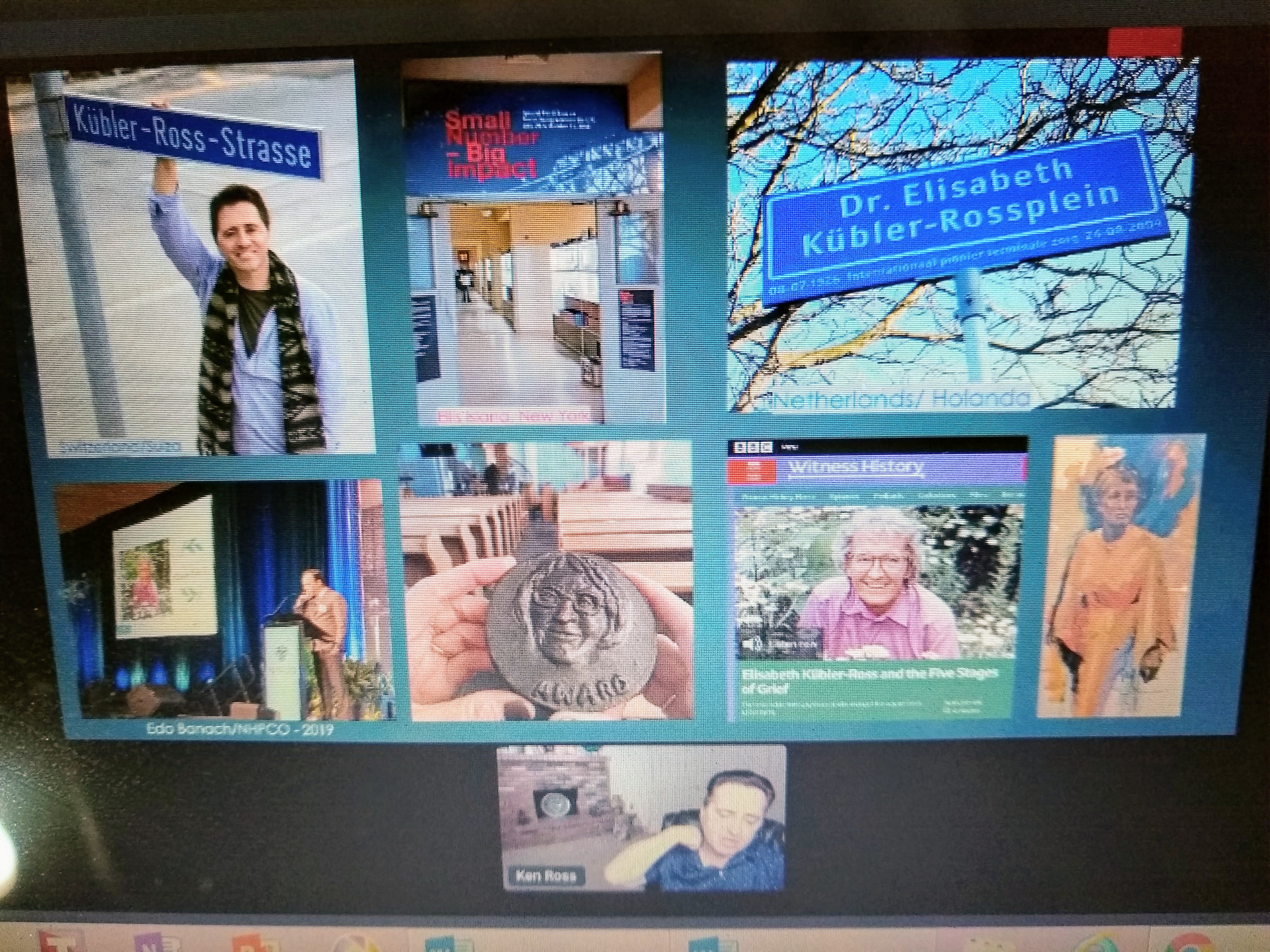
Another highlight was the session with Ken Ross, son of Elizabeth-Kubler Ross, the Swiss-American psychiatrist who normalized grief through many books, the most well-known of which is On Death and Dying. That particular book offers a model known as the five stages of grief. Ken Ross, a natural storyteller, was his mother’s caregiver the last 10 years of her life. He is carrying on his mother’s legacy through her worldwide foundation and foreign publication of her books. Ross regaled listeners with stories of travels to 20 countries with his mother.  He clarified that his mother thought grief happened in cycles, and continues – it is not a cut and dry five stages.

The Elizabeth Kubler-Ross Foundation of Mexico, headed up by psychologist and end-of-life doula Wilka Roig, a Puerto Rican by birth, gathered a group of colleagues from other Elizabeth Kubler-Ross chapters around the world – Rodrigo Luz, a psychologist and thanatologist from Brazil, Else Groot-Alberts originally from The Netherlands but residing in New Zealand, Dr. Laura Aresca from Argentina and Uruguay, Wendy Pineda of Guatamala, and Cynthia Frahne a German psychotherapist devoted to palliative care in Argentina.

Screen shot of slide show from Ken Ross of Elizabeth Kubler-Ross Foundation, see Ken in upper left corner under the street sign bearing his motther’s name

Verna Fisher, a social worker, gave an endearing and sensitive talk about how to discover what is unsaid with both patients and families, how to show up for others, and how to listen.

Keith Bradley of Final Exit Network gave a valuable talk about Advanced Health Care Directives for Dementia, and John Tastad, a thought leader in end-of-life ethics, shared about truth-telling in a gentle way.

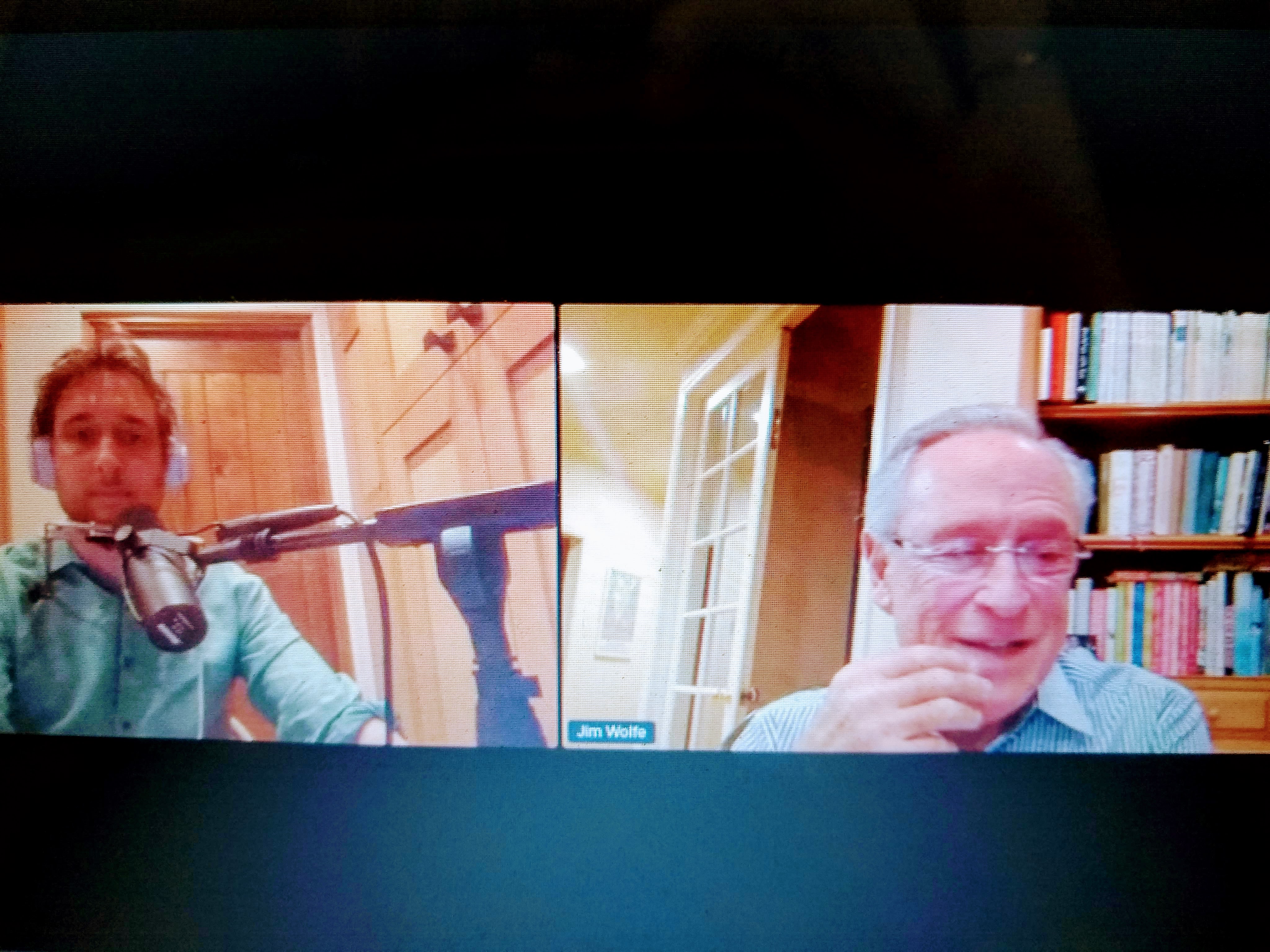
The closing hour with Brad Wolfe, creator of Reimagine, was especially heart-felt. Wolfe spoke about the death of his cherished grandmother and what it means to love someone all the way to the end of their life. An especially poignant moment was when his father Jim Wolfe joined the talk about this delicate subject.  Reimagine is a platform to reimagine death. It has gathered over 65,000 attendees since its inception to discuss how to embrace life by facing death.  See https://www.letsreimagine.org/about 

Screen shot of Reimagine Founder Brad Wolfe with his father Jim Wolfe discussing delicate subject; Brad sings a song about beautiful dying

I was honored to attend and present at the first Beautiful Dying Expo last year in San Diego which you may read about here:

https://wellnessshepherd.com/2019/12/29/a-visit-to-the-beautiful-dying-expo-in-san-diego-california-2019/

Also see the expo’s Facebook page where you may listen to Michele Little’s informed interviews with some of the speakers.  Scroll down the FB page at

https://www.facebook.com/beautifuldyingexpo

For more information see https://www.beautifuldyingepxo.com, write to info@beautifuldyingexpo.com or call (760)944-7540.

Death and Dying, Death and Dying Education, End-of-Life Education, End-of-Life Planning, Palliative Care

Palliative Care and End of Life Practitioners Gather Internationally and Locally Seeking Solutions for COVID Care, Social Disparities, and More

COVID has brought about loss of lives, economies, and untold devastation around the world.

It has also brought with it dedicated palliative care and end of life practitioners gathering for discussions about  how to improve healthcare inequities and offer psycho-social-spiritual support to patients, families, medical teams, and first responders for now and the future.

New alliances and friendships have been formed via Facebook, Webinar, and Zoom chats that may not have been forged otherwise.

In August 2020, I attended several gatherings. Below are highlights. Each exchange was a gift.

The Chaplaincy Innovation Lab lead by Wendy Cadge and Michael Skaggs at Brandeis University continues to host a remarkable gathering of chaplains and others. The Trauma and Spiritual Care meeting in August emphasized the value of chaplaincy during COVID.  We listened to moving stories about trauma created by the current medical model, especially for minorities, and the statement “racism is a public health crisis.”  Also of note were observations by Dr. Ayo Yetunde, a professor at United Theological Center of the Twin Cities, who focused her remarks on the trauma and stigmatization of growing up black in America. She spoke about moral injury and how “politicians traumatize us.”  Her newest book, to be released this fall is Black and Buddhist.  See https://www.unitedseminary.edu/academics/faculty/pamela-ayo-yetunde/ and http://chaplaincyinnovation.org/

The Elizabeth Kubler-Ross Foundation of Central Mexico.  Psychologist and end-of-life educator Wilka Roig in San Miguel de Allende produces monthly seminars related to death, dying, and grief. The August gathering was uncommonly interesting with Ken Ross, son of Dr. Elizabeth Kubler-Ross, as the guest. It was fascinating to learn about his mother, the Swiss doctor who spent her adult life in the U.S. devoted to continuing the hospice movement started by her friend and colleague Dame Cicely Saunders of St. Christopher’s Hospice, London. I have visited the Elizabeth Kubler-Ross library in Torrance, California at Dr. Ira Byock’s Institute of Human Caring but had no idea of the trials and tribulations of this remarkable woman’s life. Dr. Kubler-Ross was a Jungian, and a prolific author best known for Death and Dying, 1969. Ken was her caregiver for almost 10 years. He gave a loving, tender report that included amusing stories about how stubborn she could be. A revealing part of his talk was how most people interpret the five stages of dying or the five stages of grief literally, as fixed stages. He showed us circular graphs his mother created showing all phases are connected and that we go in and out of phases arbitrarily. There is no end.

Dr. Marcos Gomez Sancho, the pre-eminent thought leader for palliative care in the Latin world spoke on Facebook to over 700 physicians, nurses, social workers, psychologists, educators, and volunteers in North and South America from his home in Palma de Majorca, Spain. As anticipated his talk was well-planned and included music, paintings, and photos to illustrate his points. His presentation was “El Duelo Normal al Duelo Imposible”, normal grief to impossible grief, emphasizing “the cruelty” of dying alone without traditional support and the suffering of the patient, the family, and the medical team. Dr. Gomez’ website is: http://www.mgomezsancho.com/esp/index.php

I was honored to spend time with Dr. Gomez at the 2nd International Palliative Care Conference in Guadalajara in 2015 and last year when he was again the headliner at the 4th conference: https://wellnessshepherd.com/tag/dr-marcos-gomez-sancho/

Dr. Marcos Gomez Sancho, 2 August 2020

The National Association of Hindu Chaplains (NAHCA) A unique gathering of mostly Hindu Americans (14) with special guest Sanjay Mathur of the Hindu Temple of Rochester, NY. Moving stories by this tender-hearted man with compassionate presence. I could see why anyone would feel comfortable receiving his pastoral care. http://www.hindutempleofrochester.com/

Let’s Reimagine End of Life, based in San Francisco, has put a tremendous amount of energy into producing 700 “spaces” around the world, and 125 workshops. Congratulations to programmer Dara Kosberg. One of my favorite discussions included a small group of first generation Americans of Chinese, East Indian, Korean, and Thai descent discussing how to talk to their parents about planning end of life, a culturally taboo subject. On August 31, founder Brad Wolfe, a Stanford educated entrepreneur and artist hosted a chat with palliative care physician Jessica Zitter (also author and filmmaker), Pastor Corey Kennard, and grief author Hope Edelman. I loved the breakout sessions where a marvelous synchronicity introduced me to Jessica’s lovely mother Rhoda, and two colleagues whom I hope to stay in touch with – international end-of-life doulas Glynis German of Mallorca, Spain and Merilynne Rush, RN of Michigan. They both also host Death Cafes. Small, meaningful world.  https://letsreimagine.org/

Heartfelt thanks to all those mentioned above who dedicate their lives to the well-being of others, and who are so willing to share what they’ve learned.  And heartfelt thanks to all others engaged in these activities and are not mentioned.

Death and Dying, Death and Dying Conferences, Death and Dying Education, End-of-Life Education, Palliative Care

2020 Death & Dying Conferences & Education – COVID Has Accelerated Discussions of Mortality

The worldwide “death positive” movement of the last 10 years has encouraged many persons to prepare for their earthly demise – emotionally, physically, spiritually, and legally (addressing healthcare wishes, wills, and more).

The arrival of COVID has accelerated these discussions.

Many gatherings and programs focus on a return to “slow medicine”, person-centered care, traditional ways of honoring departures, the creation or continuation of rituals and all things “natural”.

Who is leading the conversations?

Here below is a random short list (many missing) of conferences and educational resources (mostly in the U.S.) about healthcare, death, dying, and transitions in 2020-2021. Consider it a starter list.

Not included are hundreds of insightful books by caregivers, chaplains, doulas, journalists, nurses, physicians, and lay folks, as well as numerous end-of-life doula programs, local civic community programs, and offerings from hospices, and faith-based organizations.

1001 thanks to all persons near and far who openly share information about mortality and ways to create a thoughtful, peaceful end-of-life for all (when possible) as part of their love mission.

Afterlife Conference  The 10th annual conference, produced by Dr. Terri Daniels, a clinical chaplain, certified trauma professional, and end-of-life educator took place on-line in June. The 2021 conference is scheduled for next June. https://afterlifeconference.com/

Art of Dying Institute at the New York Open Center. On-going seminars plus certificate trainings all year for end-of-life doulas, and dying consciously teachers.  https://www.artofdying.org/

Association for Death Education and Counseling based in Minneapolis, MN cancelled its 42nd annual meeting for 2020. The next conference is scheduled for April 6-10 in Houston, TX. The conference offers continuing education credits and thanatology certifications. See www.adec.org

Authentic Presence  On-going contemplative end-of-life care trainings and meditations led by interdisciplinary palliative care practitioners Kirsten de Leo, and Dr. Anne Allegre. Currently being held on-line. Notable professional education team  https://www.authentic-presence.org/our-team

Beautiful Dying Expo.  On-going end-of-life conversations on their Facebook page with palliative care physicians, hospice nurses, green burial professionals and more. Engaging interviewer is Michele Little, producer, author, and end-of-life doula. The 2020 Expo will be on-line November 13-15. Here is a report on their first expo in 2019: https://wellnessshepherd.com/2019/12/29/a-visit-to-the-beautiful-dying-expo-in-san-diego-california-2019/  www.beautifuldyingexpo.com

Café Mortality, Death Cafes, and Death Over Dinner. Groups around the world started gathering to discuss death over tea and cake in Switzerland in 2002 with sociologist Bernard Crettaz. In September 2011, American Jon Underwood, based in England, carried on the tradition by creating Death Café. Jon died not long ago but his wife, mother, sister, and other volunteers keep the organization going. There are Death Cafes in 79 countries!!! Find one near you or far from you (as most are on-line at this time of COVID) at www.deathcafe.com. Death Over Dinner continues in the same vein with night-time conversations about how we wish to die. See www.deathoverdinner.org. These are all volunteer efforts.

End of Life Experience Conference  March 12-13, 2021 (originally scheduled for April 2020) Lisbon, Portugal  https://www.progressiveconnexions.net/interdisciplinary-projects/health-and-illness/the-end-of-life-experience/conferences/

End of Life University. Dr. Karen Wyatt, an award-winning spiritual care author and hospice physician, started on-line podcast interviews (over 250) with end-of-life professionals in 2013 to offer a resource for family caregivers, healthcare workers, and the public. Dr. Wyatt also creates a book list every year, one book per month, known as The Year of Reading Dangerously. See http://www.eoluniversity.com and

https://wellnessshepherd.com/2018/08/05/death-dying-education-a-chat-with-end-of-life-universitys-karen-wyatt-md/

End Well Project   www.endwellproject.org  The End Well Symposium is a one-day series of talks every December by esteemed healthcare professionals, most of whom are authors focused on creating more human-centered end-of-life experiences. The 2019 talks may be viewed on You Tube. Here is my blog about the last event.  https://wellnessshepherd.com/2019/12/31/end-well-a-symposium-on-redesigning-the-end-of-life-experience-san-francisco-ca-2019/

Dying for Change Hospice UK offers on-going conferences, workshops, and more.  See https://www.hospiceuk.org/what-we-offer/courses-conferences-and-learning-events

Dying Matters https://www.dyingmatters.org/events  A coalition of National Health Service, non-profit, and the independent healthcare sector in England and Wales. On-going, on-line educational events promoting conversations throughout the kingdom.https://www.conferenceseries.com/palliativecare-meetings   2020

Reimagine  A non-profit organization based in San Francisco that “explores death and celebrates living.” On-going on-line conversations with a diverse group of participants – for example, an interview with palliative care physician Ira Byock, and a group of young Asian-American professionals focusing on how to address the subject of advance healthcare directives with their immigrant parents. For more info see www.letsreimagine.org

The Conversation Project. Boston-based non-profit, co-founded by Ellen Goodman, dedicated to helping folks talk about their wishes for end-of-life care at home and in community settings. Excellent materials (starter kits) to download and work with plus guidance for how to have your end-of-life wishes respected. They have a new COVID-19 specific guide which you may download for free as well as other resources.  www.theconversationproject.org

University of Bath, UK  The Centre for Death and Society, according to Director John Troyer, “is the only research centre that looks at death.”  They held their 14th prestigious international conference in the fall of 2019. Their 2020 conference was cancelled but there are some continuing events including “Big Death Talks”  https://www.bath.ac.uk/research-centres/centre-for-death-society/

University of Wisconsin  International Death, Grief, and Bereavement Conference sponsored by the University of Wisconsin La Cross Center for Death Education, Bioethics, and Extended Learning. June 6-9, 2021  Call for proposals is open for the subject Ambiguous Loss and Grief. https://www.uwlax.edu/ex/dgb/

World Hospice and Palliative Care Alliance  Last but not least, the most meaningful COVID healthcare conversations for me professionally were organized by WHPCA Executive Director Stephen R. Connor, PhD. Connor gathered palliative care professionals from Africa, Asia, Europe, Latin America, and the U.S. to review challenges related to caring, pain management, policy, resources, and serving during COVID. The series was on-line for 12 weeks and included collaboration with the International Association of Hospice and Palliative Care (IAHPC), International Children’s Palliative Care Network (ICPCN), and PALCHASE offering Palliative Care in Humanitarian Aid Situations and Emergencies. WHPCA has over 200 affiliate organizations and members in 79 countries. See https://www.thewhpca.org/covid-19/ for briefing notes and information on participants.


Death and Dying, Death and Dying Education, End-of-Life Education, Palliative Care

A Visit to the Beautiful Dying Expo in San Diego, California 2019

For those of you working in palliative care and hospice, or those of you interested in the subject of end-of-life, transitions, and grief, there are a vast number of educational and support opportunities sponsored by foundations, medical centers, universities, small groups, and individuals around the globe.

This year, I attended a new event in California…

Beautiful Dying Expo, November 2, 2019 which was founded and produced with love and attention by author (Exit Papers 101: Prepare for the Final) and End-of-Life Doula Michele Little at the San Diego Convention Center.

This first time gathering included palliative care and hospice professionals, educators, and volunteers; authors/philosophers/teachers/guides; green burial enterprises; music thanatologists; scientists, and, the public.  A “Successful Aging” Expo, in full swing in an adjacent hall, brought curious older adults to attend as well.

According to Little, “Beautiful Dying Expo’s mission is to expand awareness and encourage meaningful conversation, demystifying the process of dying and death by bringing industry experts together to share current tools, new ideas and resources with the public.”

Noteworthy were the excellent panels moderated by author, podcast host, hospice physician, and founder of End of Life University on-line Karen Wyatt, MD.  To read more about this extraordinarily dedicated educator and spiritual teacher please see www.EOLuniversity.com or

https://wellnessshepherd.com/2018/08/05/death-dying-education-a-chat-with-end-of-life-universitys-karen-wyatt-md/ 

Hospice Physician Karen Wyatt
Karen Wyatt, MD, Author and Founder of End-of-Life University

The Comfort Measures and Caring for the Dying panel included Dan Diaz of End-of-Life Options (husband of Brittany Maynard who died of a brain tumor with assisted dying in Oregon), author, hospice nurse and chaplain Gabrielle Elise Jimenez (www.thehospiceheart.net), Sharon Lund (author and NDE near death experience speaker), Roger Moore a medical hypnotherapist, Elizabeth Padilla of the Conscious Dying Institute (www.ConsciousDyingInstitute.com ), Dr. Karl Steinberg palliative care physician, and Dr. Bob Uslander (Medical Director and Founder of Integrated MD Care).

Beautiful Dying Expo Advisory Board members San Diego palliative care physician Karl Steinberg, and Santa Barbara-based video and event producer Penny Little

The End-of-Life Choices and Planning panel included Scott T. Barton, PhD of UCSD School of Medicine’s Anatomical Department, estate attorney Adam Englund “the best bequest is to have your affairs in order”, Healthcare Chaplaincy member and speaker Ben Janzen (Dr Theology, PhD, VITAS Healthcare Chaplain and Bereavement Manager), Eric Putt, MBA of Thresholds Home and Family-Directed Funerals, Samantha Trad the California Director of Compassion and Choices, and Shawn LaValleur Adame founder of DIY Dying. Drs. Steinberg and Uslander also participated (see paragraph above for their details).

Also noteworthy were panels about Advance Care Planning, POLSTs (in California), end-of-life planning and options for veterans, end-of-life choices, and more.  Among the unique exhibitors, workshop hosts, and musicians were Living Reef Memorials (“giving new life to our oceans”), Joshua Tree Memorial Park natural burials, Liz Fernandez DVM on pet euthanasia, Good Grief mandalas, and healing spiritual music from Gia George of http://www.divinelygia.com.

In honor of Mexico’s Day of the Dead it was an honor for me to share an overview of dying in Mexico – family and religious traditions, rituals, plus their origins and meaning told through stories I’ve been witness to based on two years as an educator and outreach liaison at www.JuntosContraelDolor.com – the only 24/7 palliative care hospital and hospice in the state of Jalisco, another two years dedicated to folks nearing end-of-life in a small village at Lake Chapala, and research volunteer work for www.HolaHospice.org to establish a senior home and hospice in the state of Michoacan.

Mexican paper mache’ Catrina dolls created by Professor Ernesto Eduardo Figueroa and his sister Ana of San Miguel Allende and Celaya. These dolls, dressed in French-influenced gowns from around 1900 telegraph that death is democratic and that even the wealthy do not escape it.

As a result of my expo presentation three hospice nurses, two bi-lingual, were excited to offer volunteer services in Mexico!! What a happy synchronicity, all due to Michele Little’s invitation for which I am grateful.  Thanks also to Michele and team for creating a Day of the Dead altar in the middle of the expo room!!!!

Finishing touches were offered at 8:00 p.m. by idiosyncratic guest speaker Stephen Jenkinson, a Harvard-educated theologian and social worker, founder of Orphan Wisdom, and former director of palliative care at Mount Sinai Hospital in Toronto, Canada.

Canadian Stephen Jenkinson, author and speaker

Jenkinson has spent years of his life dedicated to promoting the acceptance of death and is the author of several books including the Nautilus Award-winning Die Wise: A Manifesto for Sanity and Soul. The National Film Board of Canada produced a documentary about Jenkinson and his philosophy entitled Griefwalker.

The 2020 educational event will take place in San Diego, CA October 31 and November 1.

See https://beautifuldyingexpo.com/