Assisted Living Mexico, Mexico Retirement, Mexico Senior Living, Senior Care Mexico, Senior Living Mexico

Mexico’s Future as a Senior Living and Senior Care Destination for North Americans: Opportunities and Realities from CIAMAR 2025

We live in an aging universe, a universe where older adults live longer than ever before. 

The need for housing and care, especially affordable housing and care, is growing in all three North American nations – Canada, Mexico, and the U.S. (See the Statistics section for expected growth by 2030 and 2050 at the base of this review).

In 2003, when working at a luxury senior residence in Rancho Mirage, CA, it was evident that healthcare affordability for U.S. older adults would become a challenge or become completely cost prohibitive, especially if dementia was part of the equation.

This revelation ignited my desire to explore international options.

I started investigating Ecuador, Mexico, and other destinations for medical care, long-term care, and end-of-life care, subjects that remain dear to me and those I serve.

My hands-on experience as a Mexico senior living consultant conducting due diligence over a period of 11 years in 18 Mexican states (there are 31. The Federal District of Mexico City makes 32) has kept me engaged and open to what’s happening on the senior living front. An excellent place for me to learn more was as a speaker and guest at this year’s CIAMAR Wellness and Senior Living Investment Summit 50+ to 80, a conference produced by Javier Govi.

Govi is a “nearetiring” proselytizer and real estate entrepreneur who has believed in the growth of senior living in Mexico for American, Canadian, and Mexican retirees for more than a decade. His platform is focused on growth with corporate players from Canada, Mexico, Spain, the U.S., and other countries in Latin America.

My interest is in all sectors including smaller residences and intimate communities with sustainable futures.

Who attended CIAMAR 2025?   

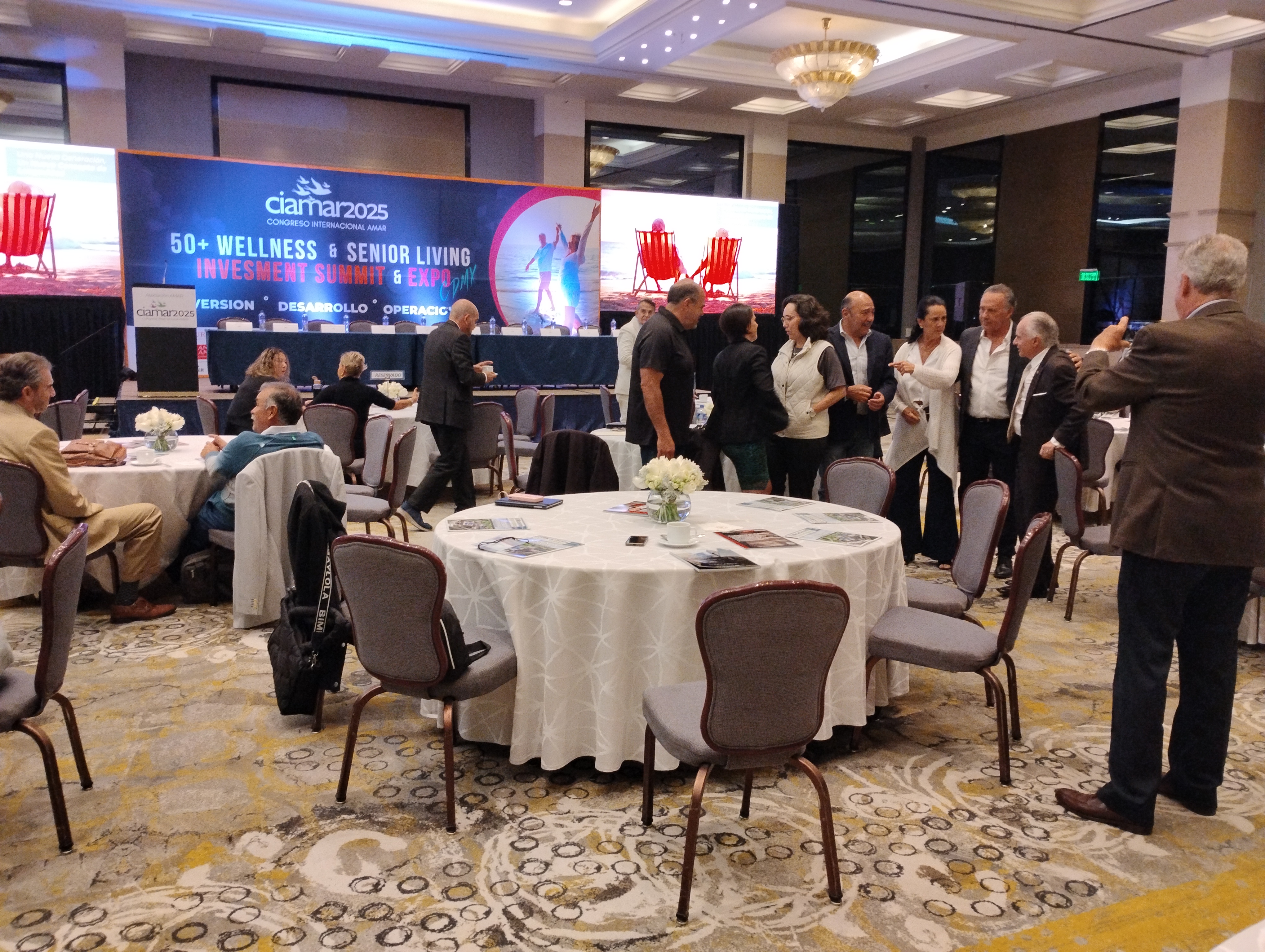
Between 150 to 200 persons attended the summit, gently modelled after NIC (National Investment Center) conferences in the U.S. with 1500 to 3,000 participants. The event was held at the Hotel Marquis Reforma in Mexico City.

Architects, bankers, real estate developers, senior living operators, tourism industry execs, one real estate appraiser, and entrepreneurs from around Mexico – Baja California Norte y Sur (Tijuana, Cabo San Lucas), Cancun, Cuernavaca, Leon, Merida, Mexico City, Puebla, Queretaro – and from other countries – Argentina, Colombia, Costa Rica, (Germany via Zoom), Panama, Spain, were present.

Below is a photo from the first day of the summit, almost an hour before we began.
What was on the agenda and who were the speakers addressing the opportunities?

https://ciamar.odoo.com/en/programa

https://ciamar.odoo.com/en/ponentes

Speakers from Latin America, mostly from Mexico, brought unique projects and perspectives, some are outlined further below.  

These Latin American entrepreneurs see opportunity in attracting Americans, Canadians, and Europeans. One of the speakers referred to the current wave of this cohort as “el tsunami blanco”, the “white tsunami”. (An interesting comment as some expats in Mexico have Afro, Asian, and Latino heritage).

Latin American entrepreneurs are also focused on culturally compatible senior living for their own populations. Is there a way to meld the different cultures? This is a subject that remains open for discussion.

Some Mexican senior living homes thrive on hosting expats as their primary residents.

Despite the perception outside Mexico that Mexican elders are taken care of at home, many still are, there are senior living enclaves for Mexicans around the country, though far fewer than with Mexico’s neighbors north of the border. 31% of 11 million Mexican homes have at least one older adult (INEGI 2020).

According to INEGI (Mexico’s National Institute of Statistics and Geography, 2020) there are approximately 1200 senior living residences including assisted living/nursing care/memory care (often combined into one residence unlike American and Canadian systems). In 2017 there were an estimated 800.

The numbers for Mexico do not include independent living/active adult enclaves but do include corporate senior living, smaller private pay residences, non-profits often run by nurse nuns, and government homes. These numbers fluctuate as numerous small start-ups often close.

In Canada there are approximately 2,076 assisted living/supportive living/retirement residences according to Science Direct. Another source says Canada has 571 assisted living residences. (See Reference section below). In the U.S. there are approximately 32,000 assisted living communities with a total of over one million beds.

The “Bucket List” panel below with Javier Govi CIAMAR founder/producer, Wendy Jane Carrel, Kerri Moon, and Oliver Sahlmann
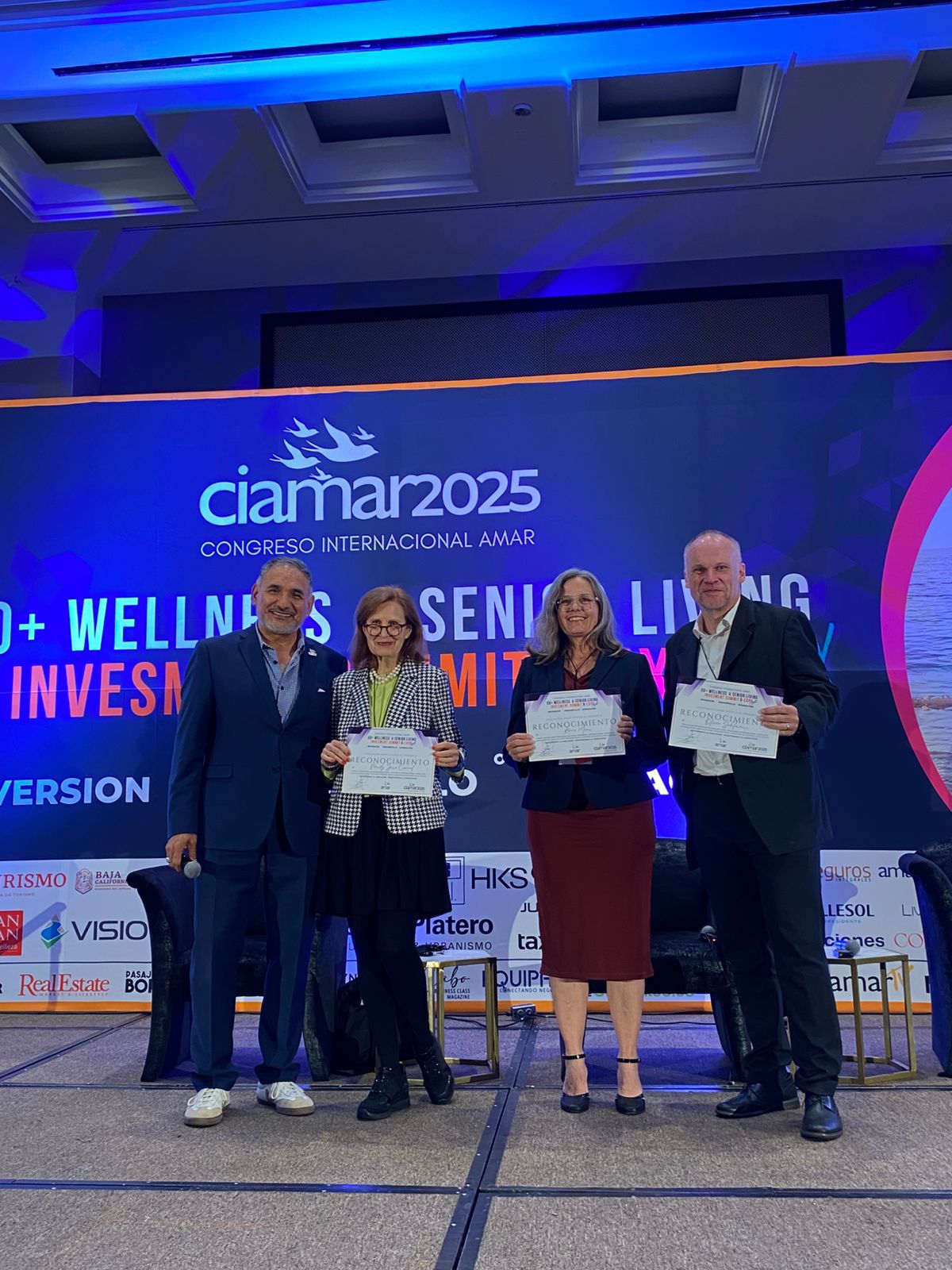
Three of us were invited to address the following question:

Who are the Americans, Canadians, and other foreigners considering Mexico for retirement and senior care?

We began our team presentation with a quick slide show of photos showing foreign residents in Mexico ages 60 to 100, couples and solo agers of diverse backgrounds (a growing number of Mexican Americans included), and those with diverse interests and preferences from no frills to resort-like settings.

Kerri Moon, an American entrepreneur who built one community at Lake Chapala and collaborated on the growth of the Namaste Community (another Lake Chapala expat community), pointed out, and we all agree, “the availability of caring workers who come from intergenerational households and are accustomed to respecting their elders could ensure superior staff-to-resident ratios giving Mexican senior housing a tremendous opportunity to succeed.”

Moon is currently spearheading a group seeking investors for a Memory Care Village at Lake Chapala. Find her at https://www.facebook.com/RetireInternationally/

Oliver Sahlmann, a business coach, former Volkswagen Mexico executive, and Mexico resident for 20+ years, shared about German retirees in Mexico.  “They come mostly for the sun, and, in winter months.” He presented some charming cultural stories to give the audience a feeling for the German mindset.

The main points of my contribution were the diversity of ages, backgrounds, and interests, that no one plan fits all, and that most retirees from Canada and the U.S. prefer to Age in Place in communities with other expats. Fewer prefer living among locals but those who do often thrive.

The migration of Americans and Canadians to Mexico for retirement and senior care is not new, it has existed for decades. Numbers increased noticeably since 2008 (U.S. economic challenges), COVID, and as mentioned above – the realization that we are living longer and there may not be enough funds for retirement and healthcare. The U.S. does not have universal healthcare, Canada and Mexico do to varying degrees.

For older adults who have long-term care insurance and are independently wealthy healthcare is not an issue. But the reality is, even with U.S. Medicare, and continued rumors of cuts for Medicare and Medicare Advantage programs, some older adults are seeking alternatives and solutions in other U.S. states or other countries.

Here are some highlights from CIAMAR 2025 sharing pride of Mexico, sustainable projects, unique visions, plus mention of notable vendor/summit supporters:

Javier Govi invited attendees to invest in the future of senior living in Mexico and LatAm, invest in the concept of Near Retiring (bringing Americans and Canadians to Mexico), consider Pueblo Magicos for aging (see Reference section below for explanation of this government initiative for magical villages), and most of all offer dignity, quality of life, and exceptional healthcare. Govi is the author of Nearetiring: Baby Boomers, Snowbirds, and Summerbirds, a Great Opportunity for Mexico and Latin America in Spanish.

Mac Kroupensky – Mac is a thought leader who teaches corporations, companies, and government how to create innovative change and motivate people and teams. For 10 years he taught at IPADE, Mexico’s equivalent of the Harvard Business School or France’s INSEAD. “To be a great leader you must be a great human being,” is his motto.

Kroupensky has a super enthusiastic presence. He regaled the audience by asking them to imagine an ideal retirement place – a city of 150,000 with medical infrastructure, security, and new technology. He pointed to Sofia, Bulgaria’s thriving tech and arts scene, a city of old and new. Most of all, that perfect retirement place would offer the best of humanity, people who care. He then added, the Mexico/LatAm Senior Living Investment Summit would offer invaluable expertise and talent. He is right, it did.

https://kroupensky.com/quien-es-mac/

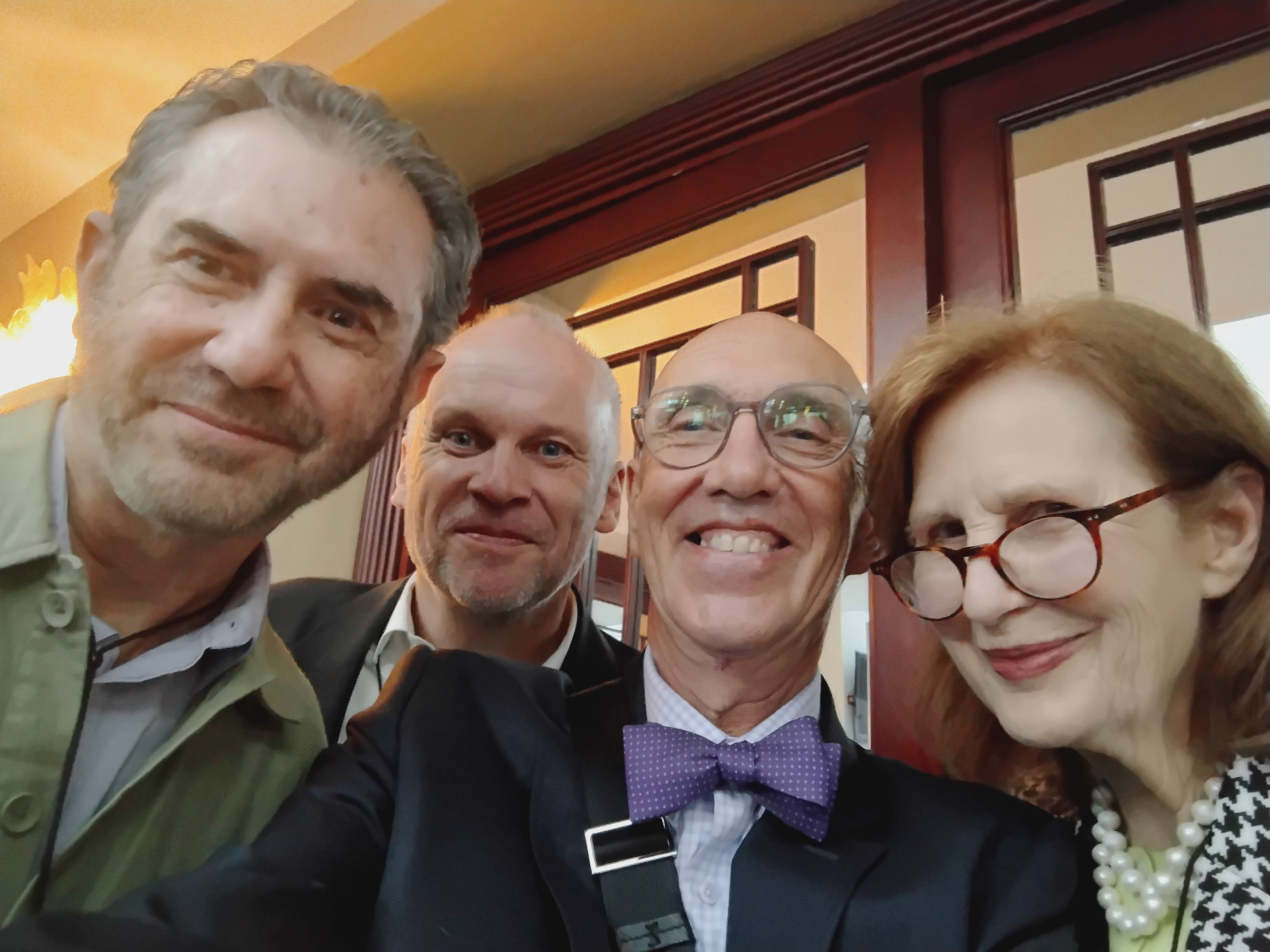
In the photo below: Rafael Garcia Turban international developer, Oliver Sahlmann, Mac Kroupensky, Wendy Jane Carrel at CIAMAR Mexico and LatAm Senior LIving Investment Summit 2025
Antonio Gonzalez-Quiros F. , Director of Ballesol Mexico, was the keynote speaker. Ballesol is a Spanish corporation that for 40 years has developed 55+ resorts, residential apartments, and assisted living. Ballesol has assisted living facilities in Queretaro and Mexico City. Note: Spaniards and Latin Americans investing in senior living have much in common – culture, language, law, and a familiar way of doing business.

Ernesto Oechlar former banker, former CEO of a family-owned senior living residence, advocate for holistic senior living, organic food, and positive mind set. He is currently a consultant for Neuro Change Solutions (NCS), a global network of corporate consultants trained by Dr. Joe Dispenza teaching how to apply the neuroscience of change to increase employee engagement, collaboration, and productivity for business results. Delightful to converse with him and with Mac Kroupensky about differences of perception within cultures.

Marta Parra, Co-Founder and Co-Director of Virai Arquitectura, Spain.  She was one of the last speakers and I wish more attendees could have listened to her enlightened presentation about creating accessible spaces and person-centered memory care with the energy of light, located in nature, and more. She is a pioneer in neuroarchitecture and sustainability for hospitals and senior living residences in Spain, Africa, and Latin America. Her slides and presentation were excellent. For more information see https://www.virai.eu/

Architect Carlos Sanchez of www.gomezplatero.com was a pleasure to listen to and learn from. He studied architecture in Torino, Italy and has worked on senior living projects in Medellín, Colombia and in Uruguay. 

Mario López is the founderof Taxáre. He is a real estate appraiser, consultant and enthusiastic investment project manager for real estate businesses. You can find him as “Mario El Valuador” on Instagram, Tik Tok and his podcast Un Express de Real Estate on You Tube @soymariolopez. He showed us drawings of an eye-catching urban city design for Tijuana intended for retirees and others – modern towers, gated, secure, flat and walkable, alongside the Pacific Ocean, with sustainable architecture, lots of gardens and amenities. If and when such a project is manifested, I can see folks with this concept as their aging in place vision filling it up fast. Based on my several due diligence visits to Tijuana, the city would benefit from a project such as this.

Juan Pablo Payró an Architect/Masterplanner/Designer/Developer shared about Agrihoods and Wellness Community projects in Queretaro, San Miguel de Allende, Holbox, Bacalar, and Los Cabos. He is a co-developer with Javier Govi’s Grupo AMAR. I contacted him to share photos or a website but have yet to receive a reply.

Salvador Rivas, an articulate, cultivated British-Mexican architect, has worked on prestigious international projects. His web site is www.srivasarchitects.com . I contacted him for information related to senior living projects but have yet to receive a reply.

There were many worthy presenters. Apologies to those not mentioned.

A special shout out to Jose Manuel Diez for his elegant, gracious energy as Master of Ceremonies and to the amazing AMAR and CIAMAR support team who produced this event.

Attendees I also appreciated meeting:

Juan Jose Perez Rifel shared with me an appealing project for Queretaro, one of my favorite Mexican cities. He is with www.st-austin.mx (see concept photos at the website). As I understand St. Austin owns the land. The first project is an eco-sustainable hospital which will serve as the property anchor with plans to expand to a medical district with doctor’s offices, a senior living residence (no precise details), a commercial center, gardens, and more. I am eager to see it when it is built.

Visiting from Lake Chapala was Jorge Garcia de Leon who is head of operations at Rancho Salud Village, see www.rancholasaludvillage.com or their Facebook page.  His father-in-law owns the land in this eco-friendly, holistic, sustainable, multicultural, co-housing community of homes for Aging in Place. I have witnessed the growth over 11 years from two homes to a plan for 21 and eventually 30+ with pool, vegetable and herb gardens, and more. I am a fan of Jaime Navarro, his lady Sara, and their passion for healthy, independent living.

Roberto Madruga Avensa of Mexico City has “four legally clear parcels for development” for an Aging in Place/Wellness project in the Pueblo Magico (magical village) of Ixtapan de la Sal. The project is known as Reserva Reforma and there is no website yet. Sr Madruga envisions a completely flat, walkable community with local healthcare within five minutes, a hospital you would be flown to by air ambulance if needed, living spaces with doors, floors, and more following the 150 Residencial Universal Living Design standards. Sr. Madruga’s wife is a geriatrician. They have travelled to Italy, Spain, and Switzerland to look at senior care. The Reserva Reforma concept would appeal to American and Canadian couples and solo agers if and when such a project is built may be a few years from now.  In any event, the vision is a match with many folks who wish to move to Mexico, Baby Boomers especially.

Alejandro del Rio of Leon, Mexico.  Family property on many acres in nature with a villa, a large home, lots of green trees, brick walls. It has been or is being converted into a senior living residence. See https://www.plenityland.com/ for photos and contact information.

Nelly Vasquez Sanchez of Gravasa Immobiliaria in Puebla and Oaxaca is a real estate agent and a newbie to the senior living world.  She shared with me she attended the conference because she wishes to learn how to provide for expat residents. She paid attention to each presentation. She was a joy to get to know as she represents a younger generation that has an interest in aging. https://www.facebook.com/igruvasa/?locale=en_GB

Mauricio de la Cerda, VP Growth for www.angela.care was at a vendor table sharing how to receive pills in a pill pack organized by day and time (breakfast, lunch, dinner), delivered to you at home. Angela Care works in collaboration with Amazon Pharmacy.

Vendor Roberto Sanchez of Gerflor.com, a French flooring company, shared my kind of waterproof, antimicrobial, soft to fall on, quiet, no glue, fast installation flooring. I wish this flooring was mandatory in Mexican residences as injuries from falls could be less severe. Most residences have slippery tile flooring. I also had a secret desire that the Marquis Reforma Hotel where the summit was held would remove its marble floors. We were there in rainy season!! Here is the GerflorUSA website: https://www.gerflorusa.com/

Where is the money?

With the talent I witnessed and all the possibilities shown on multimedia around the conference center (some visually inviting, stunning in fact), I was mystified. I wondered why so many worthy older adult projects presented at the summit have not been built.

What has prevented architects, developers and others from manifesting their visions?

If I had not been breathless and a bit under the weather, nor missed the presentation that may have explained more “Where is the Money?” I may have learned more. Kudos to CIAMAR for the discussion.

So, I canvassed Mexican speakers and attendees and asked if they would please share what they see as obstacles.

The answers included government bureaucracy (heard this several times, heard this the most), challenging local laws requiring 2-3 years for permission to build, issues with land permits, financing, construction, and “voluntad” or will power and motivation for investment in this sector.

There is a growing venture capital market in Mexico of local and international investors. Most of the capital is being invested in technology, especially fintech.

Many architects and developers in senior living are essentially like movie producers. They create an idea, develop it, and shop it from place to place for financing.

It requires remarkable resilience and will power to be a Mexican entrepreneur in the senior living sector.

CIAMAR 2026 will focus on technology in senior living.

Summary

The need for senior living – housing and care, especially affordable housing and care, is growing in all three North American nations – Canada, Mexico, and the U.S.

For several decades Mexico has been a destination for Americans and Canadians. Now, with dwindling retirement funds, healthcare plans that are not flexible, and overall rising costs for housing and healthcare, the opportunity for more development is evident.

Senior living south of the U.S. border may be a continuing retirement trend.

Growth is slow as developments are often stalled by government bureaucracy, land permit issues, the ability to raise capital, and more.

Some Mexican developers are focusing on generations age 50+, especially those who are active and fit, seeking affordable luxury and a wellness environment.

© All rights reserved. Wendy Jane Carrel 2025   

Wendy Jane Carrel is a trusted older adult advocate and consultant who has hands-on experience with healthcare systems, retirement options, senior living residences, and wellness programs in Mexico, Ecuador, and other countries. She provides informed, culturally sensitive transition guidance and curated options for families and elders moving to Latin America. Her website is http://www.WellnessShepherd.com

Resources:

https://www.sciencedirect.com/science/article/abs/pii/S152586102200559X# Canadian long-term care statistics

https://bytescraper.com/b2b-database/list-of-assisted-living-facilities-in-canada

https://www12.statcan.gc.ca/census-recensement/2011/as-sa/98-312-x/98-312-x2011003_4-eng.cfm Canadian housing, dwelling statistics

https://www.technavio.com/report/senior-living-market-analysis an overview of U.S. market analysis growth for future senior living

https://dspace.mit.edu/handle/1721.1/108882# MIT study on real estate development opportunities for senior living in Mexico.  2017 2017 study on opportunities for senior living in Mexico

https://www.definitivehc.com/resources/healthcare-insights/assisted-living-facilities-us U.S. statistics for assisted living residences

https://en.wikipedia.org/wiki/Pueblos_M%C3%A1gicos Pueblos Magicos are part of a Mexican government initiative to create interest in its small towns with historical or magical charm.

I wrote the article below in 2016, it is dated in part.

Statistics

Statistics for burgeoning population growth in North America:

Canada – 7.6 million older adults representing 18.9% of the population according to Statistics Canada 2024. Statistics project seniors could make up 23% of the population by 2030 and nearly 26% by 2068

Mexico – 10.6 million adults over age 65 according to INEGI the Mexican Statistics Bureau, and Statistica.com. AARP International suggests older Mexican adults will represent 30% of the population by 2050 an increase of 277%.

USA – The number of Americans 65 and older is projected to increase from 58 million in 2022 to 82 million by 2050 (a 42% increase) according to a 2024 study by the Population Resources Bureau.

Assisted Living Mexico, CCRC's in Mexico, Expats Mexico, Health & Wellness Mexico, International Retirement, Life Plan Communities Mexico, Mexico Senior Living

Senior Living Investment Summit Mexico and Latin America September 3-4, 2025

I am on my way to Mexico City to speak at a Senior Living Summit being held at the Hotel Marquis Reforma September 3-4, 2025 about the growing need to create evolved, affordable, holistic enclaves of well-being for older adults to age in place, age in community, and more, a subject on my mind since 2003.

Quick history:

In 2003, when serving as nighttime administrator and day time admissions and marketing officer at an exemplary (still is) memory care campus in Rancho Mirage, California, (thank you owner and mentor Floyd), the writing was on the wall.

Unless you are blessed with excellent health your entire life and have experienced no accidents, in the U.S. the cost of adequate long-term care at home or in a residence, could easily require up to $1 million per person with 2025 fees and pricing. With long-term care insurance at several hundred dollars a month, only 80% of costs would be covered.

This awakening was the impetus to look internationally for more affordable options with quality care and medical infrastructure. Mexico and Ecuador, by virtue of proximity, were places I conducted due diligence and developed hands-on experience with locals and expats, as well as other nations farther away.

Thankfully, as a trusted older adult advocate and consultant I have met like-minded souls on my path including Mexico’s Javier Govi, the « nearretiring » proselytizer and real estate entrepreneur behind CIAMAR’s 9th edition Wellness and Senior Living Summit for 50+ to 80.

About 100 to 150 persons are expected to attend the gathering gently modelled after NIC (National Investment Center conferences in the U.S. with 1500 to 3,000 participants).

The concept to develop and expand senior living options is growing in Latin America as the silver tsunami is not just an American/Canadian/European phenomenon, it is worldwide.

Attendees will be real estate developers, venture capitalists, architects, brokers, folks from the tourism industry, and senior living operators who will meet, greet, and assess future potential for collaboration.

I will be on the Bucket List panel with two others to talk about expats who migrate to Mexico and other countries in Latin America and what their expectations are.

Here is a link to the summit home page: https://ciamar.odoo.com/en

Here is a link to the speaker page: https://ciamar.odoo.com/en/ponentes

If you are unable to access it, here is how my bio reads:

Wendy Jane Carrel

Founder, Wellness Shepherd

A trusted older adult advocate and consultant who has hands-on experience with healthcare systems, retirement options, senior living residences, and wellness programs in Mexico, Ecuador, and other countries. She provides informed and thoughtful transition guidance and curated options for families and elders moving to Latin America.

©  Wendy Jane Carrel 2025 http://www.WellnessShepherd.com

Aguascalientes City Park
Aguascalientes Museum of Death, Assisted Living Mexico, Death in Mexico, Health & Wellness Mexico, International Retirement, Senior Care Mexico

Aguascalientes, Mexico – a Colonial City, its Senior Care, and a Surprise, the Museum of Death

Nestled in Mexico’s highlands, Aguascalientes charms visitors with colonial architecture, clean streets, wide sidewalks, shade trees, and a warm community spirit. About 1.5 million residents live at 6,194 feet above sea level, an easy drive on the highway from Jalisco (three hours from Guadalajara). Known for its safety and relative tranquility, Aguascalientes surprised this newcomer. During my three-day stay persistent winds became an unexpected part of the city’s personality.

Founded in 1575 by royal decree of King Phillip II of Spain, the city’s original name was Villa de Nuestra Señora de la Asunción de las Aguas Calientes (Village of Our Lady of the Assumption of the Hot Waters). Citizens are amusingly referred to as hidrocalidos or hydrothermal people.

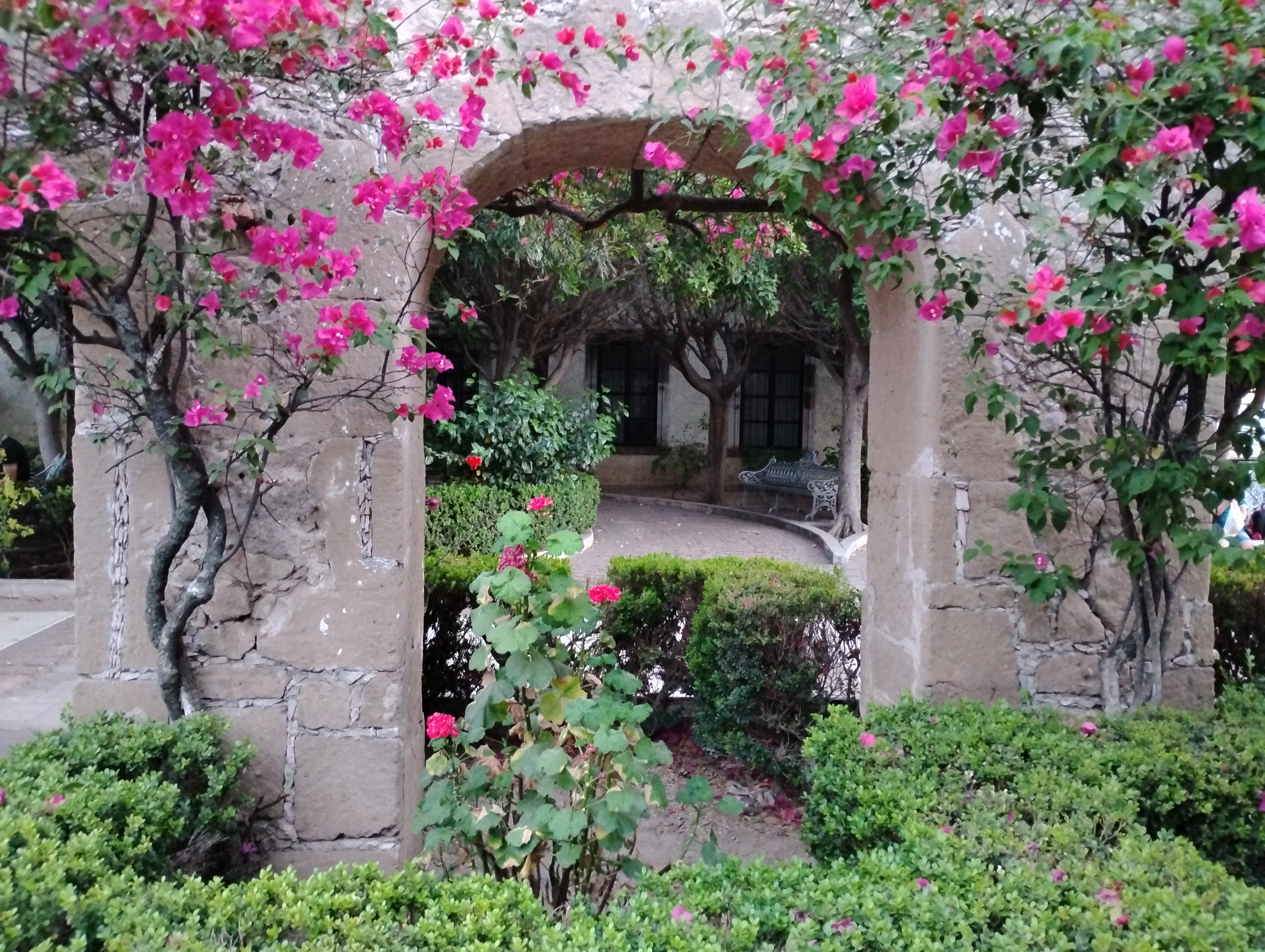
Mini-park in central Aguascalientes:

Immaculate street with residences and shops in central Aguascalientes:

Aguascalientes is an industrial city. Major companies present are GM, Honda, Mazda and Nissan. Other notable companies manufacture medical equipment, electronics, car parts, and textiles. Years ago, Aguascalientes built trains. The original station still stands as a museum and there are restored train cars to see.

Not surprisingly, among the expat population estimated around 1,000, there are several Japanese. Trip Advisor lists 34 Japanese restaurants (not all Japanese owned).

A glimpse of what I experienced related to older adult activities, care, hospitals, and end of life:

Older Adult Socialization in Community

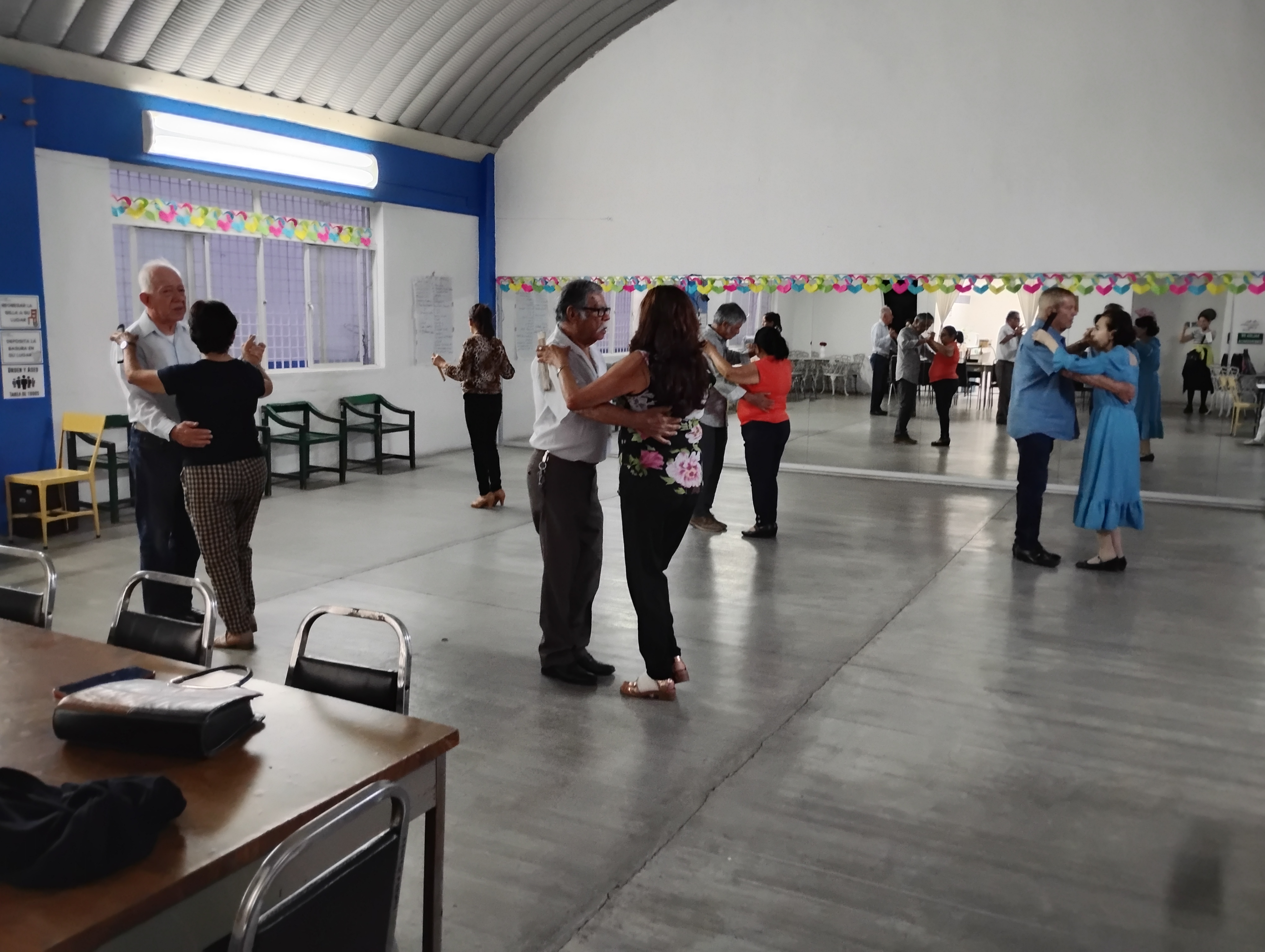
Club de la Tercera Edad is a public center for older adults run by CONACYT, the national counsel studying science and technology. When I arrived, there was a danzon class. Danzon is a Cuban music and slow dance tradition, immensely popular in Mexico and other parts of Latin America.

DIF and INAPAM Older Adult Activity Centers   Both DIF (Desarrollo Integral de la Familia) and INAPAM (Instituto Nacional de las Personas Adultas Mayores) are government run centers offering activities. They are separate entities but sometimes collaborate. DIF addresses entire family needs and is more about social protection of vulnerable populations. It offers adult daycare centers, psychosocial support, food programs, medical attention, recreational activities, and more. INAPAM is focused on older adult legal rights, transportation discounts, medical and cultural services.

On another trip I hope to meet Aguascalientes DIF director Aurora Jimenez Esquivel, known for her innovative initiatives including a popular travel program to visit nearby states known as “Gigantes Viajeros”. If you have access to Facebook, there are charming photos with older adults from Aguascalientes enjoying a trip at the FB page of Aurora Jimenez Esquivel. The link would not post when I loaded it here.

Señor Sebastian   As I made my way to the Panteón de los Ángeles y La Cruz, thirst led me to a sunlit corner store not far from the cemetery gates. There I met the venerable octogenarian you see in the photo whose warmth seemed to animate the whole neighborhood. With his son by his side, he presides over the store like a sage, sharing stories about local elders and aging in place. He graciously pointed me to the entrance of the cemetery. After wandering the peaceful grounds among small and large gravestones, I returned to thank him —feeling, in that moment, not just like a visitor, but welcomed to Aguascalientes. Memorable encounter.

Photos of the cemetery may be seen on an Aguascalientes Facebook page at: https://www.facebook.com/VivaAguascalientes/posts/pante%C3%B3n-de-los-%C3%A1ngeles-y-la-cruzaguascalientes-ofrece-una-gran-historia-en-relac/2168728129814822/

Assisted Living/Memory Care Residences

According to INEGI (the Mexican government statistics bureau) and Google, there are about 14 long-term care residences. (In Mexico long-term care is, with some exceptions, all in one – assisted living/memory care/nursing).

I focused on homes in the city center and visited seven to get a feeling for environment, providers, residents, and care.

Three assisted living/memory care homes had closed, one during COVID. Most places were basic, clean, modest, and dark, yet each with devoted caregivers. Residents in some homes seemed thrilled to have a visitor.

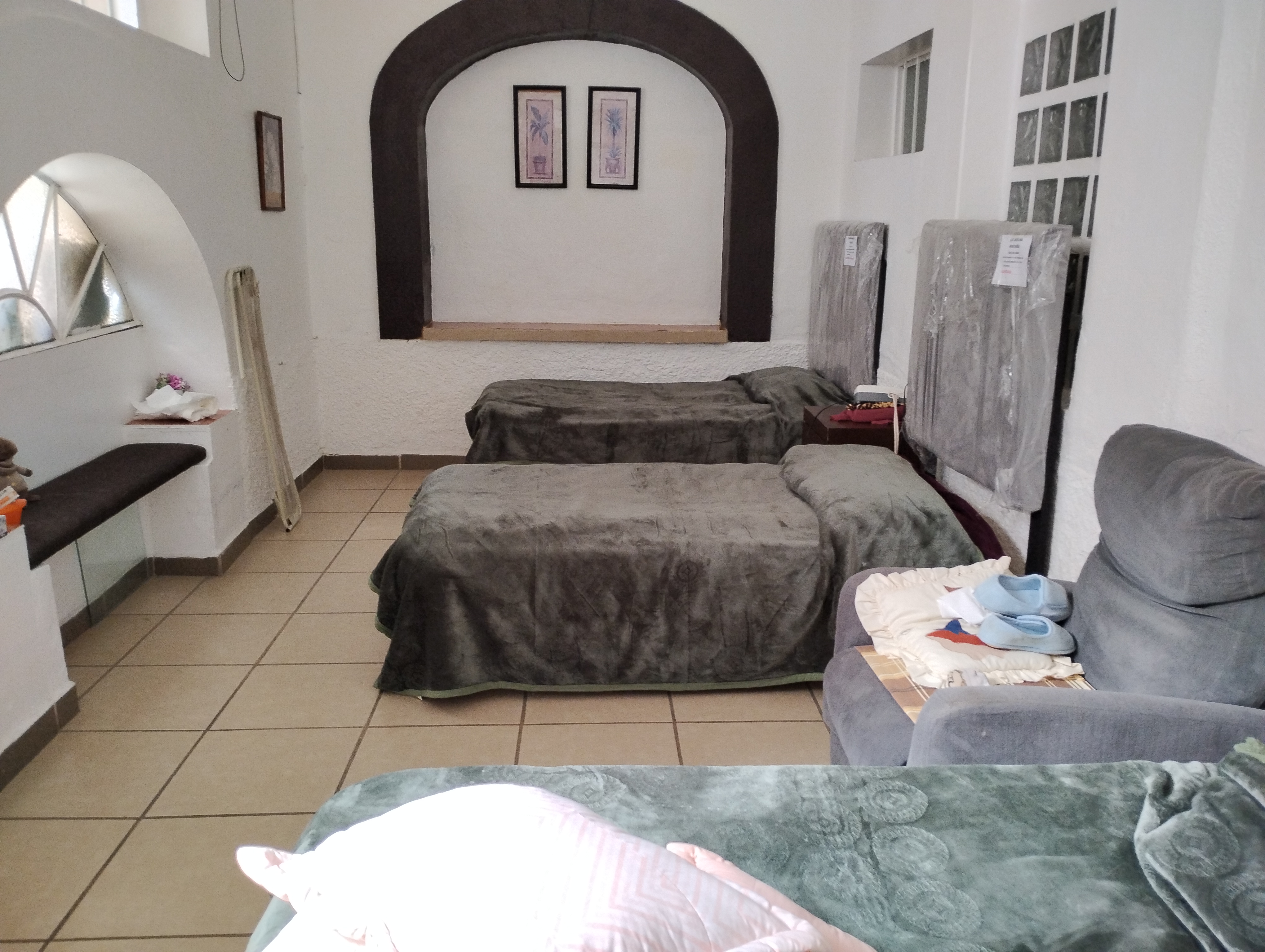
I was warmly welcomed at clean, efficient, light-filled Residencia de la Roble which houses 33 older adults including Mexican-Americans who prefer to age in their native Aguascalientes. Care costs are about $700/month USD (13,000 pesos/month) for shared rooms (there were two single rooms). Included in the fee: nutrition with customized diets, television and activities, laundry, medical care by the owner, a geriatrician, and most of all what appeared to be loving, energetic care by devoted nursing assistants. Note: Many Mexicans are accustomed to sharing space. The concept of privacy and your own room is often found with families who are well-off.

Here are photos showing a shared room with pristine, well-organized clothing and linen storage:

There is no website for Residencia de la Roble but you may find several photos of its high energy, activities, and sweet residents and caregivers on Facebook at Residencia para adulto mayor “El Roble”. https://www.facebook.com/profile.php?id=100064126566555

On my next visit I wish to tour Estancia Geriatrica Villas Juan Pablo as I had originally planned. It is a privileged residence in a park-like setting, also with lots of light, a few miles north of the city center. You will find photos at https://estanciageriatricavjp.com/  The environment reminds me of countryside care homes outside Quito, Ecuador – wood cabinetry, vistas of green meadows, tranquility. Under “instalaciones” there are photos of private rooms. The monthly prices at Villas Juan Pablo would be double, or more than double, the costs at Residencia de la Roble.

Note: prices for long-term care in the state of Aguascalientes are less than in the state of Jalisco (home to Guadalajara, Lake Chapala, and Puerto Vallarta). The Aguascalientes homes cater to local Mexican families.

Hospitals and Dental Care

Aguascalientes has an impressive medical infrastructure with hospitals both public and private.  Hospital MAC (there are two, one in the north the other in city center), Centro Hospitalario de Aguascalientes, Star Medica, Centro Medico la Salud, Hospital Cardiologica de Aguascalientes, Medica San Juan de Aguascalientes, Hospital Fundación Medica México Franco Brasileña plus a plethora of other options for specialized medical care as well as dentistry.

Emergency Care at Hospital MAC

The third night of my visit I awakened around 10-10:30 p.m. feeling tingling down my right side and leg. My first thought, oh no, not a TIA/stroke!! But I was able to speak. The sweet elderly man on night duty at the hotel suggested a taxi to the Red Cross. I wished for a hospital. I was super weak and dizzy yet decided to slowly walk to a nearby hotel. The night duty clerk there suggested Hospital MAC, a few blocks away.

There are about 30 MAC hospitals in the country. I had visited others and felt confident. I was especially encouraged because I could see the hospital tower from the front door of the hotel. I walked slowly but surely about four short blocks and made it to the emergency room. A nurse promptly greeted me, took my name, invited me to a room, took my vitals. I was then escorted to meet Dra Nancy originally from Mexico City and a graduate of UNAM. She was amazing – attentive, kind, professional. A thorough assessment of eyes, strength in arms and legs, heart, walking etc. Thankfully I was going to be okay. I was dehydrated (first time ever and quite a lesson) and had a bit of heat stroke from walking in the sun from early morning to sundown. The hospital experience was a gift, and I remain grateful to all who assisted and cared for me at the hotel as well.

Palliative Care and End-of-Life Care

Pain relief for life-limiting illness is offered by 14 anesthesiologists with palliative care credentials at hospitals and clinics. Two of the physicians drive from Guadalajara. According to a list of medical providers, there are 20 geriatricians. In-home pain relief for end-of-life is offered by at least two geriatricians.

All assisted living/nursing homes attend to end-of-life.

One residence, Hogar del Abuelo Maty, was founded with supportive end-of-life care in mind. It is in the countryside one hour to the northeast of Aguascalientes.

The home, opened in 1981, is named in remembrance of Matilde (Maty) Dubroy de Villanueva who was accompanied at end of life by her daughter Carolina Villanueva de Garcia. The profound experience inspired Señora Carolina to build the hogar where every elder could have a dignified death with compassionate, personalized care. 

The current administrator of the non-profit is the founder’s son, Carlos Garcia Villanueva. Care is provided by nurse nuns of St. Vincent de Paul. The nuns have a long and rich history of companioning the infirm and those at end-of-life. The website with photos and videos reveals more:  https://www.hogardelabuelomaty.org/

While I did not encounter any modern-day end-of-life doulas in Aguascalientes, Mexico, non-medical, psychosocial spiritual support has been a community tradition for centuries. Local women known as “parteras” assist not only with birth but have a significant role supporting families and individuals during the dying process.

Funeral Home Arriaga 

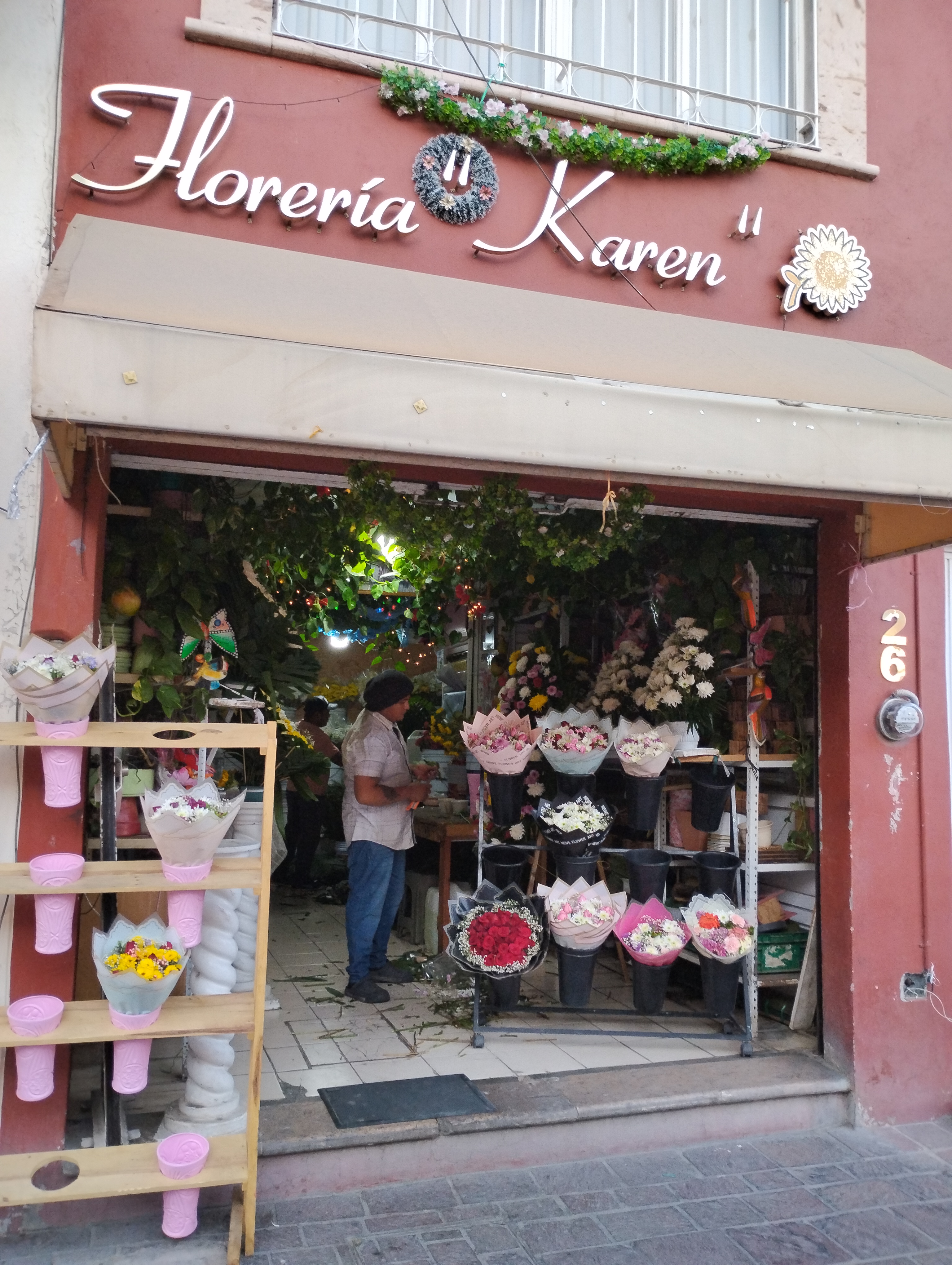
Toward the end of each day, I passed Funeraria Arriaga on the way to my hotel. Families waited inside where there are four viewing rooms and a place to sit and sip coffee or tea. Or, they waited in front of the building. There is a florist across the street.

Most Mexicans choose burial in a coffin. For those who choose cremation, the cost with this funeral home is between 9,000 and 20,000 pesos ($470 to $1000 USD) depending on whether there is a memorial service. According to Funeraria Arriaga there is no refrigeration in Aguascalientes but there is embalming. (Refrigeration is possible in Jalisco to create time for family members arriving from far away to view the deceased). The Boinita Group advertises green spaces for cremains (ashes) in Aguascalientes as well as Cancun, Hermosillo, Merida, and San Luis Potosi. https://boinita.com/en/green-niches-of-funerary-forests-in-mexico/

National Museum of Death

The museum, which opened in 2007, exhibits death-related artifacts from pre-Hispanic times to the present from the personal collection of Octavio Bajonero Gil. The 2,000 or so items include sacred religious paintings, sculptures, objects d’arte, and more. They are displayed in three connected buildings of a restored 17th century convent that once housed Franciscan monks. The property is now owned by the University of Aguascalientes.

My experience was not of the macabre. Some items show the unique Mexican sense of humor.

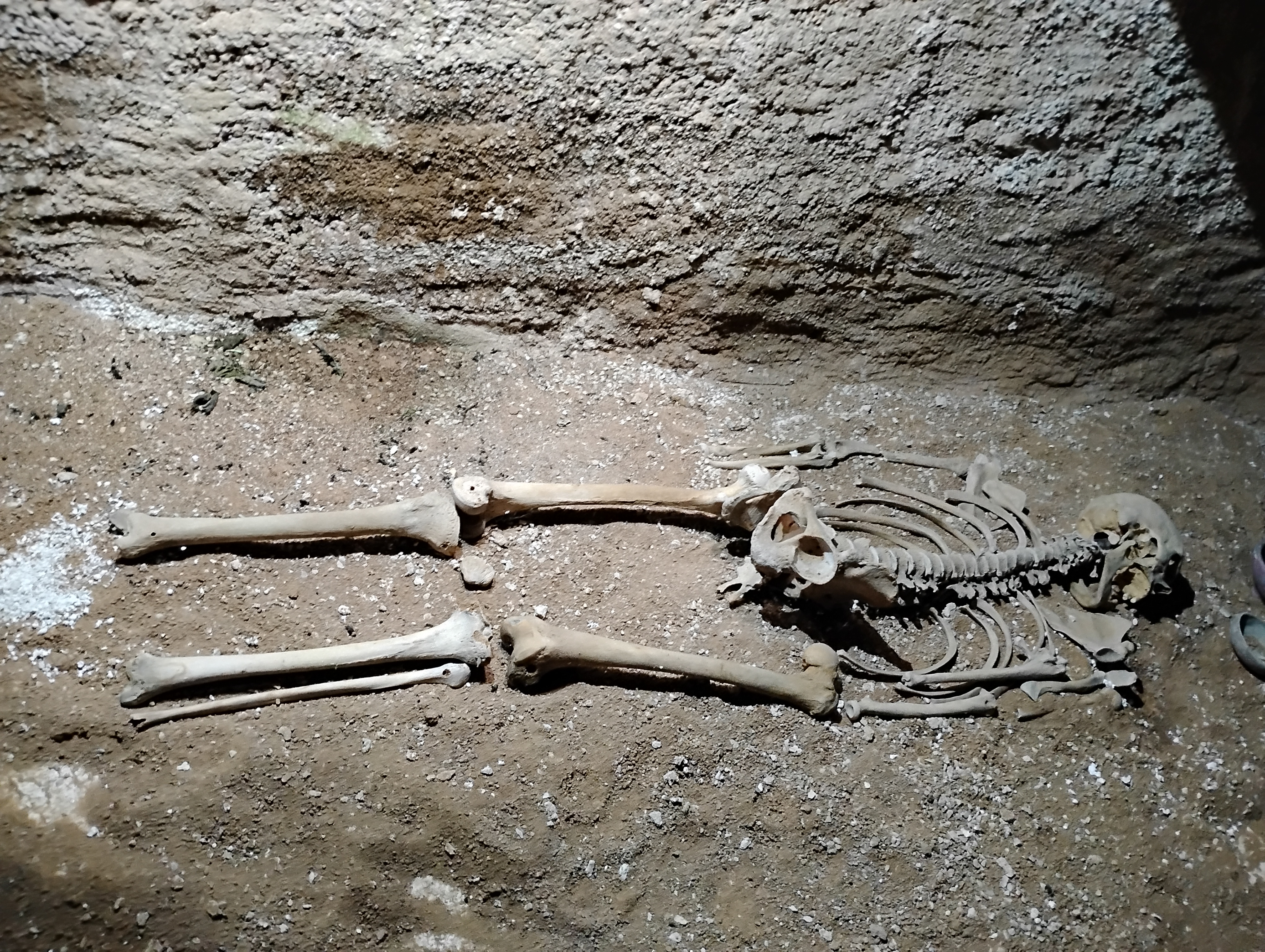
At the entrance of the museum is a gift shop where you pay an entrance fee of 20 pesos ($1 USD). It takes 45 minutes to an hour for a self-guided tour. If you are lucky you will have university student Antonio accompany you to the basement to see reconstructed gravesite remains. The photo below was taken in the basement:

Later, multi-lingual Jesus from Mexico City who delighted me with his Italian might lead you through the floors and buildings.

The Instagram video at this link shows more items displayed in the museum: https://www.instagram.com/reel/C-Ag-HsgAFv/

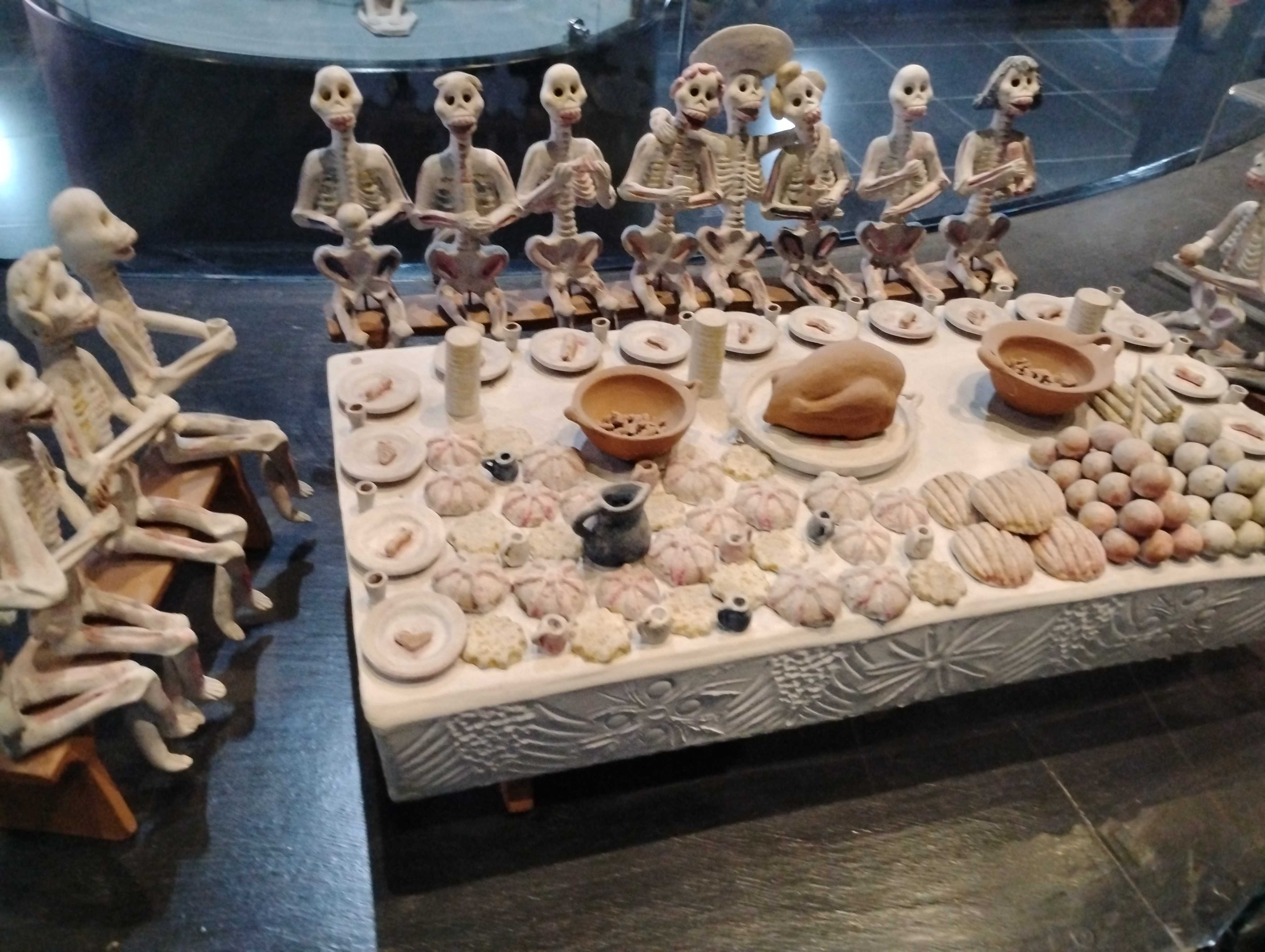
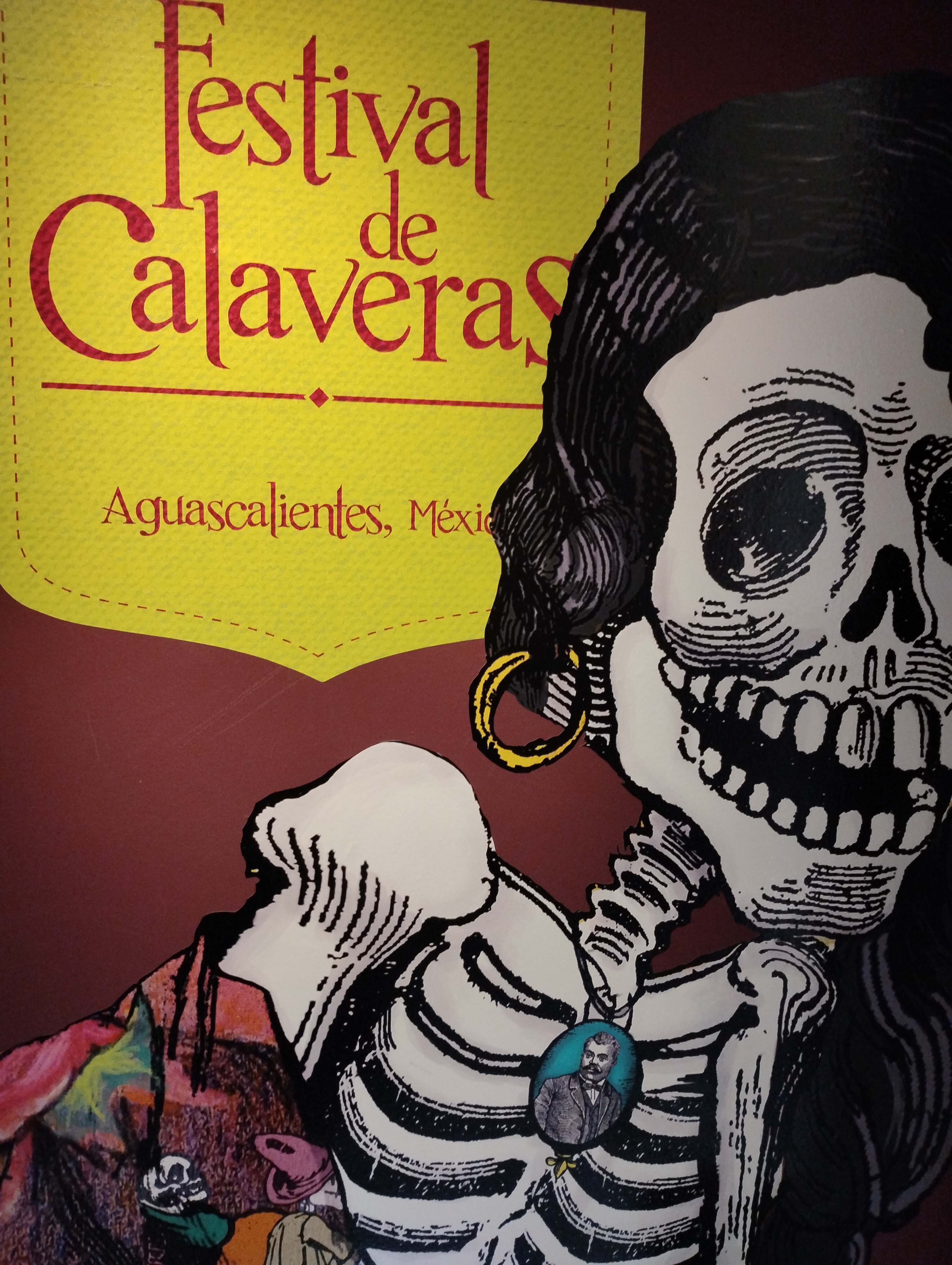
The museum produces 200 or so events per year including the October/November Day of the Dead Celebrations.  At the writing of this post the calendar of events for the 2025 Annual Festival de Calaveras (skeletons) has yet to be posted.

Museo Posada This museum is dedicated to the collected works of Aguascalientes native Jose Guadalupe Posada (2 February 1852 – 20 January 1913), a political satirist/caricaturist, engraver, and printmaker known throughout Mexico as the father of La Calavera Garbancera/La Catrina, a female skeleton dressed to the nines that is seen each year at Dia de los Muertos/Day of the Dead ceremonies. During the presidencies of Portfirio Diaz (1876-1911) Posada introduced skulls and bones as political and cultural critique. La Catrina indicates death comes to all, including politicians and the super wealthy. Here below is a Catrina from the Museum of Death:

Photos of the museum and its contents may be seen at this link: https://ags.gob.mx/turismo/conocemas/museoposada/index.html

©  All rights reserved. Wendy Jane Carrel 2025

Wendy Jane Carrel, MA, is a trusted older adult advocate and consultant who has many years of hands-on experience with healthcare systems, retirement options, senior living and wellness programs in Mexico, Ecuador, Italy, the U.S., and beyond. She provides culturally sensitive transition guidance and curated options for families and elders domestically and internationally. Wendy’s web site is https://www.WellnessShepherd.com

Resources

https://en.wikipedia.org/wiki/List_of_states_of_Mexico

https://en.wikipedia.org/wiki/Aguascalientes_(city)

https://en.wikipedia.org/wiki/Jos%C3%A9_Guadalupe_Posada

https://www.hospitalesmac.com/  MAC Sur, Aguasacalientes, República de Perú 102, Las Américas, 20230 Aguascalientes, Ags., Mexico    Open 24 hours

https://www.atlasobscura.com/places/national-museum-of-death

https://www.youtube.com/watch?v=01-n8TduhkM   Mariana Lange’s Mexico Relocation Guide

https://roadtrippers.com/magazine/10-macabre-museums/

Death and Dying, Death and Dying Education, Death in Mexico, Dying in Mexico, End-of-Life Education, End-of-Life Planning, Expats, Health & Wellness Mexico

The Death Positive Movement is Alive Amongst Retiree Ex-pats at Lake Chapala, Mexico

In the course of one week of August 2018 a fellowship, a Death Cafe, and a talk group at Lake Chapala, Mexico hosted events related to considerations for end-of-life.

These events, intentionally or not, are part of the growing Death Positive movement around the world – places to share, plan, or think about what we want; to consider how we foresee our own passing; and to learn from others who openly share their experiences.

Wikipedia’s explanation of Death Positive: 

“The death positive movement is a social and philosophical movement that encourages people to speak openly about death, dying, and corpses. The movement seeks to eliminate silence around death-related topics, decrease anxiety surrounding death, and encourages more diversity in end-of-life care options available to the public.”

See https://en.wikipedia.org/wiki/Death-positive_movement

Retiree ex-pats ages 50+ from Canada, Germany, the U.S., and the UK gathered at three different venues to hear or participate in interesting, lively, or poignant discussions about mortality.

The venues:

Lake Chapala Unitarian Universalist Fellowship

On a sunny lakeside morning, the fellowship hosted an inspirational, memorable service devoted to End-of-Life.

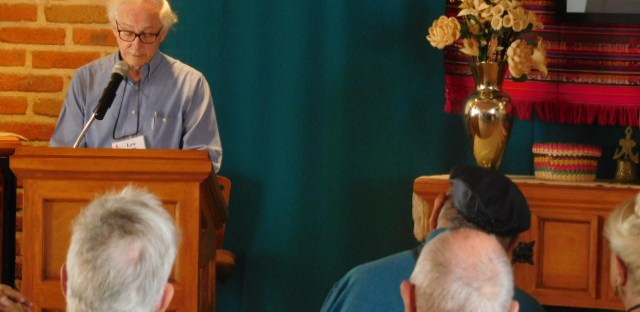
Sandy Wallin was the service leader. The sermon, “What I Learned from Charlie,” was delivered by Lew Crippen.  Hymns related to transitions – I’ll Fly Away ( performed on a recording by the Humbard family), plus One More Step, and Spirit of Life. The postlude was Handel’s The Trumpet Shall Sound.

Crippen’s sharing was an endearing, sometimes funny, but definitely moving tale about how witnessing the dying of his beloved rescue cat taught him more about love and life.

Lew Crippen, Unitarian Universalist, Lake Chapala, Mexico

Service poetry included Mending Walls by Robert Frost, and the surprisingly amusing Let Me Die a Young Man’s Death (Roger McGough), beautifully read by Wallin.

Note: The tenets of the Universalist Unitarians have much in common with palliative care and hospice – “to honor the inherent worth and dignity of every person,” plus “justice, equity, and compassion in human relations.”

See http://lakechapalauu.org/

Cafe Mortality Ajijic aka Death Cafe Ajijic

A group of American, Canadian, and German retirees and others recently gathered for the third Café Mortality Ajijic in Mexico August 2018. Thirty persons sat in an engaged way at  six round tables and one rectangle table (added at the last minute) at Min Wah Restaurant. Conversation was uncommonly lively. Participants included a hospice chaplain (a new café volunteer), a hospice nurse, a hospice volunteer (a new café volunteer), three psychologists, a psychiatrist, one professor, one journalist, and others.

Currently, there are three co-hosts sharing the duties – Debi Buckland, Wendy Jane Carrel, and Loretta Downs, each with 20+ years devoted to some or all aspects of end-of-life care, planning, and transitions. Each Cafe Mortality is introduced by one of the hosts. The August café was heralded by Loretta Downs who flew in from Chicago to lead.

Jade Young and Laura Petit, observers and volunteers at Cafe Mortality Ajijic, August 2018

In the last few minutes, a representative from each table stood up to share with attendees interests and concerns discussed – how to die peacefully at home in Mexico, how to take one’s life legally in Mexico, how to die on your own terms in Mexico (have your wishes honored), and what happens in the afterlife.

These all-volunteer social gatherings which discuss death and dying respectfully and informally (no agenda) are now held in 52 countries. See http://deathcafe.com/  

A review of the first Death Café Ajijic, held in February 2018, may be found at the following link:

https://wellnessshepherd.com/2018/02/25/death-cafe-ajijic-mexico-ex-pats-and-snowbirds-talk-gently-about-mortality/

The next Cafe Mortality is scheduled for October 9, 2018.  Please RSVP to wellnessshepherd@aol.com if you wish to attend. Note: the venue may change.

Open Circle Ajijic

David Acuff, PhD, talk show host, and author of 15 books, spoke to over 300 attendees at Open Circle Ajijic on Creation of the Afterlife: Perspectives of Different Cultures. He brought forth views from Native Americans, Australian aborigines, Judeo-Christians, Buddhists, and Hindus about what happens when we die. He interspersed his presentation with audience breaks asking those present to find a partner to ask questions with such as…Where are we going after our demise? As at Café Mortality, the audience was fully engaged with the subject, voices were animated and lively.

David Acuff, PhD speaks about the After Life at Open Circle Ajijic

In closing, Acuff offered a new view of afterlife suggested from findings at tombs of the Nazca mummies in Peru. Perhaps, he shared, there is evidence we are not alone in the world. According to DNA research in the spring of this year, mummies from 300 A.D. and 1400 A.D. had three fingers on each hand and were not homo sapiens.

Maybe we do go somewhere else, time travel, or reincarnate… all food for thought.

https://www.news.com.au/technology/science/archaeology/threefingered-mummies-found-in-peru-are-not-human-says-scientist-and-may-be-aliens/news-story/d27160119d077bf407b03c6562e15712

Open Circle’s mission is “to improve understanding of our community and our world.”  The web site is http://opencircleajijic.org/