
First, a little background. Where is Sonora and what is it like to live in a cowboy culture?
The people of Sonora, known as Sonorenses, possess a unique spirit. It’s a blend of indigenous (Mayo, Yaqui, and Pima) customs and Spanish heritage plus a strong work ethic.
For centuries, Sonora has offered an agricultural, fishing, and/or rural ranching (vaquero) lifestyle. By virtue of its border with Arizona (and a small section of New Mexico), Sonorans have a close connection to the American Southwest. Most of all, they have a deep relationship with the land and sea.
There is a relaxed, informal atmosphere in Sonora – a directness and pride of culture and cuisine – especially the importance placed on the mesquite grill, serving carne asada that has brought families and friends together over open campfires for hundreds of years.
Hermosillo Airport shops boast refrigerated cases of world-class beef (placed in cardboard carry boxes when sold), bottles of bacanora (the region’s protected agave spirit), and “coyotas”, Hermosillo cookies filled with brown sugar, caramel, guava, nutella, quince, or chocolate. (Coyotas are female coyotes or a term referencing a mestiza woman of mixed Spanish and indigenous heritage).
At the Hermosillo airport warmth was evident, and not just with the weather. (Think Arizona). A sweet family ensured I found my Uber; and my Booking.com hosts went out of their way to make my stay meaningful from the moment of my arrival until my departure for Guaymas.
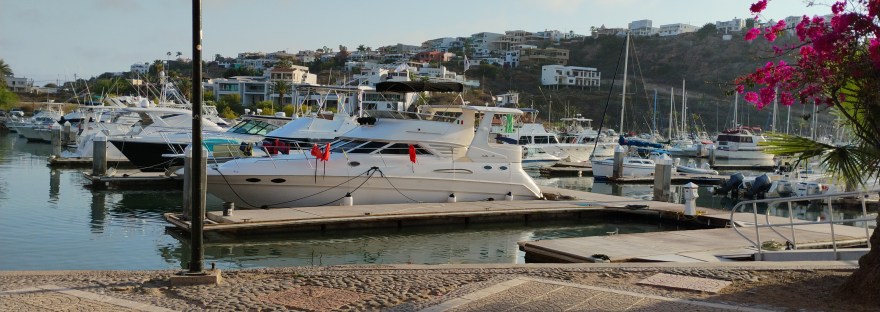
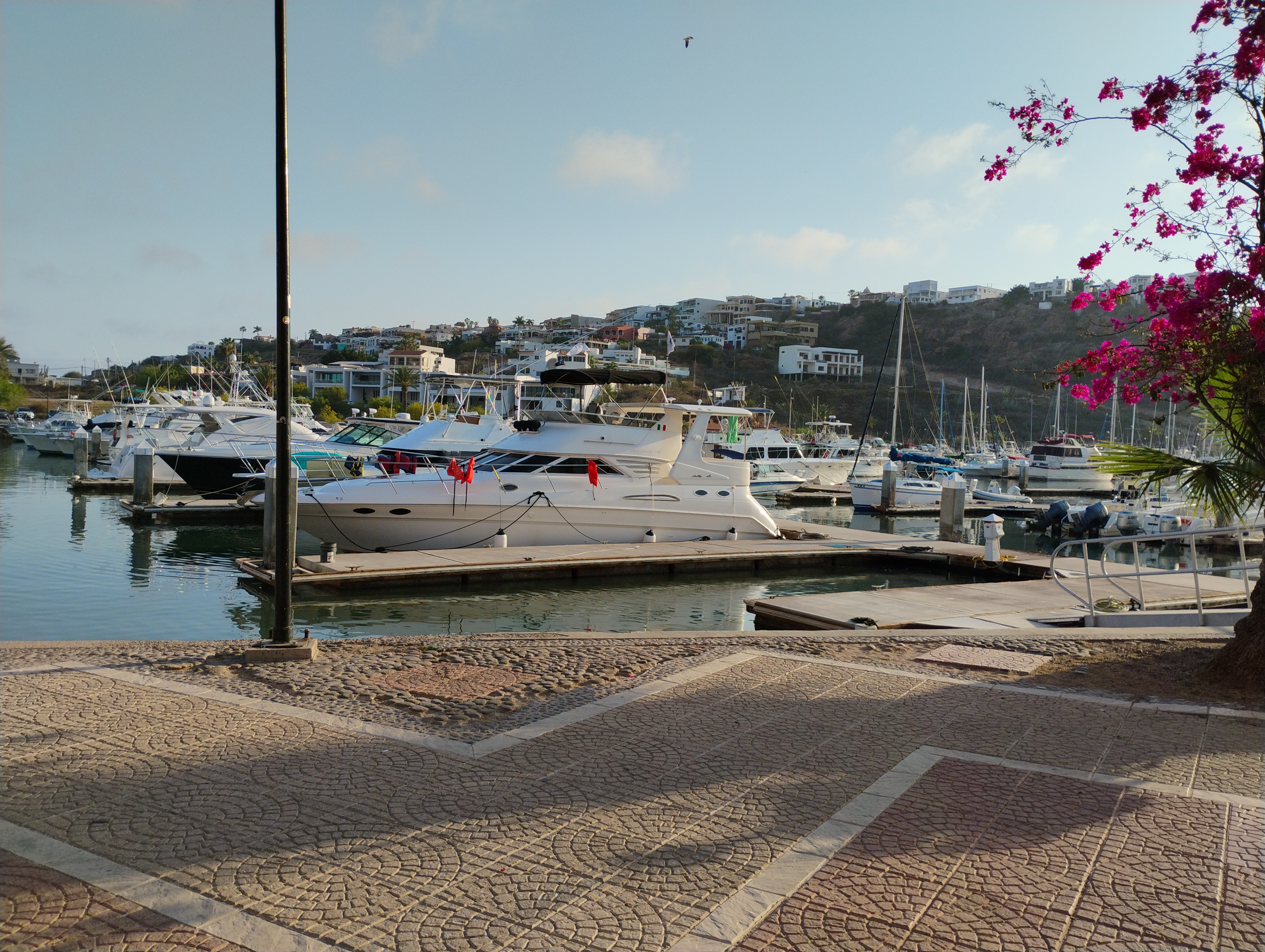
Many towns in southern Sonora feel like undiscovered gems – from the charming colonial pueblo magico Alamos (I love Alamos) to the beaches of Guaymas and San Carlos. These are relatively peaceful destinations off the beaten path, authentic, not overrun with tourists. Below is a photo of the quiet San Carlos harbor:
Preparing for the Unexpected in Sonora, Mexico (or anywhere else)
As a solo traveler, I leave home WITH travel insurance. Before departure, I search for the best doctors with the least invasive procedures for hip fractures ahead of time. With insurance, my prayer is nothing will happen. However, insurance is only a part of the story for those of us without Mexican nationality as it relates to healthcare and end-of-this-life.
Each state and some cities in Mexico—much like in the U.S. or Italy—has its specific laws and traditions regarding healthcare, medical directives, and the disposition of remains. For best outcomes, it is important to know what those laws and traditions are, and to be prepared in case anything happens.
As I share in presentations about Mexican Advance Health Care Directives, Preparing for Emergencies, and Palliative Care and/or End of Life, Mexico is not Canada or the U.S.
In short, Mexican law is civil law, not common law. Families and blood relations rule. Customs and traditions are different. Attitudes and expectations are generally not the same either. The healthcare system has its own idiosyncrasies.
On this trip (my third to Sonora), my goal was to understand the reality of medical emergencies for expats living in the southern part of the state. Much has changed since before the pandemic. I am pleased to report, as with other communities in Mexico, healthcare access has continually improved for expats as well as local Mexicans.
Lessons from the Field
I spent my time connecting with people dedicated to creating community support. My “healthcare dive” included meetings with…
The Expat Community of Guaymas/San Carlos:
Thanks to the invitation of death educator and death doula Marta Macbeth, and the seminar we produced – “Navigating End-of-Life in Mexico: Advance Directives and Palliative Care” – at Club Deportivo in the coastal fishing village of San Carlos, I received a better understanding of needs and healthcare through expats and locals we met up with.
There are around 3,000 foreigners in the area during high season, many from neighboring Arizona and New Mexico. Some come from as far as Canada or Minnesota.
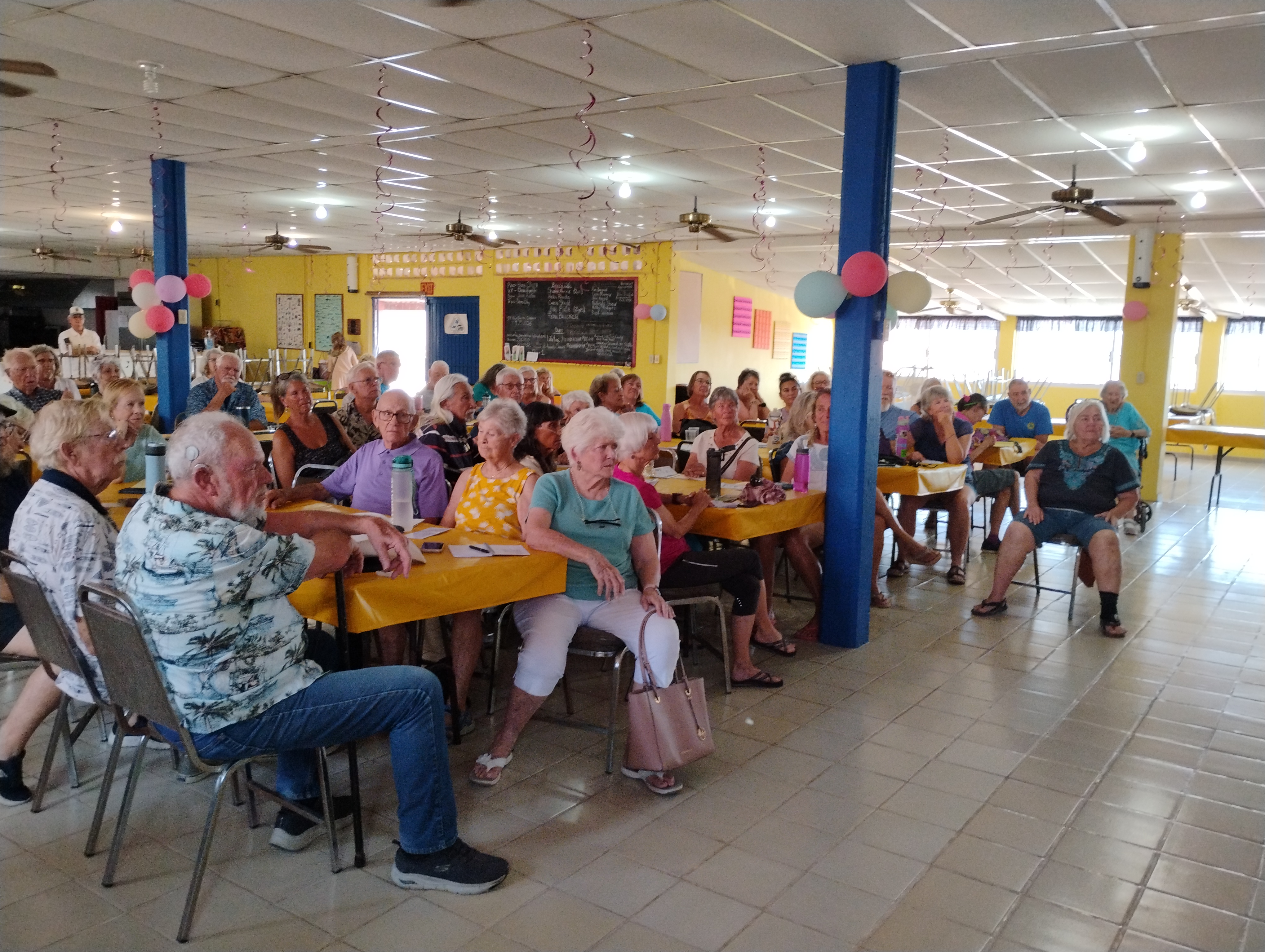
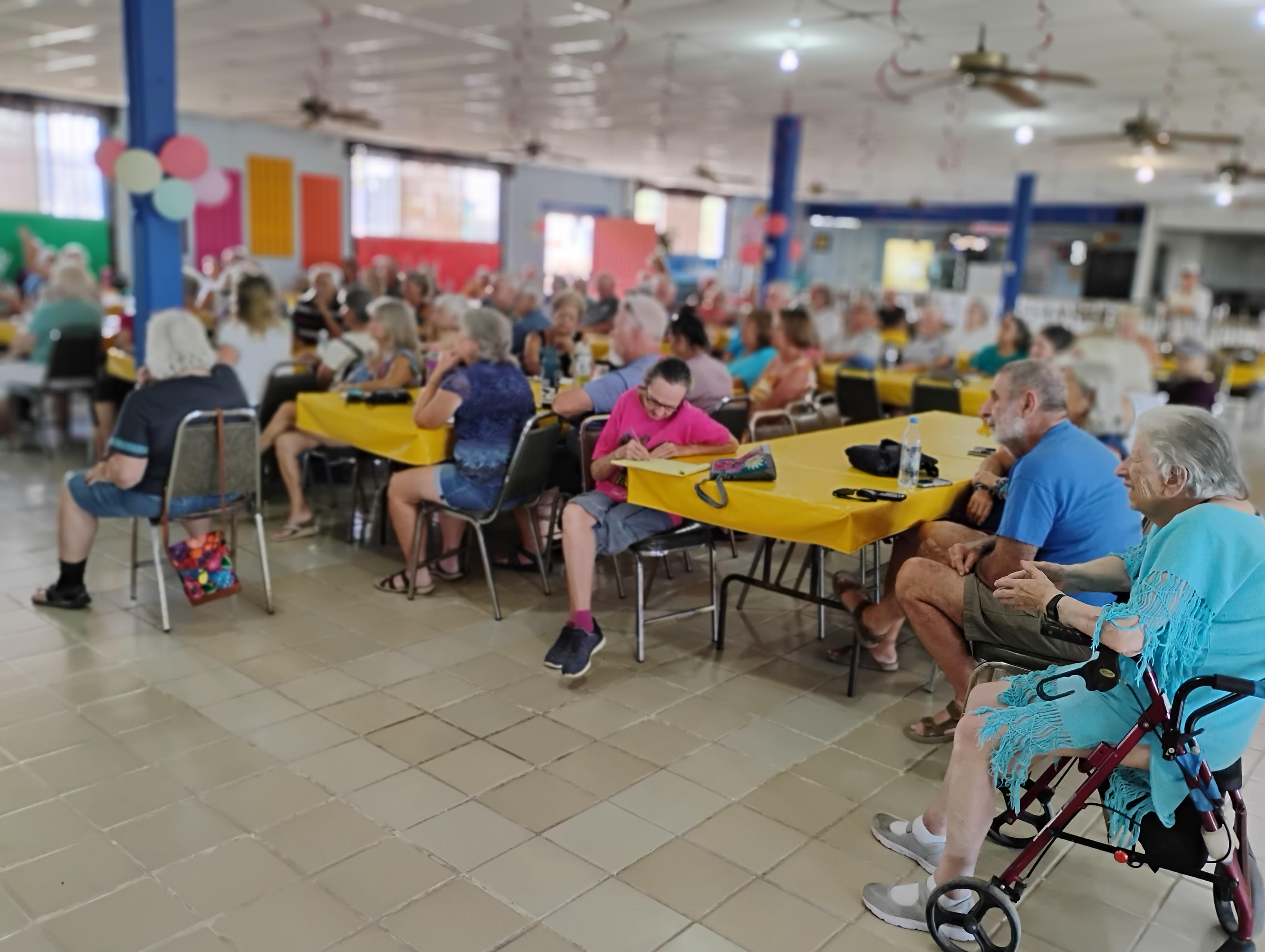
Long-term residents and retired Canadian and U.S. healthcare providers came to the gathering. To my surprise, over 100 folks turned out in the heat and humidity for an interactive exchange about preparing Mexican healthcare directives and what palliative care is available in southern Sonora. No one left! We followed with a mini-Death Café to share thoughts about mortality.
Below are photos of those who braved the heat. Our thanks to them.
During the gathering six expat residents shared their healthcare stories about the realities of Aging in Place with illness, going to a hospital, accompanying a loved one who was dying in San Carlos to a hospital in Hermosillo. Even though situations were emotionally or strategically challenging, they were learning experiences.
The outcomes were for the most part positive, as best they could be, including the story of a solo ager who died in San Carlos and left behind funds and instructions for his friends to celebrate his departure. Thank you Barbara Oliver for sharing the touching celebration story of your friend and for providing the space at Club Deportivo.
First Responders: Melissa “Moosey” Nicoletti, an energetic American volunteer coordinator for the local ambulance and rescue service Rescate, shared several meaningful stories, cautionary tales included, at the gathering. We had the opportunity to meet up with her afterward.
What is Rescate?
Rescate (Rescue in Spanish) was established in 1980. It is a Mexican non-profit and a registered Arizona non-profit 501(c)(3) for tax deductions in the U.S.
Rescate has two ambulances, an infirmary with three equipped first aid treatment rooms, and a large building which houses the Rescate Treasures Thrift Store – a friendly community meeting place for those who live in San Carlos or Guaymas. One day a week they feature food and artisan vendors on the back patio of the thrift store.
On the website at the link below, if you are interested, you will find the well-written Health Tips page with advice not only for southern Sonora but applicable to other parts of Mexico. The only item missing for me was what to do when bitten by scorpions, something I am obsessed about as friends in Jalisco have been bitten. (I travel with diatomaceous earth and place it at doorways as a deterrent).
Melissa shared Rescate will expand the death and dying portion of its website soon.
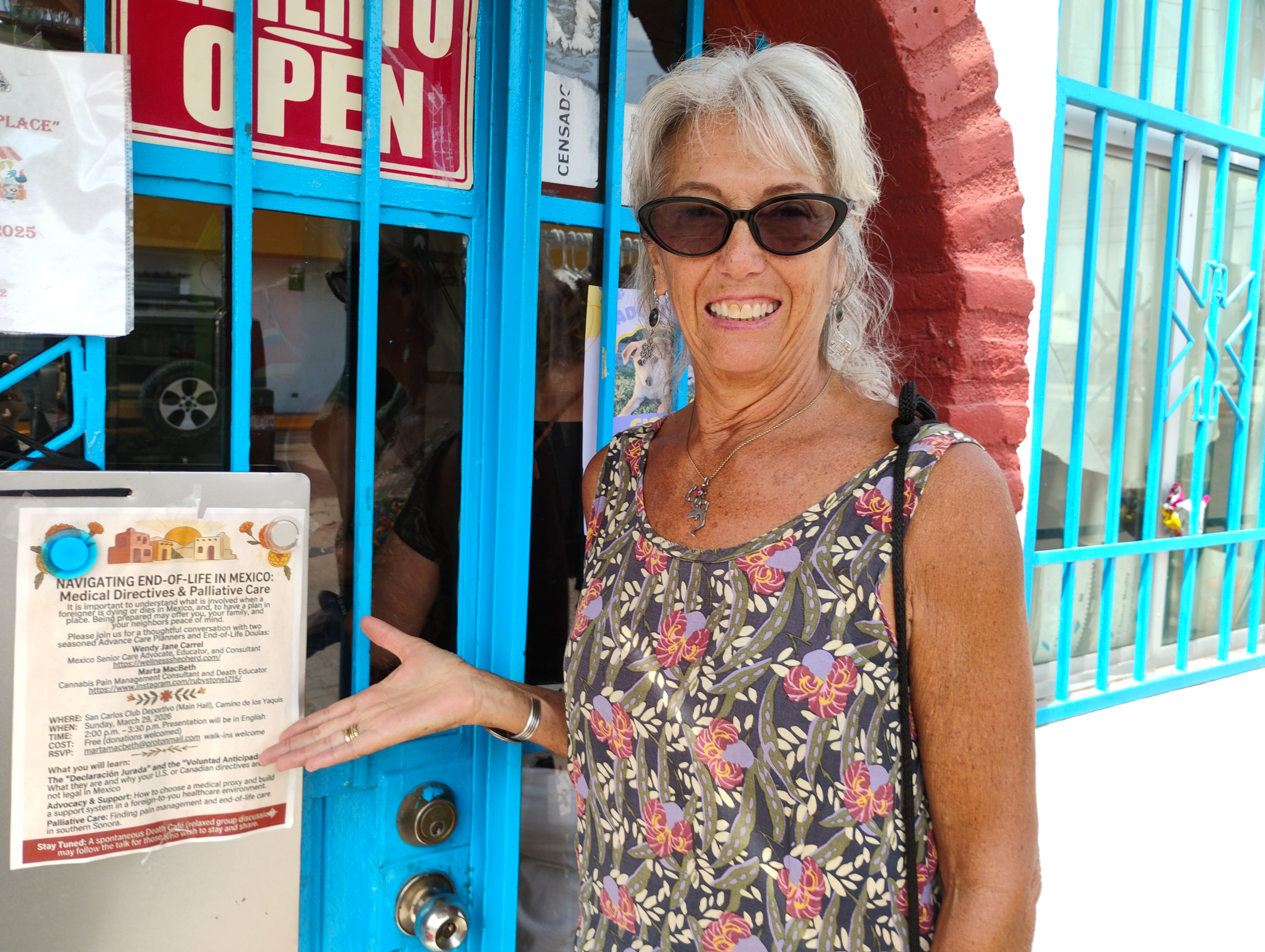
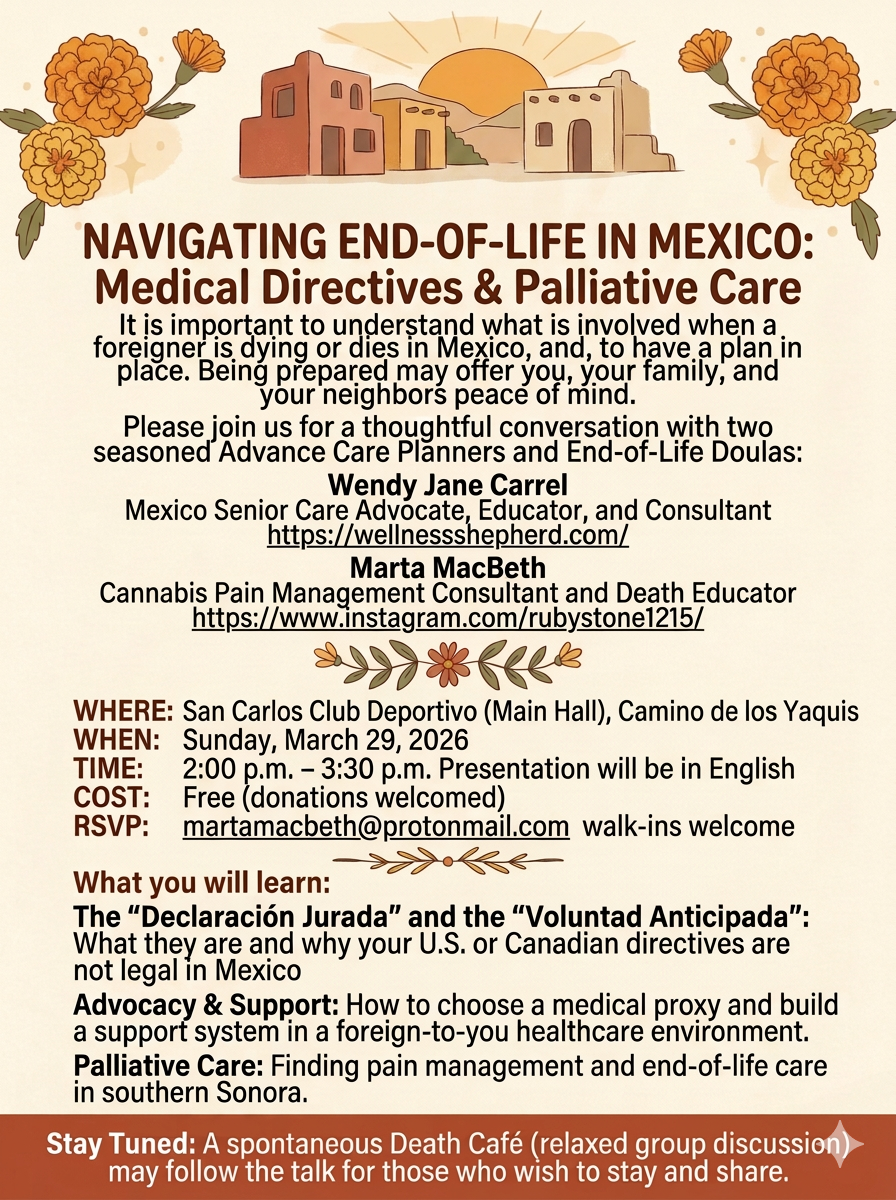
The photo below is of death doula and educator Marta Macbeth outside the Rescate Treasures Thrift Store. The poster to the left is the poster for our event which is also in another photo below more distinctly.
An Official Liaison in San Carlos/Guaymas: Marta introduced me and the attendees to another energetic wonder, Cindy Denzer, the CLV (Citizen Liaison Volunteer) who liaises for the U.S. Consulate in Hermosillo. Other than being the “eyes and ears” for the consulate about daily life in the area, she assists travelers in distress and proactively addresses healthcare emergencies such as meeting expats (often solo agers) at hospitals, or helping families and other loved ones arrange for after death. In a somewhat rural area like Guaymas/San Carlos Cindy’s support is both needed and appreciated.
Physicians and Hospitals, a boots-on-the-ground view of local options: Other than the Rescate infirmary and a few local physicians there is the beautiful new level three (highest level) Hospital San Jose. According to locals, the opening of Hospital San Jose is welcome, no more hour-long ambulance rides to Hermosillo. And, they stock anti-venom for scorpion stings. I asked. Here at the Sea of Cortez, however, jelly fish stings seem to be more common.
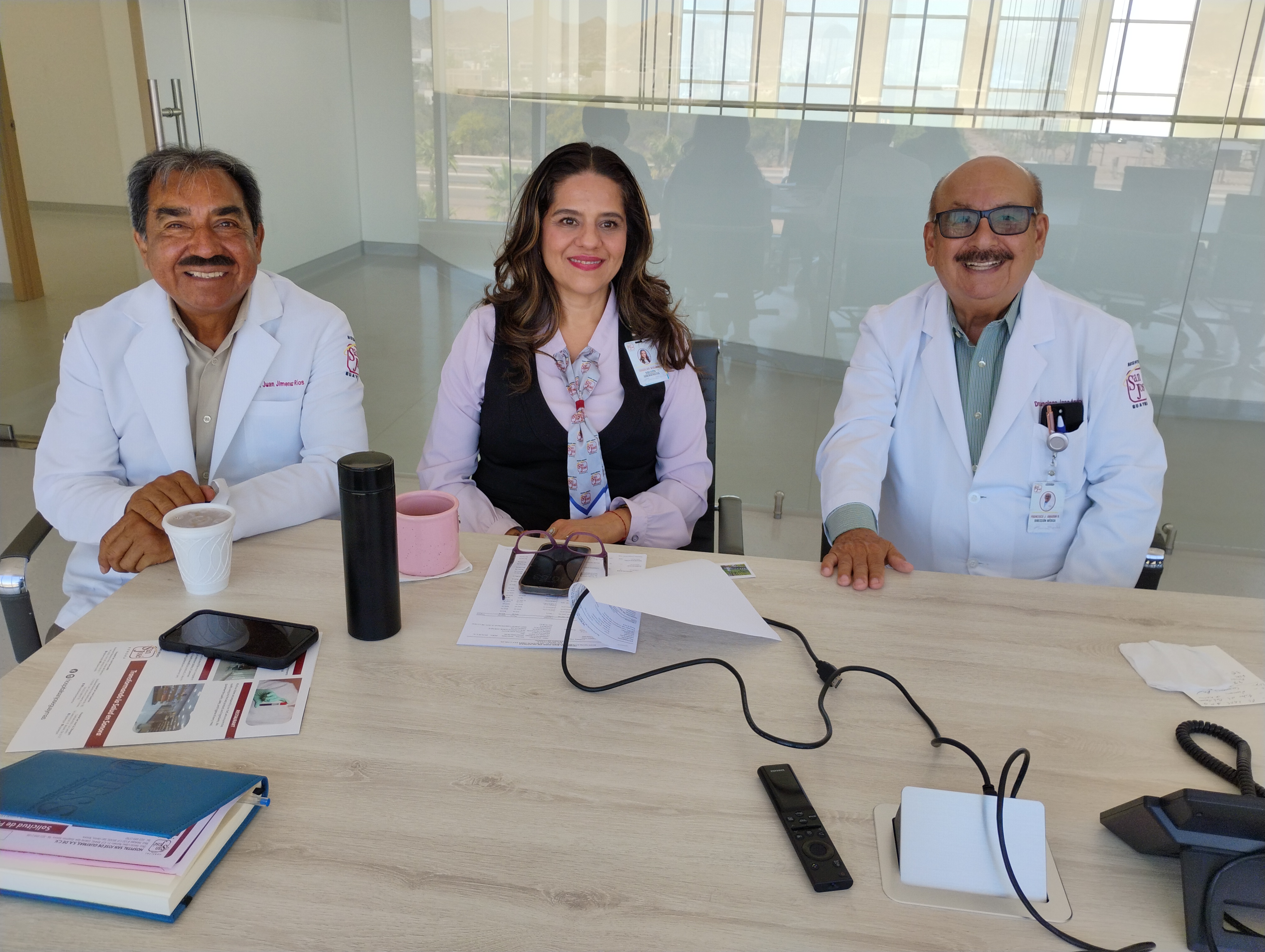
The photo below is of Dr. Juan Jimenez, the Medical Coordinator, Administrator Guadalupe Miranda Castellanos, and Dr. Amador, the Medical Director. That warmth is authentic! Marta and I spent an hour with them and we thank them again for their hospitality.
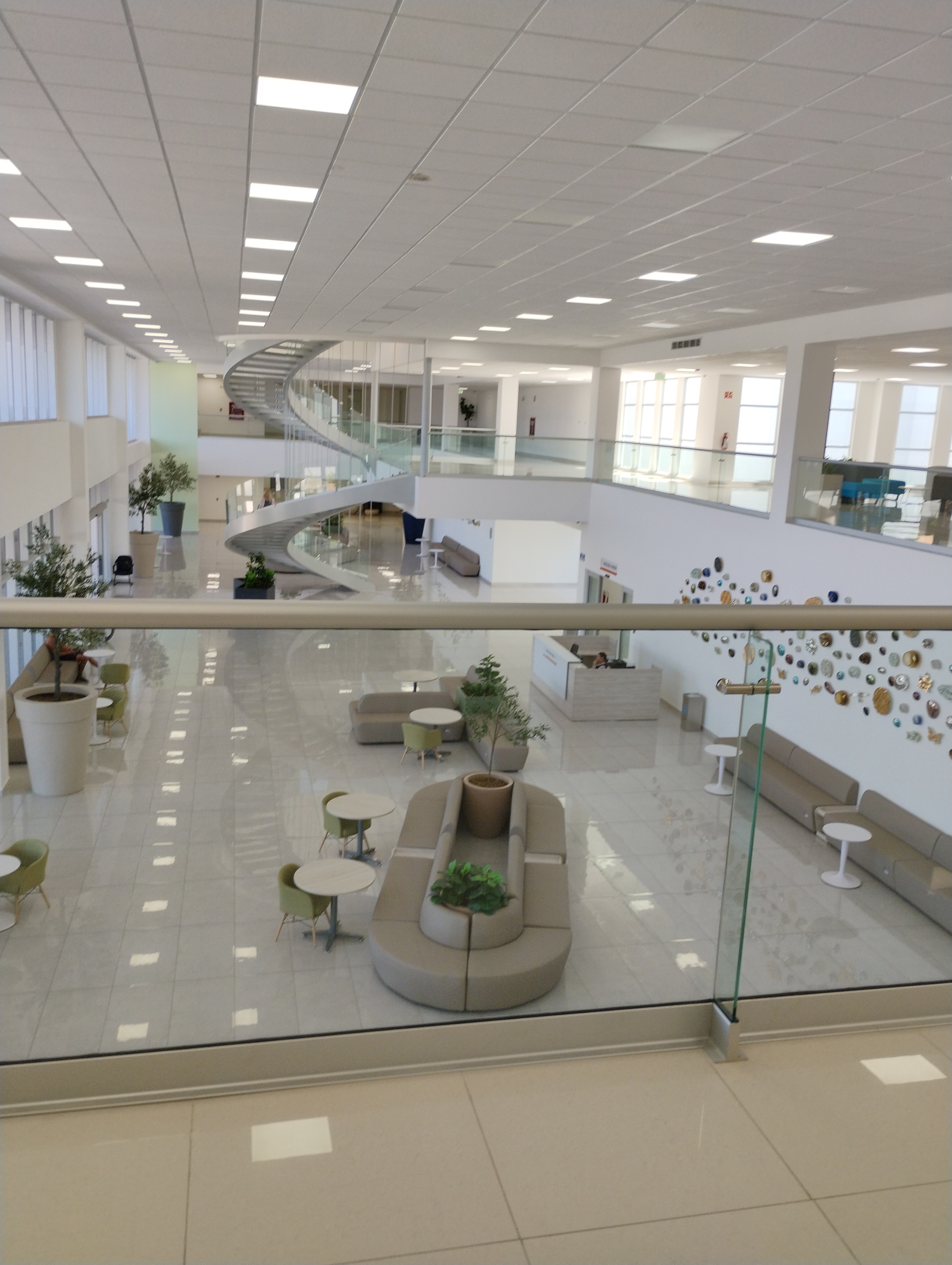
The photos below show the beautiful energy of light throughout the hospital. There are more photos on the hospital’s website https://grupomedicosanjose.com/guaymas/ .
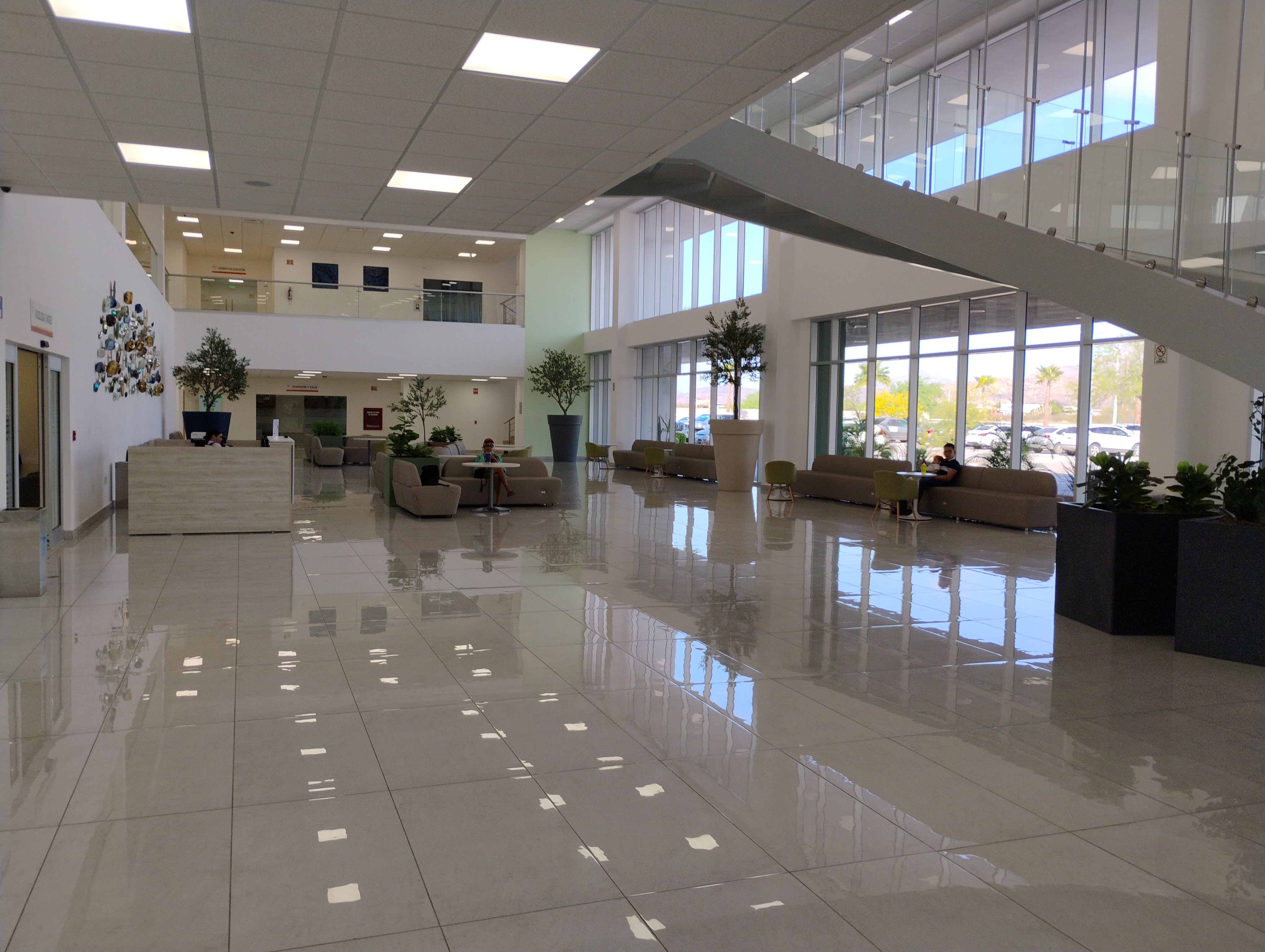
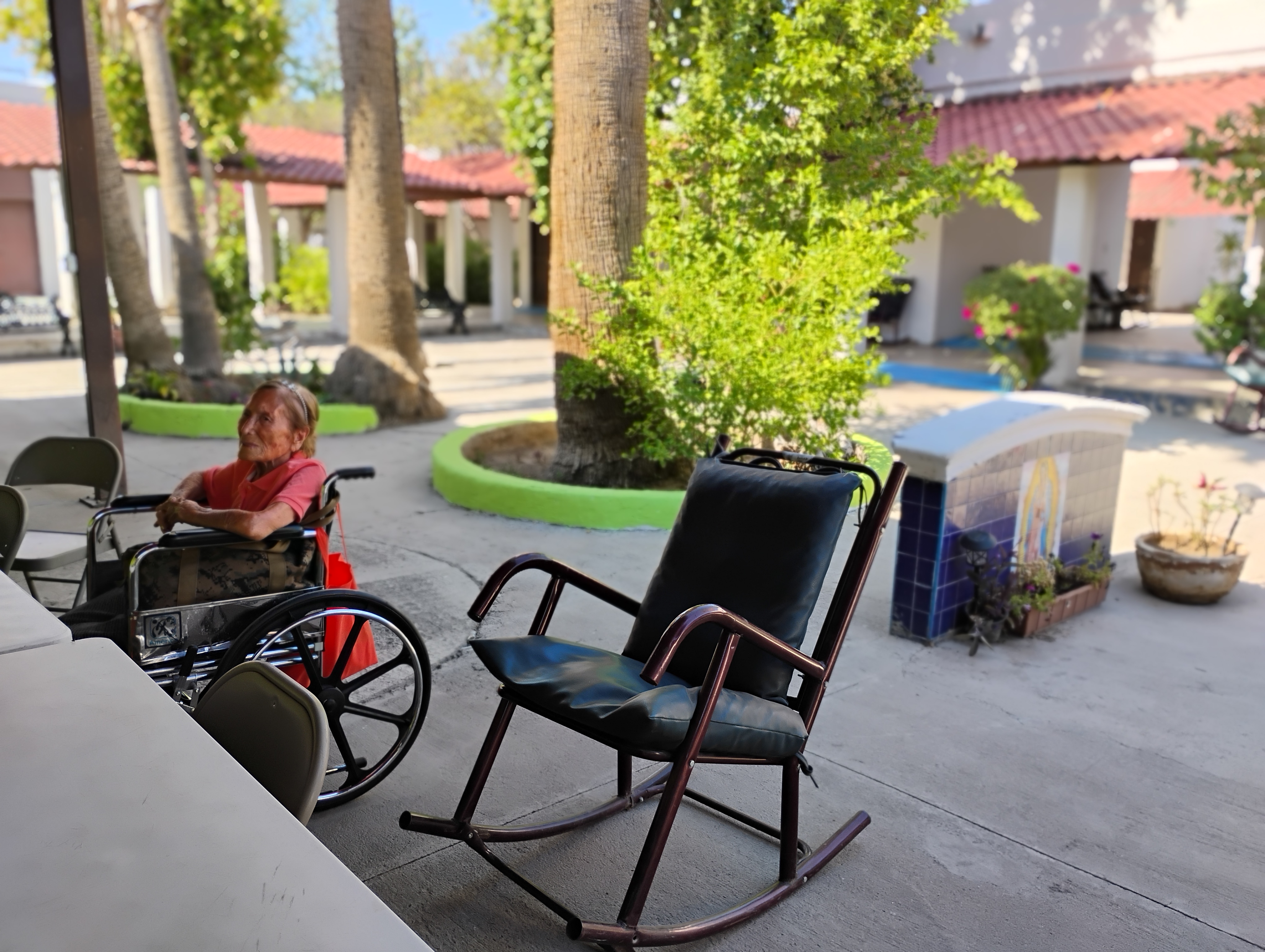
Senior Care: There are a handful of assisted living residences in Hermosillo; the residents are Mexican or Mexican-American. In Guaymas there is a small residence struggling to survive. There is a rumor that the second floor of Hospital San Jose in Guaymas may become an assisted living residence. The hospital administrator and medical director confirmed that the concept is under discussion. They would be fulfilling a community need.
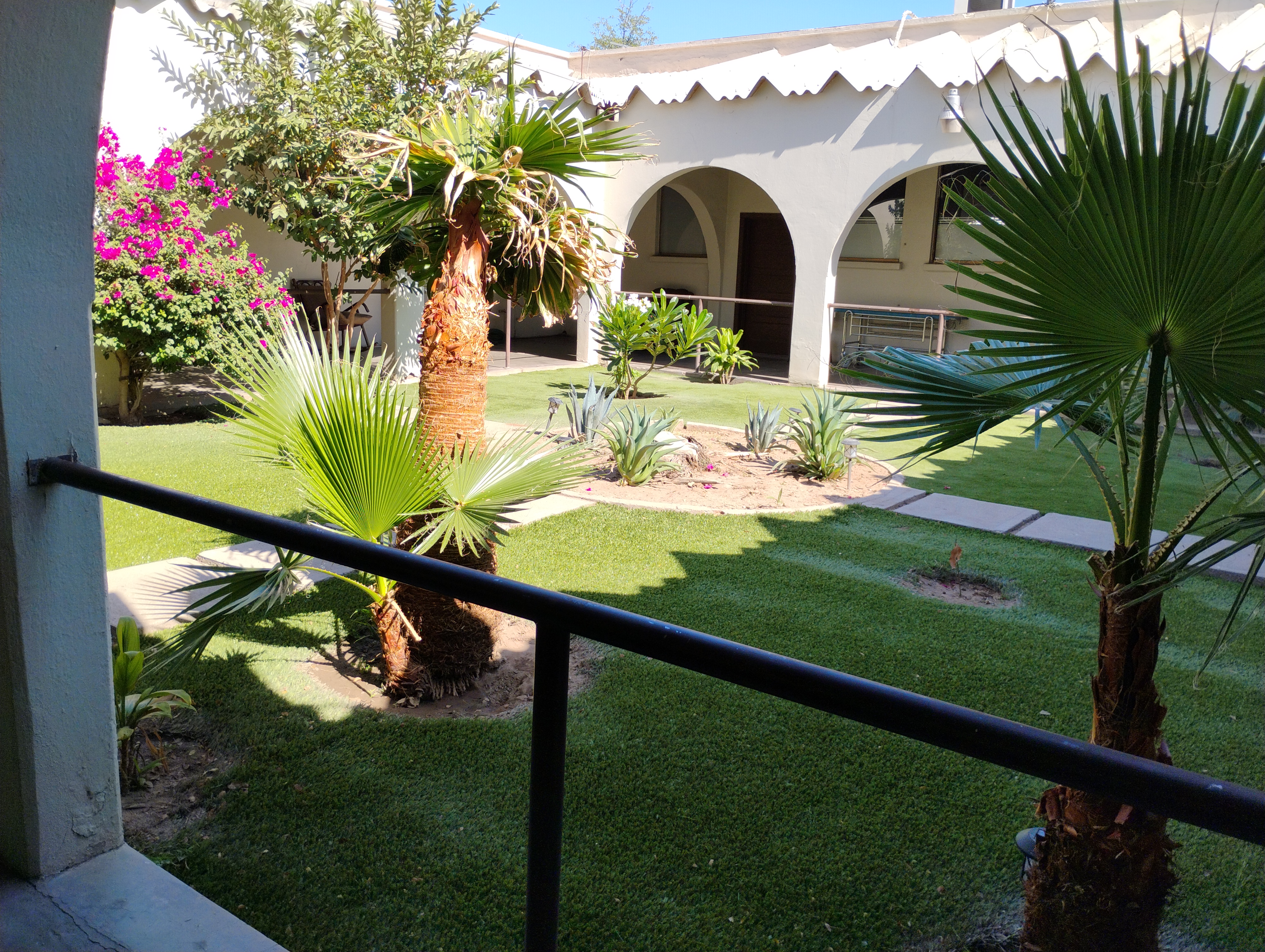
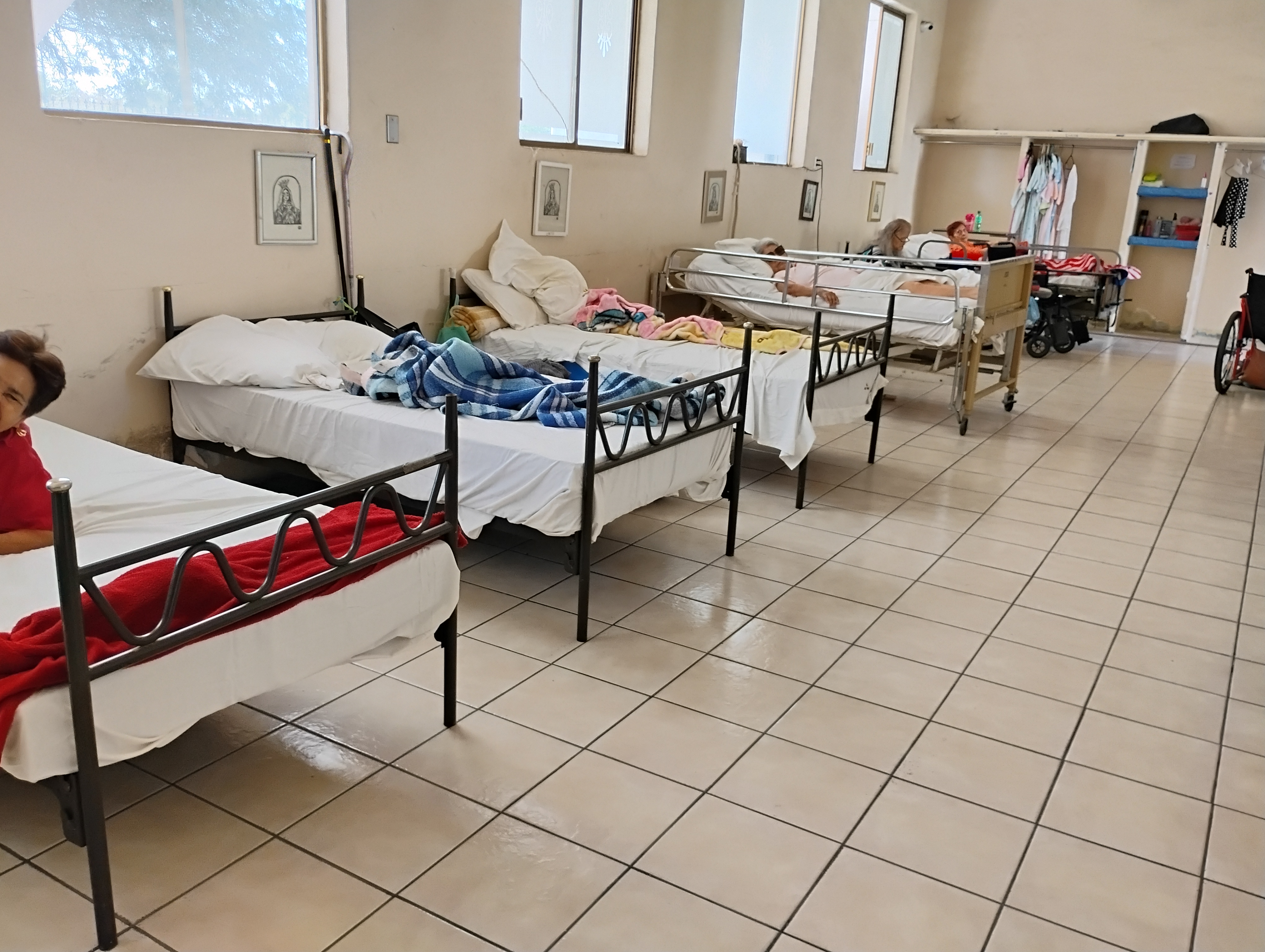
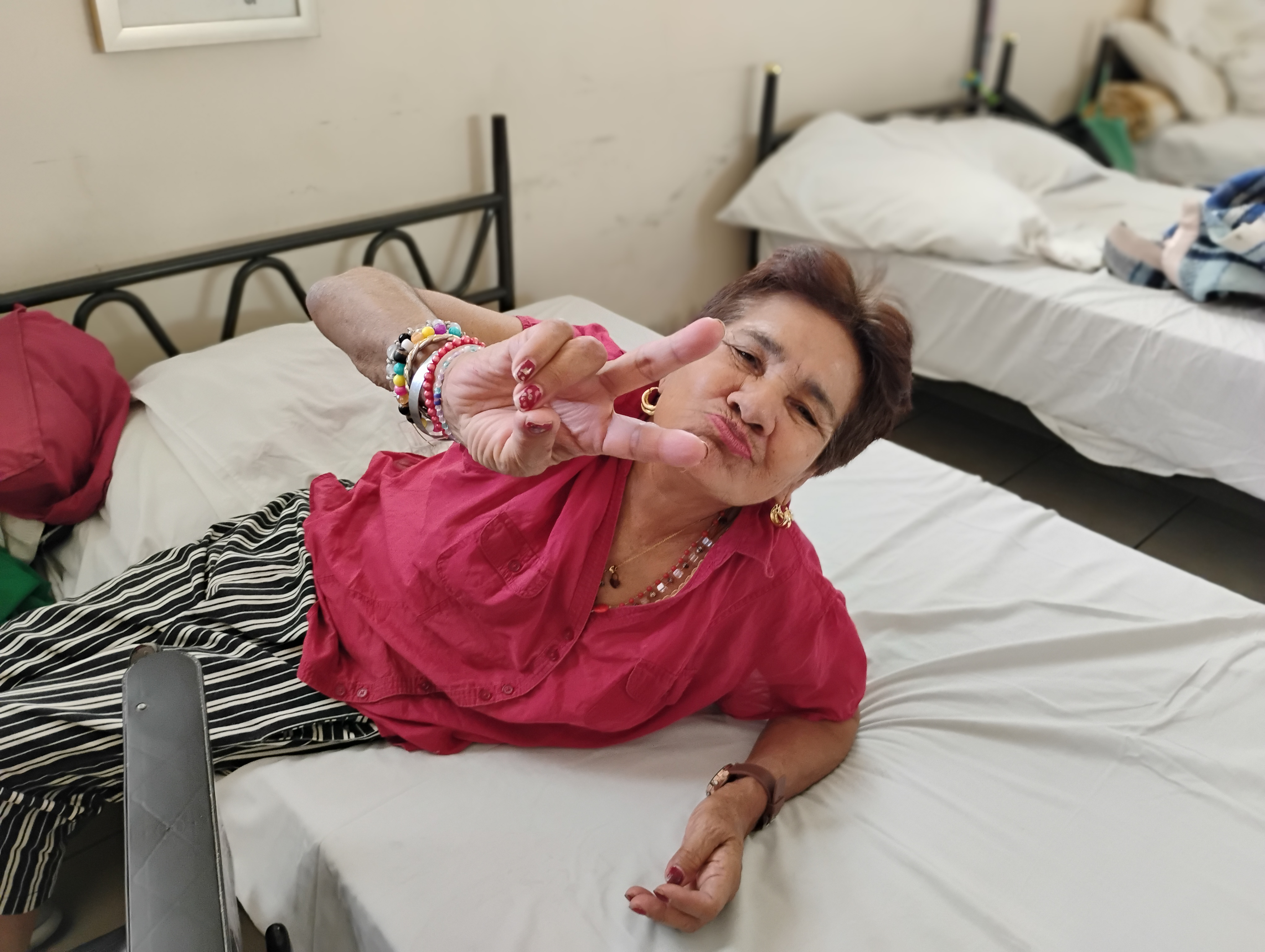
With Alejandra, my host in Hermosillo, I toured Asilo Juan Pablo II, a modest Mexican residence for men and for women. Below are some photos taken with permission.
WhatsApp “After Incident Support Group“
San Carlos has an Aftercare group. Everyone in the circle is aware of needs of persons who are healing at home or in a hospital setting. At my base in Lake Chapala, Mexico, faith communities offer healthcare outreach and pastoral care, also on What’s App. I’ve been a part of two groups at the lake and I find being in these groups is a remarkable way to learn what is going on in real time.
What I Learned
The healthcare scene in southern Sonora is a patchwork of local kindness and professional resources. While the “informal” nature of the culture is charming, a medical emergency requires a formal plan if you are not Mexican. If you are Mexican, you likely have at least 20-30 family members who will know what to do. Whether it’s preparing medical directives that comply with Sonoran law or understanding how private insurance works (if you are over a certain age, you may not be eligible for Mexican private insurance), preparation is the key to enjoying the relaxed Sonoran lifestyle safely.
As in many communities of Mexico where expats congregate, southern Sonora has stitched together an energetic, experienced volunteer safety network. Each person brings compassion, rescue skills, and support for healing.
Thank you Marta Macbeth for inviting me to San Carlos and sharing with me life in your community. You created beautiful memories.
Note: I plan to write about palliative care and end of life in southern Sonora in another blog. Stay tuned.
Wendy Jane Carrel, MA, is a trusted senior care advocate and consultant with over 25 years of hands-on experience navigating cross-border healthcare systems. A specialist on Aging-in-Place and international retirement transitions, Wendy continues to conduct extensive due diligence for senior housing, long-term care, and palliative care across California, Mexico, Ecuador, Italy, and other destinations.
© Wendy Jane Carrel 2026
Resources:


1 thought on “The Solidarity Prescription: How Expats Navigate Healthcare and Emergencies in Southern Sonora, Mexico”